
A Guide to the 2 ATA Hyperbaric Chamber


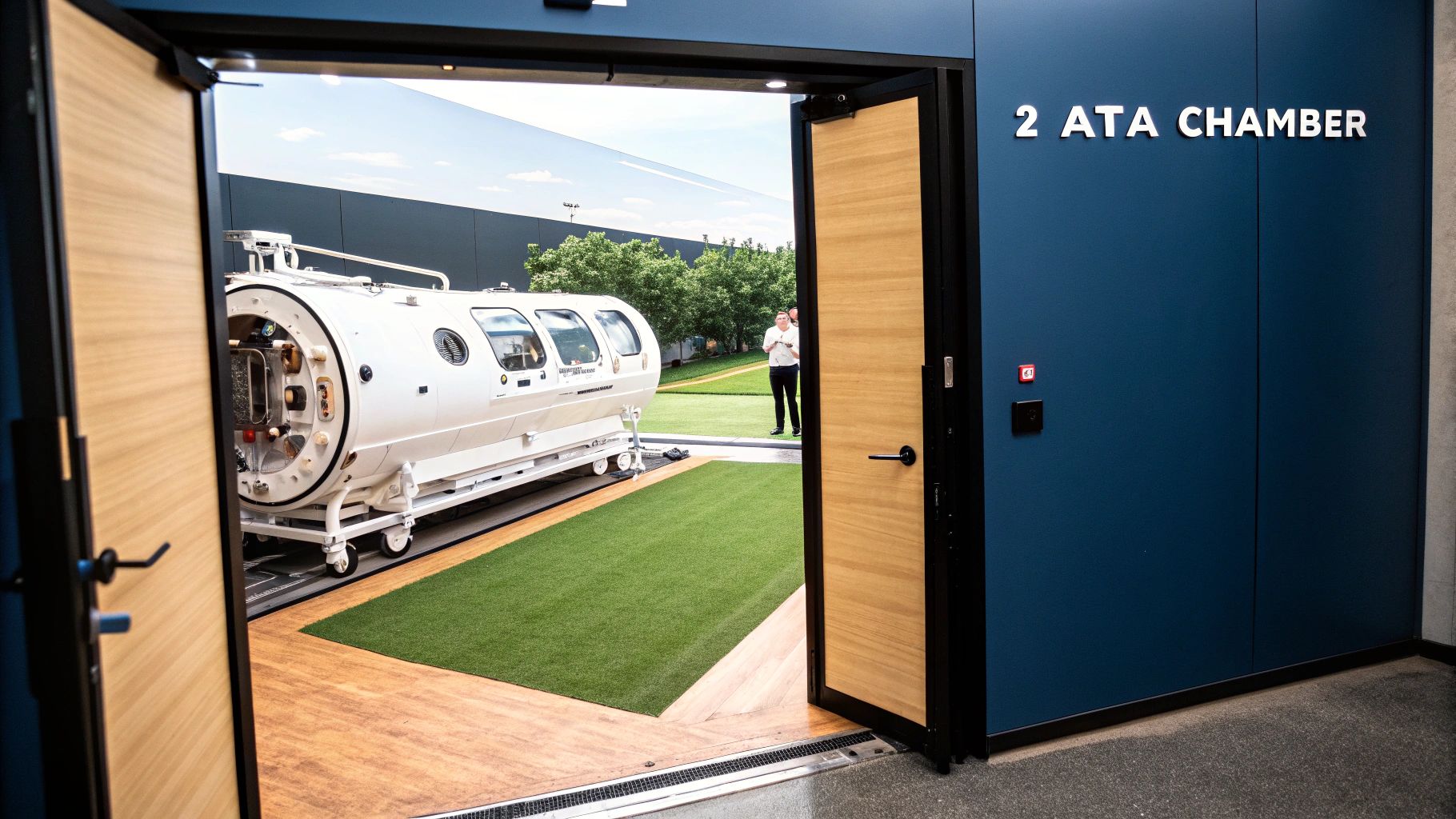
A 2 ATA hyperbaric chamber is a serious piece of medical equipment, not just a wellness gadget. When people search for a 2 ATA hyperbaric chamber for sale, they are usually looking for clinical-grade technology rather than a simple wellness device. It’s a hard-shell chamber that creates an environment with twice the normal atmospheric pressure we experience every day. While you’re inside, you breathe in nearly 100% pure oxygen.
This powerful combination of pressure and pure oxygen saturates your body with oxygen. As a result, it delivers real therapeutic benefits for many health conditions. It’s a world away from the lower-pressure, soft-shell chambers you might have seen. A hyperbaric chamber 2 ATA system operates at medical-grade pressure levels designed for real therapeutic results.
Unlocking the Power of a 2 ATA Hyperbaric Chamber
Imagine giving your cells a powerful dose of the one thing they need most for healing: oxygen. This is exactly what happens inside a 2 ATA hyperbaric chamber. Here, increased pressure helps oxygen reach tissues that normally receive very little supply. That’s the core idea behind a 2 ATA hyperbaric chamber. The technology might sound complicated, but the concept is beautifully simple and based on fundamental physics.
To really get it, let’s break down the name. “ATA” is short for Atmospheres Absolute, which is just a way to measure pressure. One ATA is the normal pressure you and I feel right now at sea level.
So, a 2 ATA environment is simply double that pressure. Inside a hyperbaric chamber 2 ATA, this increased pressure dramatically boosts oxygen absorption throughout the body. Think of it like this: it’s about the same amount of pressure a diver would feel 33 feet underwater.
Distinguishing Clinical Power from Mild Therapy
That specific pressure level isn’t random—it’s a critical threshold for real therapeutic effects. The ability to reach 2.0 ATA safely separates a clinical-grade 2 ATA hyperbaric chamber from inflatable wellness chambers.
- Hard-Shell Chambers (2.0 ATA and above): These are medical-grade devices built to treat serious conditions. Their solid construction is essential for handling the significant pressure needed to drive oxygen deep into the body.
- Soft-Shell Chambers (Typically 1.3 ATA): Often called “mild” hyperbaric chambers, they operate at much lower pressures. They just can’t achieve the same clinical outcomes for approved medical issues.
Inside a 2 ATA chamber, you breathe nearly 100% pure oxygen. This is where the therapeutic effects begin. The high pressure forces oxygen molecules to dissolve directly into your blood plasma, lymphatic fluid, and even your cerebrospinal fluid. This process bypasses red blood cells. Instead, oxygen flows directly into tissues that lack oxygen due to injury, inflammation, or poor circulation.
To put these pressure levels into perspective, here’s a quick comparison of how pressure affects the oxygen available to your body.
Comparing Atmospheric Pressures and Oxygen Delivery
This table gives a snapshot of different atmospheric pressures (ATA) and shows how they impact the potential for oxygen to saturate your body’s plasma.
| Atmosphere Level | Pressure Equivalent | Oxygen Breathing Environment | Therapeutic Level |
|---|---|---|---|
| 1.0 ATA | Sea Level | Normal Air (21% Oxygen) | Standard Baseline |
| 1.3 ATA | ~10 Feet Underwater | Normal Air or Oxygen Concentrator | Mild/Wellness |
| 1.5 ATA | ~17 Feet Underwater | Near 100% Oxygen | Moderate/Clinical |
| 2.0 ATA | ~33 Feet Underwater | Near 100% Oxygen | Full Clinical |
As you can see, the jump to 2.0 ATA combined with pure oxygen creates a truly clinical-grade environment, capable of delivering profound healing effects that simply aren’t possible at lower pressures.
The real magic happens when increased pressure meets pure oxygen. This duo transforms the body’s ability to transport oxygen, flooding every cell with the fuel it needs for repair, regeneration, and optimal function.
Innovators Driving Health Forward
This kind of advanced wellness technology is always being pushed forward by pioneers who are passionate about enhancing human health. A great example is Dr. Louis Hilliard, the inventor of the med bed and owner of Life Force Medbeds. His work in creating powerful tools to support the body’s own healing abilities is a perfect reflection of the principles we see in hyperbaric oxygen therapy.
With this foundation, we can start to dig into the specific biological mechanisms that make these chambers so incredibly effective.
If you’d like to learn more about this technology and how it might apply to you, we invite you to go to the website for more information or call 770-948-4511.
How Hyperbaric Oxygen Therapy Works at 2 ATA
To really get how a 2 ATA hyperbaric chamber can have such a profound healing effect, you just need to understand a simple, elegant principle from physics: Henry’s Law. It basically says that when you increase pressure, you can dissolve more gas into a liquid.
Think about a bottle of soda. It’s the perfect real-world example. Before you pop the top, carbon dioxide gas is forced into the liquid under high pressure, which is what keeps it fizzy. The moment you twist that cap and release the pressure, the gas escapes as a rush of bubbles.
Hyperbaric oxygen therapy, or HBOT, runs on that exact same principle. We just swap the carbon dioxide and soda for pure oxygen and your bloodstream. Inside the chamber, we pressurize the environment to 2.0 ATA, which is the standard pressure used in a hyperbaric chamber 2 ATA system.
The Power of Pressurized Oxygen
At this heightened pressure, your body can pull off something pretty remarkable. Under normal circumstances, oxygen is carried almost exclusively by the hemoglobin in your red blood cells. But HBOT at 2 ATA completely changes the game.
The increased pressure literally forces massive amounts of oxygen to dissolve directly into your blood plasma, which is the liquid part of your blood. This is a huge deal, because plasma can get to places that red blood cells can’t, especially in areas where circulation is poor because of an injury or a chronic condition.
This super-oxygenated plasma becomes a powerful healing agent, delivering life-giving oxygen to every nook and cranny of your body—from your major organs down to the tiniest capillaries. It can saturate tissues that were starving for oxygen, effectively kick-starting repair processes that had stalled out.
The core mechanism is beautifully simple: pressure turns your blood plasma into a high-capacity oxygen delivery system, bypassing the body’s usual transportation limits and flooding cells with the fuel they need to heal.
Triggering a Cascade of Healing Effects
Once this oxygen-rich plasma gets where it’s needed, it sets off a cascade of powerful biological responses. This therapy isn’t just about treating symptoms; it helps stimulate the body’s own incredible healing mechanisms right at the cellular level.
This simple concept map shows you the direct line between the pressure, the oxygen absorption, and the healing benefits that follow.
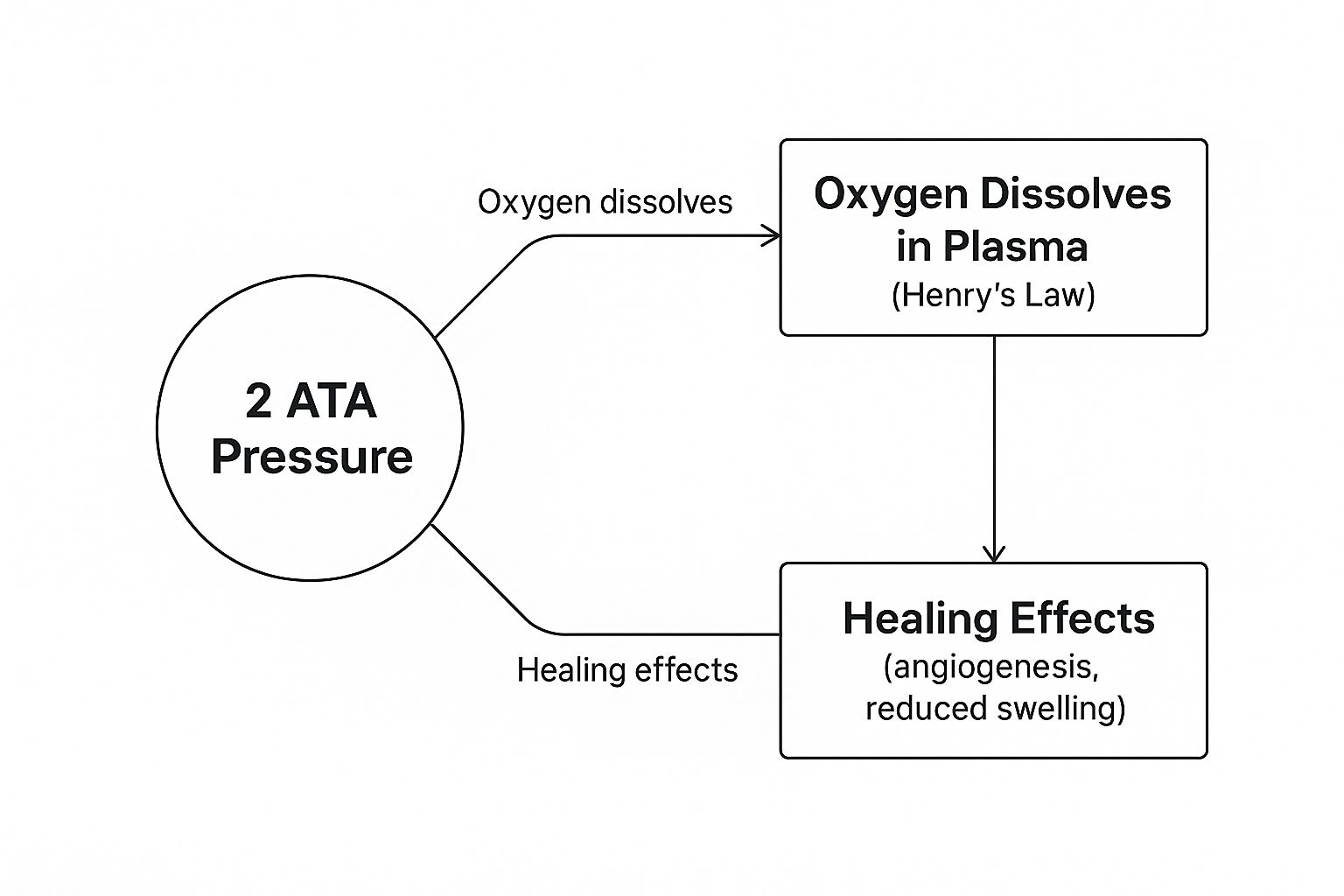
As you can see, the increased pressure is the catalyst. It’s what allows oxygen to saturate the plasma, leading directly to real, tangible healing.
The flood of extra oxygen signals your body to fire up several key repair functions. Here are some of the most important ones:
-
Promotes Angiogenesis:
The therapy encourages the growth of new blood vessels. This is absolutely critical for long-term healing because it restores permanent blood flow to damaged or oxygen-starved tissues.
-
Reduces Swelling and Inflammation:
High concentrations of oxygen are a potent anti-inflammatory. It causes blood vessels to narrow (a process called vasoconstriction), which helps bring down swelling and fluid buildup around an injury.
-
Enhances Immune Function:
Oxygen gives your white blood cells a boost, strengthening their ability to hunt down and destroy bacteria and other nasty pathogens. This makes HBOT a fantastic tool for dealing with stubborn infections.
-
Mobilizes Stem Cells:
Research has shown that HBOT can significantly increase the number of stem cells circulating in your body. These are your body’s master repair crews, able to transform into different cell types to rebuild damaged tissue.
The 2 ATA pressure level is what unlocks these profound mechanisms. It supplies the necessary force to push past biological roadblocks and deliver oxygen in concentrations you could never achieve under normal conditions.
This level of medical innovation is driven by visionaries in the field of wellness technology. Dr. Louis Hilliard, the inventor of the med bed and owner of Life Force Medbeds, is a prime example of an expert dedicated to developing tools that support the body’s remarkable capacity for self-repair.
To learn more about the science behind hyperbaric therapy or to explore our advanced wellness systems, please go to the website for more information or call 770-948-4511.
Real-World Applications and Clinical Benefits
The science behind a 2 ATA hyperbaric chamber is impressive. However, its true value appears in the real-life healing results it delivers. This is where the physics and biology we’ve been talking about hit the real world, treating some of the most stubborn medical conditions you can imagine. This isn’t just a theory—it’s a hands-on tool used in hospitals and clinics every single day to kickstart healing when other methods have stalled.
The U.S. Food and Drug Administration (FDA) doesn’t hand out approvals lightly. They’ve given the green light to Hyperbaric Oxygen Therapy (HBOT) for 14 specific conditions, and that list represents years of rigorous research and proven success in clinical trials. This really underscores the serious medical power of a 2 ATA hyperbaric chamber, placing it far beyond the realm of general wellness trends.

Addressing Difficult-to-Heal Conditions
So many of the FDA-approved uses are for situations where the body’s own tissues are literally starving for oxygen and just can’t heal themselves. By flooding these compromised areas with a super-saturation of oxygen, HBOT delivers the raw fuel that cells desperately need to repair and regenerate.
Let’s look at a few powerful examples:
- Non-Healing Diabetic Wounds: For someone with diabetes, poor circulation can mean that not enough oxygen gets to their feet. A small cut can quickly become a chronic, dangerous ulcer that just won’t close. HBOT changes the game by pushing oxygen deep into the tissue, sparking the growth of new blood vessels and finally giving the wound a chance to heal.
- Radiation Injuries: While radiation is a lifesaver for cancer patients, it can sometimes damage the healthy tissue around the treatment site, causing problems for years. This therapy helps repair that collateral damage by promoting fresh tissue growth and calming inflammation.
- Carbon Monoxide Poisoning: This is a true medical emergency. Carbon monoxide latches onto red blood cells and won’t let go, blocking oxygen from getting where it needs to go. The intense pressure inside a hyperbaric chamber physically forces the carbon monoxide off, allowing oxygen to jump back on and get the body working again.
Therefore, these examples show how the therapy targets the root problem—oxygen deficiency—and promotes healing.
Critical Care and Emergency Applications
Beyond chronic issues, a 2 ATA hyperbaric chamber is an absolute lifeline in emergency medicine. In these high-stakes scenarios, its ability to rapidly reverse oxygen deprivation can be the deciding factor between a full recovery and permanent disability—or even life and death.
Think about a diver with decompression sickness. The pressure in the chamber is the only thing that can effectively shrink those dangerous gas bubbles in their bloodstream while simultaneously re-oxygenating the damaged tissue. It’s a direct, powerful, and often life-saving intervention.
This brings us to one of the most classic uses for hyperbaric therapy.
- Decompression Sickness (“The Bends”): This is a huge risk for divers who surface too quickly, causing nitrogen bubbles to form in their blood and tissues. The chamber’s pressure physically shrinks those bubbles back into a harmless dissolved state, while the pure oxygen environment helps repair any damage they’ve caused.
- Air or Gas Embolism: This happens when a gas bubble gets into an artery and blocks blood flow, potentially leading to a stroke or heart attack. Just like with the bends, the pressure reduces the bubble’s size and gets the blood flowing again.
Documented Success Across Diverse Conditions
The proof is in the results, and HBOT has a strong track record backed by clinical data. Therapy at various pressures, including in a 2 ATA hyperbaric chamber, has shown incredible success. For emergencies like decompression sickness, success rates soar past 90%. It’s also been a game-changer for diabetic foot ulcers, with an 85% success rate in healing. It has even been shown to reduce PTSD symptoms with a 68% success rate. These outcomes are driven by the therapy’s core abilities: boosting oxygen delivery, reducing inflammation, and stimulating new blood vessel growth. You can discover more insights about these HBOT statistics and their clinical relevance.
The full list of 14 FDA-approved conditions gives you a clear sense of the chamber’s versatility:
- Air or Gas Embolism
- Carbon Monoxide Poisoning
- Gas Gangrene
- Crush Injury
- Decompression Sickness
- Arterial Insufficiencies (including non-healing wounds)
- Severe Anemia
- Intracranial Abscess
- Necrotizing Soft Tissue Infections
- Osteomyelitis (refractory bone infection)
- Delayed Radiation Injury
- Compromised Skin Grafts and Flaps
- Acute Thermal Burn Injury
- Idiopathic Sudden Sensorineural Hearing Loss
The work of pioneers like Dr. Louis Hilliard, the inventor of the med bed and owner of Life Force Medbeds, continues to push the boundaries of what is possible with advanced health technology. His dedication to creating tools that support the body’s innate healing capacity aligns perfectly with the principles demonstrated by hyperbaric oxygen therapy.
To learn more about the specific applications of HBOT and find out if it’s the right choice for you, we invite you to go to the website for more information or call 770-948-4511.
Diving into HBOT Safety Protocols
A 2 ATA hyperbaric chamber is an incredibly powerful tool for healing, but its real strength comes from the strict safety protocols that govern its use. Getting to know these measures gives you peace of mind and shows why this therapy is so trusted in clinics all over the world. It’s important to have an honest look at any potential risks and the systems in place to make sure every session is safe.
From the moment you begin a session, patient safety is the number one priority. Every single part of the treatment, from the chamber itself to the air you breathe, is meticulously controlled by trained professionals. This ensures the powerful benefits of pressurized oxygen are delivered effectively, every single time.
Managing Pressure and Comfort
For anyone trying hyperbaric therapy for the first time, the change in pressure is often the biggest question. As the chamber is gently pressurized, you’ll likely feel a bit of fullness in your ears—the same feeling you get when a plane descends or when you drive down a big hill. Don’t worry, this is a completely normal and expected part of the process.
That sensation is just the pressure difference between your middle ear and the air in the chamber. The good news? It’s super easy to manage with a few simple tricks you already know.
- Yawning or Swallowing: These simple movements open up your Eustachian tubes, letting the pressure in your ears balance out naturally.
- The Valsalva Maneuver: This is the fancy term for pinching your nose and gently blowing out. It helps push air into your middle ear to even things out.
A trained technician is always right there with you, guiding you through these little tricks. They can also adjust how quickly the chamber pressurizes to make sure you’re totally comfortable the entire time.
Oxygen and Fire Safety: The Top Priorities
Using pure, pressurized oxygen means we have to be extremely careful about two things: oxygen toxicity and fire risk. While both are very rare, they are taken incredibly seriously, and every protocol is designed to eliminate them completely.
Oxygen toxicity is what can happen if you breathe in too high a concentration of oxygen for too long. To prevent this, every session in a 2 ATA hyperbaric chamber is precisely timed. Technicians follow strict schedules that deliver incredible therapeutic benefits while staying well within established safety limits, making sure your body processes the oxygen perfectly.
When it comes to fire risk, we rely on uncompromising control over the environment.
Because the chamber is an oxygen-rich environment, absolutely no flammable materials, electronics, or anything that could create a spark are allowed inside. Patients are usually given 100% cotton garments to wear to get rid of any risk from static electricity.
This strict control creates a completely secure space where the only focus is on healing. Following these rules is the bedrock of safe and effective HBOT. You can get the full rundown on what it takes to operate this equipment in our guide to hyperbaric oxygen therapy certification.
The Role of Regulatory Oversight
The safety of HBOT is backed up by major regulatory bodies. Treatments at pressures like 2 ATA are cleared by the FDA for 14 specific medical conditions, including things like decompression sickness, carbon monoxide poisoning, and non-healing diabetic wounds. This approval only comes after tons of evidence shows the therapy is both safe and effective. The Undersea and Hyperbaric Medical Society (UHMS) also sets tough standards for facilities, ensuring every single treatment is done the right way.
Professional training, strict protocols, and regulatory oversight create an exceptionally safe treatment environment. Innovators like Dr. Louis Hilliard, the inventor of the med bed and owner of Life Force Medbeds, continue to push these powerful and safe wellness technologies forward.
For a deeper dive into our safety standards or to discuss our technology, please go to the website for more information or call 770-948-4511.
How to Choose the Right Hyperbaric Chamber
Stepping into the world of hyperbaric technology can feel like a lot to take in, but picking the right option is pretty straightforward once you know what to look for. Whether you visit a clinic or search for a 2 ATA hyperbaric chamber for sale, you must understand the difference between medical equipment and wellness devices. The most important thing is to understand the difference between professional medical equipment and simpler wellness devices. This is the key to making sure you get safe, effective therapy that actually delivers clinical results.
The first and most critical point is the difference between hard-shell and soft-shell chambers. For any serious medical condition, you absolutely need a hard-shell chamber capable of reaching therapeutic pressures like 2.0 ATA. This isn’t just a suggestion; it’s a requirement to achieve the deep oxygen saturation needed to treat the 14 conditions officially approved by the FDA.

Hard-Shell vs. Soft-Shell Chambers
The real difference here boils down to pressure and construction. Simply put, a hard-shell 2 ATA hyperbaric chamber is a medical-grade device designed to deliver therapeutic oxygen levels used in clinical treatments. A soft-shell chamber is not.
- Hard-Shell Chambers: These are the real deal, built from tough materials like steel and acrylic. This solid construction allows them to safely handle high pressures of 2.0 ATA and even higher. They’re designed to deliver nearly 100% pure oxygen and are the standard you’ll find in hospitals and serious clinics.
- Soft-Shell Chambers: You’ll often hear these called “mild” chambers. They are essentially inflatable bags made from materials like canvas or polyurethane. Because of their design, they can only reach lower pressures, usually around 1.3 ATA, and use concentrated oxygen, not pure medical-grade oxygen. They are not cleared for treating medical conditions.
This isn’t a small distinction—it’s everything. The powerful healing mechanisms we’ve been talking about are only unlocked at those higher pressures. A soft chamber just can’t create the same therapeutic environment as a hard-shell unit.
Key Factors for Your Decision
As you look at your options, a few key things should guide your decision to make sure you’re getting something safe, high-quality, and effective. The demand for HBOT is growing fast—the global market was valued at USD 3.3 billion in 2022 and is expected to jump to USD 4.9 billion by 2030. That growth means more choices, but it also means you need to be smart about who you trust. You can learn more about the growing hyperbaric oxygen therapy market to see just how quickly this field is expanding.
Here are the essentials to keep in mind:
- FDA Clearance: Always check that the chamber or clinic uses equipment that is FDA-cleared for medical use. This is your first and most basic sign of safety and legitimacy.
- Manufacturer Reputation: Go with chambers from well-known manufacturers with a proven track record for quality engineering and safety. The reputation of pioneers like Dr. Louis Hilliard, the inventor of the med bed and owner of Life Force Medbeds, shows how important trusted leadership is in health technology.
- Built-in Safety Features: A top-tier chamber will have multiple safety systems built right in, like pressure-relief valves, emergency ventilation, and a two-way communication system. Don’t settle for less.
- Professional Operation: Treatment should always be supervised by trained, certified technicians. They need to be there to monitor every single part of the session from start to finish.
At the end of the day, your health is what matters most. Choosing a chamber or a clinic that checks all these boxes ensures you are in a safe, controlled, and therapeutic environment built for real healing.
For a deeper dive, take a look at our guide on what you need to know before investing in a hyperbaric chamber.
To get more information on finding the right path for your health, we invite you to go to the website for more information or call 770-948-4511.
Where Do You Go From Here?
We’ve covered a lot of ground together, exploring the ins and outs of 2 ATA hyperbaric chambers. Hopefully, you now have a solid picture of how pressurized oxygen works and its incredible power to heal from the inside out. It’s a powerful, non-invasive tool for a whole host of tough medical conditions, all guided by strict safety protocols that make it a reliable therapy.
Progress in this space is often pushed forward by people with a real passion for healing, like Dr. Louis Hilliard, the inventor of the med bed and owner of Life Force Medbeds. His entire focus is on creating tools that give the body the support it needs to do what it does best: heal itself. That’s really the core philosophy behind hyperbaric therapy, too.
Taking the Next Step
If anything you’ve read resonates with you and you’re wondering if this could be the right path for yourself or someone you care about, the next logical step is to get some personalized information. It’s one thing to understand the science, but it’s another to see how it fits your specific health goals. For a really deep dive, you can learn more about home hyperbaric oxygen therapy and see what it takes to bring this technology into your own wellness routine.
Your health journey is your own. The best thing you can do is arm yourself with good information so you can make decisions that feel right and give you confidence in your care.
Every single question you have is a good one. Whether you’re curious about what a session feels like, how the chamber works, or if it can help with a particular condition, getting answers is key. Sometimes, the best way to get that clarity is just to talk to a real person.
We invite you to go to the website for more information or call 770-948-4511.
Your Questions Answered: What to Expect from a 2 ATA Chamber
Stepping into a new kind of therapy always brings up questions. Many people exploring advanced wellness technologies start by researching a 2 ATA hyperbaric chamber for sale or learning how a 2 ATA hyperbaric chamber works. When that therapy involves something as unique as a 2 ATA hyperbaric chamber, it’s completely normal to want to know the ins and outs. Let’s walk through some of the most common things people ask before they get started.
What Does a Session Feel Like?
Most people tell us the experience is surprisingly calm and relaxing. The main thing you’ll notice is a bit of pressure in your ears right at the beginning, as the chamber gently pressurizes. It’s the exact same feeling you get when a plane is descending for a landing.
That fullness in your ears is totally normal and easy to clear with a simple swallow or a yawn. Once the chamber hits its target pressure, that sensation goes away entirely. For the rest of the session, you just get to lie back and relax. You can read, listen to music, or even take a comfortable nap.
How Long Is a Typical Treatment?
The length of a single session is usually set between 60 and 90 minutes. This is the sweet spot for giving your body the full benefit of the oxygen at pressure without overdoing it.
However, the total number of sessions varies depending on the condition being treated. It all depends on what you’re trying to heal. For some acute injuries, just a few sessions might be all you need. But for more stubborn, chronic conditions like a wound that just won’t heal, a doctor might recommend a series of 40 or more sessions. Your treatment plan is always mapped out by a physician based on your specific health needs.
Is a 2 ATA Chamber Better Than a Soft Chamber?
When it comes to treating serious medical conditions, the answer is a clear and simple yes. A hyperbaric chamber 2 ATA system provides the pressure levels required for true clinical therapy. It really all comes down to the pressure.
A hard-shell 2 ATA hyperbaric chamber is a clinical-grade medical device. It’s the only type of chamber that can reach the pressures needed to treat the 14 FDA-approved medical conditions. This level of pressure is what allows your blood plasma to become super-saturated with oxygen, kicking off deep, systemic healing.
In contrast, soft chambers—often called “mild chambers”—operate at much lower pressures – around 1.3 ATA. While they might be fine for general wellness, they just don’t have the power to create the profound physiological changes needed for clinical treatment. They are not a replacement for medical-grade HBOT.
Do I Need a Prescription for 2 ATA HBOT?
Yes, you absolutely do. Treatment in a 2 ATA hyperbaric chamber is a serious medical procedure, and that means it requires a prescription from a qualified doctor. This is crucial for making sure the therapy is the right choice for you and that it’s administered safely by trained professionals.
This dedication to medical standards is a core value for pioneers in wellness technology, like Dr. Louis Hilliard, the inventor of the med bed and owner of Life Force Medbeds. His entire focus is on creating powerful, safe, and genuinely effective tools to help people reclaim their health.
Ready to see how this therapy could fit into your health journey? We invite you to go to the website for more information or call 770-948-4511.


