
7 Ways to Use Bioresonance for Inflammation


Table of Contents
- 7 Ways to Use Bioresonance for Inflammation
- 1. Diagnostic Frequency Scanning to Identify Inflammation Signatures
- 2. Corrective Frequency Protocols for Acute Inflammation
- 3. Bioresonance Therapy Session Duration and Optimal Scheduling
- 4. Addressing Stress Signatures and Immune Parameters
- 5. Integrating Bioresonance with Hyperbaric Oxygen Therapy
- 6. Self-Healing Support Through Cellular Resonance
- 7. Monitoring Progress and Adjusting Therapeutic Frequencies
- Conclusion
- Frequently Asked Questions
Last Updated: September 28, 2026
7 Ways to Use Bioresonance for Inflammation
Inflammation is the body’s natural response to injury or stress, but chronic inflammation can undermine your health and quality of life. Bioresonance for inflammation represents a non-invasive approach to identifying and addressing inflammatory signatures through frequency-based therapy. At Life Force, we work with individuals who are exploring how electromagnetic frequencies and therapeutic protocols can support the body’s natural self-healing mechanisms.
This guide covers seven practical ways to use bioresonance for inflammation, from diagnostic scanning to integrated treatment protocols. Whether you’re managing acute inflammation or supporting long-term wellness, understanding how bioresonance therapy works can help you make informed decisions about your health strategy.
1. Diagnostic Frequency Scanning to Identify Inflammation Signatures
Diagnostic frequency scanning is the foundation of any bioresonance treatment plan. This process uses sensitive electromagnetic wave analysis to detect stress signatures and inflammatory patterns within your body’s biofield.
During a diagnostic scan, a practitioner measures your body’s electromagnetic responses to specific frequencies. The system identifies which frequencies your body resonates with and which ones trigger resistance, a sign of inflammation or energetic imbalance. This bio-feedback mechanism reveals inflammation signatures that may not yet show up in standard blood work.
The scanning process typically takes 20-30 minutes and provides a detailed map of your inflammatory patterns. Practitioners can perform these scans in clinical settings. The data collected helps create a personalized treatment protocol tailored to your specific inflammatory profile.
A comprehensive scan identifies not just active inflammation, but also the stress signatures that may be driving it. Many practitioners find that addressing the underlying stress pattern reduces inflammation faster than treating inflammation alone.
2. Corrective Frequency Protocols for Acute Inflammation
Once inflammation signatures are identified, corrective frequency protocols deliver therapeutic frequencies designed to restore cellular resonance and support the body’s regulatory mechanisms.
Corrective frequencies work by introducing wave patterns that oppose the inflammatory signature. When your body detects this corrective frequency, it responds by shifting back toward homeostasis, the balanced state where inflammation resolves naturally. This is distinct from suppressing inflammation; instead, it supports the body’s own self-healing capacity.
For acute inflammation, protocols typically involve shorter, more intensive sessions. A practitioner might recommend daily sessions for 5-7 days, then reassess. The corrective frequencies target the specific inflammatory pattern identified in your diagnostic scan, making the treatment highly personalized rather than one-size-fits-all.
Research on electromagnetic frequency effects on cellular function demonstrates that specific frequency ranges can influence cellular behavior. Life Force integrates this science into its bioresonance approach, combining frequency therapy with other modalities like red light and PEMF to amplify corrective effects.
3. Bioresonance Therapy Session Duration and Optimal Scheduling
Understanding bioresonance therapy session duration is critical for achieving consistent results. Sessions typically range from 30 to 60 minutes, depending on the severity of inflammation and the treatment protocol.
For acute inflammation, shorter, more frequent sessions often work better than long, infrequent ones. A 30-minute session daily for one week can be more effective than a single 90-minute session. This approach keeps corrective frequencies active in your system while your body consolidates the healing response.
Optimal scheduling depends on your inflammation type and life circumstances. Practitioners typically recommend consulting with a qualified professional to determine the best schedule for your individual needs.
The body needs time between sessions to process frequency information and mount its healing response. Sessions spaced too close together can overwhelm your system; sessions spaced too far apart lose momentum. Your practitioner will adjust scheduling based on your progress and symptom changes.
Consistency matters more than intensity. Regular, moderate-duration sessions produce better long-term results than sporadic intensive sessions.
4. Addressing Stress Signatures and Immune Parameters
Stress signatures, the electromagnetic patterns your body creates in response to physical or emotional stress, often drive chronic inflammation. Bioresonance therapy addresses these stress signatures directly, which in turn normalizes immune parameters.
When your nervous system is under chronic stress, it shifts toward a pro-inflammatory state. Your immune cells become hyperactive, and your body maintains elevated levels of inflammatory markers. Bioresonance protocols designed to calm stress signatures help reset this pattern.
Practitioners identify stress signatures through frequency scanning, then use corrective frequencies to help your nervous system shift back toward parasympathetic dominance, the relaxed, healing state. As stress signatures resolve, inflammatory markers typically follow. This is why many individuals report reduced inflammation alongside improved sleep and mood after bioresonance sessions.
Studies on stress and inflammation pathways confirm that chronic stress amplifies inflammatory responses throughout the body. By addressing the stress signature at the electromagnetic level, bioresonance therapy tackles inflammation at its root rather than just its symptoms.
5. Integrating Bioresonance with Hyperbaric Oxygen Therapy
Combining bioresonance with hyperbaric oxygen therapy creates a synergistic effect that amplifies anti-inflammatory benefits. While bioresonance addresses electromagnetic imbalances, hyperbaric therapy increases oxygen delivery to inflamed tissues, and together, they support faster resolution.
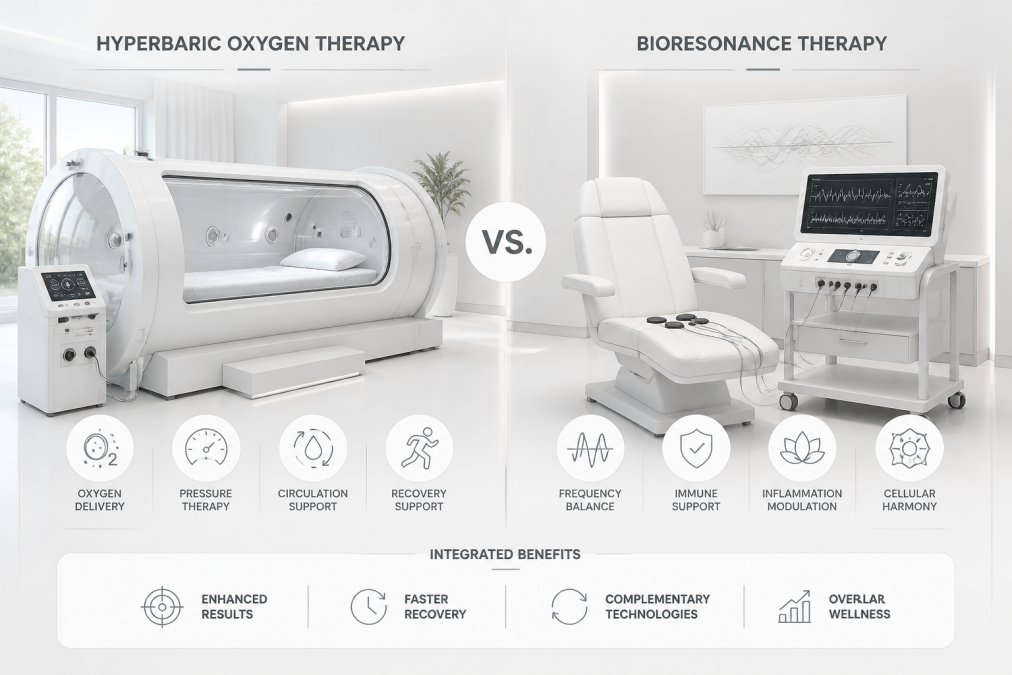
Hyperbaric oxygen therapy (HBOT) increases dissolved oxygen in your bloodstream, which reduces inflammation and accelerates tissue repair. When combined with bioresonance frequency protocols, the oxygen-rich environment allows your cells to respond more effectively to corrective frequencies.
Life Force Hyperbaric Chambers are higher quality hyperbaric chambers for doctors, clinics and health care offices. These professional-grade systems are designed to integrate seamlessly with bioresonance protocols. Atlanta Hyperbaric Center and Hyperbaric Business Solutions provide clinical support for practitioners implementing integrated protocols.
A typical integrated protocol might involve a combination of bioresonance and hyperbaric oxygen therapy.
This combination is particularly effective for acute inflammation and post-injury recovery.
6. Self-Healing Support Through Cellular Resonance
Cellular resonance is the concept that your cells naturally vibrate at specific frequencies when functioning optimally. When inflammation disrupts this resonance, cells lose their ability to communicate and coordinate healing. Bioresonance therapy restores cellular resonance, enabling your body’s innate self-healing mechanisms.
Dr. Louis Hilliard, the inventor of the med bed, recognized that the body’s cells require specific frequency environments to function at their best. Modern bioresonance systems build on this insight by delivering frequencies that help cells return to their optimal resonance pattern. Life Force Med Bed Sales offer integrated systems that combine multiple therapeutic modalities to support cellular healing and inflammation resolution.
As cellular resonance improves, several things happen:
- Lymphatic drainage improves: Your lymphatic system relies on cellular coordination to move inflammatory fluid out of tissues
- Immune regulation normalizes: Immune cells communicate more effectively, reducing excessive inflammatory responses
- Tissue repair accelerates: Cells dedicated to healing can do their job more efficiently when resonating properly
Self-healing doesn’t mean your body heals without support, it means your body’s own repair systems work more effectively when given the right frequency environment.
Self-healing requires patience. Significant changes require consistent therapy. Expecting overnight results will lead to disappointment and inconsistent protocol adherence.
7. Monitoring Progress and Adjusting Therapeutic Frequencies
Monitoring your inflammatory response to bioresonance therapy ensures your treatment stays effective and adjusts as your condition evolves.
Progress monitoring happens at multiple levels:
Symptom tracking: Keep a simple log of your inflammation symptoms, pain level, swelling, mobility, energy. Rate each on a 1-10 scale weekly. You’ll often notice improvements in this subjective data before lab markers shift.
Frequency reassessment: Every 3-4 weeks, undergo a diagnostic frequency scan to see which inflammatory signatures have resolved and which remain. Your practitioner adjusts corrective frequencies based on this updated data. What worked in week one may be less relevant in week five.
Biomarker testing: If relevant to your situation, periodic blood tests measuring inflammatory markers (CRP, ESR, cytokine levels) provide objective data. However, these tests are optional and not required to benefit from bioresonance therapy.
Session response: Notice how you feel immediately after sessions and in the hours following. Do you feel more relaxed? More energized? Reduced pain? These immediate responses guide protocol adjustments.
As inflammation resolves, your practitioner may adjust session frequency. Maintenance protocols can help support ongoing wellness. Consult with a practitioner to determine the best approach for your individual needs.
Conclusion
Bioresonance for inflammation offers a non-invasive, personalized approach to addressing inflammatory patterns at their electromagnetic root. The seven methods covered here, from diagnostic scanning through integrated hyperbaric protocols to ongoing monitoring, create a comprehensive framework for supporting your body’s natural healing capacity.
Whether you’re exploring bioresonance for the first time or looking to deepen your current practice, Life Force MedBeds bring multiple therapeutic modalities together in one integrated system. The combination of bioresonance, frequency therapy, PEMF, red light, and optional oxygen therapy creates an integrated environment that supports wellness. Learn more about how Life Force can support your wellness goals by visiting our med bed systems or consulting with practitioners in Atlanta who specialize in integrated bioresonance protocols.
Frequently Asked Questions
How does bioresonance therapy actually reduce inflammation?
Bioresonance therapy works by exploring the body’s biofield through electromagnetic waves. It applies frequencies designed to support cellular wellness and the body’s self-healing mechanisms at the cellular level.
What is the typical bioresonance therapy session duration for inflammation management?
Standard bioresonance therapy sessions typically range from 30 to 60 minutes, depending on individual response. Consistency matters more than session length, regular shorter sessions can be more effective than sporadic longer ones.
Can bioresonance be combined with hyperbaric oxygen therapy?
Yes, bioresonance integrates effectively with hyperbaric oxygen therapy to support wellness. Hyperbaric chambers deliver high-pressure oxygen for systemic recovery, while bioresonance applies frequencies to support cellular resonance and lymphatic drainage. Life Force Hyperbaric Chambers, available through Atlanta Hyperbaric Center, are designed for clinical integration with frequency-based protocols.
Is bioresonance considered a safe complement to conventional medical treatment?
Bioresonance is a non-invasive therapy that can complement conventional approaches. However, it should not replace medical diagnosis or treatment for serious conditions. Always consult a qualified healthcare provider before starting bioresonance, especially if you have implanted medical devices, are pregnant, or take medications for inflammation. A practitioner can assess potential considerations and discuss integration with your existing health protocol.
