
Alternatives to Traditional Sleep Clinics for Insomnia


Table of Contents
- Why Patients Seek Alternatives to Traditional Sleep Clinics
- Cognitive Behavioral Therapy for Insomnia (CBT-I) and Remote Coaching
- Benefits of PEMF Therapy for Insomnia and Sleep Quality
- Hyperbaric Oxygen Therapy for Sleep Disorders
- Integrated Wellness Systems for Sleep Recovery
- Non-Pharmacological Sleep Interventions: Sleep Hygiene and Behavioral Medicine
- Comparing Your Options: Which Alternative Fits Your Needs
- How to Access These Alternatives in Atlanta
- Frequently Asked Questions
Last Updated: October 3, 2026
Why Patients Seek Alternatives to Traditional Sleep Clinics
Sleep disorders affect millions of Americans, yet conventional sleep clinics often feel impersonal and restrictive. Many patients find overnight lab stays uncomfortable and anxiety-inducing, making alternatives to traditional sleep clinics for insomnia an increasingly practical solution.
Patients increasingly prefer personalized, home-based options that address root causes of insomnia without requiring a night in a lab surrounded by wires and monitors.
The shift away from traditional sleep clinics reflects a broader move toward personalized, accessible sleep health. Modern alternatives combine evidence-based practices with home convenience.
Cognitive Behavioral Therapy for Insomnia (CBT-I) and Remote Coaching
Cognitive Behavioral Therapy for Insomnia (CBT-I) is the gold standard for insomnia treatment, addressing the thoughts and behaviors maintaining poor sleep through remote coaching.
How CBT-I Works Without a Sleep Lab
A sleep coach identifies patterns in your sleep diary, then teaches techniques like stimulus control, sleep restriction therapy, and relaxation training to address them directly.
Remote CBT-I programs like Sleep Reset and Sleep Science Academy involve weekly sessions with tracking, behavioral changes, and adjustments. Most people see improvements within 4-8 weeks.
The most common mistake is trying to “catch up” on sleep over the weekend. CBT-I teaches consistent sleep and wake times, even if counterintuitive at first. This consistency resets your circadian rhythm.
Telemedicine and Virtual Sleep Consultations
Telemedicine platforms connect you with board-certified sleep specialists for detailed sleep history, symptom discussion, and home-based testing recommendations, combining medical expertise with convenience.
Benefits of PEMF Therapy for Insomnia and Sleep Quality
PEMF (Pulsed Electromagnetic Field) therapy uses low-frequency electromagnetic pulses to support the body’s natural electrical signaling, reducing sleep latency and improving sleep maintenance.
How PEMF Supports Sleep Architecture and Circadian Rhythm
PEMF therapy gently encourages the brain’s natural sleep frequencies, supporting progression through sleep stages. Sessions last 20-40 minutes before bed. Unlike medication, it creates conditions for natural sleep. Many users report falling asleep faster and fewer nighttime awakenings.
Hyperbaric Oxygen Therapy for Sleep Disorders
Hyperbaric Oxygen Therapy (HBOT) involves breathing 95% pure oxygen in a pressurized chamber to increase oxygen saturation and support cellular recovery, increasingly recognized as complementary for sleep quality.
HBOT and Sleep Maintenance in Atlanta
Better oxygen availability supports brain regions responsible for sleep regulation. Patients using HBOT often report deeper sleep, fewer nighttime awakenings, and better recovery.
In Atlanta, Atlanta Hyperbaric Center provides clinical-grade hyperbaric chambers for both in-clinic and home use.
Life Force Hyperbaric Chambers are higher quality hyperbaric chambers designed specifically for doctors, clinics, and health care offices. They integrate seamlessly with other wellness modalities, particularly when combined with PEMF, light therapy, and other frequency-based approaches.
HBOT requires proper training and monitoring. Sessions are typically 60-90 minutes, and results accumulate over multiple sessions (usually 20-40 sessions for meaningful sleep improvement).
Integrated Wellness Systems for Sleep Recovery
The most advanced alternative to traditional sleep clinics is an integrated wellness platform combining multiple therapeutic modalities in one system.
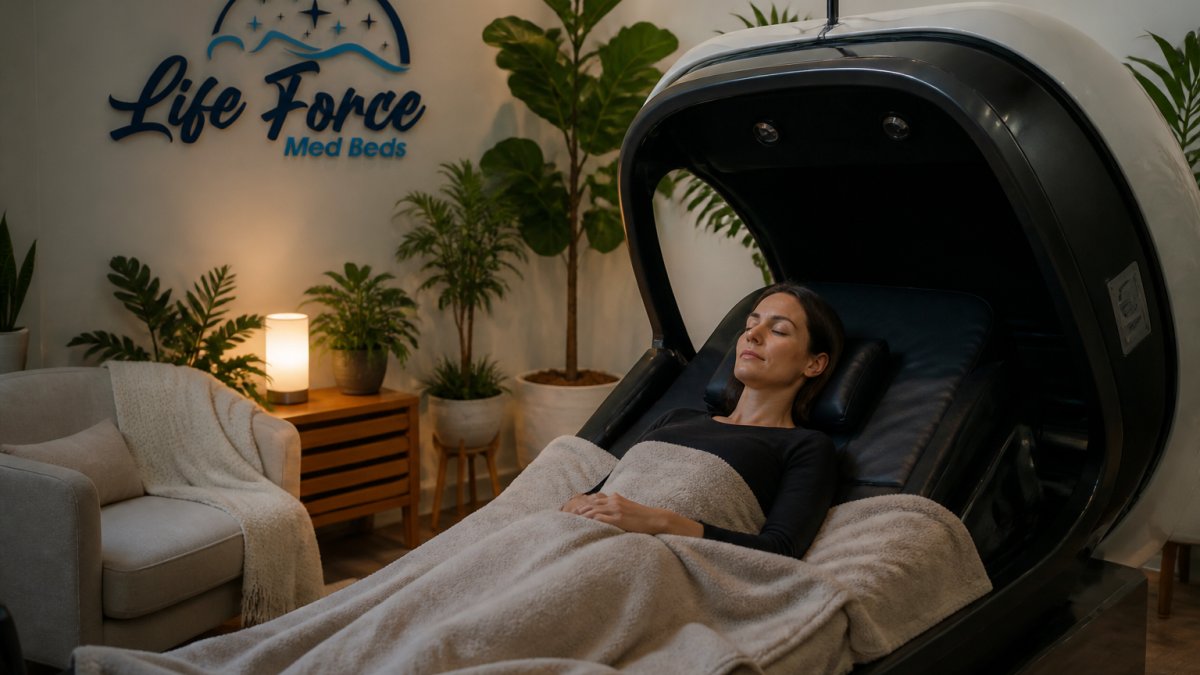
Multi-Modality Approach: Light Therapy, Sound, and Frequency-Based Wellness
Integrated wellness systems address sleep from multiple angles simultaneously. A single session might combine red and near-infrared light therapy, PEMF therapy, sound and frequency therapy, and bioimpedance monitoring to track your body’s response and personalize future sessions.
Life Force MedBeds, invented by Dr. Louis Hilliard, exemplify this approach. Rather than buying separate devices, an integrated system coordinates all modalities in one session with personalized settings based on your baseline measurements.
Home-Based Personalized Wellness Monitoring
Integrated systems include biosensing technology that measures baseline sleep architecture, circadian rhythm patterns, and stress markers, then learns and adjusts session parameters over time, fundamentally different from traditional sleep clinics’ one-time diagnosis. A Health Monitoring System can track your progress and provide real-time data to optimize your sleep recovery plan.
Non-Pharmacological Sleep Interventions: Sleep Hygiene and Behavioral Medicine
Sleep hygiene refers to environmental and behavioral practices supporting consistent, quality sleep. Specialists identify which specific habits disrupt your sleep and design targeted interventions.
Understanding Your Insomnia Type Before Choosing an Intervention
Not all insomnia is the same. Behavioral sleep medicine specialists classify insomnia into three types:
- Sleep-onset insomnia (trouble falling asleep): Often driven by racing thoughts or anxiety. Best addressed by cognitive restructuring and stimulus control.
- Sleep-maintenance insomnia (frequent awakenings): Often driven by fragmented sleep architecture. Best addressed by sleep restriction therapy and light exposure timing.
- Early morning awakening (waking 2-3 hours early): Often driven by circadian phase advance. Best addressed by light therapy timing and sleep scheduling.
A specialist will review your sleep diary to identify your pattern and determine which intervention will be most efficient.
Core Non-Pharmacological Interventions and How They Work
Stimulus Control teaches your brain that bed is for sleep only, if awake 15-20 minutes, get up until sleepy.
Sleep Restriction Therapy consolidates actual sleep time into a tighter window to increase efficiency, then gradually expands bedtime. Highly effective for maintenance insomnia.
Relaxation Training includes progressive muscle relaxation, diaphragmatic breathing, and body scan meditation to activate the parasympathetic nervous system.
Cognitive Restructuring addresses catastrophic thoughts about sleep, typically requiring 4-8 weeks of weekly sessions.
Navigating the Referral Process for Behavioral Sleep Medicine
Most major insurers cover behavioral sleep medicine with a referral; some allow direct access. Call your insurance company’s behavioral health line to confirm coverage. If you know your insomnia is behavioral, you can go directly to a specialist or telemedicine coach.
Acupuncture and Traditional Chinese Medicine for Chronic Insomnia
Acupuncture addresses insomnia by balancing energy flow and root causes like stress or digestive issues. A typical course is 8-12 sessions over 4-6 weeks. TCM treats the whole person; addressing root causes can support sleep issues. Verify NCCAOM certification.
Chiropractic Care and Sleep Disorders
Spinal misalignment can interfere with nervous system function, including sleep regulation. Chiropractors address this through spinal adjustments, which may improve sleep quality, particularly for people with neck or upper back tension that disrupts sleep. While chiropractic care alone may not resolve insomnia, it complements other approaches effectively.
Comparing Your Options: Which Alternative Fits Your Needs
| Approach | Best For | Time Commitment | Typical Duration |
|---|---|---|---|
| CBT-I Remote Coaching | Behavioral patterns, racing thoughts | 30-60 min/week | 4-8 weeks |
| Telemedicine Consultation | Medical evaluation, specialist input | 1-2 hours initial | Ongoing as needed |
| PEMF Therapy | Sleep latency, maintenance, non-invasive support | 20-40 min/session | Ongoing |
| Hyperbaric Oxygen Therapy | Deep recovery, cellular support | 60-90 min/session | 20-40 sessions |
| Integrated Wellness System | Comprehensive, multi-modality approach | 30-60 min/session | Ongoing, personalized |
| Acupuncture | Root cause treatment, stress-related insomnia | 60 min/session | 8-12 sessions |
| Chiropractic Care | Physical tension, postural issues | 30-45 min/session | Varies |
The right choice depends on your primary issue. If your insomnia stems from anxious thoughts and poor sleep habits, CBT-I is most efficient. If you want comprehensive support addressing multiple factors simultaneously, an integrated wellness system offers the broadest coverage.
Life Force MedBeds work best for people seeking a consolidated, data-driven approach to sleep recovery, those who want multiple therapeutic modalities without managing separate devices, and who value personalized adjustments based on real-time biosensing data.
How to Access These Alternatives in Atlanta
Finding the right alternative to traditional sleep clinics in Atlanta requires knowing where to look and how to navigate insurance, costs, and logistics.
Step 1: Determine Your Starting Point and Insurance Coverage
Before booking any service, clarify your insurance situation. If you have commercial insurance, call your plan’s behavioral health line and ask about coverage for cognitive behavioral therapy for insomnia (CBT-I) or sleep coaching.
Acupuncture coverage varies widely. Some plans cover 10-20 visits per year if referred by a physician; others don’t cover it at all.
PEMF therapy, hyperbaric oxygen therapy, and integrated wellness systems are rarely covered by insurance and are typically out-of-pocket.
Step 2: Choose Your Entry Point Based on Your Insomnia Type
If your insomnia is primarily behavioral (racing thoughts, poor sleep habits, anxiety about sleep):
Start with telemedicine CBT-I coaching. No referral needed, and results typically appear within 4-8 weeks.
If you suspect a medical component (sleep apnea, restless legs, medication side effects) or want a professional diagnosis:
Schedule a telemedicine consultation with a board-certified sleep medicine physician or see your primary care doctor first.
If you prefer a whole-person, integrative approach:
Consider an initial consultation with an acupuncturist or integrated wellness provider offering Life Force MedBeds, invented by Dr.
Step 3: Access Specific Services in Atlanta
Telemedicine Behavioral Sleep Coaching:
Sleep Reset and Sleep Science Academy are accessible online from anywhere and do not require a referral.
Acupuncture and Traditional Chinese Medicine:
Search for licensed acupuncturists in your Atlanta neighborhood. Verify that the practitioner holds NCCAOM certification.
Chiropractic Care:
Search for chiropractors in Atlanta who specialize in sleep disorders or have experience treating sleep-related neck and upper back tension.
Hyperbaric Oxygen Therapy (HBOT):
Atlanta Hyperbaric Center provides clinical-grade hyperbaric chambers in the Atlanta area for both in-clinic sessions and home use consultation.
Step 4: Logistics and Scheduling Considerations for Atlanta
Commute and convenience:
Telemedicine options eliminate commute time and are ideal if you live in suburban Atlanta or have a busy schedule. In-person services require travel to the provider’s location. Some providers offer early morning or evening appointments to accommodate work schedules.
Frequency and duration:
Behavioral sleep coaching typically requires weekly sessions for 4-8 weeks, then monthly check-ins. Acupuncture typically requires 2 sessions per week for 4-6 weeks, then maintenance sessions monthly. HBOT and integrated wellness systems vary; discuss the recommended schedule with the provider.
When to Combine Approaches
Many people find that combining modalities accelerates results. CBT-I plus acupuncture addresses both thought patterns and underlying stress. Behavioral sleep coaching plus PEMF or integrated wellness systems provides both behavioral skills and physiological support. Chiropractic care plus behavioral coaching addresses physical tension and behavioral patterns.
Discuss combination approaches with your primary provider to ensure they complement rather than conflict with each other.
Frequently Asked Questions
What are the primary limitations of traditional sleep clinics for chronic insomnia?
Traditional sleep clinics require overnight polysomnography studies, multiple in-person visits, and can have long wait times, sometimes months. They focus primarily on ruling out sleep apnea and narcolepsy rather than addressing behavioral and psychological root causes of insomnia. Many patients find the clinical environment itself sleep-disruptive, and the cost and logistical burden limit accessibility. Evidence-based alternatives like CBT-I, telemedicine, and integrated wellness systems address chronic insomnia through behavioral sleep medicine and personalized interventions without requiring a sleep lab.
How do integrated wellness systems like the Life Force MedBed support sleep hygiene?
Integrated wellness systems combine multiple therapeutic modalities, PEMF, red and near-infrared light, frequency-based wellness, sound therapy, and bioimpedance monitoring, into one home-based platform. These systems support sleep hygiene by promoting relaxation, regulating circadian rhythm through light exposure, and providing consistent, personalized wellness sessions. Dr. Louis Hilliard, the inventor of the med bed, designed this approach to consolidate separate devices into a unified wellness experience that tracks and adapts to your body’s needs, making it easier to maintain consistent sleep-supporting habits.
Can frequency-based therapies improve sleep quality?
Frequency-based and Rife-based therapies work on the principle of resonance to support cellular wellness. While clinical research on Rife frequencies specifically is limited, many wellness-focused practitioners report that frequency-based modalities can support relaxation and sleep quality when combined with other evidence-based approaches like sleep hygiene and behavioral interventions. These therapies are most effective as part of a multidisciplinary approach rather than as standalone treatments. Always consult a behavioral sleep medicine specialist to ensure your chosen modality complements your overall sleep recovery plan.
What role does hyperbaric oxygen therapy play in restorative sleep?
Hyperbaric oxygen therapy (HBOT) increases oxygen saturation in the bloodstream, supporting cellular recovery and reducing inflammation, both factors that can improve sleep quality and sleep maintenance. HBOT is particularly useful for patients with sleep disorders related to oxygen deprivation, chronic fatigue, or recovery from injury. Life Force Hyperbaric Chambers offer high-quality equipment for clinical and home use. In Atlanta, the Atlanta Hyperbaric Center and Hyperbaric Business Solutions provide professional-grade chambers and consultation services to integrate HBOT into a comprehensive sleep recovery plan.
If you’re tired of the traditional sleep clinic experience and ready for a more personalized, home-based approach, Life Force MedBeds integrate multiple therapeutic modalities into one system. With biosensing technology, PEMF therapy, light therapy, and frequency-based wellness all coordinated in a single platform, you get comprehensive sleep support without the clinic overhead. Explore how Life Force MedBeds can support your sleep recovery and overall wellness.
