
The Link Between Anemia and Sleep Explained


Feel like you’re running on empty all day, only to lie awake at night staring at the ceiling? It’s a frustrating and exhausting cycle, and it might be more than just stress or a bad mattress. The culprit could be hiding in your bloodwork—specifically, your iron levels. The connection between anemia and sleep is powerful and often overlooked, with low hemoglobin sabotaging your body’s oxygen supply and leading to a cascade of sleep problems.
How an Oxygen Shortage Ties Anemia to Poor Sleep
So, what exactly is happening inside your body? When you have anemia, you don’t have enough healthy red blood cells to ferry oxygen from your lungs to the rest of your body. Imagine your bloodstream is a complex delivery network, and red blood cells are the trucks carrying vital oxygen packages. With anemia, you’re essentially dealing with a major trucker shortage, causing a system-wide delivery delay.
This oxygen deficit is the root cause of that deep-seated, bone-weary fatigue. Every part of you—your muscles, your organs, and especially your brain—is starved for fuel, which is why even small tasks can feel like climbing a mountain. But this is just one piece of the puzzle. The impact of low oxygen doesn’t just stop when your head hits the pillow; in many ways, that’s when the real trouble begins.
The Vicious Cycle of Fatigue and Sleeplessness
The link between anemia and sleep often spirals into a frustrating cycle. The low oxygen makes you exhausted, but that same deficiency can also trigger a host of other issues that make quality sleep feel impossible.
Here’s what that often looks like:
- Chronic Fatigue: This isn’t just feeling tired. It’s a profound, persistent exhaustion that sleep and rest don’t seem to touch.
- Insomnia: You feel completely drained, yet you struggle to fall asleep or, just as commonly, you wake up frequently throughout the night.
- Restless Legs Syndrome (RLS): A deeply uncomfortable, sometimes overwhelming, urge to move your legs. It typically flares up at night, making it incredibly difficult to settle down and sleep.
It’s not just anecdotal, either. Research has shown that people with anemia are a staggering 22% more likely to report sleep disturbances than those with healthy iron levels. This really drives home the point that you have to treat the root cause—the anemia itself—not just the sleepless nights.
The table below breaks down the direct effects of anemia on different aspects of sleep quality, helping you quickly connect your symptoms to the cause.
How Anemia Disrupts Your Sleep Cycle
| Symptom | How Anemia Contributes | What You Might Experience |
|---|---|---|
| Daytime Sleepiness | Your brain isn’t getting enough oxygen, leading to persistent mental and physical fatigue that rest can’t fix. | Feeling drowsy at your desk, needing naps to get through the day, or having trouble concentrating. |
| Insomnia | Low iron levels can interfere with neurotransmitters like dopamine, which help regulate your sleep-wake cycle. | Lying awake for hours despite feeling exhausted, or waking up repeatedly throughout the night. |
| Restless Legs Syndrome (RLS) | Iron deficiency is a well-known trigger for RLS, causing uncomfortable sensations in the legs that are only relieved by movement. | An irresistible “creepy-rawly” or aching feeling in your legs, especially in the evening when you’re trying to relax. |
| Fragmented Sleep | The body’s struggle for oxygen can lead to more frequent, subtle arousals from deep sleep, even if you don’t fully wake up. | Waking up feeling unrefreshed, as if you barely slept at all, even after a full 8 hours in bed. |
Ultimately, recognizing how low oxygen levels impact your entire system is the first step toward breaking free from this cycle of exhaustion. To dig deeper into this topic, you can learn more about the silent killer: low oxygen levels.
Fortunately, modern wellness approaches can help support your body’s natural functions. Innovative technologies, like those in the Life Force Med Beds invented by Dr. Louis Hilliard, owner of Life Force Medbeds, are specifically designed to help promote the kind of deep, restorative rest your body is craving. For more information, go to the website or call 770-948-4511.
Why Low Iron Hijacks Your Ability to Rest
To really get why anemia and sleep are so tangled up, you have to look at the most common culprit: iron deficiency. Iron is much more than just a part of your blood. Think of it as a master key for countless processes in your body, especially in your brain. When your iron levels tank, it’s like a critical assembly line shutting down—the fallout is felt everywhere.
One of iron’s biggest jobs is helping create dopamine, the brain chemical that manages things like movement and mood. Without enough iron, the whole dopamine system can get thrown out of whack. This is what often triggers Restless Legs Syndrome (RLS)—that maddening, creepy-crawly feeling in your legs that makes it impossible to find a comfortable position at night. It’s a perfect, frustrating example of how a simple nutrient shortage can directly ruin your chances of falling asleep.
The Tired But Wired Paradox
On top of RLS, low iron creates a bizarre and exhausting internal conflict. Down at the cellular level, iron is a non-negotiable ingredient for making adenosine triphosphate (ATP), which is basically the fuel for every cell in your body. Not enough iron means not enough fuel. This leads to that bone-deep, physical exhaustion that makes you feel weak and drained all day long.
But here’s the paradox: while your body is begging for a break, the neurological side effects of low iron can make your brain feel agitated and overstimulated. You end up in that classic “tired but wired” state. Your body is screaming for rest, but your mind just won’t switch off, leaving you trapped in a cycle of agitated exhaustion.
This diagram helps visualize how anemia fuels a draining loop of poor sleep and fatigue.
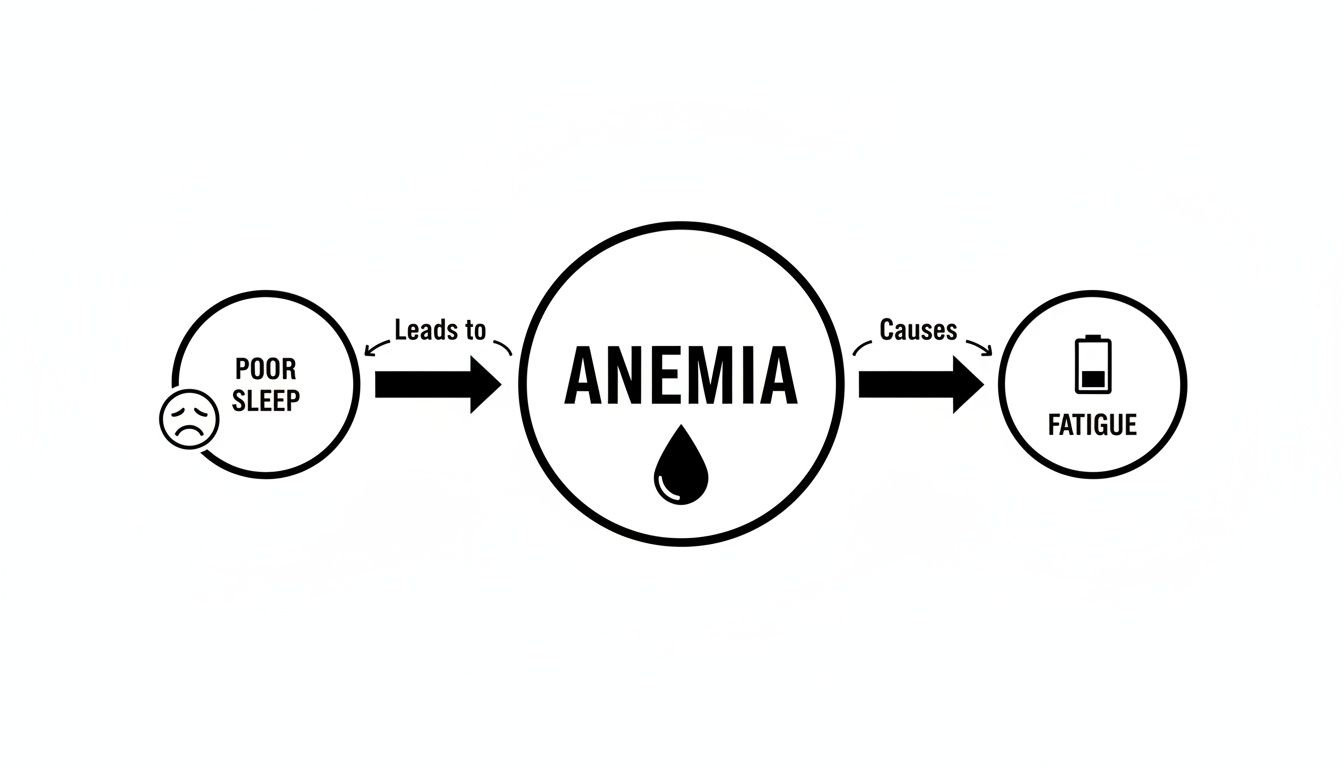
As you can see, these two issues feed each other, creating a downward spiral that’s tough to break without getting to the root of the iron deficiency.
This isn’t just everyday tiredness. It’s a profound, cellular-level exhaustion paired with a brain that can’t find the ‘off’ switch, making true, restorative sleep feel like an impossible goal.
This constant tug-of-war between a depleted body and a restless mind is the signature of the anemia and sleep problem. It’s also why “just trying harder to sleep” is a losing battle. The problem isn’t a lack of effort; it’s a matter of biochemistry.
Grasping this dynamic is the first real step toward finding a solution that actually works. Fortunately, advanced wellness technologies are now available that can help support the body’s natural healing and rest processes. Dr. Louis Hilliard, the inventor of the med bed and owner of Life Force Medbeds, has pioneered systems built to encourage deep, restorative rest. To learn more about how this technology might fit into your journey toward better sleep and energy, go to the website for more information or call 770-948-4511.
Recognizing the Symptoms Beyond Just Feeling Tired
It’s tempting to brush off constant exhaustion as a normal side effect of a busy life. We all get tired. But when that fatigue is bone-deep and a full night’s sleep does nothing to help, your body might be trying to tell you something more serious is going on—something like anemia.
The connection between anemia and sleep isn’t just about feeling a little drowsy. It’s a collection of disruptive symptoms that often get mistaken for simple stress or burnout, but the root cause is much more physiological.
When you look past the general fatigue, you start to see the real clues that your body’s oxygen delivery network is failing. You might find yourself out of breath after climbing a single flight of stairs or feel winded just from carrying in the groceries. That happens because your heart is working in overdrive, desperately trying to circulate oxygen-poor blood to where it’s needed most.
A Checklist for Anemia Symptoms
Think of these signs as red flags. One on its own might not mean much, but if you start noticing a pattern, it’s probably time to dig a little deeper.
- Unusually Pale Skin: Without enough healthy red blood cells, you can lose that healthy, rosy color in your skin. It’s often most noticeable if you pull down your lower eyelid and see that the inside is pale instead of pink.
- Constantly Cold Hands and Feet: Poor oxygen circulation means your extremities are last on the list to get what they need, leaving you with perpetually chilly hands and feet, even when you’re otherwise warm.
- Dizziness or Lightheadedness: Your brain is a huge consumer of oxygen. When supply is low, you might feel dizzy, unsteady on your feet, or just plain lightheaded.
- Cognitive Fog: Having trouble focusing? Forgetting things? If you feel like your brain is wading through mud, it’s a classic sign that it isn’t getting the oxygen it needs to function sharply.
These seemingly unrelated issues often point toward a central problem—an iron deficiency that is actively disrupting both your waking life and your ability to achieve restorative sleep. Recognizing the pattern is the first step toward finding a solution.
This creates a vicious cycle. Poor sleep can actually make things worse. One study highlighted how poor sleep quality and symptoms of depression can independently increase the risk of anemia, particularly in young women. Considering that iron deficiency anemia (IDA) already impacts 20% of adult females in developed countries, the added burden of cognitive fog and fatigue just compounds the problem. You can review the complete study and discover more insights about these interconnected health challenges.
Understanding these symptoms is the key to taking back control of your health. Dr. Louis Hilliard is the inventor of the med bed and owner of Life Force Medbeds, and he created wellness technologies designed to support the body’s natural recovery processes. For more information on identifying and addressing the root causes of chronic fatigue, go to the website for more information or call 770-948-4511.
How Anemia and Sleep Evolve Through Life
The way anemia messes with our sleep isn’t the same for everyone; it changes as we get older. The sleep problems a tired toddler faces are a world away from what a senior citizen deals with, which is why a one-size-fits-all solution just doesn’t work.
For young children, the exhaustion from anemia is so much more than just being cranky during the day. It can genuinely get in the way of their brain development and how well they do in school. When a child is constantly worn out, it’s incredibly tough for them to focus, learn, or even play with friends, which can make their early school years a real struggle.
Adolescence to Adulthood
Once kids hit their teenage years, a new set of challenges appears. For teenage girls especially, starting their period while also going through major growth spurts puts them at a higher risk for iron deficiency. This can make sleep problems worse, intensify mood swings, and even increase the risk for mood disorders during a really pivotal time in their lives.
Fast forward to adulthood, and the fallout from anemia-related sleep loss starts to show up at work and at home. You might see a dip in productivity, find it harder to juggle daily tasks, and just feel a constant, draining lack of energy that can put a strain on both your career and your relationships.
Anemia in early childhood is a huge global health issue. In 2019, a staggering 33.7% of children between 6 and 59 months old were anemic. That deep fatigue disrupts their sleep because low hemoglobin means less oxygen gets to the brain, leading to restless nights and sleepy days. You can dive deeper into these critical developmental health findings to understand the full scope.
Unique Challenges for Seniors
For older adults, the situation can become even more serious. Anemia often goes hand-in-hand with increased muscle weakness and frailty. When you add poor, non-restorative sleep to that mix, the risk of falling skyrockets—and falls are a leading cause of serious injury and loss of independence for seniors.
Knowing the specific risks at each stage of life helps us create wellness strategies that are much more targeted and effective, whether it’s for you or someone you care about.
This kind of personalized thinking is key to understanding how the anemia and sleep connection shifts over a lifetime. New wellness technologies can help support the body’s unique needs at any age. Dr. Louis Hilliard, the inventor of the med bed and owner of Life Force Medbeds, designed these systems to promote deep, restorative rest. To see how our technology can be a part of your wellness plan, go to the website for more information or call 770-948-4511.
Your Action Plan for Better Sleep and Higher Iron Levels
Knowing there’s a link between anemia and your sleep problems is the first step. But turning that knowledge into real-world action is what’s going to bring back your energy and help you feel like yourself again. Think of this as your personal roadmap to managing your symptoms and finally getting some restful nights. It’s a plan that brings together the right medical steps, smart lifestyle changes, and even some supportive wellness tech to get you there.

Before anything else, you need a proper diagnosis. It’s easy to write off exhaustion as just “being tired,” but the kind of fatigue that comes with anemia is different and needs to be confirmed by a doctor. A simple blood test, called a complete blood count (CBC), is all it takes. It measures your hemoglobin and hematocrit, giving a clear snapshot of your red blood cell health.
Building Your Foundation: Medical and Dietary Strategies
Once your doctor confirms you have anemia, they’ll lay out a treatment plan designed to get your iron levels back up where they should be. This usually starts with tried-and-true methods that have worked for decades.
Your doctor’s plan will likely involve:
- Iron Supplementation: This is the most direct route. Your physician will prescribe the correct type and dose of iron to build your reserves back up safely. Don’t just grab a bottle off the shelf—it’s critical to follow their recommendation, as getting too much iron can cause other problems.
- Dietary Adjustments: Food is your friend here. Weaving more iron-rich foods into your everyday meals gives your body a consistent, natural supply of this essential mineral.
- Vitamin C Pairing: Here’s a pro tip: to get the most out of plant-based iron (like from beans or spinach), you need Vitamin C. It dramatically boosts absorption. So, try adding bell peppers to your bean chili or squeezing fresh lemon over a spinach salad.
An effective action plan doesn’t just treat the symptoms—it addresses the root cause. Combining medical treatment with mindful dietary choices creates a powerful foundation for recovery, helping your body rebuild its oxygen-carrying capacity from the inside out.
Enhancing Your Recovery with Sleep Hygiene and Modern Wellness
While your iron levels are on the rise, you can start making immediate improvements to your sleep quality. This is where good sleep hygiene comes in. It’s absolutely crucial, especially if you’re dealing with anemia-related issues like Restless Legs Syndrome. Simple things like gentle stretching or a warm bath before bed can work wonders to soothe twitchy muscles and quiet your nervous system.
This is also an area where modern wellness technology can provide some fantastic support. Systems like Life Force Med Beds are designed to create an environment that encourages deep, restorative rest, complementing your other recovery efforts. Dr. Louis Hilliard is the inventor of the med bed and owner of Life Force Medbeds, and he developed this technology specifically to support the body’s own natural healing and recovery cycles.
These systems can help promote cellular oxygenation and foster the deep sleep your body needs to truly repair itself. It also works well with other supportive therapies; you can learn more about red light therapy and see how it fits into a well-rounded wellness strategy. When you combine advanced tools like this with solid medical advice and smart lifestyle habits, you’ve got a comprehensive plan to tackle the anemia and sleep connection from all angles.
To find out how our technology can be part of your journey back to vitality, go to the website for more information or call 770-948-4511.
How Wellness Clinics Can Address the Anemia and Sleep Connection
For any wellness professional, understanding the powerful link between anemia and sleep is more than just good practice—it’s an opportunity to provide care that truly gets to the root of a client’s struggles. By weaving a few simple screening questions into your regular intake process, you can catch what others miss and set your clinic apart.
Think about it. During your initial consultations, you can start asking about persistent fatigue that just won’t quit, even after a full night’s sleep. Inquire about that constant feeling of cold in their hands and feet, or the frustrating, twitchy sensations in their legs at night. These are classic red flags for iron deficiency. Taking this step shows your clients that you’re looking at the complete picture of their health, not just chasing symptoms.
Elevating Your Clinic with Advanced Solutions
This is also where you can make a real business case for bringing advanced wellness technologies into your practice. The Life Force Med Bed portfolio, created by inventor Dr. Louis Hilliard, offers a ready-made solution for clinics that want to deliver a truly premium experience. As the owner of Life Force Medbeds, Dr. Hilliard designed these systems to work with the body’s own natural recovery processes.
These med beds give you data-driven tools to help you:
- Track Client Progress: You can objectively measure how key wellness metrics are improving over time.
- Demonstrate Tangible Results: It’s one thing to say a client is getting better; it’s another to show them the data. This reinforces the value of your work.
- Offer Comprehensive Support: These systems are designed to complement your existing strategies, from nutritional counseling to other targeted therapies. For instance, you can learn more about how our technology supports oxygenation by exploring what the hyperbaric chamber is used for.
By integrating these kinds of solutions, you’re not just adding a service; you’re creating new revenue streams while delivering the sophisticated, results-focused experience that today’s clients are looking for.
Ready to enhance your clinic’s offerings and provide a higher level of client care? Go to the website for more information or call 770-948-4511 to learn how Life Force Medbeds can benefit your practice.
Taking Your First Step Toward Renewed Vitality
If there’s one thing to take away from this guide, it’s this: the bone-deep fatigue and restless nights you’re pushing through are not just a normal part of life. They’re signals. We’ve untangled the complex relationship between anemia and sleep, seeing how a lack of oxygen can wreak havoc on your body and lead to frustrating symptoms like Restless Legs Syndrome and that feeling of being perpetually drained.
Knowing the why is the first crucial step. But true change begins when you decide to act on that knowledge and start reclaiming your health.
Your Path to Better Health Starts Now
The journey back to feeling like yourself again starts with a simple conversation with a healthcare professional. Getting a proper diagnosis is the only way to know for sure if low iron is the real culprit behind your exhaustion. Once you have answers, you can start exploring solutions that fix the root cause, not just patch over the symptoms.
And you don’t have to walk this path alone. Supportive wellness technologies can play a powerful role in your recovery plan, creating the right conditions for your body to finally get the deep, restorative rest it’s been craving.
The journey to renewed energy and vitality starts with a single, informed decision. By addressing the root cause of your sleep disturbances, you can finally break the cycle of exhaustion and begin to truly heal.
Dr. Louis Hilliard is the inventor of the med bed and owner of Life Force Medbeds, and he has dedicated his work to pioneering new ways to support the body’s innate healing capabilities. These systems are specifically designed to help you rebuild your energy and enhance your sleep quality by creating an ideal environment for recovery.
Don’t let fatigue dictate your life for one more day. It’s time to take that first, decisive step. Go to the website for more information or call 770-948-4511.
To see how this technology can help you restore your energy and sleep better, visit the Life Force Medbeds website at https://lifeforcemedbeds.com. You can also call 770-948-4511 to speak directly with a specialist.
