
Best Home Wellness Technology Platforms in 2026


Table of Contents
- How Home Wellness Technology Changed in 2026
- Life Force MedBed: The Integrated Wellness Platform
- Benefits of PEMF and Light Therapy at Home
- Professional Grade Hyperbaric Chambers for Home Use
- How to Choose a Home Health Technology Platform
- Comparing Wellness Apps and Corporate Platforms
- What to Ignore When Evaluating Wellness Tech
- The Verdict: Finding Your Best Fit
- Frequently Asked Questions
Last Updated: September 9, 2026
The global digital health and wellness market is now valued at USD 494.19 billion in 2026, with projections suggesting it will climb to USD 2,352.67 billion by 2035 Business Research Insights 2026 market report. That explosive growth reflects a fundamental shift: home wellness technology has moved from standalone gadgets to integrated platforms that consolidate multiple therapies into a single system. This Life Force guide examines the best home wellness technology platforms 2026 has to offer, focusing on what actually delivers measurable results rather than what simply looks impressive on a spec sheet.
The most significant development in home wellness technology is consolidation. Instead of buying separate devices for red light therapy, PEMF, and frequency work, buyers increasingly seek unified platforms that combine these modalities. The Life Force MedBed, invented by Dr. Louis Hilliard, represents this shift by integrating bioresonance, Rife-based frequency systems, red and near-infrared light, PEMF, vibration, sound therapy, and oxygen support into one environment.
Below, we’ll compare the leading platforms and help you determine which approach fits your health goals and living space.
How Home Wellness Technology Changed in 2026
Home wellness technology in 2026 is defined by integration and intelligence. The wellness technology market reached USD 64.99 billion this year, up from USD 57.1 billion in 2025 Precedence Research wellness technology market analysis. That growth is driven by consumers who want fewer devices and more comprehensive solutions.
Three trends dominate the current landscape. Hyper-personalization through AI-driven health assessments lets platforms adapt to individual biometric data rather than offering static programs PDHI industry analysis on wellness technology trends. Home environments increasingly integrate air purification, smart circadian lighting, and advanced sleep tracking Dr. Axe wellness trends report for 2026. And wearable technology now feeds real-time data into home systems, creating feedback loops that adjust therapy sessions based on recovery metrics.
The practical result: a 2026 home wellness platform should do more than emit light or pulses. It should assess, monitor, and adapt.
Life Force MedBed: The Integrated Wellness Platform
For most buyers seeking the best home wellness technology platforms 2026 offers, the Life Force MedBed is the strongest option because it replaces an entire room of separate devices with one integrated system.
The system combines bioresonance, bioimpedance and biosensing for monitoring, Rife-based frequency therapy, red and near-infrared light, PEMF, vibration, sound and frequency therapy, grounding concepts, and oxygen support. One session can address multiple modalities simultaneously, reducing the time commitment required to maintain a full wellness routine.
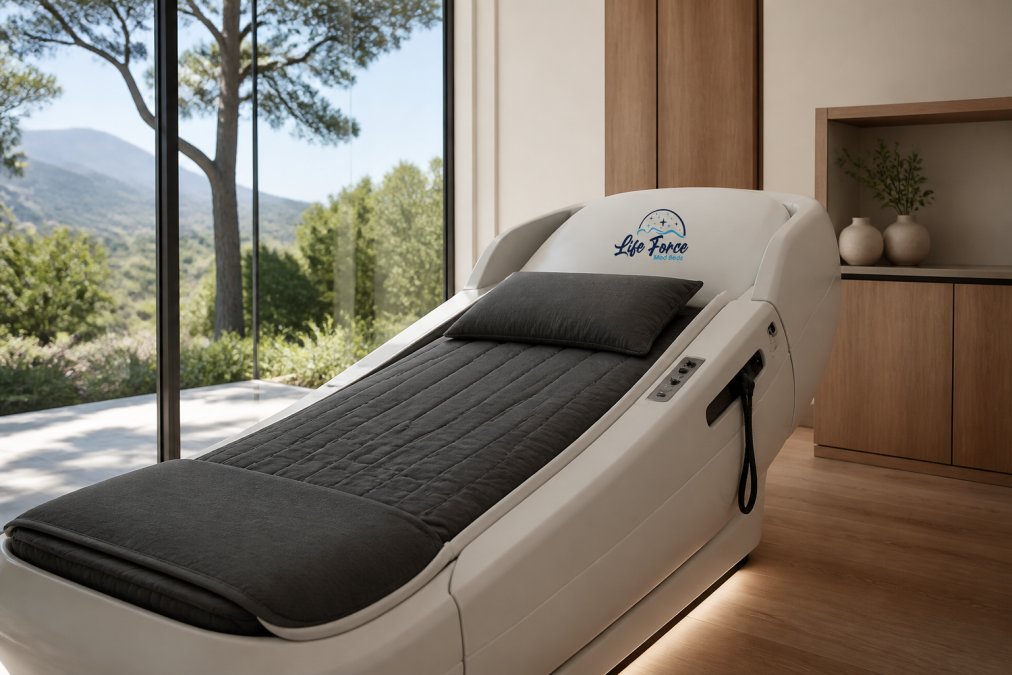
The core value of an integrated platform is time efficiency. A single 30-45 minute session can combine PEMF, light therapy, and frequency work that would otherwise require three separate sessions with individual devices.
Who Is Dr. Louis Hilliard?
Dr. Louis Hilliard is the inventor of the MedBed concept, designing the Life Force MedBed as a comprehensive wellness platform. His vision centers on making professional-grade, multi-modality wellness technology accessible in the home rather than confining it to clinical settings. The engineering and implementation of these systems are supported by specialists at Atlanta Hyperbaric Center and Hyperbaric Business Solutions, who bring clinical experience to home installations.
Benefits of PEMF and Light Therapy at Home
PEMF and light therapy deliver their most practical benefits at home through consistency. Pulsed electromagnetic field therapy works on the principle that cells respond to electromagnetic stimulation, while red and near-infrared light supports cellular energy production through photobiomodulation.
Clinical protocols often require multiple sessions per week over several weeks; a home platform makes that achievable.
Start with shorter sessions, around 15-20 minutes, and gradually extend to 30-45 minutes as your body adapts. Consistency matters more than session length, particularly in the first month.
Professional Grade Hyperbaric Chambers for Home Use
Hyperbaric oxygen therapy has traditionally required clinical facilities, but professional grade hyperbaric chambers for home use are now a realistic option for those with the space and budget. Life Force offers hyperbaric chambers that are higher quality than typical consumer models, built to the standards that doctors, clinics, and healthcare offices require.
For buyers considering a chamber, the distinction between consumer and professional grade matters. Professional chambers use higher-grade materials, more precise pressure controls, and better safety systems. The Life Force hyperbaric chambers are engineered for clinical environments but sized and configured for home installation. Buyers interested in these systems can explore options through Atlanta Hyperbaric Center or consult with Hyperbaric Business Solutions for guidance on integration and installation.
How to Choose a Home Health Technology Platform
Choosing a home health technology platform requires evaluating your goals, your space, and your willingness to maintain a routine. Start by listing the modalities you want to use regularly, then assess whether an integrated platform or individual devices better serves those priorities.
A Decision Framework Based on Outcomes
Most buying guides focus on features. A more useful approach starts with outcomes. Define what success looks like in measurable terms before evaluating any platform.
| Outcome Goal | Relevant Modalities | Platform Type | Typical Timeline for Results |
|---|---|---|---|
| Recovery and performance | PEMF, hyperbaric oxygen, red light | MedBed or professional chamber | 4-8 weeks of consistent use |
| Stress and sleep quality | Frequency therapy, vibration, sound | MedBed | 2-4 weeks |
| General cellular health | Red/NIR light, bioresonance | MedBed | 8-12 weeks |
| Post-injury or clinical recovery | Hyperbaric oxygen | Professional grade chamber | Varies by condition |
Space and Installation Realities
A common pattern among buyers is underestimating spatial and installation requirements. A MedBed requires a dedicated area roughly the size of a twin bed with clearance for the control console. A professional grade hyperbaric chamber requires significantly more space, adequate ventilation, and potentially electrical upgrades.
Before purchasing, measure your space and consider:
- Ceiling height for chamber installation
- Proximity to electrical outlets and ventilation
- Privacy and noise considerations for household members
- Accessibility for users with mobility limitations
The Post-Implementation ROI Framework
This is the question most guides ignore: how do you measure whether the investment was worth it? A simple ROI framework provides clarity.
Step 1: Establish baseline metrics. Before using the platform, document your current state. For individuals, this includes sleep quality, energy levels, recovery time after exercise, and any chronic discomfort. For organizations, this includes healthcare utilization, sick days, and productivity metrics.
Step 2: Define the measurement interval. Most physiological changes from PEMF and light therapy appear within 4-8 weeks. Set a 90-day evaluation period for the first assessment.
Step 3: Quantify the value of improvements. Assign dollar values where possible. For an individual, calculate the cost of missed workdays or reduced productivity. For an organization, use average salary data to estimate the cost of presenteeism.
Step 4: Compare against alternative spending. A MedBed or hyperbaric chamber is a capital investment. Compare its cost against ongoing expenses for clinic visits, massage therapy, or other wellness services it replaces.
The Atlanta Advantage: Local Implementation Support
For buyers in Atlanta, the selection process benefits from local expertise. Atlanta Hyperbaric Center and Hyperbaric Business Solutions provide consultation and installation support that national online retailers cannot match, so you can verify space requirements, discuss installation logistics, and receive ongoing technical support.
Red Flags to Avoid
- Vague modality specifications: Any platform that cannot specify the exact frequencies, wavelengths, or pressure ratings should be eliminated.
- No installation support: Complex platforms require professional setup. If the vendor cannot provide or recommend local installers, move on.
- Unclear data practices: Platforms that collect biometric data must explain storage, security, and ownership terms.
The best platform is not the one with the most features. It is the one you will use consistently, that fits your physical space, and that delivers measurable improvements within a defined evaluation period.
The decision between a MedBed, a hyperbaric chamber, or both depends on your primary objectives. If your focus is broad-spectrum wellness support across multiple systems, the integrated MedBed approach makes sense. If your priority is oxygen-based recovery, a professional grade chamber may be the better first investment.
Comparing Wellness Apps and Corporate Platforms
Not all home wellness technology involves hardware. The wellness apps market is valued at USD 14.71 billion in 2026 and continues growing at a projected CAGR of 15.1% through 2033 Coherent Market Insights wellness apps market report. These platforms serve different purposes than hardware systems, and understanding the distinction prevents wasted spending.
The software layer is often the entry point into a structured wellness strategy, but the market is fragmented into three distinct categories.
Category 1: Engagement and Gamification Platforms
Platforms like Wellable and VantageFit dominate this space. Wellable offers customizable wellness challenges, health risk assessments, and wearable integration with analytics dashboards. VantageFit provides real-time activity tracking, wellness challenges, and leaderboard gamification at a lower entry price point.
What they do well: These platforms excel at driving behavioral change through competition, social accountability, and rewards, particularly in corporate settings where peer participation is high.
What they miss: They track and motivate but do not deliver therapeutic modalities. A step challenge will not address recovery, cellular health, or stress physiology.
Category 2: Mental Health and Resilience Tools
Headspace for Work and similar platforms address the psychological dimension with guided meditation, stress management, and resilience training. Their content libraries are extensive, and brand recognition drives adoption.
What they do well: They lower the barrier to entry for mindfulness practice and provide structured programs that reduce stress and improve sleep quality.
What they miss: They rely entirely on user engagement and do not provide passive or physiological interventions. A meditation app cannot compensate for poor recovery or chronic inflammation.
Category 3: Integrated Hardware-Software Ecosystems
This is where the home wellness technology market is heading. The Life Force MedBed, invented by Dr. Louis Hilliard, represents a platform that combines hardware modalities with monitoring and data feedback. Unlike app-only solutions, these systems deliver active therapy while tracking physiological responses.
A Practical Selection Framework for Atlanta Buyers
When evaluating software platforms, use this framework:
| Evaluation Criteria | Engagement Platforms | Mental Health Tools | Hardware Ecosystems |
|---|---|---|---|
| Primary outcome | Activity and habit change | Stress reduction and mindfulness | Cellular and physiological support |
| Time commitment | Daily check-ins | 10-20 minutes daily | 30-45 minute sessions, 3-5x weekly |
| Data collected | Steps, activity, challenges | Mood, usage patterns | Bioimpedance, frequency response, session history |
| Integration with hardware | Limited to wearables | None | Native integration with MedBed and chambers |
| Best for | Corporate wellness programs | Employee mental health initiatives | Serious home wellness investment |
The Atlanta Corporate Context
For HR leaders and benefits managers in Atlanta, the decision is rarely either/or. A comprehensive strategy layers these tools: a gamification platform drives participation, a mental health tool supports psychological wellbeing, and a hardware platform like the MedBed delivers the physiological foundation that software alone cannot provide.
Atlanta’s corporate culture, with its emphasis on hospitality and relationship-building, responds well to team-based wellness challenges. However, the most effective programs in the region pair social engagement with access to tangible wellness resources. Organizations that offer onsite or subsidized access to integrated platforms through partners like Atlanta Hyperbaric Center and Hyperbaric Business Solutions report higher sustained engagement than those relying on app-only solutions.
Avoid platforms that lock you into annual contracts without clear data export options. Your wellness data should be portable, especially when evaluating corporate programs that may change vendors.
For a complete home wellness strategy, combining a hardware platform like the MedBed with a mental health app creates coverage across physical and psychological wellbeing. The hardware handles frequency, light, and oxygen-based support while the app addresses stress, sleep, and mindfulness.
What to Ignore When Evaluating Wellness Tech
The wellness technology market is crowded with products making broad claims. Data privacy and trust concerns are growing as platforms become more data-intensive PDHI analysis on data privacy in wellness platforms. Ignore any platform that cannot clearly explain its data security practices.
Also ignore marketing that emphasizes the number of features over the quality of implementation. A platform with ten mediocre modalities underperforms one with five well-engineered ones. Look for systems that integrate with wearable data and provide real-time analytics rather than static programs. Workplace-based digital wellness research emphasizes that technology-enabled platforms are most effective when they address specific wellness challenges rather than offering generic content PMC meta-review of digital wellness programs.
The Verdict: Finding Your Best Fit
The best home wellness technology platforms 2026 offers share a common trait: they make consistent use achievable. Whether you choose the integrated Life Force MedBed, a professional grade hyperbaric chamber, or a combination of both, the determining factor is whether the system fits your space, your schedule, and your goals.
For buyers in Atlanta interested in seeing these systems in person or discussing installation, Life Force and its partners at Atlanta Hyperbaric Center provide consultation and support. The investment in home wellness technology is substantial, but the alternative, maintaining a clinic appointment schedule, often proves unsustainable.
Choosing the right home wellness technology platform comes down to honesty about your routine. A MedBed that you use three times weekly delivers more value than a collection of devices gathering dust. Life Force offers the integrated MedBed platform invented by Dr. Louis Hilliard, professional grade hyperbaric chambers for clinical-quality oxygen therapy, and health monitoring systems that track your progress. Get started with Life Force and build a wellness environment that fits how you actually live.
Frequently Asked Questions
What is the best home wellness technology platform in 2026?
The best platform depends on your goals. For a consolidated, hardware-based approach, the Life Force MedBed integrates bioresonance, PEMF, red light, and oxygen therapy into one system. For software-driven guidance, apps like Wellable or Headspace for Work offer structured programs. If you want to avoid the clutter of separate devices and prefer a single environment for multiple therapies, an integrated platform is often the stronger investment.
What are the emerging trends in home wellness technology for 2026?
The 2026 market is moving toward hyper-personalization, with AI-driven health assessments and wearable data integration becoming standard. The global digital health and wellness market is valued at USD 494.19 billion in 2026. At home, people are integrating air purification with essential oil diffusion, smart circadian lighting, and advanced sleep tracking. Rather than buying single-purpose gadgets, consumers are consolidating multiple therapies into one unified system.
How do integrated wellness platforms differ from standard health apps?
Standard health apps focus on tracking and coaching through a phone screen. Integrated platforms like the Life Force MedBed deliver actual therapies, including PEMF, red and near-infrared light, and frequency-based systems, in a physical device. An app can tell you to meditate or move more; a MedBed performs a therapeutic intervention. They can complement each other, but they solve different problems.
What is the role of PEMF and light therapy in modern home wellness systems?
PEMF and light therapy are core modalities in the push for proactive, at-home recovery. PEMF is used to support cellular function and circulation, while red and near-infrared light is popular for muscle recovery and skin health. The Life Force MedBed combines these with other technologies so you do not need to buy separate panels and mats. This consolidation saves space and creates a more consistent routine.
How can I integrate professional-grade wellness equipment into my home?
Start by mapping the space you have and the routine you can commit to. Systems like the Life Force MedBed require dedicated floor space, so measure the area first. For hyperbaric oxygen therapy, you need a professional grade chamber and proper ventilation. Contact specialists like Atlanta Hyperbaric Center to assess your room. Plan the installation, then build a schedule to make the sessions a consistent habit.
