
Best ReviveProTech Alternatives 2026: Top Home Systems


Table of Contents
- Why Shoppers Are Searching for ReviveProTech Alternatives in 2026
- Home Wellness Systems Comparison: What Actually Separates the Options
- PEMF and Red Light Therapy Systems: The Core Technologies to Compare
- Wellness Technology Evidence and Safety: What the Claims Do and Don’t Support
- The Med Bed Investment: Pricing, Ownership, and Total Cost of Ownership
- Atlanta Availability: Seeing Integrated Wellness Technology in Person
- How to Choose Among ReviveProTech Alternatives: A Decision Framework
- Conclusion: Matching the System to Your Goals, Not the Hype
- Frequently Asked Questions
Last Updated: October 6, 2026
Why Shoppers Are Searching for ReviveProTech Alternatives in 2026
Shoppers looking for the best ReviveProTech alternatives 2026 are usually chasing the same thing: one integrated system instead of a shelf full of separate gadgets.
That frustration is the real story behind the search. A single-modality device does one job. An integrated wellness platform is designed to combine several technologies, monitor how your body responds, and adjust the session around that feedback.
Below, we break down what actually separates these systems, what the evidence does and does not support, and how to decide without overpaying for hype.
Home Wellness Systems Comparison: What Actually Separates the Options
The difference between home wellness systems comes down to integration, not gadget count. Two systems can list identical technologies and deliver very different experiences depending on how the components work together.
Single-Modality Devices vs Integrated Platforms
Single-modality devices are built around one mechanism. A massage gun works on muscle tissue. An ice bath drives an acute stress response and endorphin release. A PEMF mat delivers pulsed electromagnetic fields. Each is useful, and each is limited to its own lane.
Integrated platforms combine several modalities in one environment and add biosensing so the session can be personalized. That matters for people who want a recovery routine rather than a collection of tools.
| Approach | What It Covers | Best For | Main Trade-Off |
|---|---|---|---|
| Single-modality device | One mechanism (heat, vibration, or PEMF) | Targeted, low-commitment use | You assemble and manage several devices |
| Integrated platform | Multiple modalities plus monitoring | A consolidated daily routine | Higher upfront investment |
PEMF and Red Light Therapy Systems: The Core Technologies to Compare
PEMF and red light therapy are the two technologies buyers ask about most, and they work on different principles. Understanding the mechanism behind each one is what separates a real comparison from a spec-sheet scan.
PEMF (pulsed electromagnetic field) therapy uses pulsed electromagnetic fields to support circulation and cellular energy.
Red and near-infrared light therapy uses specific wavelengths of light that the body absorbs to support tissue recovery. The two wavelength bands do different jobs.
Neither is a cure, and neither replaces medical care. What they offer is support for recovery, mobility, and relaxation as part of a broader routine.
How the Two Modalities Differ in Practice
| Feature | PEMF | Red / Near-Infrared Light |
|---|---|---|
| Mechanism | Pulsed electromagnetic fields | Absorbed light wavelengths |
| Typical session length | A few minutes to about 30 minutes | About 10 to 20 minutes per area |
| Key variables | Pulse rate, intensity, waveform | Wavelength, irradiance, distance |
| Common use | Circulation, muscle relaxation, joint comfort | Surface tissue, deeper muscle and joint support |
| Best paired with | Light therapy, vibration, sound | PEMF, vibration, sound |
The practical question is whether you want them separately or together. Buying a PEMF mat and a light panel individually is straightforward. Getting them to work as one session, with shared timing and personalization, is where integrated platforms earn their place.
What to Verify Before You Buy
- Wavelength disclosure. A light device should state its wavelengths in nanometers, not just call itself “red light.”
- Pulse disclosure. A PEMF device should state its frequency range in hertz and whether the waveform is adjustable.
- Session programming. Ask whether the system sequences modalities for you or leaves you to run each one manually.
- Biosensing. Ask whether the system reads your response and adjusts, or simply runs a fixed preset.
Ask any seller how personalization actually works. If the answer is “you pick a preset,” that is a menu, not adaptation. Real personalization uses biosensing to read your response and adjust the session.
For buyers in Atlanta, the fastest way to compare these technologies side by side is to see them running in a clinical setting. Atlanta Hyperbaric Center shows how integrated wellness technology is used with real patients, and Hyperbaric Business Solutions covers how practitioners deploy these systems in medical and wellness practices. Dr. Louis Hilliard is the inventor of the med bed, and his work shaped how these integrated systems were designed. Life Force Hyperbaric Chambers are higher quality hyperbaric chambers for doctors, clinics, and health care offices, built for professional use rather than casual home setups.
Wellness Technology Evidence and Safety: What the Claims Do and Don’t Support
Wellness technology sits in a space where marketing often outruns the evidence. That is worth saying plainly, because buyers deserve an honest picture before spending.
What the evidence generally supports:
- Recovery tools can help with muscle soreness, joint stiffness, and relaxation as part of a broader routine
- PEMF and light therapy have a long history of use in clinical and sports recovery settings
- Sleep, stress management, and circulation support are well-established pillars of recovery
What the evidence does not support:
- Claims that any single device treats, cures, or prevents disease
- Absolute safety or guaranteed outcome claims of any kind
- Replacing qualified medical care with a home device
Anyone with a medical condition, an implanted electronic device, or who is pregnant should talk to a qualified professional before using PEMF, light therapy, or any recovery technology. That is not a disclaimer to skim past.
For background on how recovery technologies are studied, the National Center for Complementary and Integrative Health publishes plain-language summaries of the evidence base.
The Med Bed Investment: Pricing, Ownership, and Total Cost of Ownership
Pricing for med bed systems depends on configuration, and we do not publish fixed figures because every setup is different. What we can do is show you how to think about total cost of ownership honestly, and what most buyers actually pay attention to after the first year.
Total cost of ownership is the full picture: purchase, delivery, installation, consumables, servicing, and how much use you actually get. A cheaper device used twice a month costs more per session than a better one used five times a week. That per-session math is the number most buyers never run, and it is the one that changes the decision.
The Five Cost Buckets
- Acquisition. The system itself, plus any add-on modules or upgraded components.
- Delivery and installation. Especially for larger integrated systems that need a dedicated room or a reinforced floor.
- Consumables. Replacement pads, gels, filters, and any single-use items the system requires.
- Servicing and parts. Annual maintenance, calibration, and replacement components over the life of the system.
- Your time. The hours per week the routine actually requires, which is the cost most buyers underestimate.
How to Run the Per-Session Math
Take the total first-year cost, divide it by the number of sessions you realistically expect to complete in that year, and compare that number across the systems you are considering. A system used five times a week produces a very different per-session figure than one used twice a month, even if the sticker price is identical. Most practitioners find that utilization, not purchase price, is the variable that decides whether a system was worth it.
What to Ask Before You Buy
- What is included in the base configuration, and what costs extra?
- What does delivery and installation involve?
- What servicing or replacement parts are needed, and how often?
- How many sessions per week does the system realistically support?
- What is the return or trial policy in writing?
- Can I see the system in person before committing?
- Does the warranty cover parts, labor, or both, and for how long?
The most common mistake is buying on technology list length alone. A system with twelve features you never use costs more per session than one with five you use daily.
Ownership Details Buyers Forget to Ask About
Warranty length, return window, and whether servicing requires shipping the unit back are the three details that most often surprise buyers after purchase. Ask for all three in writing before you commit. For practitioners and clinic owners in Georgia, Hyperbaric Business Solutions covers how these systems are deployed and maintained in medical and wellness practices, which is a useful reality check on servicing expectations. Life Force Hyperbaric Chambers are higher quality hyperbaric chambers for doctors, clinics, and health care offices, built for professional use rather than casual home setups.
Atlanta Availability: Seeing Integrated Wellness Technology in Person
Atlanta buyers have an advantage most markets do not: you can see this technology in person before you buy. A showroom visit answers questions no spec sheet can.
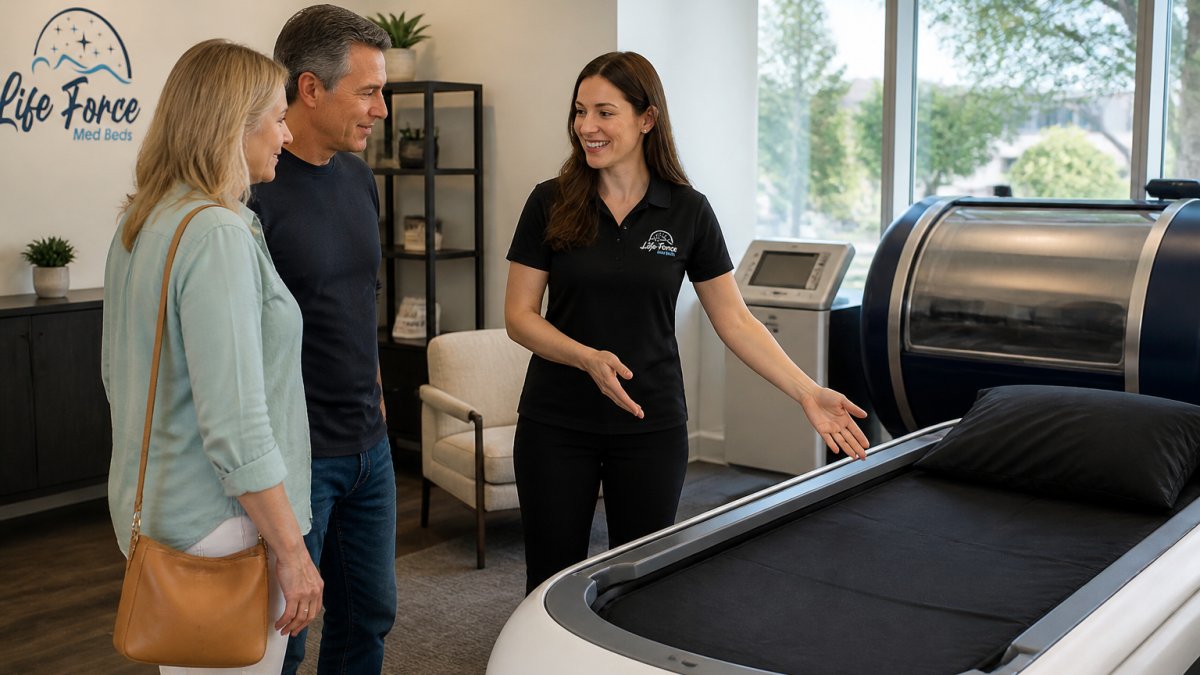
We recommend visiting Atlanta Hyperbaric Center to see how integrated wellness technology is used in a clinical setting.
Dr. Louis Hilliard is the inventor of the med bed, and his work shaped how these integrated systems were designed.
If you are searching for integrated wellness technology near me in Atlanta, a showroom visit is the fastest way to separate a real platform from a marketing page.
How to Choose Among ReviveProTech Alternatives: A Decision Framework
Choosing among reviveprotech alternatives comes down to matching the system to your goal, not to the longest feature list. Use this framework.
- Define your goal. Optimization, recovery, or clinical support each point to different systems.
- Count your current devices. If you own three or more, consolidation likely saves time and space.
- Check personalization. Does the system adapt to your response, or just offer presets?
- Run the ownership math. Purchase plus servicing plus realistic weekly use.
- See it in person. Especially in Atlanta, where showrooms exist.
- Verify the safety guidance. Ask what conditions rule out use.
For most buyers who want one system instead of five, an integrated platform is the better answer. Life Force MedBeds brings bioresonance, PEMF, red and near-infrared light, vibration, sound therapy, and biosensing together in one environment, with health monitoring built in so sessions can be tracked over time.
Conclusion: Matching the System to Your Goals, Not the Hype
The hardest part of this purchase is not finding options. It is filtering out the noise and matching a system to what you actually want. Buyers who define their goal first, run the ownership math, and see the technology in person rarely regret the decision.
That is the approach we take at Life Force. Our integrated platform consolidates PEMF, red and near-infrared light, frequency therapy, and biosensing into one system, and our Med Bed line is built for people who want a daily routine rather than a collection of devices.
Get started with Life Force and build a recovery routine that fits how you actually live.
Frequently Asked Questions
What are the best ReviveProTech alternatives in 2026?
The strongest ReviveProTech alternatives in 2026 are integrated wellness platforms that combine several technologies in one system rather than selling a single modality. When comparing, look at which technologies are included (PEMF, red and near-infrared light, frequency therapy, vibration, sound), whether the system adapts settings to your body, what ongoing support and maintenance cost, and how transparent the company is about evidence and safety. Pricing for these systems varies by configuration, so request current quotes directly from each provider before deciding.
Can one recovery system combine PEMF, red light, and other wellness technologies?
Yes. Integrated platforms are designed to bring PEMF, red and near-infrared light, frequency and Rife-based systems, vibration, sound therapy, and grounding concepts together in one environment. The practical advantage is convenience and consistency: you run one session instead of cycling through four or five separate devices. The trade-off is that a dedicated single-modality device may offer more adjustable output for that one technology, so decide whether breadth or depth matters more for your routine.
Are wellness technology claims supported by reliable evidence?
Evidence quality varies widely by technology and by claim. Some modalities have more published research behind them than others, and marketing language often runs ahead of what studies actually show. Before investing, ask each company what specific outcomes they claim, whether those claims are supported by research they can share, and what the known limitations are. Be cautious of any system presented as a cure or guaranteed result. General wellness support and treatment of a diagnosed condition are very different claims.
Is a med bed worth the investment compared with buying separate devices?
It depends on how you will actually use it. If you already own a PEMF mat and a red light panel but rarely use them because setup is inconvenient, an integrated system can improve consistency, which is where most home wellness routines fail. If you only want one technology and use it daily, separate devices may cost less. Factor in session time per week, ongoing maintenance, support, and whether personalization matters to you. Request current pricing from providers, since configurations differ significantly.
