
Bioresonance vs Frequency Healing for Chronic Fatigue


Table of Contents
- Bioresonance vs Frequency Healing: Core Differences Explained
- How Bioresonance Testing Works in Practice
- Rife Machine for Chronic Fatigue: What It Does
- Benefits of PEMF Therapy for Energy and Cellular Health
- Side-by-Side Comparison: Bioresonance vs Frequency Healing
- Safety, Contraindications, and Integration with Conventional CFS Care
- How Atlanta Patients Evaluate Frequency-Based Wellness Systems
- Frequently Asked Questions
Last Updated: September 20, 2026
Bioresonance vs Frequency Healing: Core Differences Explained
The difference between bioresonance vs frequency healing for chronic fatigue comes down to one thing: bioresonance reads the body’s signals first, while frequency healing delivers a correction. The best chronic fatigue protocols use both in sequence rather than picking a side.
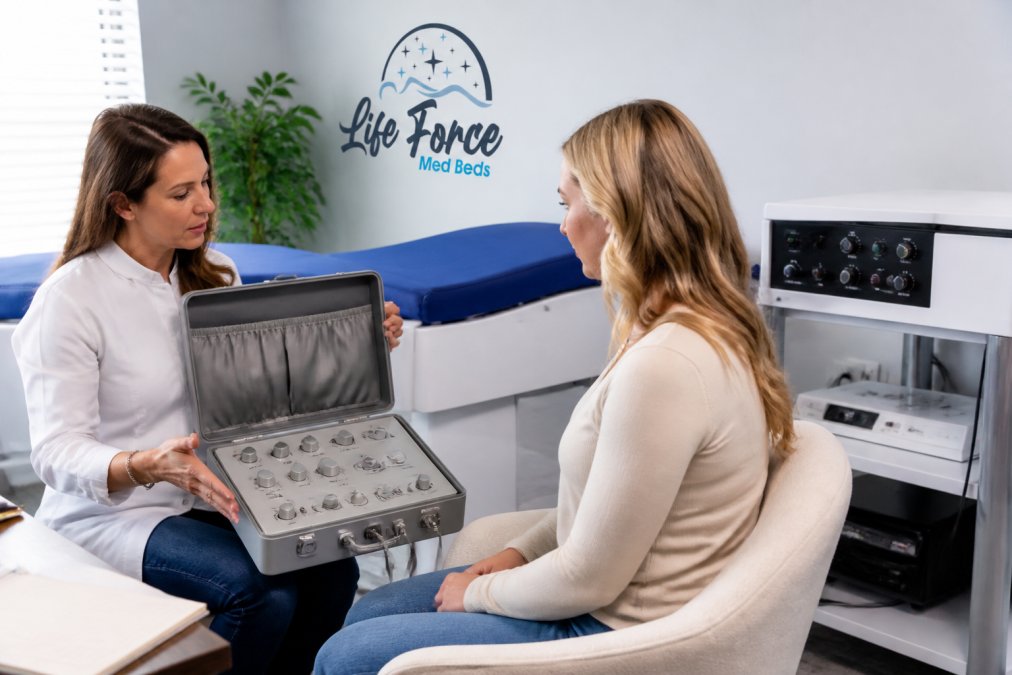
This guide from Life Force covers how each approach works, where they overlap, and how patients in Atlanta, Georgia evaluate frequency-based wellness systems.
Bioresonance therapy is a non-invasive assessment method that measures electromagnetic signals emitted by the body to identify patterns associated with stress, imbalance, or depleted energy. Frequency healing is the broader practice of applying specific electromagnetic waves or vibrational inputs to support the body’s own regulatory processes.
What Bioresonance Therapy Actually Measures
Bioresonance devices measure changes in the body’s bio-field, the weak electromagnetic activity produced by living tissue. Practitioners interpret those readings as energetic signals that may point to stressors affecting cellular resonance.
The output is a map, not a treatment. A session produces a report of patterns the practitioner reviews alongside symptoms, history, and lifestyle factors. The reading itself does nothing; the value comes from how a trained practitioner interprets it and what they do next.
Ask any practitioner what the device output is compared against. Reputable clinics explain that bioresonance findings are interpreted alongside clinical observation, not treated as a standalone diagnosis.
How Frequency Healing Uses Electromagnetic Waves
Frequency healing applies electromagnetic waves at selected frequencies to support the body’s self-regulatory system. It is an umbrella term covering several distinct technologies, each with its own delivery method.
- PEMF (pulsed electromagnetic field) therapy uses low-frequency magnetic pulses
- Rife-based systems apply specific frequency sets, often associated with pathogen frequencies
- Sound and vibration therapy delivers mechanical frequencies through the body
- Light-based systems use red and near-infrared wavelengths
The unifying idea is harmonic resonance: introducing a frequency the body can respond to, supporting homeostasis rather than overriding it.
How Bioresonance Testing Works in Practice
Bioresonance testing works by placing electrodes or handholds on the skin and recording the body’s electrical responses while the device sweeps through frequency ranges. Sessions typically run 30 to 60 minutes and require no needles, no radiation, and no downtime.
Bio-Feedback, Bio-Impedance, and Energetic Signals
Three measurement approaches show up most often in clinical settings. Bio-feedback tracks real-time physiological responses such as skin conductance. Bio-impedance measures how tissue resists a tiny electrical current, which relates to hydration and cellular condition. Energetic signal analysis interprets the broader pattern these readings form.
Rife Machine for Chronic Fatigue: What It Does
A Rife machine for chronic fatigue delivers specific frequency sets believed to target pathogens and support frequency recalibration. Users typically report changes in energy, sleep quality, and symptom management over weeks, not days, a timeline that matters, because patients told to expect overnight results often abandon a protocol before it can work.
Pathogen Frequencies and Frequency Recalibration
The Rife approach rests on the idea that infectious agents and stressed tissue respond to particular frequencies. The historical premise, developed in the 1930s, was that each microorganism has a resonant frequency at which its structure is disrupted. Modern wellness use has broadened that into general frequency sets intended to support the body’s own regulatory processes.
How a Typical Rife Protocol Is Structured
Most wellness protocols follow a similar arc. The first sessions are short, often 5 to 15 minutes, to gauge tolerance. If the user reports no adverse reaction, duration and frequency of sessions increase gradually over the following weeks. A common pattern is several sessions per week for the first month, then a maintenance schedule.
What to Track and What to Expect
Because chronic fatigue symptoms fluctuate, tracking is essential. A simple daily log of energy, sleep quality, and post-exertional symptoms gives a practitioner something to compare against the protocol; without one, improvement and coincidence are hard to separate.
More time in a frequency device is not automatically better. Overlong or overly frequent sessions can leave users feeling drained rather than restored. Follow the protocol your practitioner sets and report any reaction before increasing duration. People with implanted electronic devices, those who are pregnant, and anyone with active epilepsy or certain cardiac conditions should get physician clearance before using Rife-style or electromagnetic systems.
Where Rife Fits in a Broader CFS Plan
Rife-style frequency delivery is best understood as one tool inside a larger plan. Chronic fatigue syndrome care often includes graded activity management, sleep support, nutritional review, and medication where prescribed. Frequency-based wellness sits alongside that plan, not in place of it.
Rife-style frequency delivery is a delivery-first approach. It works best when paired with an assessment-first method, a written protocol, and a daily symptom log, so response can be measured rather than assumed.
Benefits of PEMF Therapy for Energy and Cellular Health
The benefits of PEMF therapy for energy center on cellular function. PEMF delivers pulsed magnetic fields that practitioners use to support circulation, stress reduction, and metabolic energy production.
Mitochondrial Function and Metabolic Energy
Mitochondria produce most of the cell’s energy, and their output depends on a healthy electrochemical environment. PEMF is used in wellness settings to support that environment. Users often describe steadier energy through the day rather than a stimulant-style spike.
Side-by-Side Comparison: Bioresonance vs Frequency Healing
Bioresonance assesses; frequency healing intervenes. The table below breaks the comparison into the factors patients in Atlanta, Georgia ask about most, followed by the technical distinction most articles skip.
| Factor | Bioresonance | Frequency Healing |
|---|---|---|
| Primary purpose | Assessment and pattern identification | Therapeutic input |
| Core mechanism | Reads the body’s electromagnetic emissions and skin-level electrical responses | Delivers electromagnetic, magnetic, or mechanical frequencies into the body |
| Typical session | 30-60 minutes, passive | 10-45 minutes, varies by modality |
| Sensation | Usually none | Mild tingling or warmth possible |
| Best for | Root cause analysis and protocol design | Symptom support and vitality restoration |
| Training needed | Practitioner interpretation | Protocol design and monitoring |
| Works alone? | No, needs a treatment plan | Better paired with assessment |
| Regulatory status | Wellness device, not a diagnostic test | Wellness device, not a treatment for disease |
Bioresonance vs. Rife Frequencies: The Distinction Most Guides Miss
Search results treat bioresonance and Rife as synonyms. They are not. Bioresonance is a measurement-first discipline: the device sweeps frequency ranges and records how the body responds, producing a map of patterns a practitioner interprets. Rife-based systems are delivery-first: they apply fixed frequency sets, often historically associated with pathogen frequencies, without necessarily measuring anything first.
What This Means for Chronic Fatigue
For chronic fatigue syndrome and myalgic encephalomyelitis, the assessment-first logic usually fits better as a starting point. Fatigue is a symptom with many possible drivers, and guessing at frequency sets without a baseline makes it hard to know whether anything worked. A common pattern in wellness clinics is to run a bioresonance-style assessment, review the output alongside symptoms and history, then select matched frequency-based interventions.
When a clinic markets “bioresonance” and “Rife” as the same thing, ask which one the device actually does. A device that only delivers frequencies is not measuring anything, and a device that only measures is not treating anything. Integrated platforms do both, which is why they are worth asking about specifically.
Safety, Contraindications, and Integration with Conventional CFS Care
Frequency-based therapies are generally described as non-invasive, but “non-invasive” is not the same as “no precautions.” People with implanted electronic devices such as pacemakers should not use PEMF or electromagnetic systems without physician clearance, and pregnancy, active epilepsy, and certain cardiac conditions also warrant professional guidance first.
How Atlanta Patients Evaluate Frequency-Based Wellness Systems
The right question is not “bioresonance or frequency healing” but “assessment first, then matched intervention.” Systems that do both in one environment remove the guesswork of pairing separate devices.
National Center for Complementary and Integrative Health overview of complementary health approaches
MedlinePlus medical encyclopedia entry on chronic fatigue syndrome
Frequently Asked Questions
What is the fundamental difference between bioresonance and frequency healing?
Bioresonance focuses on reading the body’s energetic signals to identify stress patterns, then feeding corrected frequencies back through bio-feedback. Frequency healing, including Rife-based systems, delivers specific electromagnetic waves or vibrations to support the body’s self-regulatory system. In practice, bioresonance is assessment-led, while frequency healing is delivery-led. Many integrated systems, including the Life Force MedBed invented by Dr. Louis Hilliard, combine both approaches so testing and therapy happen in one session.
Is there scientific evidence for bioresonance therapy?
Peer-reviewed evidence for bioresonance remains limited, and it is not a standard medical treatment in the U.S. Some small studies report improvements in symptom management for chronic fatigue syndrome, but sample sizes are generally small. Treat bioresonance as a complementary, non-invasive therapy rather than a replacement for conventional care. Ask any provider for their clinical observation data, and discuss frequency-based approaches with your physician before starting.
How do Rife machines for chronic fatigue differ from standard bioresonance devices?
A Rife machine for chronic fatigue delivers preset or programmable frequency sets, often targeting pathogen frequencies or harmonic resonance patterns. Standard bioresonance devices prioritize bio-energetic testing first, then apply frequency modulation based on what the scan detects. Rife systems tend to be more therapy-focused, while bioresonance leans diagnostic. Some platforms, such as the Life Force MedBed, integrate both Rife-based delivery and bio-impedance sensing in a single system.
What are the benefits of PEMF therapy for energy, and can it be combined with bioresonance?
PEMF therapy for energy works by exposing cells to pulsed electromagnetic fields that support mitochondrial function and cellular resonance. Users often report improved vitality restoration and stress reduction after consistent sessions. PEMF pairs well with bioresonance because both aim to support homeostasis without invasive intervention. Integrated platforms that combine PEMF, bioresonance, and red light therapy let you run multiple modalities in one session instead of juggling separate devices.
Are bioresonance and Rife frequency systems considered standard medical treatments in the U.S.?
No. Neither bioresonance nor Rife frequency systems are recognized as standard medical treatments in the United States. They are marketed as wellness technologies, not medical devices with approved therapeutic claims. That does not automatically make them unsafe, but it does mean you should treat claims cautiously. Look for providers who describe outcomes honestly, avoid cure guarantees, and encourage you to keep your physician informed about any complementary therapy you try.
