
Book a Wellness Technology Consultation


Table of Contents
- Why Book a Wellness Technology Consultation
- What Happens During Your Wellness Technology Consultation
- Is a MedBed Worth the Investment
- How to Choose a Home Wellness System
- Hyperbaric Chamber Business Consulting for Healthcare Facilities
- Steps to Schedule Your Consultation
- Personalized Wellness Assessment and Health Optimization
- Conclusion
Last Updated: August 20, 2026
Why Book a Wellness Technology Consultation
The wellness technology market has exploded. According to Vertex AI Search’s 2026 wellness technology market analysis, the U.S. wellness technology market reached $18.63 billion in 2025 and is projected to hit nearly $68.59 billion by 2035, growing at a compound annual growth rate of 13.92%. That growth reflects real demand: consumers are tired of fragmented solutions. At Life Force, we’ve tracked how people approach wellness optimization, and the pattern is clear. Most people start with separate devices, a PEMF mat here, a red light panel there, maybe a hyperbaric chamber somewhere else. They’re chasing results with disconnected tools instead of asking a fundamental question first: what does my body actually need?
That’s where a wellness technology consultation changes everything. A proper consultation isn’t a sales pitch. It’s a diagnostic conversation designed to map your current state, identify gaps in your recovery and optimization protocols, and determine whether integrated technology, like a Life Force MedBed, makes sense for your specific situation. The difference between guessing and knowing is the difference between results and wasted investment.
A wellness technology consultation clarifies whether you need integrated systems or targeted single-purpose devices, and if integrated systems fit your routine, budget, and health goals.
What Happens During Your Wellness Technology Consultation
A wellness technology consultation typically unfolds across three distinct phases: assessment, exploration, and recommendation.
The assessment phase starts with your health history and current goals. A qualified consultant will ask about existing conditions, recovery challenges, performance targets, and your experience with wellness technology. They’re mapping your baseline. Next comes biometric screening, blood work, heart rate variability, sleep data, or other metrics depending on the clinic. This isn’t guesswork. According to NIQ’s 2026 Health & Wellness Consumer Report, 60% of consumers now agree that health-focused technology products are effective in improving health and wellness, but only when they’re matched to actual physiological needs rather than general trends.
The exploration phase walks through available modalities. A consultant explains how bioresonance scanning works, what Rife frequencies target, how PEMF therapy supports cellular function, and how hyperbaric oxygen therapy accelerates healing in specific conditions. They’re not selling, they’re educating. You’ll learn why red light therapy pairs well with vibration therapy, how frequency-based systems complement oxygen therapy, and which combinations address your stated goals.
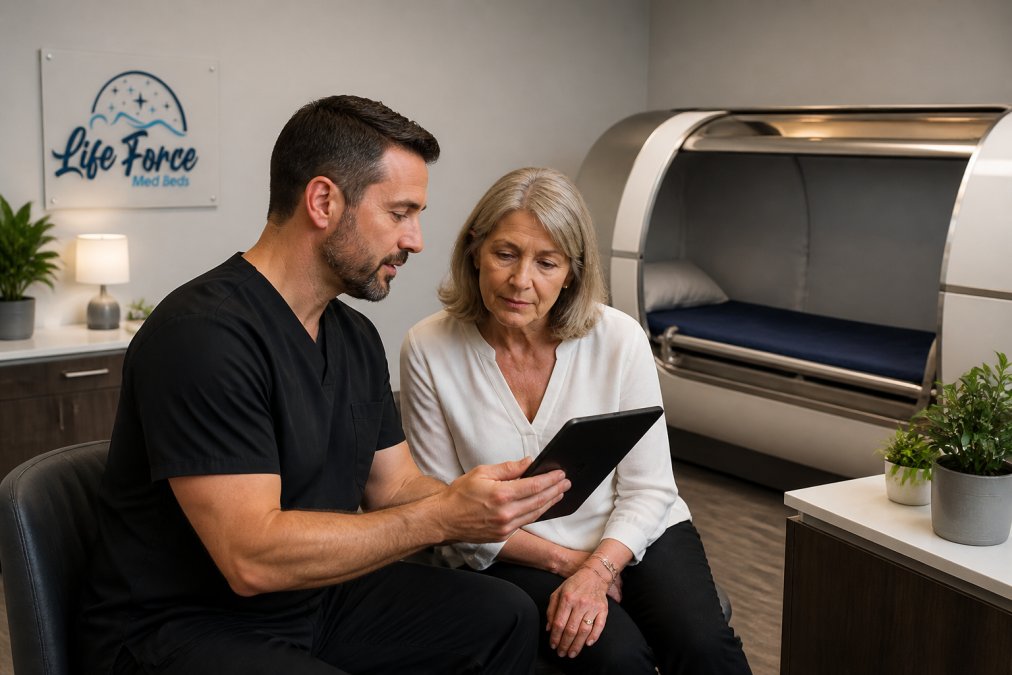
The recommendation phase is where integration matters. If you’re dealing with chronic wound healing, athletic recovery, or age-related decline, a consultant will explain how an integrated system like a Life Force MedBed consolidates what might otherwise require three separate devices. They’ll address the real question: does buying one system that does multiple things beat buying multiple specialized devices?
A genuine consultation also covers practical logistics. How much time per week do you actually need to spend in the system to see results? Can you integrate it into your existing routine? Does the learning curve match your comfort level with technology? These aren’t trivial questions. Many people buy sophisticated wellness equipment and abandon it because the friction is too high.
Avoid consultations that skip the assessment phase and jump straight to recommendations. A consultant who doesn’t ask about your health history or baseline metrics is selling, not consulting.
Is a MedBed Worth the Investment
The real question isn’t whether a MedBed works, it’s whether consolidating multiple therapies into one system justifies the investment for your specific situation.
Start with the math of alternatives. If you’re serious about recovery optimization, you’re likely considering: a quality PEMF device ($3,000-$8,000), a red light therapy panel ($2,000-$6,000), a vibration platform ($1,500-$4,000), and possibly a hyperbaric chamber for serious healing ($10,000-$40,000+). That’s $16,500 to $58,000 in separate equipment, plus the space to house it all, plus the time to use each device in sequence. An integrated system consolidates these into a single environment where multiple therapies work together rather than in isolation.
The consolidated approach has real advantages. You’re not switching between devices. You’re not managing separate apps or protocols. You’re not guessing whether the order of therapies matters. Research from Global Wellness Institute’s 2026 wellness economy analysis, which valued the U.S. wellness economy at $2.1 trillion, shows that integrated wellness platforms see higher engagement and better adherence than fragmented systems. People actually use them consistently.
But integration only makes sense if you’ll actually use it. This is where many people go wrong. They invest in a MedBed imagining daily sessions, then life happens, work gets busy, travel disrupts routine, motivation fades. The system sits idle. A consultation should help you assess your real commitment level before you invest.
Consider also the clinical outcomes that matter to you. If you’re optimizing for athletic performance, the priority is different than if you’re managing a chronic wound or supporting recovery from radiation therapy. Life Force MedBeds are designed to address multiple modalities simultaneously, but the value proposition changes based on your specific use case. Someone using hyperbaric oxygen therapy for diabetic ulcer healing gets different outcomes than someone using the same system for anti-aging optimization.
Calculate your true cost of ownership. Include not just equipment but the space, electricity, maintenance, and most importantly, the time commitment. If you won’t use it consistently, no amount of capability matters.
How to Choose a Home Wellness System
Choosing a home wellness system requires clarity on three dimensions: your actual health priorities, your weekly time commitment, and your integration needs.
Start with priority mapping. Are you managing an active health condition, optimizing performance, or pursuing anti-aging benefits? These aren’t the same. Someone recovering from surgery has different needs than an athlete chasing marginal gains. A consultation will help you identify which therapies address your top three priorities, then determine whether those therapies require integration or work independently.
Next, assess time honestly. How many hours per week can you realistically dedicate to wellness protocols? If the answer is one hour, a system requiring daily 30-minute sessions won’t work. If you travel frequently, a home system might not fit your lifestyle at all. The best wellness technology is the one you’ll actually use. According to research on digital health adoption, 40% of healthcare consumers actively use digital tools for health tracking and preventive care in the U.S., but adherence drops significantly when systems demand more than 45 minutes per week.
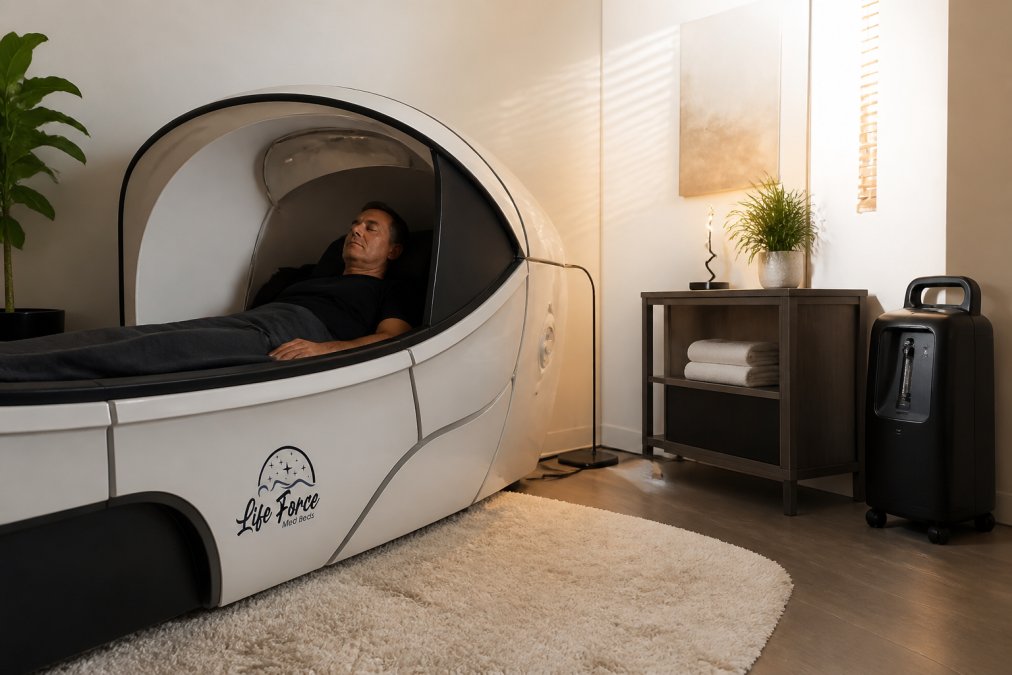
Consider integration carefully. If you already own a PEMF device and a red light panel that you use regularly, adding an integrated system might be redundant. But if you’re starting from scratch and want multiple modalities, integration eliminates friction. Life Force MedBeds combine bioresonance, frequency therapy, light therapy, PEMF, vibration, and oxygen therapy in one environment. That consolidation means you’re not managing separate protocols, separate apps, or separate time commitments.
Evaluate your support needs. Some people thrive with minimal guidance and self-directed protocols. Others need regular consultation to adjust settings, interpret biometric data, and refine their approach. A quality wellness technology provider should offer both: clear self-service options and access to expertise when you need it.
Finally, test before committing. A good consultation includes trial sessions or demonstrations. You should feel the difference between a mediocre system and a well-designed one. You should understand how the protocols work and whether they fit your body’s response patterns. find a longevity clinic.
Hyperbaric Chamber Business Consulting for Healthcare Facilities
For doctors, clinics, and healthcare offices, hyperbaric oxygen therapy represents a growing revenue stream and a genuine clinical tool. But implementation requires more than just buying equipment.
Hyperbaric chambers aren’t commodities. Quality matters significantly. Life Force Hyperbaric Chambers are engineered for clinical environments and represent a higher quality standard that healthcare facilities demand. But beyond equipment selection, successful implementation requires understanding patient selection, protocol development, staffing, and integration with existing clinical workflows.
A consultation with hyperbaric business experts addresses these directly. How do you identify patients who benefit most from HBOT? What protocols work best for specific conditions, diabetic ulcers, radiation injuries, non-healing wounds, infections? How do you staff the chamber safely? What does insurance reimbursement look like? How do you market this service to referring physicians?
Atlanta Hyperbaric Center has been delivering evidence-based hyperbaric oxygen therapy for more than 24 years, helping patients with complications from cancer, infection, trauma, and chronic wounds. Their experience shows that successful HBOT programs in clinical settings require more than equipment, they require protocols, staff training, and a clear clinical integration strategy.
For healthcare facilities considering hyperbaric expansion, Hyperbaric Business Solutions specializes in implementation consulting. They help clinics evaluate whether HBOT fits their patient population, design treatment protocols, train staff, and integrate the service into existing revenue models. Dr. Louis Hilliard, the inventor of the med bed, has shaped how integrated wellness technology is understood in clinical contexts, and his influence extends to how facilities think about combining modalities like hyperbaric therapy with other recovery technologies.
The business case for healthcare facilities is strong. HBOT is evidence-based for specific conditions, reimbursable by insurance, and addresses a patient population with real clinical need. But implementation without proper consulting often fails, equipment sits underutilized, protocols aren’t optimized, and the revenue potential never materializes.
Steps to Schedule Your Consultation
Scheduling a wellness technology consultation follows a straightforward process, but the quality of the consultation depends on preparation.
Step 1: Define Your Primary Goal
Before contacting a provider, clarify what you’re actually trying to achieve. Are you recovering from an injury? Optimizing athletic performance? Managing a chronic condition? Exploring anti-aging strategies? This single clarity point determines whether a consultation will be useful. Vague goals lead to vague recommendations.
Step 2: Gather Your Health Context
Compile relevant information: current health conditions, medications, previous wellness technology experience, any diagnostics or biomarkers you’ve tracked, and your typical weekly schedule. This isn’t about medical history, it’s about context. A consultant needs to understand your baseline before they can recommend anything.
Step 3: Contact a Qualified Provider
Look for providers with demonstrated expertise in integrated wellness technology, not just equipment sales. A consultation should include education about how different modalities work together, not just a product pitch. Ask whether they offer trial sessions or demonstrations before commitment.
Step 4: Prepare for the Assessment
Expect a consultation to take 45 minutes to 90 minutes. The first portion is diagnostic, questions about your health, goals, and constraints. The second portion is educational, explanation of how different therapies address your priorities. The final portion is practical, discussion of implementation, time commitment, and realistic outcomes.
Step 5: Ask Specific Questions
Don’t settle for generic answers. Ask how the recommended system specifically addresses your top three health priorities. Ask what results you should expect within 30, 60, and 90 days. Ask about integration with your existing routine. Ask what happens if you don’t see the results you expected.
Step 6: Review the Recommendation in Writing
A good consultation includes a written summary of the assessment, recommended protocols, expected time commitment, and realistic outcomes. This gives you time to consider the recommendation without sales pressure.
Personalized Wellness Assessment and Health Optimization
The gap between generic wellness advice and personalized optimization is where real results happen.
A personalized wellness assessment goes beyond standard health screening. It maps your specific physiological response patterns, identifies which therapies your body responds to most effectively, and prioritizes interventions based on your actual constraints, time, budget, lifestyle, and commitment level.
This is where integrated wellness technology platforms show their value. Life Force MedBeds include bioresonance scanning and bioimpedance analysis, tools that assess your current state and track changes over time through our Health Monitoring System. You’re not guessing whether a protocol is working. You’re measuring it. According to research on connected health solutions, the U.S. connected health and wellness solutions market generated $11,793 million in 2023 and is expected to reach $35,415.3 million by 2030, growing at a 17% CAGR. That growth reflects a fundamental shift: consumers want data-driven personalization, not one-size-fits-all wellness.
Health optimization means moving beyond "not sick" to "optimally functioning." It means understanding your recovery capacity, your stress response flexibility, and your adaptation patterns. It means identifying which specific interventions move your key metrics, sleep quality, heart rate variability, inflammatory markers, cognitive performance, or whatever matters most to your goals.
A consultation should clarify your personalization needs. Some people thrive with detailed biometric tracking and weekly protocol adjustments. Others prefer simplicity, a basic protocol they can execute consistently. The best system matches your personality and preferences, not just your health goals.
Booking a wellness technology consultation isn’t about committing to a purchase. It’s about gaining clarity on whether integrated wellness technology fits your actual situation. A quality consultation answers three fundamental questions: What does your body need? What can you realistically commit to? And does the investment justify the expected outcomes? Life Force provides comprehensive consultations designed to answer exactly these questions, helping you make an informed decision about whether consolidated wellness technology belongs in your optimization strategy. Contact Life Force today to schedule your personalized assessment and explore how integrated wellness technology can support your health goals.
Frequently Asked Questions
What should I expect during a wellness technology consultation?
Your wellness technology consultation begins with a comprehensive health assessment covering your current wellness goals, lifestyle, and any health concerns. A specialist will review your health metrics and discuss how integrated wellness technologies like bioresonance, light therapy, and PEMF systems work. You'll learn about personalized wellness plans tailored to your needs and explore how systems like the Life Force MedBed combine multiple therapeutic modalities into one platform. The consultation typically includes a patient intake process and recommendations for your specific health optimization journey.
How do I determine if a Life Force MedBed is right for my home?
A wellness technology consultation helps you assess whether a MedBed fits your lifestyle and wellness goals. Consider your available space, time commitment, and whether you prefer consolidating multiple devices into one integrated system versus maintaining separate wellness tools. Life Force specialists can discuss how bioresonance scanning, bioimpedance analysis, and remote patient monitoring features align with your preventative care approach. They'll also address whether the all-in-one design meets your personalized wellness needs better than individual devices, helping you make an informed investment decision.
Are wellness technology consultations available in Atlanta?
Yes. Atlanta-based wellness facilities and hyperbaric centers offer consultations for integrated wellness technologies. The Atlanta Hyperbaric Center and Hyperbaric Business Solutions provide expert guidance on wellness technology systems, including Life Force MedBeds and hyperbaric chamber options. You can contact these providers directly to schedule a virtual visit or in-person appointment to discuss your health optimization goals and explore how advanced wellness technology can support your wellness plan.
Do I need a medical referral for a wellness technology consultation?
No medical referral is required for a wellness technology consultation. These consultations are designed for individuals interested in preventative care, health optimization, and personalized wellness monitoring. Whether you're exploring biohacking, anti-aging approaches, or integrative medicine strategies, you can book a consultation directly. However, if you have existing health conditions or take medications, consulting with your primary care provider before starting any new wellness protocol is recommended to ensure compatibility with your overall healthcare plan.
This article was written using GrandRanker
