
Clinical Data for Wellness Technology: 2026 Guide


Table of Contents
- What Clinical Data Means for Wellness Technology
- Wellness Technology Validation: From Consumer Data to Clinical Standards
- Biometric Monitoring in Wellness: Real-Time Health Tracking
- Clinical Efficacy of Bioresonance and Frequency-Based Systems
- Market Growth and Clinical Integration in 2026
- Data Privacy, Interoperability, and Patient-Provider Communication
- Building Your Personal Clinical Data Strategy
- Conclusion
Last Updated: August 27, 2026
What Clinical Data Means for Wellness Technology
Clinical data for wellness technology represents the bridge between consumer-grade health monitoring and medical-grade validation. At Life Force, we’ve watched this transformation unfold as wearables, biometric sensors, and integrated wellness platforms move from lifestyle gadgets into tools that healthcare providers actually trust. The shift matters because it changes everything about how you approach personal health optimization.
For decades, wellness devices operated in a vacuum. You’d buy a fitness tracker, watch your step count climb, and hope it meant something. But clinical data changes that equation. It means your health metrics are collected using validated measurement protocols, stored in standardized formats, and interpretable by actual medical professionals. A heart rate reading becomes clinically actionable. Sleep data becomes part of your health record. Biometric trends become predictive signals.
The fitness tracker industry hit 19 billion dollars in 2024 and is projected to reach nearly 66 billion by 2032, according to AJC’s analysis of wearable health technology trends. That growth isn’t just about more people buying smartwatches. It’s about the infrastructure evolving to make those devices clinically relevant.
But here’s what most guides miss: having data and having usable data are different things. The real game-changer is interoperability, which means your wellness data can actually talk to your doctor’s electronic health records system. That’s where clinical validation becomes more than a marketing claim.
Wellness Technology Validation: From Consumer Data to Clinical Standards
Validation is where wellness technology stops being a self-quantification hobby and starts being actual medicine. The process requires three things: standardized measurement protocols, clinical testing, and integration pathways that let healthcare providers access and interpret the data.
Most consumer wellness devices measure something, but clinical validation asks harder questions. Does the sensor actually measure what it claims? Is the measurement consistent across different users and conditions? Can a clinician trust it enough to base treatment decisions on it? These questions separate a validated system from one that’s just collecting numbers.
The wellness and health services sector saw 247 transactions in the second half of 2025, a 15% increase year-over-year, with 62% of acquired companies offering hybrid service delivery models that incorporated telehealth and virtual care capabilities, according to SDR Ventures’ Wellness & Health Services Industry Report. That consolidation reflects a market reality: providers want integrated systems that combine monitoring, data interpretation, and clinical decision support in one place.
Validation happens through clinical research. A device gets tested in controlled settings, its accuracy is measured against gold-standard instruments, and results are published in peer-reviewed literature. That’s the traditional path. But in 2026, a parallel path is emerging: real-world evidence. Clinics using integrated wellness platforms are generating longitudinal data on thousands of patients, creating evidence bases that rival traditional trials.
Life Force MedBeds exemplify this approach by combining multiple validated measurement modalities, bioresonance, bioimpedance sensing, frequency-based systems, and biometric monitoring, within a single integrated platform. The consolidation matters because it creates a unified data ecosystem rather than scattered readings from separate devices.
When evaluating any wellness technology platform, ask whether the vendor publishes validation studies, whether their data integrates with standard EHR systems, and whether clinicians in your area actually use it. Vendor claims alone aren’t enough.
Biometric Monitoring in Wellness: Real-Time Health Tracking
Real-time biometric monitoring has fundamentally changed what’s possible in personal health optimization. Instead of annual checkups where your doctor sees a single snapshot, continuous monitoring creates a longitudinal record of how your body actually behaves across days, weeks, and seasons.
The concept is straightforward: sensors collect physiological data continuously, algorithms interpret it, and you get actionable insights. Heart rate variability, sleep quality, respiratory patterns, glucose trends, these become visible in real time rather than remaining invisible until something goes wrong.
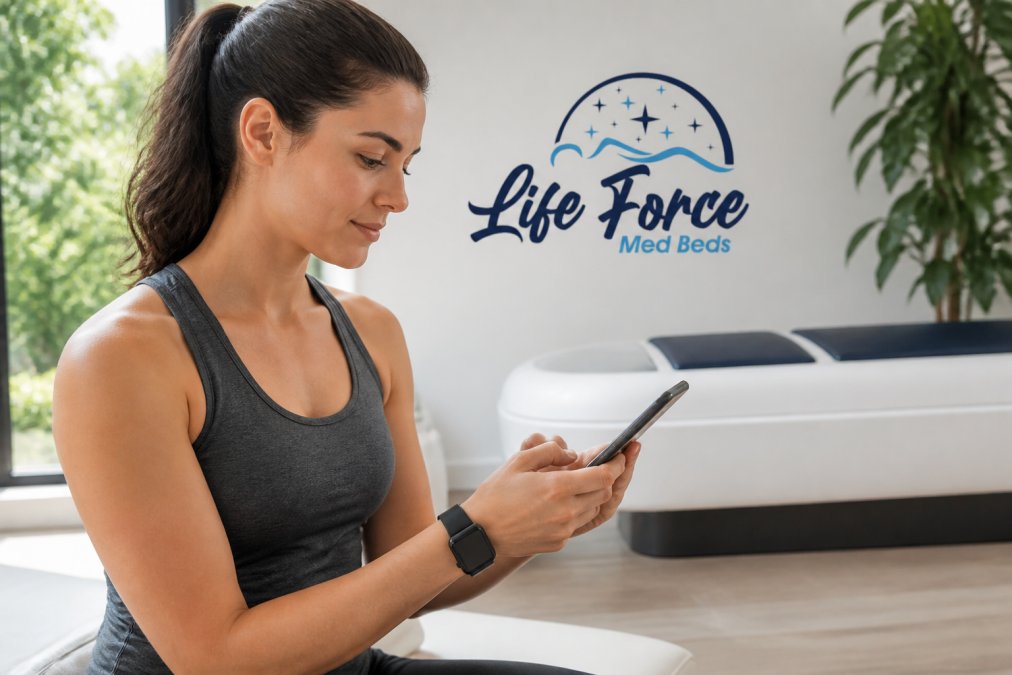
Heart Rate Variability and Continuous Glucose Monitoring
Heart rate variability (HRV) is one of the most underrated biometric markers. It measures the variation in time between heartbeats, not your heart rate itself, but the rhythm. High HRV generally correlates with better cardiovascular fitness and stress resilience. Low HRV can signal overtraining, illness, or chronic stress.
Continuous glucose monitoring (CGM) has moved beyond diabetes management into performance optimization. Athletes and biohackers use CGM data to understand how different foods, sleep patterns, and stress levels affect metabolic stability. The clinical value is clear: stable glucose means stable energy, better cognitive function, and reduced inflammation.
Both HRV and CGM require validated sensors and clinically-sound interpretation protocols. A smartwatch measuring HRV gives you a number. A clinically-validated HRV system gives you context: how your reading compares to your baseline, what factors move it, and what interventions actually change it.
Wearable health integrations are expected to provide clinics with real-time patient data in 2026, enabling proactive monitoring and personalized treatment plans, with wearables like heart monitors, glucose trackers, and sleep analyzers syncing directly with patient records for faster detection of abnormal readings, according to TrueITPros’ Emerging Healthcare Tech 2026 guide.
Integration with Electronic Health Records
The real power of biometric monitoring emerges when your data integrates with your clinical record. Your doctor sees your HRV trends, your glucose patterns, your sleep data, not as separate apps, but as part of your unified health picture.
EHR integration requires technical standardization. Health data needs to be formatted in ways that different systems can read. FHIR (Fast Healthcare Interoperability Resources) is the emerging standard that makes this possible. It’s technical infrastructure, but it’s the infrastructure that transforms wellness data from personal curiosity into clinical tool.
Integration also solves the interpretation problem. Raw biometric data is noise without context. When your data feeds into a system that understands your medical history, your medications, your conditions, and your goals, that data becomes signal. Your HRV reading becomes meaningful in relation to your sleep debt and your training load. Your glucose pattern becomes actionable in relation to your diet and your metabolic baseline.
Atlanta clinics and health centers are increasingly adopting integrated platforms that consolidate monitoring, data curation, and clinical decision support. This shift reflects a broader recognition that fragmented data creates fragmented care.
Clinical Efficacy of Bioresonance and Frequency-Based Systems
Bioresonance represents a different category of wellness technology, one that attempts to detect and correct energetic imbalances rather than simply measure physiological parameters. The theory is that every biological system has a characteristic frequency, and that restoring optimal frequency promotes healing.
Clinical evidence for bioresonance remains limited compared to traditional biometrics. The mechanisms are still not fully understood by conventional medical science, and peer-reviewed validation studies are sparse. That’s the honest assessment. But absence of conventional validation doesn’t mean absence of effect, it often means the measurement tools don’t exist yet to quantify what’s happening. clinical trial quality standards.
What we do know: patients report measurable improvements in recovery time, energy levels, and symptom management when using integrated frequency-based systems. Whether that’s placebo, actual resonance effects, or some combination remains an open question. The clinical research is ongoing.
Life Force‘s approach combines frequency-based modalities with measurable biometric feedback. That combination matters because it grounds subjective experience in objective data. You feel better, and your HRV data shows measurable improvement. Your recovery accelerates, and your sleep metrics validate it. The integration of frequency-based systems with clinical-grade monitoring creates accountability that pure frequency work alone cannot provide.
Be skeptical of any wellness technology claiming to “cure” conditions or replace medical treatment. Frequency-based systems work best as complementary modalities within a broader health optimization strategy, not as standalone alternatives to clinical care.
Market Growth and Clinical Integration in 2026
The wellness technology market is experiencing rapid consolidation and clinical integration. What started as consumer gadgets is becoming infrastructure that healthcare systems depend on.
The transformation reflects several converging trends. First, data abundance: sensors are cheaper and better than ever. Second, clinical necessity: healthcare systems are drowning in patient volume and need better monitoring tools. Third, regulatory clarity: standards like FHIR are making interoperability possible at scale. Fourth, consumer demand: people increasingly want to be partners in their own health rather than passive recipients of care.
AI-enabled home wellness technology is moving into residences, capable of observing daily life, detecting changes, and translating observations into clinical signals, with multimodal sensing tracking posture, gait, movement, respiration, and restlessness without requiring wearables, according to Georgia Clinical and Translational Science Alliance’s research on AI wellness capabilities. The Prototype Living of Tomorrow initiative at Kennesaw State University in Georgia exemplifies this, integrating visual, acoustic, ambient, and physiological sensors with on-device AI to recognize falls, flag gait changes, and offer health prompts.
That’s the direction the market is moving: from devices you wear to environments that monitor you. From data collection to continuous clinical oversight. From isolated metrics to integrated health ecosystems.
Data Privacy, Interoperability, and Patient-Provider Communication
Clinical data creates new responsibilities. When your wellness data becomes part of your medical record, privacy becomes critical. HIPAA compliance isn’t optional, it’s the foundation that allows healthcare providers to trust your data enough to act on it.
Interoperability is the technical challenge. Your data needs to move between systems securely. Your doctor needs to access it. You need to control who sees what. Your insurance company might need certain data for coverage decisions. These requirements create complex technical and legal requirements.
Patient-provider communication is the human layer. Data is only useful if your doctor actually interprets it and discusses it with you. A clinician who ignores your HRV trends or glucose patterns is collecting data, not providing care. The best integrated systems include communication workflows that ensure data actually gets discussed.
Georgia’s Health Landscape platform demonstrates how this works at scale. It consolidates public health, demographic, healthcare, and community data while incorporating community voice from resident surveys to provide context beyond traditional data sources, according to Georgia Clinical & Translational Science Alliance’s Health Landscape platform report. That’s the model: integrated data plus clinical interpretation plus community context.
Building Your Personal Clinical Data Strategy
A personal clinical data strategy starts with clarity about what you’re actually trying to optimize. Are you managing a diagnosed condition? Preventing disease? Enhancing performance? Each goal requires different data and different clinical partnerships.
Start by identifying your baseline. What do you want to measure? Heart rate variability? Sleep quality? Glucose stability? Recovery metrics? Choose metrics that align with your actual goals, not just metrics that sound sophisticated.
Next, choose your measurement platform. It needs to be clinically validated for the metrics you care about. It needs to integrate with your doctor’s EHR system if possible. It needs to be something you’ll actually use consistently, a sophisticated system you abandon is worthless.
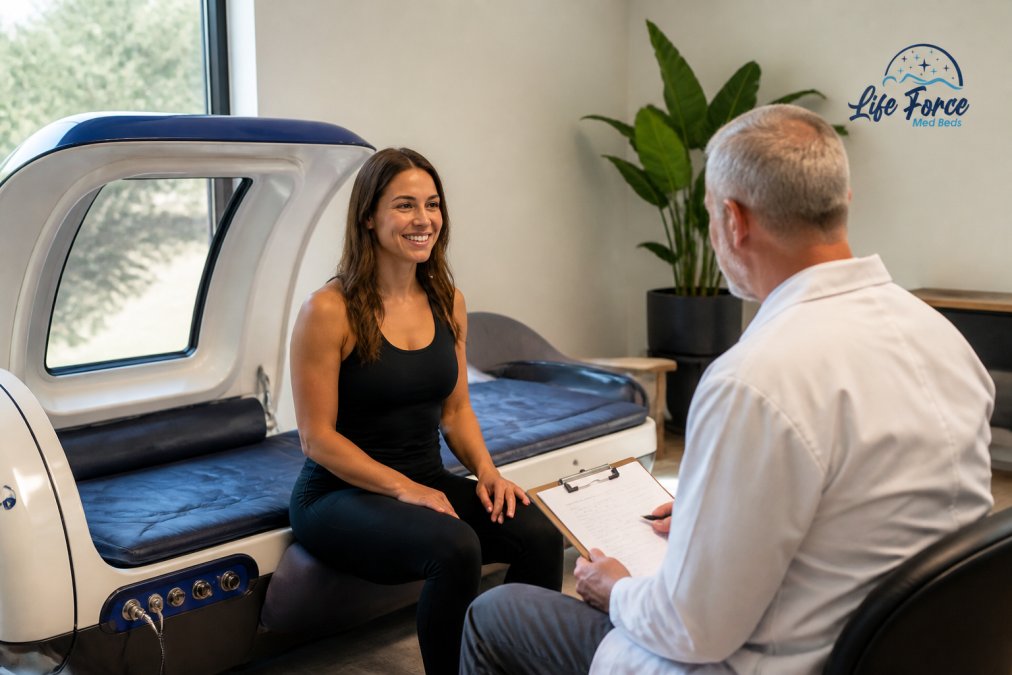
Then establish your clinical partnership. Find a healthcare provider who understands your data. This might be your primary care doctor, a functional medicine practitioner, a sports medicine specialist, or a wellness-focused clinic. The point is someone who interprets your data in context and helps you adjust your strategy based on what the data shows.
Finally, build feedback loops. Measure, adjust, measure again. Your baseline from month one won’t be your baseline from month six. Your body adapts. Your needs change. Your data strategy needs to evolve with you.
Life Force MedBeds integrate multiple measurement and therapeutic modalities, bioresonance, bioimpedance sensing, frequency systems, light therapy, PEMF, and sound therapy, within a single platform designed to provide personalized wellness optimization. The integration consolidates what might otherwise be five separate devices into one coherent system, reducing decision fatigue and creating unified data that your healthcare provider can actually interpret.
The future of wellness isn’t about collecting more data. It’s about collecting the right data and having someone clinically qualified interpret it in context. That’s where personal optimization becomes actual health transformation.
Clinical data for wellness technology is no longer a novelty, it’s becoming the standard that healthcare systems expect. If you’re serious about health optimization in Atlanta and beyond, building a personal clinical data strategy isn’t optional. Life Force MedBeds are designed specifically for this purpose: bringing multiple validated measurement and therapeutic modalities together in one integrated platform that generates clinically interpretable data your healthcare provider can actually use. Explore how an integrated approach to wellness technology can transform your health outcomes by visiting Atlanta Hyperbaric Center or learning more through Hyperbaric Business Solutions for clinical integration support.
Frequently Asked Questions
What constitutes clinical data in the context of wellness technology?
Clinical data includes patient-generated health metrics collected through wearable sensors, biometric monitors, and integrated wellness systems. This encompasses heart rate variability, continuous glucose readings, sleep patterns, movement data, and other physiological indicators. Unlike consumer-grade wellness data, clinical-grade data meets standards for accuracy, consistency, and validation that allow healthcare providers to use it for real-time patient monitoring and informed decision-making. The key distinction is medical-grade accuracy and interoperability with electronic health records.
How does clinical data improve the efficacy of bioresonance and frequency therapy?
Clinical data enables personalized calibration of bioresonance and frequency-based systems by providing real-time feedback on how your body responds to specific frequencies and therapies. Biometric monitoring tracks changes in heart rate variability, stress markers, and other wellness indicators before, during, and after sessions. This data-driven approach allows practitioners to adjust treatment parameters based on measurable outcomes rather than generic protocols. Integrated systems like the Life Force MedBed combine frequency therapy with biosensing to create adaptive, individualized wellness experiences informed by your unique physiological profile.
Why is data integration critical for recovery-focused wellness systems?
Data integration consolidates multiple health signals, biometric readings, frequency therapy responses, sleep data, and movement patterns, into a unified clinical picture. Rather than managing separate devices and isolated data streams, integrated systems enable longitudinal health tracking over time, helping identify trends and patterns that single-point measurements miss. This interoperability between wearables, wellness devices, and health records allows practitioners and users to make evidence-based adjustments to recovery protocols. Integrated platforms also reduce friction in patient-provider communication by centralizing all relevant data in one accessible location.
How can users verify the clinical basis of wellness technology before investing?
Look for systems that provide published research, clinical validation studies, or partnerships with recognized healthcare institutions. Ask manufacturers for specific data on how their technology was tested, what outcomes were measured, and whether results were peer-reviewed. Request access to anonymized user outcome data or case studies from clinical settings. Reputable wellness technology providers, particularly those serving doctors and clinics like Life Force Hyperbaric Chambers, are transparent about their clinical evidence. Verify that any claims about efficacy are supported by measurable data rather than testimonials alone, and consult with a healthcare provider about whether a specific system aligns with your health goals.
