
Cryotherapy Chamber Prices An Investor’s Complete Guide


So, you’re thinking about investing in a cryotherapy chamber? The first question on everyone’s mind is always the same: what’s it going to cost?
The short answer is, it depends. Prices can start around $35,000 for a basic liquid nitrogen unit and soar past $200,000 for a top-of-the-line, multi-person electric model. The final number on the invoice really comes down to the technology, size, and specific features you choose.
What Do Cryotherapy Chambers Actually Cost?
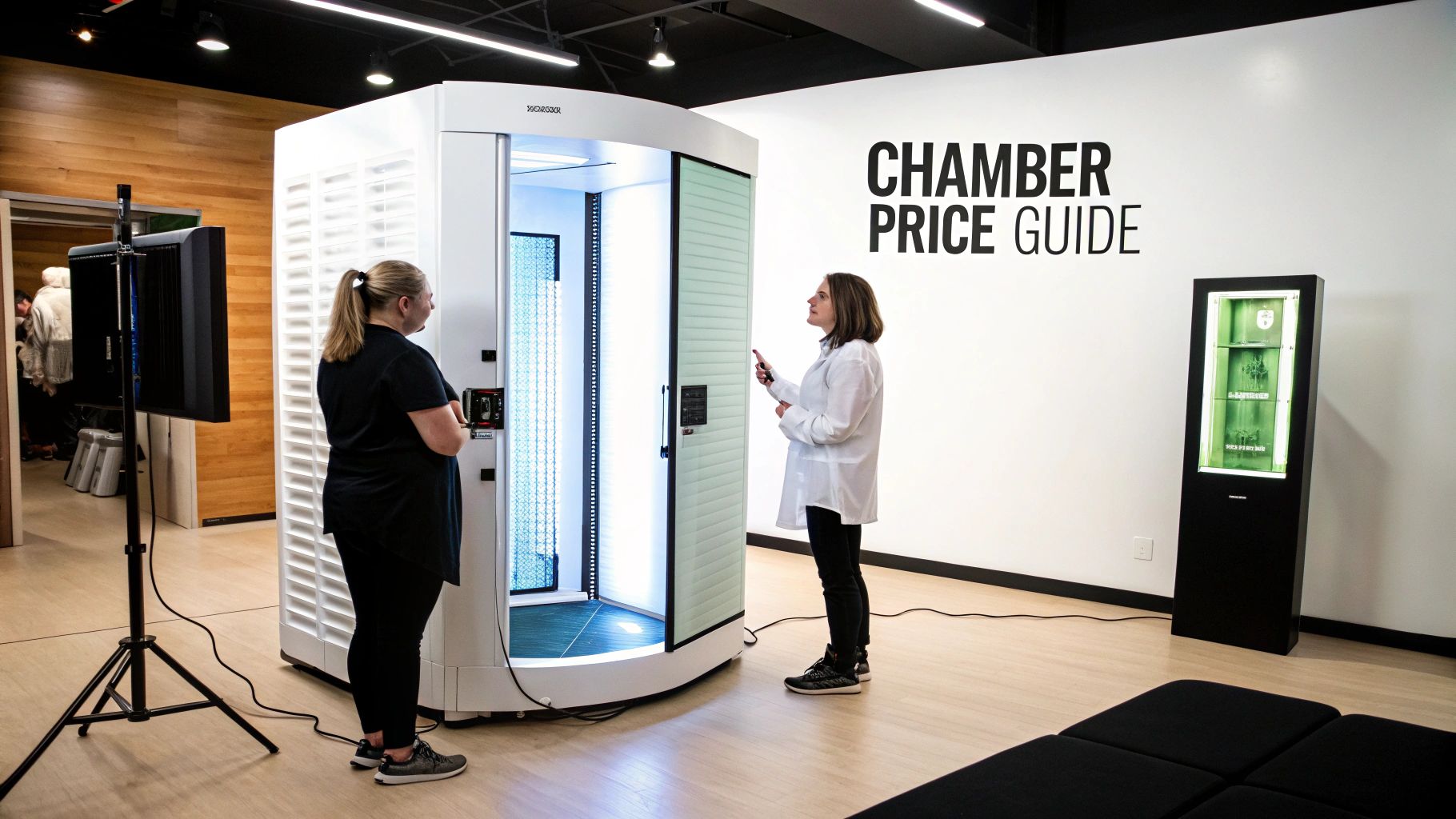
When you start shopping for a cryotherapy chamber, it’s a lot like buying a new car. The base model looks affordable, but the price climbs quickly as you add the features and performance you really want. The sticker price is just the beginning.
The biggest fork in the road—and the one that impacts the price most—is the cooling technology. You’ll have to choose between a system that uses liquid nitrogen (LN2) or one that’s fully electric. This single decision sets the stage for both your initial investment and your ongoing operational costs.
Comparing Nitrogen and Electric Systems
For years, liquid nitrogen chambers were the go-to for many businesses, mostly because they had a lower barrier to entry. They seem more affordable upfront, which can be tempting. But that initial savings comes with a catch: you have to continuously buy and safely store liquid nitrogen, an expense that never goes away.
Electric chambers, by contrast, require a bigger investment from day one. Instead of relying on consumables, they operate more like a sophisticated, high-performance freezer, circulating super-chilled air. This eliminates the logistical headache and recurring cost of nitrogen deliveries.
The decision between nitrogen and electric often comes down to balancing initial capital outlay against long-term operational expenses. Businesses must project their usage to determine which model offers a better financial fit over the life of the equipment.
Estimated Cryotherapy Chamber Price Ranges by Type
To give you a clearer picture, we’ve broken down the typical price ranges for new chambers based on their technology and size. Keep in mind these are estimates, and the final price will vary by manufacturer and features.
| Chamber Type | Technology | Typical Price Range (New) |
|---|---|---|
| Single-User “Cryosauna” | Liquid Nitrogen (LN2) | $35,000 – $65,000 |
| Single-User Chamber | Electric | $60,000 – $100,000 |
| Multi-Person Chamber (2-3 Users) | Electric | $120,000 – $180,000 |
| Large Multi-Person Chamber (4+ Users) | Electric | $150,000 – $200,000+ |
As you can see, the move to electric and larger capacities significantly increases the upfront cost. However, for a busy clinic or wellness center, a multi-person chamber can dramatically increase client throughput and revenue potential.
Beyond the cooling method, capacity is the next major factor. A single-user chamber is perfect for smaller clinics or even private use, but it creates a bottleneck if you have high client traffic. Multi-person chambers are built for volume. For those exploring an investment purely for personal wellness, you might find our guide on a cryotherapy machine for home use helpful.
This is why Dr. Louis Hilliard, the inventor of the med bed and owner of Life Force Medbeds, encourages people to view wellness technology as a long-term asset. It’s not just about the initial purchase price, but the value and return it delivers over many years. For more information, please go to the website or call 770-948-4511.
The Hidden Factors Driving Your Final Cost
The sticker price on a cryotherapy chamber? Think of that as just the down payment. To really understand your total investment, you have to look past the advertised number and dig into the details that truly shape the final cost. These factors don’t just affect your initial bill—they have a massive impact on your long-term success, safety, and profitability.
It’s a lot like buying a high-performance car. The base model price is one thing, but the engine type, the safety features, and the destination charges are what really determine what you’ll pay and how it will perform. The same logic applies here.
Your first major decision, and the one that will most significantly influence your budget, is whether to go with a liquid nitrogen (LN2) chamber or a fully electric one. This choice puts you on one of two very different financial paths.
Technology Showdown: Liquid Nitrogen vs. Electric
Liquid nitrogen chambers often catch the eye with a lower initial purchase price. For a new business just starting out, that can be incredibly tempting. But that upfront saving comes with a catch: a significant, ongoing operational cost. You’ll constantly be buying and storing liquid nitrogen, an expense that can be unpredictable depending on your supplier and location.
Electric chambers, on the other hand, require a much bigger check upfront. They work more like sophisticated, industrial-grade freezers, using powerful cooling systems to chill breathable air—no consumables needed. While the initial investment is higher, your day-to-day running costs are typically lower and far more predictable, mostly just your electricity bill.
A key consideration here is the client experience and operational safety. Electric chambers create a consistent, nitrogen-free cold environment, which many clients find more comfortable. LN2 systems require strict ventilation and handling protocols, adding an extra layer of responsibility for you and your staff.
Quality and Certification: The Price of Peace of Mind
Let’s be clear: not all cryotherapy chambers are built the same. A well-known brand with a proven history of reliability and excellent customer support will always cost more. You’re not just paying for the name; you’re paying for better build quality, which means a longer-lasting machine and fewer headaches from breakdowns.
Here are a few of the quality markers that directly bump up the price:
- Safety Certifications: Always look for chambers with recognized certifications like UL or CE markings. This is your proof that the equipment has passed rigorous third-party safety and performance tests. Getting those certifications isn’t cheap for the manufacturer, and that cost is passed on.
- Build Materials: The grade of steel, the quality of the insulation, and the durability of the internal components all matter. Premium materials do a better job of holding the cold and withstanding the stress of extreme temperature changes, justifying the higher price tag.
- Warranty and Support: A strong, comprehensive warranty is a manufacturer’s vote of confidence in their own product. Longer warranties that cover both parts and labor will increase the initial price, but they can easily save you thousands in unexpected repair bills down the road. You can explore the potential side effects of cryotherapy in our detailed article to understand why safety and quality are non-negotiable.
The Overlooked Costs: Shipping, Installation, and Facility Upgrades
Finally, we get to the “hidden” costs that often blindside first-time buyers. These expenses are almost never included in the sticker price, but they are absolutely essential to getting your chamber up and running.
- Shipping and Freight: Cryotherapy chambers are massive, heavy, and surprisingly delicate. Just getting one from the factory to your front door can cost several thousand dollars, depending on the distance and carrier.
- Professional Installation: This is not a weekend DIY project. A certified technician has to install the chamber to ensure it runs safely and performs to spec. Budget anywhere from $3,000 to $10,000 or more for this crucial service.
- Facility Upgrades: Your space probably isn’t “cryo-ready” out of the box. You might need to bring in an electrician to upgrade your power supply for an electric unit, or a contractor to install a specialized ventilation system for an LN2 model.
These aren’t optional add-ons; they are necessary costs. You have to factor them into your total budget from day one to avoid any nasty financial surprises. As Dr. Louis Hilliard, the inventor of the med bed and owner of Life Force Medbeds, advises, a successful wellness investment requires a full accounting of all costs, not just the price of the machine itself.
To learn more, we invite the reader to go to the website for more information or call 770-948-4511.
Budgeting Beyond the Sticker Price: The True Cost of a Cryo Chamber
A cryotherapy chamber isn’t a one-and-done purchase. It’s a major piece of business equipment with real, ongoing operational costs that hit your bottom line every single month. Thinking the initial price is your total investment is like buying a high-performance car and completely forgetting about gas, insurance, and tune-ups. To build a profitable cryotherapy service that lasts, you have to look past the price tag and account for all the recurring costs.
Hidden Costs: Where Nitrogen and Electric Chambers Really Differ
This is where the financial story for liquid nitrogen (LN2) and electric chambers splits into two very different paths. An LN2 chamber might catch your eye with a lower upfront cost, but it comes with a major, never-ending expense: the nitrogen itself. This creates a variable monthly bill that can swing wildly depending on how busy you are, what your local supplier charges, and even delivery fees. It makes long-term financial forecasting a real headache.
On the other hand, electric chambers require a much bigger investment to get started. But here’s the trade-off: their running costs are far more predictable. Your main expense is electricity, a stable utility that’s easy to budget for. This often leads to a lower total cost of ownership over the chamber’s lifespan and makes your financial planning a whole lot simpler.
The sticker price is just the beginning. As you can see below, installation and shipping can add a significant chunk to your initial outlay.
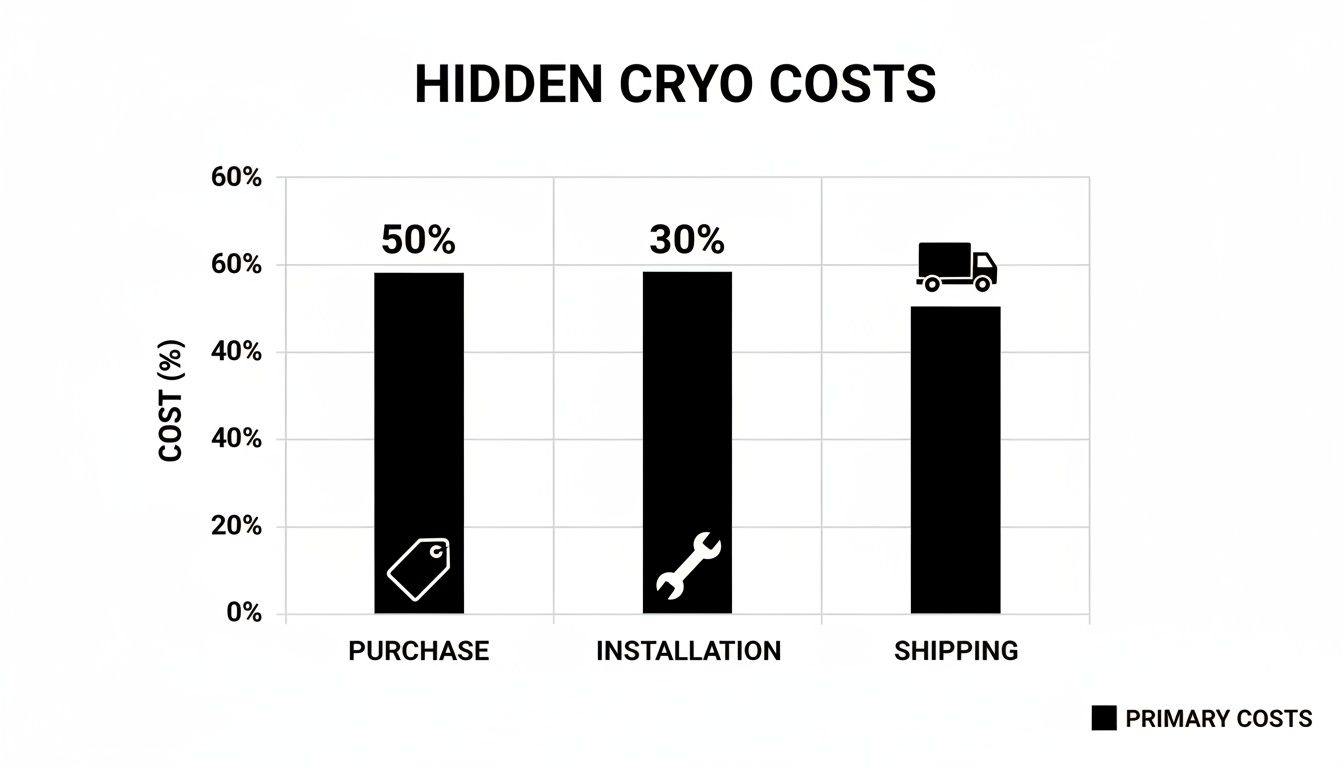
This just goes to show that your true “get-started” cost is always going to be higher than the number you first see on the sales page.
The Ongoing Costs: What to Expect Every Month
When you’re mapping out your monthly overhead, you need to think beyond just consumables and electricity. A realistic budget has to include all the other expenses that keep your business running safely, legally, and attracting new clients. If you ignore these, you’re setting yourself up for cash flow problems down the road.
Here’s a quick rundown of the key operational costs you need to plan for:
- Scheduled Maintenance & Parts: Like any sophisticated machine, cryo chambers need regular service to perform at their best. Think routine check-ups, software updates, and replacing parts that wear out over time.
- Liability Insurance: This is non-negotiable. Operating a cryotherapy chamber has inherent risks, and comprehensive liability insurance protects your business, your team, and your clients.
- Staff Training & Certification: Your team needs to be rock-solid on how to operate the chamber safely and effectively. Investing in initial and ongoing training is an investment in both client safety and the quality of your service.
- Marketing & Promotion: People won’t just magically show up. You’ll need a consistent marketing budget for social media, local ads, or whatever campaigns you use to keep a steady stream of clients coming through the door.
- Scheduling Software: In this day and age, you need good software to manage appointments, take payments, and communicate with clients. This usually comes with a monthly subscription fee.
Ongoing Costs Nitrogen vs Electric Cryotherapy Chambers
The table below breaks down the typical recurring costs you can expect with each type of chamber technology. It paints a clear picture of how the operational expenses stack up over time.
| Cost Factor | Liquid Nitrogen (LN2) Chamber | Electric (eCryotherapy) Chamber | Notes |
|---|---|---|---|
| Consumables | $800 – $3,000+ per month | $0 | LN2 is the biggest variable cost and depends heavily on usage and supplier pricing. |
| Utilities | Minimal electricity | $300 – $700 per month | Electric chambers use more power, but costs are stable and predictable. |
| Maintenance | $1,000 – $2,500 annually | $1,500 – $3,000 annually | Includes routine service, parts, and potential software updates. |
| Insurance | Moderate to High | Lower to Moderate | Premiums can be higher for LN2 due to perceived risks with handling nitrogen. |
| Staffing | Requires trained operator | Requires trained operator | Similar needs, but LN2 requires specific training on handling and tank swaps. |
As you can see, while the monthly utility bill for an electric chamber is higher, the complete absence of consumable costs for liquid nitrogen can lead to significant long-term savings and much more predictable monthly expenses.
Ultimately, your choice of technology can have a direct impact on your bottom line, especially if you’re aiming for high client volume. For example, some med spas find they can command a 15% price premium for the safety of nitrogen-free cryo, which in turn leads to 25% higher client throughput. For a busy clinic charging an average of $75 per session, those numbers add up fast.
An honest look at these ongoing expenses is the bedrock of a solid business model. It helps you get past the initial sticker shock and build a financial plan for long-term profitability and growth.
Getting your financial plan right is one of the most important first steps. If you’re looking at launching a new wellness business, our guide on how to open a medical spa is packed with great insights on budgeting and business strategy.
This detailed approach to budgeting is central to the philosophy of Dr. Louis Hilliard, the inventor of the med bed and owner of Life Force Medbeds. He always emphasizes that a truly successful wellness business is built on a foundation of smart, forward-thinking financial planning. To learn more about building a profitable practice, we invite the reader to go to the website for more information or call 770-948-4511.
How to Calculate Your Cryotherapy ROI

After you’ve tallied up the initial investment and the ongoing expenses, the real question pops up: when does this thing actually start making me money? This is where we move past the price tag and start looking at the cryotherapy chamber as a true business asset. Calculating your return on investment (ROI) is how you turn a spreadsheet of costs into a clear roadmap for profit.
Thinking about ROI isn’t just about covering your bills; it’s about seeing the future growth of your business. When you have the data, you can set smart prices, create realistic goals, and make decisions that directly boost your bottom line.
Building Your Revenue Projections
The starting point for any good ROI calculation is a solid revenue forecast. It all begins with one simple number: your price for a single cryotherapy session. Depending on your city, your direct competition, and the client experience you offer, this typically falls somewhere between $50 and $95 per session.
Let’s walk through a quick, conservative example to see how the numbers can play out.
Example Revenue Scenario (Single Chamber):
- Price Per Session: $75
- Daily Client Goal: 10 sessions per day
- Operating Days: 25 days per month
With these numbers, you’re looking at a potential monthly revenue of $18,750. That’s ($75 x 10 clients x 25 days). This gives you a baseline to work with, which you can then tweak based on your own market research and business plan.
The Power of Memberships and Packages
If you only rely on single-session walk-ins, you’re setting yourself up for a rollercoaster of unpredictable income. The real secret to a stable, growing revenue stream is turning those first-time visitors into loyal, repeat customers. This is where memberships and packages are an absolute game-changer.
- Package Deals: Think about offering bundles, like 5 sessions for the price of 4. This gets clients to commit to a larger purchase upfront and helps build the habit of coming in regularly.
- Monthly Memberships: A monthly plan, maybe for 4 sessions per month at a set price, gives you predictable, recurring revenue you can bank on. It makes financial planning a whole lot easier.
These aren’t just sales tactics; they build a community around your brand. Happy members become your best marketing tool through word-of-mouth referrals.
By creating tiered membership options, you empower clients to choose a plan that fits their wellness goals and budget, while securing a consistent income stream for your business. This is the shift from transactional sales to relationship-based revenue.
Understanding Your Breakeven Point
Your breakeven point is that magic moment when your total revenue finally equals your total costs. From that day forward, every dollar you bring in from that chamber is pure profit. It’s the point where your investment has officially paid for itself.
To figure this out, you just need two key numbers:
- Total Initial Investment: The all-in cost of the chamber, including shipping, installation, and any facility prep work.
- Monthly Net Profit: Your total monthly revenue minus all your ongoing operational costs (nitrogen, utilities, insurance, staff, etc.).
Once you have your monthly net profit, just divide your total initial investment by that number. The result is how many months it will take to break even. This is a critical piece of information, especially if you’re looking for financing, as it sets a clear timeline for profitability.
The wellness market is booming, creating a massive opportunity. For entrepreneurs in this space, it’s a clear signal that the timing is right. North America currently leads in revenue, partly because nitrogen chambers are often regulated as wellness devices, avoiding the long and costly FDA reviews required for medical equipment. You can discover more insights on the growing cryotherapy market to see the full picture.
This kind of forward-looking financial planning is a cornerstone of the business model advocated by Dr. Louis Hilliard, the inventor of the med bed and owner of Life Force Medbeds. A successful wellness venture begins with a clear understanding of its financial potential.
To explore how our technology can fit into your business plan, we invite the reader to go to the website for more information or call 770-948-4511.
Smart Ways to Fund Your Wellness Business
Staring at a six-figure price tag for a top-tier cryotherapy chamber can feel intimidating, but it absolutely doesn’t have to be a roadblock. Truth is, most successful wellness businesses don’t pay for this kind of equipment out of pocket. They use smart financing to get the chamber in the door and generating revenue right away, without draining their cash reserves.
The financing world for wellness equipment is a lot friendlier than most people think. You’ve got options, from standard business loans to leasing programs designed specifically for this kind of gear. The trick is figuring out which path makes the most sense for your business’s cash flow, tax strategy, and where you want to be in a few years.
To Buy or to Lease? That is the Question
Your first big financial decision is whether to buy the chamber with a loan or lease it. There’s no single right answer, as each path has very different impacts on your books.
With an equipment loan, you own the chamber from day one. You’re building equity in a business asset, and once it’s paid off, it’s all yours. This is usually the go-to for established businesses with solid credit who are playing the long game and want to own their assets outright.
Leasing is a different animal. Think of it more like a long-term rental. Your monthly payments are almost always lower than loan payments, which frees up a ton of working capital for essentials like marketing, hiring, or just keeping the lights on. When the lease is up, you typically get a few choices: buy the equipment, sign a new lease, or—and this is a big one—upgrade to the latest and greatest model.
Digging Into the Financial Details
When you’re comparing your options, don’t just get fixated on the monthly payment. You need to look at the whole picture—the total cost over time and the unique perks of each setup.
- Tax Implications: This is huge. Lease payments are often treated as an operational expense, meaning you can write them off and potentially lower your taxable income. With a loan, you’re more likely to depreciate the asset’s value over several years. You’ll definitely want to chat with your accountant to see which strategy saves you more money.
- Who Handles Maintenance? If you buy with a loan, maintenance and repairs are 100% on you. Some lease agreements, however, roll service packages right into the deal, which makes budgeting for upkeep way more predictable.
- Staying Current: Leasing is your best friend if you want to stay on the cutting edge. Technology in this space moves fast. A lease gives you a clear exit ramp, so you’re not stuck with an outdated chamber five years from now. You can simply upgrade and keep offering your clients the best experience possible.
The right financing choice isn’t just about getting the money. It’s a strategic move that affects your business’s agility and financial health for years. It’s all about making the numbers work for your growth plan.
This is a philosophy championed by Dr. Louis Hilliard, the inventor of the med bed and owner of Life Force Medbeds. He’s a firm believer that making advanced wellness technology financially accessible is key to getting it into more communities.
By taking the time to understand these pathways, you can turn the dream of owning a cryotherapy chamber into a smart, profitable reality for your business. For more detailed information on financing and to check out our wellness solutions, we invite the reader to go to the website for more information or call 770-948-4511.
Thinking Beyond Cryotherapy: The Rise of Multi-Modality Systems
You’ve done the math on cryotherapy chambers, and that’s a smart first step. But before you pull the trigger, let’s zoom out and look at the bigger picture. A cryotherapy chamber is a fantastic tool, no doubt. But what are today’s clients really looking for?
They want more than a one-off treatment. They’re seeking comprehensive, all-in-one wellness experiences that tackle their health goals from every angle. This shift in what people expect is a huge opportunity for savvy business owners.
Instead of buying a machine that does just one thing, what if you could offer a whole suite of advanced therapies from a single, elegant system? This “multi-modality” approach is where the wellness industry is heading. It’s about breaking free from the limits of a single service and positioning your business as a true leader.
The Power of an Integrated Approach
Think of it this way. A standalone cryo chamber is like a world-class espresso bar. It makes the best coffee in town, but it only attracts coffee drinkers. A multi-modality system, on the other hand, is like a gourmet cafe with an amazing coffee bar, artisanal teas, fresh-pressed juices, and healthy pastries. It brings in a much wider crowd.
This strategy doesn’t just expand your customer base; it multiplies the revenue you can generate from each person who walks through your door. A client who comes in for one therapy can be easily introduced to other complementary treatments—all delivered from the very same device. This leads to better results for them and a much healthier bottom line for you.
Introducing a New Standard in Wellness Technology
A perfect example of this evolution is the Life Force Med Bed, the brainchild of Dr. Louis Hilliard, who is the inventor of the med bed and owner of Life Force Medbeds. These systems weren’t designed to be just another machine; they were engineered to be a strategic leap forward. They seamlessly combine multiple powerful therapies into one cohesive unit.
Life Force Med Beds create a multi-faceted wellness experience by integrating therapies like quantum healing, light therapy, and frequency modulation. This gives practitioners the power to design a truly complete and personalized wellness journey for every client.
By offering a whole menu of services from a single piece of equipment, you can create custom wellness protocols that are simply impossible with a collection of standalone devices. It elevates the client experience while also streamlining your own operations. You save precious floor space and eliminate the headache of managing, maintaining, and training staff on multiple different machines.
This is more than an equipment upgrade; it’s a fundamental shift in your business strategy. It turns your practice into a genuine one-stop wellness destination, ready to meet the diverse and evolving needs of your clients. As Dr. Louis Hilliard, the inventor of the med bed and owner of Life Force Medbeds, envisioned, the goal is to empower practitioners to offer a higher level of care while building a more resilient and profitable business.
If you’re exploring your options and thinking about the long-term growth of your practice, it’s worth taking a serious look at how an integrated system could transform your business model. To see what’s possible with a multi-modality approach, we invite the reader to go to the website for more information or call 770-948-4511.
Making Your Final Investment Decision
So, you’ve done the homework. You now have a solid framework for looking at what a cryotherapy chamber really costs and what it can bring to your business. Making the right call means looking well past the initial sticker price. It’s about thinking through the technology, the long-term running costs, and where you ultimately want to take your business. Smart decisions today are what build a profitable business tomorrow.
As you weigh the pros and cons, the core question is really one of strategy. Does a device that does just one thing—like a cryo chamber—truly fit with your long-term vision? Or would an integrated wellness system that can deliver multiple therapies from a single platform give you a stronger foundation for success? This isn’t just about buying a piece of equipment; it’s a decision that will shape what you offer and how you’re seen in the market for years.
Recapping Your Key Considerations
The best choice will always strike a balance between being smart with your money and thinking ahead. Before you pull the trigger, run through this final checklist to make sure you’ve covered all your bases:
- Total Cost of Ownership: Don’t forget this one. It’s not just the purchase price. You have to account for shipping, installation, any necessary upgrades to your space, and the daily operational costs like liquid nitrogen or electricity.
- Return on Investment (ROI) Potential: Be realistic. Use your session pricing and projected client numbers to map out your breakeven point and see what long-term profit actually looks like on paper.
- Client Experience and Safety: Think about how your choice of tech—nitrogen versus electric—will feel to your clients. It also directly impacts your safety protocols and what you’ll need to train your staff on.
The most successful wellness businesses I’ve seen are built on a rock-solid plan. They think about every little thing, from the initial check they write to what a client experiences every single day. That’s how you build a business that lasts.
The Strategic Leap to Integrated Wellness
A cryotherapy chamber is a fantastic tool, no doubt about it. But the wellness industry is heading towards offering more complete, holistic solutions. Clients are getting smarter and are looking for one-stop shops that address their health from all angles. This is where integrated systems really shine, letting you pull in a wider range of clients and seriously boost how much you can earn from each one.
This forward-thinking mindset is exactly what drives the systems developed at Life Force Medbeds. The company is owned by Dr. Louis Hilliard, the inventor of the med bed, and was built on the idea of offering more than just a single therapy. The goal is to give practitioners a versatile tool that can deliver a whole menu of wellness services from just one device. This kind of strategic move doesn’t just raise the quality of care you can offer—it builds a much stronger, more scalable business.
You’ve got the data. You understand the moving parts. Now it’s time to decide what kind of wellness provider you want to be.
To see the innovative solutions offered by Life Force Medbeds, we invite the reader to go to the website for more information. For a personal consultation, please call 770-948-4511 to speak with a specialist about taking your practice to the next level.


