
Cryotherapy Equipment Cost Your Complete 2024 Guide


So, you're thinking about adding cryotherapy to your practice. The first question on everyone's mind is always the same: "What's this going to cost me?" Let's get straight to it.
The upfront investment for cryotherapy equipment can vary quite a bit. A full, whole-body chamber is a significant purchase, typically running anywhere from $30,000 to $100,000. If you're looking to start smaller, a localized system is much more accessible, usually costing between $5,000 and $15,000.
Knowing these numbers gives you a realistic starting point for your budget.
Realistic Budget for Cryotherapy Equipment

Once you have a general budget, the next step is to understand why the prices are so different. It really comes down to the technology powering the unit.
- Electric chambers are great for their consistent, predictable operating costs, but you'll need to make sure your facility can handle the higher power draw.
- Liquid nitrogen systems can often get colder, delivering a more intense experience, but you have the ongoing expense of nitrogen refills to consider.
- Portable devices offer amazing flexibility and a much lower entry price, making them perfect for practices just starting out or with limited space.
Cost Breakdown by Equipment Type
To make this crystal clear, I've put together a quick comparison of the most common options you'll find on the market. This should help you see exactly where your budget might fit.
Estimated Cryotherapy Equipment Cost by Type
A quick comparison of the typical upfront costs for the most common types of cryotherapy equipment.
| Equipment Type | Technology | Estimated Cost Range (USD) |
|---|---|---|
| Whole-Body Chamber | Electric | $30,000–$80,000 |
| Whole-Body Chamber | Liquid Nitrogen | $40,000–$100,000 |
| Localized Device | Portable (electric) | $5,000–$15,000 |
As you can see, electric models often have more sophisticated controls and safety features built right in, which contributes to their price. Liquid nitrogen chambers, while sometimes more expensive upfront, also have long-term costs tied to refills and proper ventilation. And of course, the portable units are the easiest to get up and running, with minimal installation needed.
“Seeing these ranges side by side helps you pinpoint the system that matches both your service goals and financial plan.”
Key Considerations Before Purchase
The sticker price is just the beginning. Before you sign on the dotted line, you absolutely have to think through the long-term costs and logistics. I've seen too many people forget these crucial details.
- Hidden Costs: Always budget for installation, delivery, and staff training. These aren't always included in the initial quote.
- Support & Warranty: What does the warranty cover? Is there a reliable service technician in your area? You don't want to be stuck with a broken machine.
- Facility Upgrades: Will you need to upgrade your electrical system or install special ventilation? This can add thousands to the final bill.
- Ongoing Expenses: Plan for routine maintenance, filter changes, and potential part replacements down the road.
- The Break-Even Point: Do the math. How many sessions will you need to do each day to make this investment profitable?
Thinking through these points ensures you're making a smart, sustainable business decision, not just buying a piece of equipment.
Aligning Equipment Cost With Business Goals
The ultimate goal is a positive return on your investment. A simple calculation can give you a rough idea. For example, if you price sessions at $80 and can consistently book 5 sessions a day, you could potentially pay off a mid-range electric chamber in less than a year.
Of course, you'll need to adjust those numbers based on your local market, staffing costs, and marketing efforts, but it gives you a tangible target to work toward.
For those looking at smaller-scale or personal options, we also have a guide on cryotherapy machines for home use that might be a better fit for home clinics.
Cryotherapy technology is brought to you by Dr. Louis Hilliard, the inventor of the med bed and owner of Life Force Medbeds. For more information, we invite you to go to the website for more information or call 770-948-4511.
So, you're looking at cryotherapy chambers and seeing prices all over the map. One is listed at $40,000 while another, seemingly similar model, is pushing $100,000. What gives?
It’s not just random pricing. Those numbers are tied directly to the technology, safety, and build quality packed into the machine. Once you understand what's driving the cost, you can look past the price tag and see the real value you’re getting for your money.
The biggest cost driver, without a doubt, is the cooling technology inside. Your main choice is between an electric unit or one that uses liquid nitrogen (LN2).
Electric chambers are a lot like a super-powered, high-tech freezer. They use compressors and refrigeration systems to chill the air, which involves some seriously sophisticated engineering and heavy-duty components. All that tech adds up.
On the other hand, liquid nitrogen systems get to those ultra-low temperatures by releasing nitrogen gas. The chamber itself might seem less complex, but the cost comes from the specialized tanks, piping, and all the safety features needed to handle a cryogenic liquid.
Technology and Safety Features
Beyond how it gets cold, the software and safety sensors are huge factors in the final price. The premium machines come loaded with advanced features that absolutely justify the higher cost.
- Oxygen Monitoring: Top-of-the-line chambers don't guess. They have built-in sensors constantly checking oxygen levels to prevent hypoxia. If the air gets thin, the session shuts down automatically.
- Thermal Sensors: Ever worry about a client getting too cold? Infrared sensors can track skin temperature in real-time, giving you a powerful safety net against overexposure.
- Intuitive Software: A user-friendly touchscreen, pre-set programs for different client goals, and data tracking aren’t just bells and whistles. They make your life easier and the client experience better.
These aren't just flashy add-ons; they are critical for keeping your clients safe and your business running smoothly.
Build Quality and Brand Reputation
The materials and construction matter. A lot. A chamber built from medical-grade steel with thick, multi-layered insulation is simply going to cost more than one made with cheaper alternatives. Think of it like a car—sure, a basic sedan and a luxury SUV both get you down the road, but the engineering, materials, and long-term reliability are in different leagues.
A higher initial cryotherapy equipment cost often translates to lower maintenance needs and a longer operational lifespan, protecting your investment for years to come.
Finally, brand reputation plays a big part. Established manufacturers with a proven track record for reliability, solid customer support, and great warranties will always command a higher price. You're not just buying a machine; you're buying peace of mind. That premium ensures you have someone to call and parts available when you need them.
These kinds of cost drivers aren't unique to cryotherapy. For a look at another popular wellness technology, you can explore the factors that influence the hyperbaric chamber cost in our detailed guide.
The inventor of the revolutionary med bed, Dr. Louis Hilliard, is the owner of Life Force Medbeds. For more information on our advanced wellness solutions, we invite you to go to the website for more information or call 770-948-4511.
Comparing Electric vs. Liquid Nitrogen Systems
When you’re looking at cryotherapy equipment, one of the biggest forks in the road is the choice between an electric or a liquid nitrogen (LN2) chamber. This decision goes way beyond the initial price tag—it shapes your daily workflow, your ongoing budget, and even the experience you offer your clients. Both get the job done, but they take very different paths to get there.
Think of an electric chamber as a high-tech, walk-in freezer. It uses compressors to chill the air, creating a consistent and evenly distributed cold. The upfront investment is usually higher, and you might need to upgrade your facility’s electrical system to handle the load. But once it’s running, you have a predictable monthly utility bill, which makes budgeting a whole lot easier.
Liquid nitrogen systems are a different beast. They work by releasing nitrogen gas into the chamber to achieve incredibly low temperatures. The initial purchase price can sometimes be lower than an electric unit, but your main financial focus quickly shifts from a one-time cost to a recurring operational expense.
Operational Costs and Logistics
With an LN2 chamber, your biggest ongoing cost isn't your power bill; it’s the nitrogen itself. You’ll need a reliable supplier for regular deliveries of liquid nitrogen, and those prices can swing depending on your location and market demand. This creates a variable expense that you have to bake into your session pricing and your long-term financial plans.
There are also specific safety and infrastructure needs with LN2. Proper ventilation is an absolute must to prevent oxygen displacement in the room. You'll also need a secure, dedicated space to store the large nitrogen tanks. These logistical hurdles add another layer to the total cost of ownership that can be easy to overlook.
This infographic breaks down the key decision points—price, technology, and quality—that influence your equipment choice.
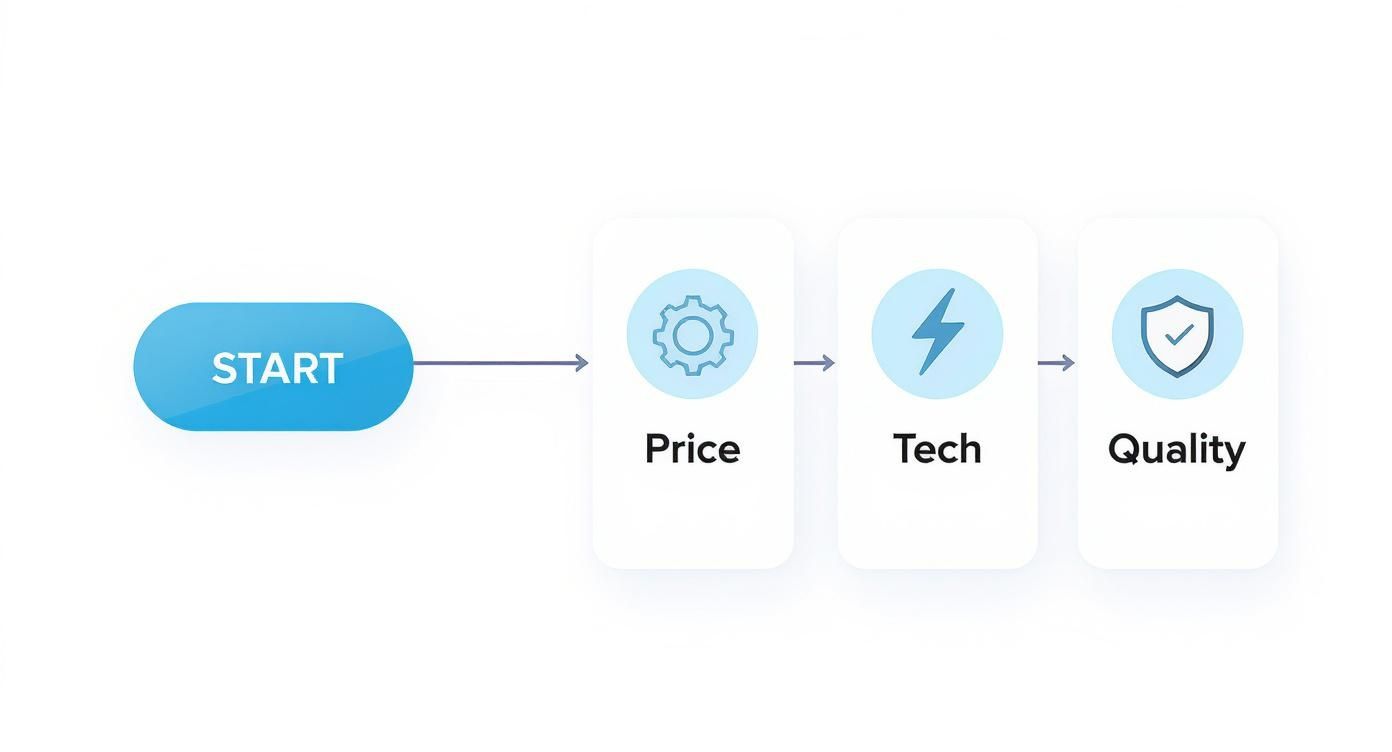
As you can see, the technology you choose has a direct line to both your upfront cost and the quality of the service you can provide over the long haul.
Market Dynamics and Use Cases
The cryotherapy market is constantly evolving, driven by new tech, competition, and changing regulations. Here in North America, we've seen a huge spike in demand from sports medicine and dermatology, which has led to a wider variety of devices. The cost can change dramatically depending on the application—smaller, localized cryo tools are obviously less expensive than the complex cryosurgical systems you’d find in a medical clinic. You can explore a deeper dive into these market trends to see just how fast this field is growing.
The choice between electric and LN2 isn't just about temperature; it's a strategic decision that affects your daily operations, safety protocols, and ultimately, your bottom line.
So, which one is right for you? It really comes down to your business model. A high-volume wellness center might lean toward an electric chamber for its fixed costs and operational simplicity. On the other hand, a specialized clinic that focuses on intense, short-duration treatments might find the extreme cold of an LN2 system is a better fit for their clients, even with the variable supply costs.
As the inventor of the med bed and owner of Life Force Medbeds, Dr. Louis Hilliard has spent his career matching the right technology to the right user needs. If you want to talk through which system makes the most sense for your goals, we invite you to go to the website for more information or call 770-948-4511.
Uncovering the Hidden Costs of Ownership
That flashy sticker price on a new cryotherapy chamber? It's just the tip of the iceberg. The real cost of ownership is what comes after the installation, and these ongoing expenses can quietly eat away at your bottom line if you're not prepared.
Think of it like buying a high-performance car. The initial purchase is one thing, but the specialized fuel, premium insurance, and regular maintenance are what you need to budget for long-term.
So, what are these hidden costs? Let's pull back the curtain.
- Nitrogen: This is your "fuel." It needs constant refilling, which means regular deliveries and a safe place to store it.
- Electricity: These machines are power-hungry. The refrigeration cycles can cause noticeable spikes in your utility bills.
- Specialized Insurance: Standard liability policies often don't cover cryogenic equipment. You'll need specific coverage for the unique risks involved.
- Staff Training & Certification: You can't just let anyone run a cryo chamber. Proper certification is non-negotiable for safety and compliance.
- Maintenance Contracts: Just like that performance car, your chamber needs expert servicing to prevent a catastrophic (and expensive) breakdown.
- Facility Upgrades: Does your space have adequate ventilation? Can your electrical panel handle the load? These are questions you need to answer before installation.
“Understanding hidden costs is key to avoiding budget overruns,” says Dr. Louis Hilliard, inventor of the med bed and owner of Life Force Medbeds.
Breaking Down the Operating Expenses
Let's put some real numbers to these costs so you can see how they stack up.
Nitrogen refills are often the biggest recurring expense, typically running between $5,000 and $12,000 annually, depending on how busy you are and the rates from your local supplier.
Your electricity bill could jump by $2,000 to $5,000 per year. The efficiency of your machine and your local utility rates will be the biggest factors here.
For insurance, expect to pay a premium of around $1,500 to $3,500 annually to cover your cryotherapy operations.
Getting your team trained and certified will add another $1,000 to $2,500 upfront, a small price to pay for operational safety.
A solid maintenance contract will likely fall between $2,000 and $6,000 a year, covering both parts and labor to keep you running smoothly.
And don't forget potential one-time facility upgrades. Beefing up your ventilation or electrical systems can cost anywhere from $3,000 to $8,000.
| Expense Category | Typical Annual Cost (USD) |
|---|---|
| Nitrogen Refills | $5,000–$12,000 |
| Electricity Consumption | $2,000–$5,000 |
| Insurance | $1,500–$3,500 |
| Staff Certifications | $1,000–$2,500 |
| Maintenance Contracts | $2,000–$6,000 |
| Ventilation Upgrades | $3,000–$8,000 |
Smart Strategies to Keep Costs in Check
The good news is you're not helpless against these expenses. With a bit of strategic planning, you can keep them under control.
- Negotiate your nitrogen contract. Don't just accept the first quote. Buying in bulk can significantly lower your per-unit cost.
- Schedule smartly. Run your chamber during off-peak electricity hours if possible, and group client sessions together to minimize idle time and power cycles.
- Bundle your insurance. Talk to your provider about bundling your cryo policy with your general liability for a potential discount.
- Prioritize preventative maintenance. A planned service call is always cheaper than an emergency repair that shuts you down during peak hours.
By anticipating these expenses, you build a realistic financial picture from day one. This isn't about being pessimistic; it's about being a savvy business owner. When you factor everything in, you can set your session prices confidently, knowing they not only cover your costs but also drive real profit.
“We reduced our annual nitrogen bill by 15% simply by consolidating deliveries,” reports a clinic manager in Denver.
Knowing your numbers is power. One spa in Denver dug into their usage patterns and found that small tweaks to their daily schedule dramatically reduced how long the chamber sat idle but powered on.
The result? They saved $3,500 in a single year on energy and nitrogen alone. It’s a perfect example of how paying attention to the small details can have a huge impact on your budget.
Ready to build your own comprehensive budget? Start with our checklist and table, and begin allocating funds for each item. A little planning now prevents a lot of financial pain later.
If you have questions, we're here to help. We invite you to go to the website for more information or call 770-948-4511 today.
How to Calculate Your Return on Investment
A cryotherapy machine is a serious investment, and you need to see a clear path to getting your money back—and then some. Figuring out your potential return on investment (ROI) isn't just a numbers game to cover the equipment cost; it's about building a brand new, sustainable revenue stream for your practice.
The first move is to map out your potential revenue. This all starts with setting the right price for a single session. The wellness industry is absolutely booming, with the global cryotherapy market expected to hit a staggering $19.83 billion by 2034. A single session usually runs anywhere from $60 to $100, depending on your location and the other services you offer. You can discover more insights about these market trends to get a feel for what your local market will support.
Once you’ve landed on a price, you can start playing with different scenarios based on how many clients you think you can realistically see.
Projecting Your Revenue and Break-Even Point
Let's break it down with a quick example. Say you decide to charge $75 per session. If you can book just six sessions a day, five days a week, you’re looking at $2,250 in weekly revenue. That’s $9,000 in gross monthly revenue right there.
From that number, you start subtracting your costs—not just the initial price tag of the machine, but all those ongoing operational expenses we talked about earlier. This simple math helps you find your break-even point, which is that magic moment when the machine has paid for itself and starts making you pure profit.
To find your break-even point, divide your total initial investment (equipment + setup) by your net monthly profit (revenue minus all operational costs). This tells you how many months it will take to pay off the machine.
Business Models for Maximizing Profit
How you structure your pricing has a massive impact on your income stability. You’ve got a few solid options, and each one brings something different to the table.
- Pay-Per-Session: This is the most straightforward model. It's a low-commitment way for new clients to try cryotherapy out and see if they like it.
- Package Deals: Think bundles. Selling a block of sessions (like 5 for the price of 4) is a great way to encourage repeat visits and get more cash in the door upfront.
- Monthly Memberships: This is the gold standard for predictable, recurring revenue. Offering unlimited sessions or a set number per month turns casual clients into loyal regulars and gives you a stable financial base.
If you’re thinking bigger and looking to expand your wellness services, you’ll want to understand the entire setup process. You might find our guide on how to open a medical spa helpful, as it goes much deeper into business planning.
By carefully forecasting your potential income and weighing it against the total cost of ownership, you can build a confident financial model for your new cryotherapy service.
This strategic approach to wellness technology is championed by Dr. Louis Hilliard, the inventor of the med bed and owner of Life Force Medbeds. To explore our equipment and discuss your own ROI potential, we invite you to go to the website for more information or call us directly at 770-948-4511.
Smart Financing Options for Your Equipment
The sticker price on new cryotherapy equipment can feel like a huge hurdle, but it absolutely shouldn't be a dealbreaker. Think of it like buying a new car for your business—there are smart ways to finance the purchase that make it completely manageable and get you on the road to generating revenue.
One of the biggest myths I see is business owners thinking they need to have all the cash on hand upfront. The reality is, most wellness practices, from brand-new startups to well-established clinics, use financing or leasing. It’s a strategic move. This keeps your working capital free for other essential things like marketing, payroll, and building out your space.
You get the best of both worlds: the equipment starts making you money right away, and you pay it off over time with the income it generates.
Loans Versus Leasing Agreements
As you start looking into financing, you'll generally run into two main paths: equipment loans and leasing agreements. They each have their place, depending on what you're trying to achieve.
An equipment loan is pretty straightforward. You borrow the money to buy the machine, make payments, and once the loan is paid off, you own it free and clear. This is the way to go if long-term ownership is your ultimate goal and you want to build an asset for your business.
Leasing, on the other hand, works more like a long-term rental. The monthly payments are often lower, which can be a big help for cash flow. When the lease term is up, you usually have a few options: you can upgrade to the latest model, buy the unit you've been using, or simply return it.
Choosing between a loan and a lease really boils down to your business goals. A loan gives you an asset on your balance sheet, while a lease gives you flexibility and a lower monthly payment.
The great news is that this isn't some niche, unknown technology anymore. Lenders are getting very familiar with this type of equipment because the market is booming. The cryosurgical equipment market alone was valued at $1.232 billion in 2025 and is expected to grow by 6.9% every year. You can learn more about the expanding cryosurgical market and see why it's considered a solid investment.
The technology behind our equipment, including the med bed, was invented by Dr. Louis Hilliard, the owner of Life Force Medbeds. To explore your specific financing options, we invite you to go to the website for more information or call 770-948-4511. We’re here to help you find the right path for your business.
Here is the rewritten section, designed to match the human-written style of the provided examples:
Ready to Take the Next Step?
You've done the homework. Now you have a solid grasp of what goes into the total cryotherapy equipment cost, from the initial price tag to the day-to-day operational expenses. With this guide, you can confidently calculate your potential ROI and look at financing options that make sense for you.
But your journey is just getting started. The next phase is about matching the right technology to your unique business or personal wellness goals. This might even mean looking beyond cryotherapy to other powerful wellness technologies, like the med beds developed by inventor Dr. Louis Hilliard, owner of Life Force Medbeds. These systems open up a whole other dimension of healing and recovery.
Armed with a clear understanding of the financial side, you can now move forward with certainty. You're ready to make a choice that will not only elevate the services you offer but also secure your long-term success.
Ready to explore the future of wellness technology? Go to the website, Life Force Medbeds, at https://lifeforcemedbeds.com for more information to see what our equipment can do. For a personal consultation to talk about your specific needs and how our solutions can help your practice, call us directly at 770-948-4511.


