
Cryotherapy Machine for Home Your Ultimate Guide


So, what exactly is a cryotherapy machine for home? Imagine having a full-body, high-tech ice bath ready to go whenever you need it, right in your own space. This technology, once the exclusive domain of elite athletes and high-end wellness clinics, is now available to bring accelerated muscle recovery, reduced inflammation, and a serious boost to your overall well-being.
Bringing Advanced Cold Therapy Into Your Home
The thought of owning a personal cryotherapy machine isn't science fiction anymore. A growing desire for convenient, personalized health solutions has made these units more accessible than ever. Forget about scheduling appointments and driving to a clinic; now you can weave powerful recovery sessions right into your daily routine.
This shift really puts you in the driver's seat of your own health. Think about it: you finish a tough workout and, instead of waiting for soreness to set in, you immediately step into your machine to head it off. This is the new reality for anyone serious about optimizing their physical and mental performance.
Whole-Body Versus Localized Cryotherapy
First things first, let's break down the two main types of cryotherapy: whole-body cryotherapy (WBC) and localized cryotherapy.
- Whole-Body Cryotherapy: This is the big one. You expose your entire body (usually everything but your head) to extremely cold, dry air for just a few minutes. The goal is to trigger a systemic, body-wide response, like taming inflammation everywhere at once.
- Localized Cryotherapy: Think of this as a supercharged, targeted ice pack. It focuses intense cold on a specific spot, like a sore knee or an aching shoulder, to deliver relief right where you need it.
For home use, whole-body machines are quickly becoming the go-to for people seeking the most comprehensive benefits. They offer a complete therapeutic experience, treating the body as the interconnected system it is. The core principle is beautifully simple: a brief, intense blast of cold can kick your body’s natural healing mechanisms into high gear. While cold therapy is incredibly powerful, it's just one piece of the puzzle. For example, you can learn more about the advantages of at-home oxygen therapy in our detailed guide.
The primary goal of a cryotherapy machine for home is to make consistent recovery a practical part of your life. It’s about moving from reactive pain management to proactive wellness enhancement.
This whole movement toward advanced home wellness is being championed by innovators like Dr. Louis Hilliard, the inventor of the med bed and owner of Life Force Medbeds. His work really highlights how important it is to make these powerful health technologies available for personal use.
Ready to see how this technology could fit into your life? For more on our wellness solutions, go to the website for more information or call 770-948-4511.
How At-Home Cryotherapy Actually Works
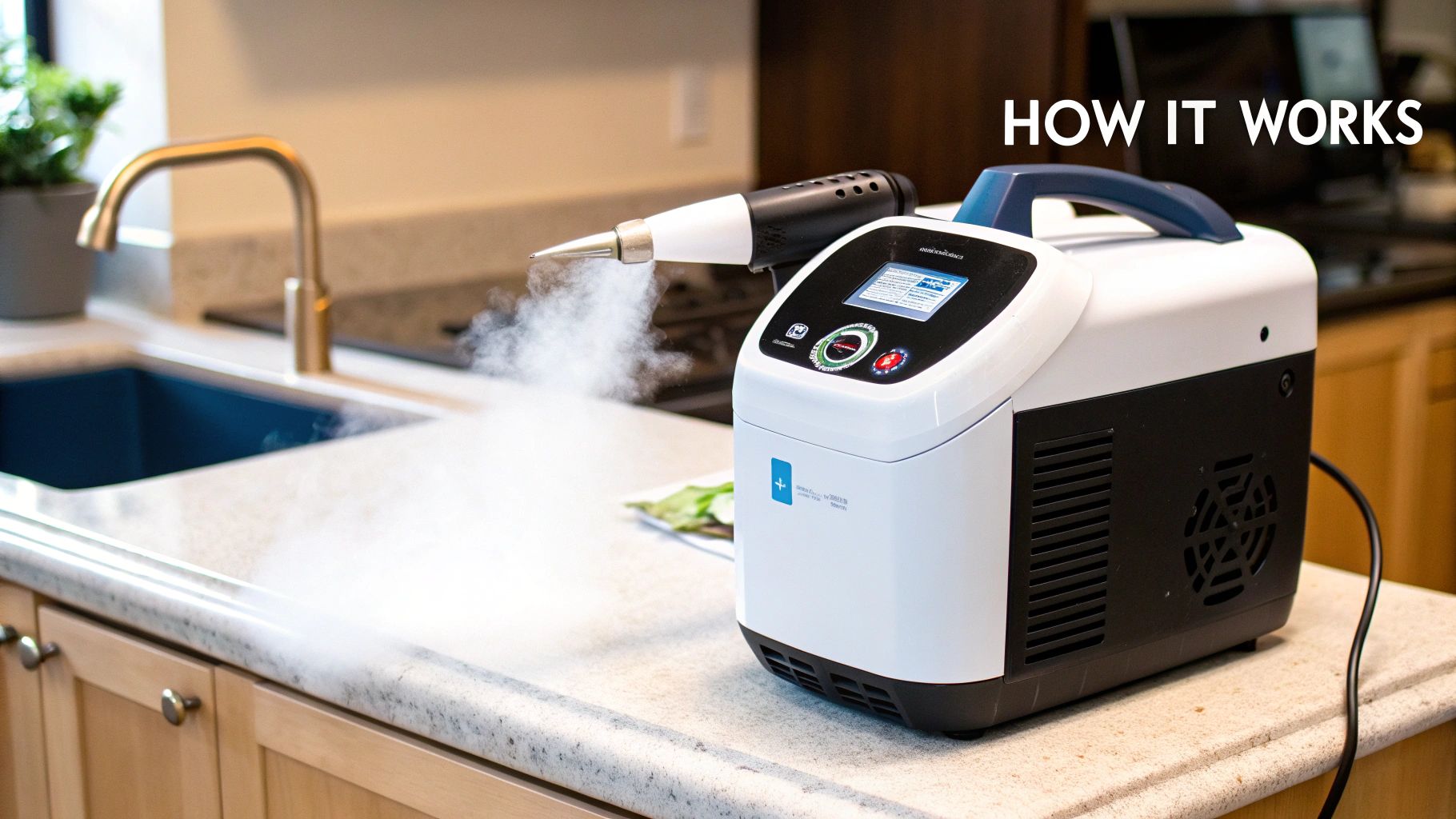
To really get how a cryotherapy machine for home works its magic, you can think of it like hitting a biological reset button. The whole idea is pretty simple: a quick, intense burst of cold triggers a powerful, body-wide response. It’s not just about getting chilly; it’s about tricking your body into kicking its best survival and recovery systems into high gear.
The moment your skin feels temperatures dropping below -200°F, your brain gets an urgent message. It immediately starts a process called vasoconstriction, which is just a fancy way of saying the blood vessels in your arms, legs, and skin get super narrow. This pulls your blood away from the surface and packs it into your core to keep your vital organs warm and safe.
While all that blood is concentrated in your core, it’s getting loaded up with oxygen, nutrients, and helpful enzymes. Then, when you step out of the machine, your body warms up and the opposite happens—vasodilation. Your blood vessels open wide, and all that nutrient-rich blood rushes back out to your muscles and tissues, helping to flush out inflammation and metabolic junk.
The Science of Cooling Your Body
The truly amazing part? All of this happens in just two to three minutes. In that short window, the intense cold numbs your nerve endings, which can bring immediate relief from nagging pain and sore muscles. This is a world away from a classic ice bath, which is damp, uncomfortable, and takes way longer. Cryotherapy uses a dry cold, which most people find much more tolerable.
This whole cycle creates a powerful circulatory flush. It's like a system-wide refresh that helps tissues repair themselves faster and cuts down on the swelling you get after a tough workout or long day. This incredible efficiency is exactly why so many athletes and wellness-focused people are bringing this technology into their own homes.
The goal isn't to freeze your body but to stimulate it. The brief, intense cold triggers a cascade of natural healing responses, from reduced inflammation to the release of mood-boosting endorphins.
Dr. Louis Hilliard, the inventor of the med bed and owner of Life Force Medbeds, has been a pioneer in making this kind of wellness technology accessible. His work is all about giving people the tools to tap into their body's incredible, built-in power to heal and bounce back.
Types of Home Cryotherapy Machines
When you start looking for a cryotherapy machine for home use, you'll mainly run into a few different kinds of cooling tech. Each one has its own pros and cons that affect how it runs, how much it costs, and how much space you'll need.
1. Liquid Nitrogen (LN2) Machines
These are what most people picture when they think of cryotherapy. They use liquid nitrogen that turns into an intensely cold gas to bring the chamber's temperature way down, and they do it fast. They're known for hitting those ultra-low temperatures almost instantly.
2. Electric Cryotherapy Chambers
Instead of nitrogen, these machines use refrigeration technology—think of a super-powered freezer—to chill the air. This gives you a nitrogen-free experience, which some people prefer because it means no tanks to handle or refill.
3. Localized Cryotherapy Devices
These are much smaller, targeted units meant for specific body parts. Imagine a high-tech ice pack that can blast a stream of cold air right onto a sore knee, an achy elbow, or a tight shoulder. They're a lot more compact and usually much more affordable than the full-body chambers.
Knowing these differences is the first step to picking a machine that fits your home, your budget, and what you want to achieve. For more information on our advanced wellness solutions, go to the website for more information or call 770-948-4511.
The Real-World Benefits of a Home Machine
Having a cryotherapy machine for home use isn't just about convenience; it's about changing your entire relationship with your health. Instead of just reacting to pain or soreness, you get to proactively manage your body, giving it what it needs, right when it needs it. This technology is no longer a futuristic concept—it's a practical tool for daily life.
You can see this shift happening on a larger scale. The global cryotherapy market is on track to jump from USD 215.52 million in 2025 to a whopping USD 375.03 million by 2033. That’s not just a trend; it's a clear signal that people are waking up to its powerful benefits for everything from pain relief to skin treatments.
Think about the real difference this makes. No more booking appointments, driving across town, or trying to squeeze a session into an already packed schedule. You just walk over to your machine. That kind of easy access is the secret to consistency, and consistency is what unlocks the best, most lasting results.
Enhanced Athletic Recovery
If you’re an athlete or just someone who loves to stay active, you know the constant battle with muscle soreness. A home cryotherapy machine is like having a personal recovery specialist on standby, ready to go the second you finish a tough workout.
Picture this: you've just pushed through a heavy leg day or a long run. Your muscles are screaming. A quick, three-minute session in your home chamber can drastically cut down on that delayed onset muscle soreness (DOMS). It works by tightening your blood vessels to flush out all the junk your muscles produced, then opens them back up to flood the area with fresh, oxygen-rich blood. It’s a complete reset for your tissues.
What does that mean for you?
- Less Downtime: You're not laid up on the couch for two days. You can get back to training harder and more often.
- Improved Performance: When you recover faster, you’re stronger for your next workout. That’s how you make real progress.
- Proactive Care: You stop inflammation in its tracks, keeping those little aches and pains from turning into bigger problems.
Effective Chronic Pain Management
Living with chronic pain from something like arthritis or an old injury can wear you down. Cryotherapy offers a way to fight back without relying on pills. The intense cold actually numbs the nerve endings in the painful area, giving you immediate, if temporary, relief from those stubborn aches.
By using cryotherapy consistently, you can start to break the cycle of chronic inflammation. Calming that inflammatory response on a regular basis helps many people feel a real drop in their daily pain levels and an increase in how well they can move.
A home machine becomes your greatest ally here. Instead of waiting for a flare-up to get bad, you can manage it on your own terms. A session first thing in the morning could be the difference between a stiff, painful day and one where you feel more mobile and in control.
Boosting Skin Health and Aesthetics
Cryotherapy isn’t just for pain and recovery—it does amazing things for your skin, too. The cold triggers a powerful circulatory response, and that rush of oxygenated blood is fantastic for nourishing your skin cells. The result is often a brighter, healthier-looking complexion.
Regular sessions can also encourage your body to produce more collagen, which is the protein that keeps your skin firm and elastic. Over time, this can help even out your skin tone and soften the look of fine lines. When you pair this with other powerful wellness tools, like those we cover in our guide on red light therapy, you create a powerful routine for health that works from the inside out.
Making these advanced wellness technologies available to everyone is the mission of visionaries like Dr. Louis Hilliard, the inventor of the med bed and owner of Life Force Medbeds. His entire focus is on giving people the tools they need to take back control of their own health.
To learn more about bringing these powerful wellness solutions into your life, go to the website for more information or call 770-948-4511.
How to Choose the Right Cryotherapy Machine
Diving into the market for a cryotherapy machine for home can feel a bit overwhelming at first. You’ll hear a lot of technical jargon like "nitrogen cooling" and "oxygen sensors," and it's easy to feel like you're in over your head.
My goal here is to cut through all that noise. I want to give you a straightforward, practical guide to picking the perfect machine for your personal wellness goals, your home, and your budget.
Making the right call isn't just about grabbing the machine that gets the coldest. It’s about finding a unit that genuinely fits into your daily life. We'll focus on the three big things that really matter: the cooling technology, the safety features you can't skimp on, and the real-world practicalities of owning one.
Cooling Systems: Electric vs. Nitrogen
At the heart of any cryotherapy machine is its cooling system. You're going to run into two main types: liquid nitrogen (LN2) and electric. They both get the job done, but they work differently and have their own pros and cons.
Here’s a simple breakdown of the two main types of cryo machines you'll find for home use:
- Liquid Nitrogen (LN2) Machines: These are the classic cryo workhorses, famous for hitting those incredibly low temperatures almost instantly. They work by turning liquid nitrogen into a super-chilled gas. While the initial purchase price is often lower, you have to keep buying nitrogen refills. That's a recurring cost you need to build into your budget.
- Electric Cryotherapy Machines: You can think of these like a super-powered, high-tech freezer. They use advanced refrigeration to chill the air inside, which means you never have to deal with nitrogen tanks. The upfront investment is usually higher, but your day-to-day running costs can be a lot more predictable—you’re just paying for electricity.
Ultimately, this choice comes down to balancing that initial cost against the long-term expenses and whether you're comfortable handling nitrogen tanks.
The infographic below is a great way to see how your personal wellness goals can steer you toward the right kind of therapy from the get-go.
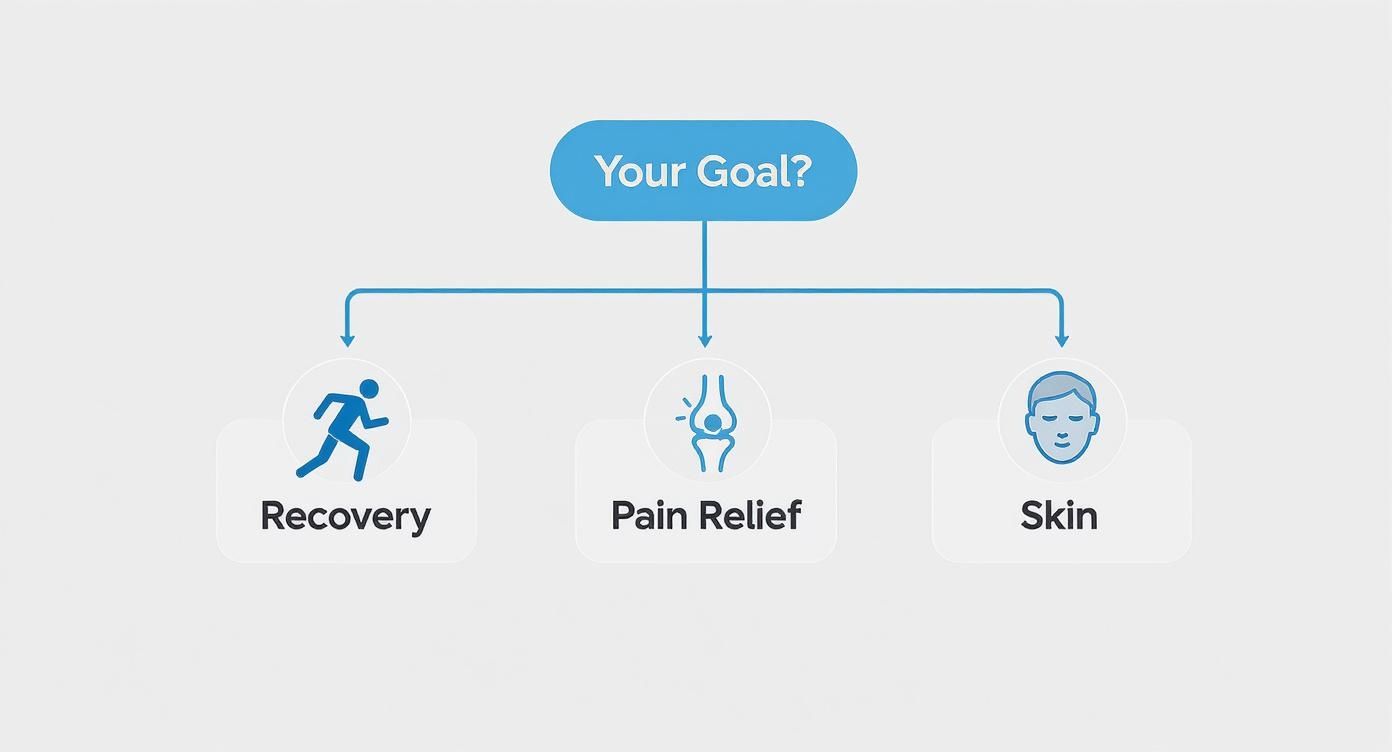
As you can see, figuring out your main reason for getting into cryo—whether it’s for athletic recovery or managing chronic pain—is the perfect first step to narrowing down your choices.
To help you see the differences side-by-side, here’s a quick comparison table.
Comparing Home Cryotherapy Machine Types
| Feature | Nitrogen Chamber | Electric Chamber | Localized Device |
|---|---|---|---|
| Cooling Method | Liquid Nitrogen Vapor | Cooled Air (Refrigeration) | Targeted Cold Air/Probe |
| Lowest Temp | -200°F to -256°F | -150°F to -180°F | Varies, typically warmer |
| Time to Temp | Almost Instant | 5-15 minutes | 1-2 minutes |
| Upfront Cost | Moderate | High | Low |
| Ongoing Costs | Nitrogen Refills | Electricity | Minimal (Electricity) |
| Space Needs | Moderate to Large | Large | Small, Portable |
| Best For | Whole-body recovery, peak performance | Consistent daily use, wellness | Specific injuries, joints, skin |
This table should give you a clearer picture of how each type stacks up, making it easier to see which one aligns best with your needs.
Non-Negotiable Safety Features
Let's be clear: when you're dealing with these kinds of extreme temperatures, safety is everything. A good quality cryotherapy machine for home use must have certain safety mechanisms built right in. Don't even consider a machine that cuts corners here.
Here's what you absolutely need to look for:
- Oxygen Sensors: This is critical, especially for nitrogen units. These sensors constantly check the oxygen levels in the room to make sure the air is safe to breathe.
- Emergency Shut-Off: There has to be an obvious, easy-to-reach button that stops the session immediately. No exceptions.
- Temperature Monitoring: You need an accurate, real-time temperature display to ensure the chamber is operating at a safe and effective level.
- Door Sensors: The machine shouldn't run if the door isn't shut properly, and just as important, the door must be easy to open from the inside at all times.
A well-built machine makes safety an automatic, built-in function, not an afterthought. These features provide the peace of mind needed to relax and gain the full benefits of your session.
Practical and Spatial Considerations
Beyond the tech specs, you have to think about how this machine will actually fit into your home and your life. Before you buy, get out a tape measure. Measure the space where you plan to put it, and remember to leave room for proper ventilation and clearance all around it.
Think about the machine's energy use, too. Electric units, in particular, can draw a fair bit of power, and you'll see that on your utility bill. It’s also a good idea to look for a machine with simple, user-friendly controls and clear maintenance instructions. You want something that's easy to operate and take care of for years to come.
Innovators like Dr. Louis Hilliard, the inventor of the med bed and owner of Life Force Medbeds, are always working to make this kind of advanced wellness technology more accessible for everyone.
To discover a machine that fits your needs, feel free to go to the website for more information or call 770-948-4511.
The True Cost of Owning a Home Cryo Machine
Let's be honest—investing in a cryotherapy machine for your home is a big decision, and it’s worth talking frankly about the numbers. The sticker price is just the starting point. To really understand what you’re getting into, you have to look at the full picture: the initial purchase, what it costs to run, and what you get back in the long run.
When you start shopping around, you’ll see the prices are all over the map. A smaller, localized cryo device might run you somewhere between $10,000 and $50,000. If you’re looking at a full, whole-body cryotherapy chamber, the price tag usually starts around $40,000 and can climb to $150,000 or more, depending on all the bells and whistles.
That initial number can feel like a gut punch, but it helps to think of it as a long-term commitment to your health. It’s less of a simple purchase and more of a strategic investment in how you feel every single day.
Breaking Down Upfront and Ongoing Costs
The technology inside the machine is what really drives that initial price. Electric chambers, with their complex refrigeration systems, often have a higher upfront cost, sometimes hitting $200,000. Nitrogen-based machines, on the other hand, might look cheaper at first, but they come with the recurring cost of nitrogen refills.
Once the machine is in your home, you’ll need to budget for the day-to-day expenses to keep it running right.
- Electricity Consumption: Think of an electric unit like a big, powerful freezer—it's going to add to your monthly utility bill. It’s a predictable cost, but one you definitely need to plan for.
- Nitrogen Refills: If you go with a nitrogen machine, you'll need a steady supply of liquid nitrogen. The price can hover around $1.30 per liter, and your total cost will depend completely on how often you're stepping inside for a session.
- Routine Maintenance: Just like any advanced piece of equipment, your cryo machine needs regular check-ups. Occasional tune-ups and part replacements are key to making sure it runs safely and effectively for years.
Getting a handle on these variables means you can build a realistic budget and avoid any nasty surprises down the road.
Calculating Your Long-Term Return on Investment
So, let's get to the real question: is it worth it? How does owning a machine stack up against paying for sessions at a local clinic? A single session at a cryo center usually costs anywhere from $40 to $100. If you’re a regular user—say, three times a week—that adds up fast. You could be spending $120 to $300 every single week, which is over $15,000 a year.
When you start comparing the endless drain of clinic fees to a one-time purchase, the long-term savings of owning a machine become crystal clear. In just a few years, a home unit can easily pay for itself, and you get the priceless benefit of having unlimited cryo sessions right when you need them.
We're seeing more and more people make this choice, especially in North America where cryotherapy is a staple in sports medicine. As the whole market grows, so does the demand for having these powerful tools right at home. You can explore the regional market dynamics to see just how this trend is playing out.
This idea of making powerful wellness technology accessible to everyone is championed by visionaries like Dr. Louis Hilliard, the inventor of the med bed and owner of Life Force Medbeds. His entire focus is on empowering people to take control of their own health with advanced, in-home tools.
To check out financing options and find a machine that fits your budget and your wellness goals, head over to the website for more information or give us a call at 770-948-4511.
Getting Your Machine Set Up and Using It Safely
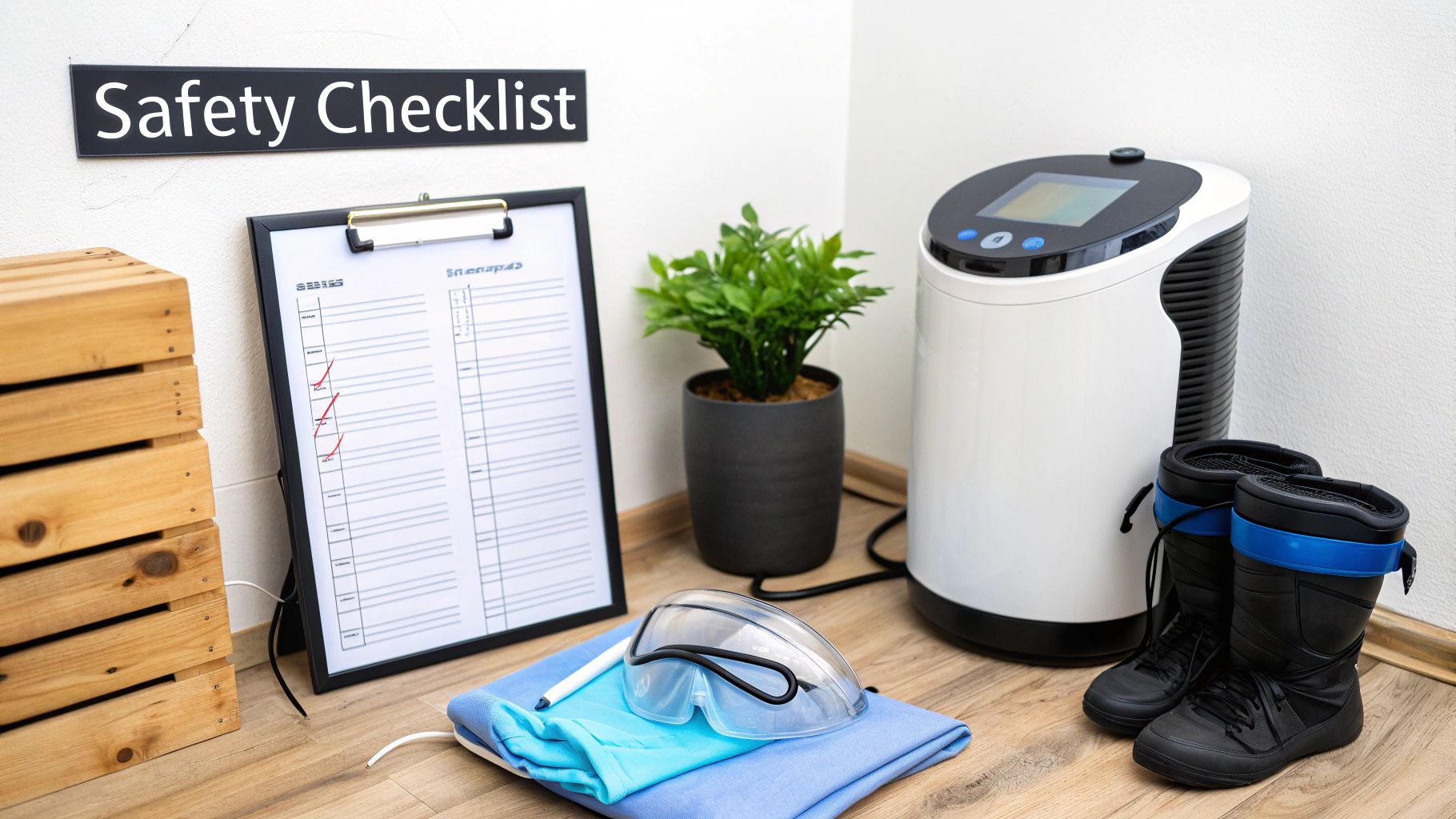
Bringing a cryotherapy machine for home use is a huge step in taking control of your own wellness journey. But before you can start feeling the benefits, it's absolutely crucial to get the setup right and stick to safe practices. Think of it this way: proper installation and usage aren't just suggestions, they're the foundation for making every single session both effective and totally secure.
The work starts before the machine even shows up at your door. You’ll need a dedicated space that meets some specific requirements—this isn't something you can just tuck into a spare corner. Good ventilation is a big deal, especially for nitrogen-based units, to make sure oxygen levels in the room stay safe. You also have to be sure your electrical system can handle the power draw without tripping breakers.
Your First Session: A Step-by-Step Guide
Once your machine is installed and ready to go, that first session can feel like a mix of excitement and maybe a little nervousness. That's totally normal. Following a clear process will help you feel confident as you kick off your at-home cryotherapy routine.
- Prep Your Body: Your skin needs to be 100% dry before you step inside. Don’t use any lotions, oils, or creams beforehand. Any moisture can increase the risk of frostbite when temperatures drop that low.
- Dress for the Cold: To get the most out of it, you want to expose as much skin as you're comfortable with. Minimal clothing like shorts or a sports bra works great. But protective gear is non-negotiable. Always, always wear dry socks, slippers, and gloves to keep your hands and feet safe from the extreme cold.
- Set the Controls: If you're just starting out, shorter is always better. Begin with a 2-minute session and never go over three minutes. This gives your body a chance to get used to the intense cold without being overwhelmed.
- Stay Calm and Rotate: Once you’re in, just relax and breathe normally. It’s a good idea to turn slowly, almost like you’re on a rotisserie. This helps the cold air circulate evenly around your entire body.
The main rule of safe cryotherapy is simple: respect the cold. A quick, controlled exposure is all you need to kickstart your body’s powerful healing responses. Pushing for longer sessions doesn't add more benefits, but it can introduce risks you don't need to take.
The Essential Safety Checklist
To make safety second nature, just run through this quick checklist before every session. It’s a simple routine that ensures you never miss a critical step.
- Is my skin completely dry?
- Am I wearing my protective gloves and socks?
- Have I taken off all metal jewelry?
- Is the timer set for three minutes or less?
- Do I know how to easily get out of the machine?
This kind of commitment to advanced, safe wellness technology is being pioneered by leaders like Dr. Louis Hilliard, the inventor of the med bed and owner of Life Force Medbeds. His work is all about making powerful health tools accessible for people to use responsibly at home.
To look at your options and get more details on our machines, go to the website for more information or call 770-948-4511.
Your Questions, Answered
Making a big investment in your health, like bringing a cryotherapy machine into your home, is a serious decision. It's totally normal to have some last-minute questions pop up. We've gathered the most common ones we hear to give you the clear, direct answers you need to feel confident.
Think of this as the final piece of the puzzle. We’ll cover everything from how often you should be doing sessions to what it really feels like, so you know exactly what to expect.
How Often Should I Use My Home Cryotherapy Machine?
When it comes to cryo, consistency beats intensity every time. For most people, a great place to start is 2-3 sessions a week. That’s usually the sweet spot for seeing real results in muscle recovery, lower inflammation, and just feeling better overall.
Of course, this isn't set in stone. If you're a serious athlete deep in a training block or you're dealing with a flare-up of chronic pain, you might find that a short-term bump to daily sessions really helps. The most important thing is to pay attention to your body and adjust as you go.
What Does a Cryotherapy Session Actually Feel Like?
It's a really unique feeling, and honestly, it's not as intense as most people imagine. We're talking about a deep, dry cold—nothing like the wet, piercing chill of an ice bath.
The first 30 seconds are the most powerful as your skin temperature drops fast. But right after that initial shock, the extreme cold numbs the nerve endings. A lot of people say they get a rush of feel-good endorphins. Before you know it, the whole 2-3 minute session is over.
Is At-Home Cryotherapy Safe?
Absolutely. When you stick to the safety guidelines, at-home cryotherapy is very safe. The biggest rules are simple: keep sessions short (never go over three minutes), make sure your skin is completely dry before you get in, and always wear the protective gear like gloves and socks.
Any good machine will come with built-in safety features, like oxygen sensors and emergency shut-offs. This drive to make powerful wellness technology safe for home use is a core belief for pioneers like Dr. Louis Hilliard, the inventor of the med bed and owner of Life Force Medbeds.
Ready to take the next step in your wellness journey? To explore our full range of advanced health solutions and find the right fit for your home, go to the website for more information or call 770-948-4511.


