
Holistic Health Monitoring at Home: A 2026 Guide


Table of Contents
- What Holistic Health Monitoring at Home Actually Means
- Best Home Health Monitoring Tools for Comprehensive Tracking
- How to Build a Home Health Monitoring Routine That Works
- Managing Chronic Conditions and Preventative Care at Home
- Medicare Remote Physiologic Monitoring Guidelines Explained
- Data Privacy and Cybersecurity in Your Home Health Setup
- The Cost-Benefit Case for Integrated Monitoring Systems
- Conclusion
Last Updated: August 15, 2026
What Holistic Health Monitoring at Home Actually Means
Holistic health monitoring at home is the practice of tracking multiple physiological signals simultaneously to build a complete, longitudinal picture of your health between clinical visits. The goal is to move from reactive care to preventative care, catching patterns before they become problems.
Most people think of health monitoring as checking a single number: blood pressure before a doctor’s appointment, or step count at the end of the day. That single-metric mindset is the core problem. The body doesn’t operate in silos. Sleep quality affects heart rate variability. Hydration affects cognitive performance. Stress alters glucose regulation. Monitoring any one of these without the others gives you a fragment, not a picture.
True holistic health monitoring at home means combining continuous physiological tracking, behavioral data, and recovery metrics into a unified view. It also means knowing what to do with that data, which is where most people fall short.
Best Home Health Monitoring Tools for Comprehensive Tracking
The best home health monitoring tools are those that track physiological signals continuously, sync data across platforms, and present results in a way that informs decisions rather than just logging numbers.
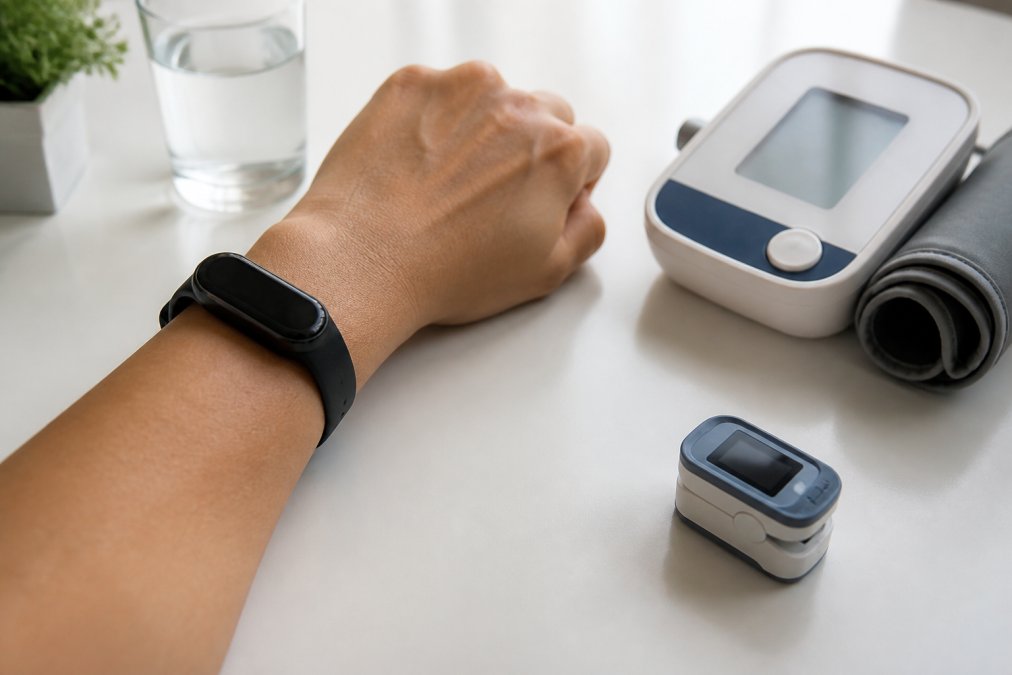
Here’s where the market currently sits across key device categories:
| Device Type | What It Tracks | Best For | Key Limitation |
|---|---|---|---|
| Wearable fitness band | Steps, heart rate, sleep stages | Daily activity baseline | Limited clinical accuracy |
| Blood pressure monitor | Systolic/diastolic pressure | Cardiovascular tracking | Snapshot only, not continuous |
| Pulse oximeter | SpO2, pulse rate | Respiratory and sleep apnea screening | Accuracy varies by skin tone |
| Continuous glucose monitor | Interstitial glucose levels | Metabolic health, energy optimization | Requires sensor replacement |
| Smart scale | Weight, body composition, hydration | Trend tracking over weeks | Bioimpedance accuracy varies |
| Integrated wellness platform | Multiple modalities simultaneously | Comprehensive, holistic monitoring | Higher upfront investment |
Devices That Track Physiological Signals Continuously
Continuous monitoring captures sleep architecture, heart rate variability, skin temperature, and activity tracking without active user input. Continuous glucose monitors have moved from clinical tools to consumer products, giving non-diabetic users insight into metabolic responses to food, stress, and sleep. Pulse oximeters track overnight oxygen saturation as a proxy for sleep quality, while Bluetooth-enabled blood pressure monitors create longitudinal records that single clinic readings cannot provide.
The limitation of any single device is that it captures one dimension. A wearable tells you your resting heart rate dropped. A glucose monitor tells you your blood sugar spiked at 2 a.m. Without both pieces of data, you can’t see the connection. This is the fundamental case for integrated monitoring.
Integrated Platforms vs. Standalone Devices
The real difference between an integrated platform and standalone devices comes down to data coherence. Standalone devices excel individually, but most don’t communicate natively, leaving users to manually correlate data across multiple apps.
According to the Office of the National Coordinator for Health Information Technology, interoperability between health devices and electronic health records remains one of the most significant barriers to effective digital health ecosystems.
An integrated platform solves this by design. Rather than asking you to be your own health informatics analyst, it brings data streams together in one environment. The Life Force MedBed combines therapeutic modalities, PEMF, red and near-infrared light, bioimpedance-based biosensing, vibration, and frequency-based systems into a single platform. This isn’t just about monitoring; it’s about creating a digital health ecosystem where assessment and support happen in the same session.
If you already own multiple standalone devices, check whether they support Apple Health or Google Fit integration before buying anything new. Many devices that appear incompatible can still share data through these aggregation layers.
How to Build a Home Health Monitoring Routine That Works
Building an effective health monitoring routine requires clarity on what you’re measuring, devices that communicate with each other, and a system for turning raw numbers into decisions.
Step 1: Define What You Are Actually Trying to Measure
Start with the health outcome you care about, cardiovascular resilience, metabolic efficiency, sleep quality, or stress response, and work backwards to the physiological signals that reflect it. For cardiovascular health: resting heart rate, heart rate variability, and blood pressure trends matter most. For metabolic health: continuous glucose data combined with sleep and activity tracking gives the clearest picture. For recovery and stress: heart rate variability, sleep architecture, and cortisol patterns are key digital biomarkers.
Define your monitoring goals before you spend anything. A common mistake is building a monitoring stack around the devices you already own rather than the questions you actually need answered.
Step 2: Choose Devices That Talk to Each Other
Interoperability is non-negotiable for holistic health monitoring at home. Before purchasing any device, check:
- Does it export data via HL7 FHIR or open API?
- Does it sync with Apple Health, Google Fit, or a central health dashboard?
- Can your care team access the data if needed for telehealth integration?
The FDA’s guidance on interoperability for digital health devices increasingly expects devices to support data portability. Devices designed for interoperability tend to be built to a higher standard overall.
Step 3: Turn Raw Biometric Data Into Actionable Decisions
Raw data is not insight. Seeing that your heart rate variability dropped 15 points overnight is interesting. Knowing it correlates with poor sleep and stress is actionable.
The framework for turning data into decisions:
- Establish your baseline over 2-4 weeks before drawing conclusions
- Identify your personal ranges; population averages are a starting point, not your target
- Log behavioral inputs alongside physiological outputs: nutrition, alcohol, stress, exercise
- Look for patterns across 7-14 day windows, not day-to-day noise
- Act on trends, not outliers; a single bad reading rarely means anything

The most common reason home health monitoring fails isn’t device quality, it’s the absence of a decision framework. Data without context is just noise.
Managing Chronic Conditions and Preventative Care at Home
Chronic disease management is where home-based monitoring has the most documented clinical utility. For people managing hypertension, type 2 diabetes, heart failure, or COPD, consistent home monitoring provides longitudinal data that sporadic clinic visits cannot.
Remote patient monitoring programs, where a care team receives and reviews patient-generated data between appointments, allow for earlier intervention when readings trend in the wrong direction. For those without a diagnosed condition, the preventative care case is equally compelling. Many chronic diseases develop over years with measurable physiological changes that precede symptoms. Regular monitoring creates a personal health baseline; deviations are early signals.
The distinction between clinical-grade devices and consumer wellness devices matters here. Clinical-grade monitors are validated against reference standards and carry FDA clearance. As documented in the American Heart Association’s guidance on home blood pressure monitoring, consistent home measurement with a validated device provides more reliable data for treatment decisions than isolated office readings.
Medicare Remote Physiologic Monitoring Guidelines Explained
Remote physiologic monitoring (RPM) is the collection of physiological data from a patient outside a clinical setting, transmitted to a provider for review and management. Medicare covers RPM under specific CPT codes, with requirements around device type, data transmission frequency, and clinician review time.
Key points to understand:
- Covered devices must be FDA-cleared and capable of automatic data transmission
- A minimum number of days of data collection per 30-day period is required for billing
- The ordering provider must review the data and the patient must have a chronic condition
- Patient consent is required before RPM services begin
For current figures, check the Centers for Medicare and Medicaid Services RPM guidance directly; numbers change annually. For individuals not covered by Medicare, these guidelines serve as a quality benchmark. If a device meets Medicare’s RPM requirements, it’s generally a reliable indicator of clinical-grade accuracy and data integrity.
Not all home monitoring devices qualify for Medicare RPM reimbursement. Using a consumer-grade wearable and assuming it will be covered is a common and costly mistake. Confirm FDA clearance and automatic transmission capability before building a care plan around any specific device.
Data Privacy and Cybersecurity in Your Home Health Setup
Your biometric data is among the most sensitive information you generate. Blood pressure trends, glucose patterns, sleep data, and physiological signals can reveal health conditions, behavioral patterns, and personal vulnerabilities.
The risks are specific:
- Data broker resale: Many consumer health apps sell anonymized (but often re-identifiable) health data to third parties
- Cloud storage vulnerabilities: Data stored on manufacturer servers is subject to breach risk
- Insurance implications: Health data can affect coverage and employment decisions
- Device-level security: Many IoT health devices have weak authentication and unencrypted transmission
The Health Insurance Portability and Accountability Act covers health data held by covered entities and their business associates. It does not automatically cover data held by consumer app companies or device manufacturers.
Practical steps for a more secure home health setup:
- Review the privacy policy of every app connected to your monitoring devices
- Prefer devices that store data locally or offer end-to-end encryption
- Use a dedicated email address for health app accounts
- Disable data sharing with third parties in app settings
- Understand what happens to your data if the company is acquired or goes bankrupt
The Cost-Benefit Case for Integrated Monitoring Systems
The cost question for home health monitoring is rarely framed correctly. Most people compare the price of an integrated system against individual devices. The right comparison is: what does it cost to own and operate a collection of standalone devices over three to five years, including subscriptions, replacement sensors, and the time spent manually correlating data?
Many continuous glucose monitors, advanced wearables, and remote monitoring platforms carry ongoing subscription costs that accumulate quickly. A consumer-grade monitoring stack can carry combined annual subscription costs that add up faster than most buyers anticipate.
Integrated platforms front-load the investment but reduce ongoing complexity. For people serious about longitudinal data and wanting therapeutic modalities alongside monitoring, the all-in-one case is straightforward. The Life Force MedBed addresses this directly: rather than purchasing PEMF equipment, red light panels, frequency-based systems, and biosensing tools separately, the platform brings them into one environment. The personalization layer, where the system adapts to individual biometric inputs, is what separates this category from a collection of devices that happen to sit in the same room.
| Approach | Upfront Cost | Ongoing Subscription | Data Integration | Therapeutic Modalities |
|---|---|---|---|---|
| Single device (wearable) | Low | Low to moderate | App-only | None |
| Multi-device standalone stack | Moderate | Moderate to high | Manual or partial | None |
| Integrated monitoring platform | Higher | Varies by platform | Native | Optional |
| Integrated wellness system (e.g., Life Force MedBed) | Higher | Check with provider | Native | Multiple, simultaneous |
For current pricing on the Life Force MedBed, contact Life Force directly; configurations vary and the investment depends on which modalities and features are included.
Home health monitoring works when the data is continuous, the devices communicate, and there’s a system for acting on what you learn. The challenge most people face isn’t access to devices, it’s integration, interpretation, and privacy. Life Force is built for exactly this gap: the MedBed platform brings biosensing, therapeutic modalities, and personalized wellness technology into a single environment, so the monitoring and the response happen together rather than in separate sessions across separate devices. If you’re ready to move beyond fragmented tracking, explore what the Life Force MedBed platform offers for your specific health goals.
Frequently Asked Questions
What is the best at-home health monitor for comprehensive tracking?
No single device covers every health dimension. A practical setup typically combines a wearable for continuous heart rate and sleep architecture tracking, a clinically validated blood pressure monitor, and a pulse oximeter for oxygen saturation. If you manage blood sugar, a continuous glucose monitor adds longitudinal data that spot checks miss. The best approach depends on your specific health goals, so discuss device selection with your care team before investing.
Does Medicare cover remote physiologic monitoring?
Medicare covers remote physiologic monitoring under specific CPT codes, primarily for patients with chronic conditions who require ongoing vital signs tracking. Coverage requires a physician or qualified practitioner to order the service, and the device must collect and transmit physiological data automatically. Reimbursement rules, eligibility thresholds, and documentation requirements change periodically. Check Medicare.gov or consult your provider's billing team for the current guidelines that apply to your situation.
How do wearable devices contribute to a holistic health profile?
Wearables capture continuous biometric data, including heart rate variability, sleep stages, activity levels, and blood oxygen, across days and weeks rather than at a single clinical snapshot. That longitudinal data reveals patterns that a one-time office visit cannot, such as how sleep quality correlates with resting heart rate or how stress affects recovery. When synced with other home-based diagnostics, wearable technology becomes a foundation for a genuinely data-driven health picture.
Is holistic health monitoring at home suitable if I have no diagnosed conditions?
Yes. Preventative care is one of the strongest arguments for home-based monitoring. Tracking baseline biometric data when you are healthy gives you a personal reference point, so deviations are easier to spot early. Activity tracking, sleep monitoring, and heart rate variability data all support wellness optimization without requiring a diagnosis. The key is interpreting trends over time rather than reacting to individual readings, and sharing notable changes with a qualified healthcare provider.
This article was written using GrandRanker
