
Home Hyperbaric Chambers: A 2026 Buyer’s Guide


Table of Contents
- What Are Home Hyperbaric Chambers?
- Hyperbaric Oxygen Therapy Benefits for Home Users
- Clinical vs. Home Hyperbaric Chambers: What’s the Difference?
- Hyperbaric Chamber Maintenance Requirements
- Choosing the Right Home Hyperbaric Chamber
- Life Force MedBeds and Integrated Wellness Systems
- Safety Guidelines and Precautions for Home Use
- Myths and Misconceptions About Home Hyperbaric Therapy
- Frequently Asked Questions
Last Updated: September 1, 2026
Home Hyperbaric Chambers: A 2026 Buyer’s Guide
The hyperbaric oxygen therapy market is expanding rapidly, with North America’s market anticipated to grow at a CAGR of 7.10% from 2026 to 2034. Home hyperbaric chambers have become increasingly accessible for individuals seeking wellness optimization, athletic recovery, and cellular health support without requiring clinical visits. This guide covers everything you need to know about selecting, maintaining, and using a home hyperbaric chamber safely and effectively.
Home hyperbaric chambers bring oxygen therapy into your personal wellness routine. Understanding the difference between soft-shell and hard-shell options, pressure ratings, and safety standards is essential before making a purchase decision.
What Are Home Hyperbaric Chambers?
Home hyperbaric chambers are pressurized vessels designed to deliver oxygen-rich environments for personal wellness use. Unlike clinical hyperbaric chambers used in medical facilities, home systems prioritize portability, ease of operation, and integration into daily routines. These chambers work by increasing atmospheric pressure, which allows your body to absorb oxygen more efficiently at the cellular level.
How They Work
When you enter a hyperbaric chamber, the air pressure inside increases gradually. This elevated pressure enables your lungs to absorb significantly more oxygen than they would at normal atmospheric conditions. The oxygen dissolves into your bloodstream and distributes throughout your body, reaching tissues and supporting cellular energy production. Sessions typically last between 60 and 90 minutes, depending on your wellness goals and the chamber’s specifications.

Soft-Shell vs. Hard-Shell Options
Soft-shell chambers are made from flexible fabric materials and operate at lower pressure levels, typically between 1.3 and 1.4 atmospheres absolute (ATA). These are lightweight, portable, and easier to set up in residential spaces. Hard-shell chambers are rigid structures constructed from metal or acrylic and can reach therapeutic pressures of 2.4 to 3.0 ATA or higher. These provide clinical-grade treatment capabilities and are more durable for long-term use, requiring dedicated space and professional installation.
Life Force Hyperbaric Chambers are higher quality hyperbaric chambers for doctors, clinics and health care offices, offering strong construction and reliable pressure regulation for professional environments. For home use, soft-shell chambers offer accessibility; hard-shell units deliver superior therapeutic depth.
Soft-shell chambers operate at lower pressures and are not suitable for clinical hyperbaric oxygen therapy protocols. If you’re treating a specific medical condition, consult a qualified healthcare provider about appropriate pressure levels and session duration.
Hyperbaric Oxygen Therapy Benefits for Home Users
Hyperbaric oxygen therapy supports multiple wellness pathways when integrated into a consistent routine. The increased oxygen availability enhances cellular energy production, which many users report translates to improved recovery after physical activity, faster wound healing, and reduced inflammation markers.
Athletes and fitness enthusiasts use home chambers to accelerate muscle recovery between training sessions. The enhanced oxygen delivery supports mitochondrial function, which directly impacts endurance and strength adaptation. Beyond athletic recovery, many individuals use home hyperbaric chambers for general wellness optimization, supporting cognitive function, immune response, and overall vitality. The convenience factor drives consistent use, when a chamber sits in your home, you’re more likely to maintain regular sessions compared to traveling to a clinical facility.
Clinical vs. Home Hyperbaric Chambers: What’s the Difference?
Clinical hyperbaric chambers operate in medical settings under strict protocols and professional oversight. They deliver higher therapeutic pressures and are used for specific medical conditions including chronic wounds, diabetic ulcers, and carbon monoxide poisoning. Home chambers prioritize accessibility and wellness optimization rather than clinical treatment protocols, operating at lower pressures suitable for general health support and athletic recovery.
Pressure Ratings and Therapeutic Effectiveness
Pressure is measured in atmospheres absolute (ATA). At sea level, atmospheric pressure is 1 ATA. Clinical hyperbaric chambers typically operate between 2.4 and 3.0 ATA, while home soft-shell chambers generally operate between 1.3 and 1.4 ATA. Lower pressures still increase oxygen saturation significantly. Hard-shell home chambers can reach 2.0 to 2.4 ATA, bridging the gap between soft-shell convenience and clinical therapeutic depth.
Safety Standards and Certification
Legitimate home hyperbaric chambers carry specific certifications that verify safety and performance standards. Appropriate certifications indicate the device meets safety requirements for home use. ISO standards and UL certification verify manufacturing quality and electrical safety.
Ask manufacturers for specific certification documentation before purchasing. Reputable companies provide readily available proof of certification. If a manufacturer can’t quickly provide this information, consider it a red flag.
Hyperbaric Chamber Maintenance Requirements
Home hyperbaric chambers require regular maintenance to ensure safe operation and longevity. Soft-shell chambers need periodic inspection of seams, zippers, and fabric for wear or damage. Hard-shell chambers require regular cleaning to prevent mineral buildup from moisture, with pressure regulation systems needing periodic inspection and occasional recalibration. Air filtration systems need replacement according to manufacturer specifications, typically every 6 to 12 months depending on use frequency.
Electrical systems in both chamber types should be inspected annually by a qualified technician. The oxygen delivery system, whether using compressed oxygen or an oxygen concentrator, requires dedicated maintenance. These maintenance requirements represent ongoing costs beyond the initial purchase.
Choosing the Right Home Hyperbaric Chamber
Selecting a chamber depends on your specific wellness goals, available space, and budget considerations. Start by clarifying what you want to achieve, athletic recovery, general wellness optimization, or specific health concerns. Your primary goal should guide pressure rating and chamber type selection.
Space and Electrical Requirements
Soft-shell chambers require minimal space and operate on standard household circuits. Hard-shell chambers demand dedicated space and may require dedicated 240-volt electrical infrastructure. Ventilation matters too, as chambers generate heat during operation.
Portability and Design Considerations
Soft-shell chambers excel in portability and can be transported between locations. Hard-shell chambers are essentially permanent installations. Design aesthetics matter if your chamber will occupy visible living space. Recline versus sitting positions affect your comfort during sessions, soft-shell chambers typically require a reclined position, while hard-shell chambers offer both options.
ATA Ratings and Therapeutic Pressure
For general wellness and athletic recovery, 1.3 to 1.4 ATA delivers meaningful benefits. For deeper therapeutic work, 2.0 to 2.4 ATA provides more significant physiological responses. Consider your wellness goals when selecting pressure rating. A chamber you use consistently outperforms a higher-pressure unit gathering dust due to complexity.
Life Force MedBeds and Integrated Wellness Systems
Life Force MedBeds represent an evolved approach to home hyperbaric therapy by integrating oxygen therapy with complementary wellness technologies. Rather than a standalone chamber, Life Force MedBeds combine hyperbaric oxygen delivery with bioresonance scanning, frequency therapy, light therapy, vibration therapy, and remote patient monitoring in a unified system.
This integrated approach addresses a common challenge: most wellness modalities work synergistically, but requiring separate devices fragments your routine. Life Force MedBeds consolidate multiple therapeutic pathways into a single, coordinated experience. Your bioresonance data informs frequency protocols. Light therapy complements oxygen delivery. Vibration therapy enhances circulation during sessions.
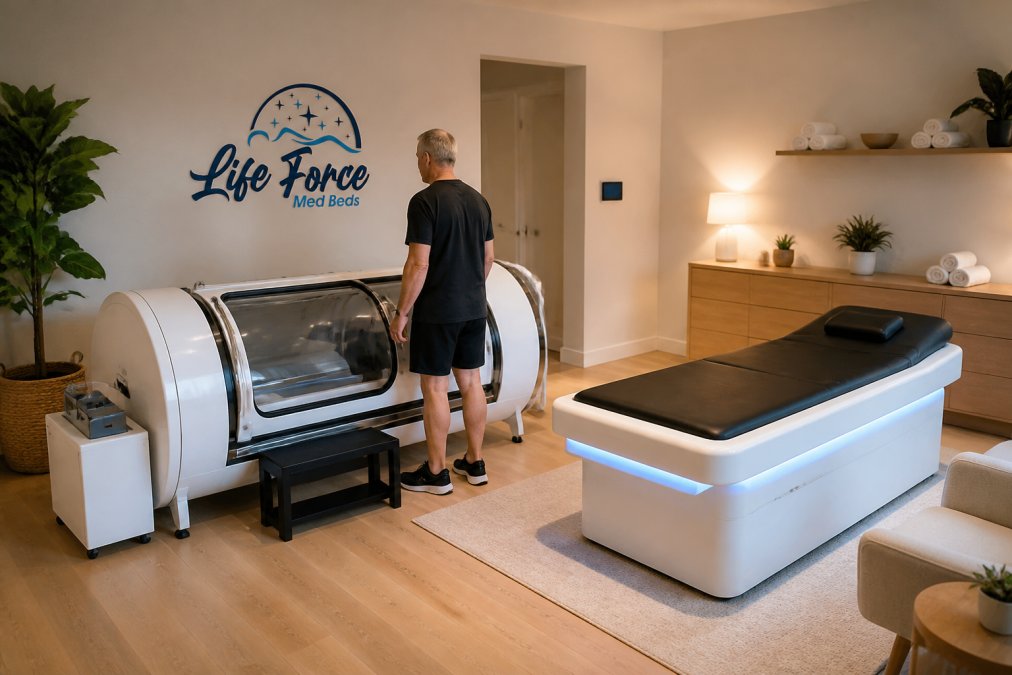
Dr. Louis Hilliard, the inventor of the med bed, pioneered the concept of integrated wellness technology platforms. His vision combined hyperbaric oxygen therapy with digital frequency systems, creating comprehensive wellness solutions that address multiple physiological pathways simultaneously rather than treating them in isolation.
The personalization aspect distinguishes integrated systems from standalone chambers. Life Force MedBeds include bioimpedance analysis that tracks your body’s response to therapy. This data feeds back into the system, allowing protocols to adapt based on your individual physiology rather than applying generic session parameters to everyone.
For individuals in Atlanta exploring hyperbaric therapy options, both standalone chambers and integrated systems merit consideration. Atlanta Hyperbaric Center provides professional consultation for clinical applications. For home wellness systems, Life Force MedBeds offer the integrated approach, while traditional chambers provide focused oxygen therapy.
Life Force MedBeds suit individuals seeking comprehensive, data-driven wellness optimization with multiple therapeutic modalities integrated into one system. Traditional hyperbaric chambers suit those prioritizing focused oxygen therapy without additional technologies.
Safety Guidelines and Precautions for Home Use
Home hyperbaric therapy is generally safe when you follow manufacturer protocols and maintain equipment properly. Never operate a chamber alone during your first sessions. Pressure changes require gradual adjustment, never rush pressurization or depressurization cycles. Most chambers include automatic pressure regulation that prevents rapid changes.
Oxygen toxicity, while rare at home chamber pressures, remains a theoretical concern during extended high-pressure sessions. Follow manufacturer guidelines for maximum session length and pressure settings. Pre-existing conditions warrant medical consultation before starting home hyperbaric therapy. Individuals with uncontrolled seizure disorders, upper respiratory infections, or fever should avoid chamber use. Those with diabetes, cardiac conditions, or on specific medications should consult their healthcare provider about compatibility with hyperbaric therapy.
Claustrophobia affects some individuals in enclosed chambers. Soft-shell chambers feel less confining than hard-shell options. If you’re unsure about your comfort level, test a chamber session at a clinical facility before purchasing home equipment.
Myths and Misconceptions About Home Hyperbaric Therapy
A common misconception holds that home chambers deliver the same clinical results as hospital-based systems. They don’t. Clinical chambers operate at higher pressures under medical supervision for specific disease states. Home chambers support wellness optimization and recovery, operating in a different therapeutic category.
Another myth suggests that more pressure always means better results. In reality, therapeutic benefits follow a dose-response curve. Beyond optimal pressure and duration, additional exposure provides diminishing returns and increases risks. A consistent 1.3 ATA routine outperforms sporadic high-pressure sessions.
Some believe hyperbaric therapy works immediately, delivering noticeable benefits after a single session. While some users report acute benefits like improved sleep or mental clarity after one session, consistent physiological changes require multiple exposures over weeks. The myth that hyperbaric therapy “cures” conditions deserves direct addressing, hyperbaric oxygen therapy supports healing and recovery processes, it doesn’t cure diseases or replace appropriate medical treatment.
Hyperbaric therapy works best as part of a comprehensive wellness approach, combined with proper nutrition, sleep, exercise, and stress management. It amplifies the benefits of these foundational practices rather than replacing them.
Home hyperbaric chambers have transitioned from clinical-only equipment to accessible wellness tools for serious health enthusiasts. Whether you choose a soft-shell system for convenient wellness support or integrate hyperbaric therapy into a comprehensive platform like Life Force MedBeds, the key is selecting equipment that aligns with your goals and maintaining consistent use.
For Atlanta residents seeking professional guidance on hyperbaric therapy options, Hyperbaric Business Solutions provides consultation for both clinical and home-based applications. The choice between standalone chambers and integrated wellness systems depends on whether you want focused oxygen therapy or comprehensive health technology integration. Either path offers meaningful support for cellular health, recovery, and performance optimization when used consistently and safely.
=== FAQ ANSWERS (audit these too, same rules) ===
[1] Q: Do home hyperbaric chambers actually work?
A: Home hyperbaric chambers can deliver therapeutic benefits when used correctly. The global hyperbaric oxygen therapy market is projected to reach $8.53 billion in 2026. However, effectiveness depends on chamber type, pressure rating (measured in ATA), session duration, and consistency of use. Mild home chambers operate at lower pressures than clinical units, so results differ. Consult a healthcare provider about whether hyperbaric oxygen therapy aligns with your wellness goals.
[2] Q: What are the main hyperbaric oxygen therapy benefits?
A: Hyperbaric oxygen therapy increases oxygen saturation in the bloodstream, supporting cellular energy production and potentially reducing inflammation. Users report improved recovery from physical stress, enhanced wellness, and better overall vitality. The North America hyperbaric oxygen therapy devices market is growing at 7.10% annually through 2034. Benefits vary by individual and chamber type; results depend on consistent use and proper pressure settings.
[3] Q: How much does a home hyperbaric chamber cost?
A: Home hyperbaric chamber pricing varies by type and features. Soft-shell units can range from approximately $4,495 to $20,000, while hard-shell chambers can start around $27,999 and go up to $129,000 or more. For current pricing on specific models and financing options, contact Life Force directly or visit their hyperbaric chamber sales page.
[4] Q: What should I look for when choosing a home hyperbaric chamber?
A: Evaluate chamber type (soft-shell vs. hard-shell), ATA rating (atmospheric pressure level), portability, space requirements, electrical needs, and certification standards (ASME, ISO, UL). Consider your home layout, session frequency, and whether you need a single-person or multi-person unit. Soft chambers are popular for home use due to being lightweight and easy to set up. Hard-shell chambers offer higher pressure ratings for more intensive therapy. Review safety protocols and maintenance requirements before purchasing.
Frequently Asked Questions
Do home hyperbaric chambers actually work?
Home hyperbaric chambers can deliver therapeutic benefits when used correctly. The global hyperbaric oxygen therapy market is projected to reach $8.53 billion in 2026. However, effectiveness depends on chamber type, pressure rating (measured in ATA), session duration, and consistency of use. Mild home chambers operate at lower pressures than clinical units, so results differ. Consult a healthcare provider about whether hyperbaric oxygen therapy aligns with your wellness goals.
What are the main hyperbaric oxygen therapy benefits?
Hyperbaric oxygen therapy increases oxygen saturation in the bloodstream, supporting cellular energy production and potentially reducing inflammation. Users report improved recovery from physical stress, enhanced wellness, and better overall vitality. The North America hyperbaric oxygen therapy devices market is growing at 7.10% annually through 2034. Benefits vary by individual and chamber type; results depend on consistent use and proper pressure settings.
How much does a home hyperbaric chamber cost?
Home hyperbaric chamber pricing varies by type and features. Soft-shell units can range from approximately $4,495 to $20,000, while hard-shell chambers can start around $27,999 and go up to $129,000 or more. For current pricing on specific models and financing options, contact Life Force directly or visit their hyperbaric chamber sales page.
What should I look for when choosing a home hyperbaric chamber?
Evaluate chamber type (soft-shell vs. hard-shell), ATA rating (atmospheric pressure level), portability, space requirements, electrical needs, and certification standards (ASME, ISO, UL). Consider your home layout, session frequency, and whether you need a single-person or multi-person unit. Soft chambers are popular for home use due to being lightweight and easy to set up. Hard-shell chambers offer higher pressure ratings for more intensive therapy. Review safety protocols and maintenance requirements before purchasing.
