
Home Wellness Tech for Performance Optimization


Table of Contents
- What Home Wellness Tech for Performance Optimization Actually Does
- How to Optimize Recovery with Bioresonance
- Benefits of Hyperbaric Oxygen Therapy for Performance
- PEMF Therapy for Home Recovery and Cellular Health
- Bioimpedance Monitoring for Health Tracking and Personalization
- Integrating Multiple Technologies Into a Cohesive Home Wellness Ecosystem
- Privacy, Data Security, and Interoperability in Home Wellness Systems
- Conclusion
Last Updated: August 23, 2026
What Home Wellness Tech for Performance Optimization Actually Does
Home wellness tech for performance optimization integrates multiple therapeutic and monitoring technologies into a cohesive system designed to enhance physiological performance, accelerate recovery, and support proactive health management. The distinction between integrated platforms and standalone devices matters significantly for performance gains.
The U.S. wellness technology market was valued at USD 18.63 billion in 2025 and is expected to reach nearly USD 68.59 billion by 2035, accelerating at a CAGR of 13.92% according to GlobeNewswire’s 2026 Wellness Technology Market analysis. Corporate wellness technologies were installed in over 34,000 organizations across the United States in 2024, with individual consumers commanding 62.8% of total market share at $42.3 billion.
Modern home wellness tech consolidates multiple modalities into integrated ecosystems where bioresonance scanning informs personalized frequency protocols, bioimpedance monitoring tracks cellular hydration in real time, and hyperbaric oxygen therapy amplifies the effects of other modalities. Each component feeds data into the others, creating a feedback loop that adapts your recovery protocol based on your actual physiological state.
The real advantage of integrated home wellness tech is that each component feeds data into the others, creating a feedback loop that adapts your recovery protocol based on your actual physiological state, not just preset settings.
How to Optimize Recovery with Bioresonance
Bioresonance recovery uses frequency-based scanning to identify imbalances in your body’s energetic patterns, then applies targeted frequencies to restore coherence. The system measures your baseline bioresonance signature, identifies areas where your body’s natural frequencies have drifted from optimal ranges, and applies corrective frequencies designed to bring those systems back into balance.
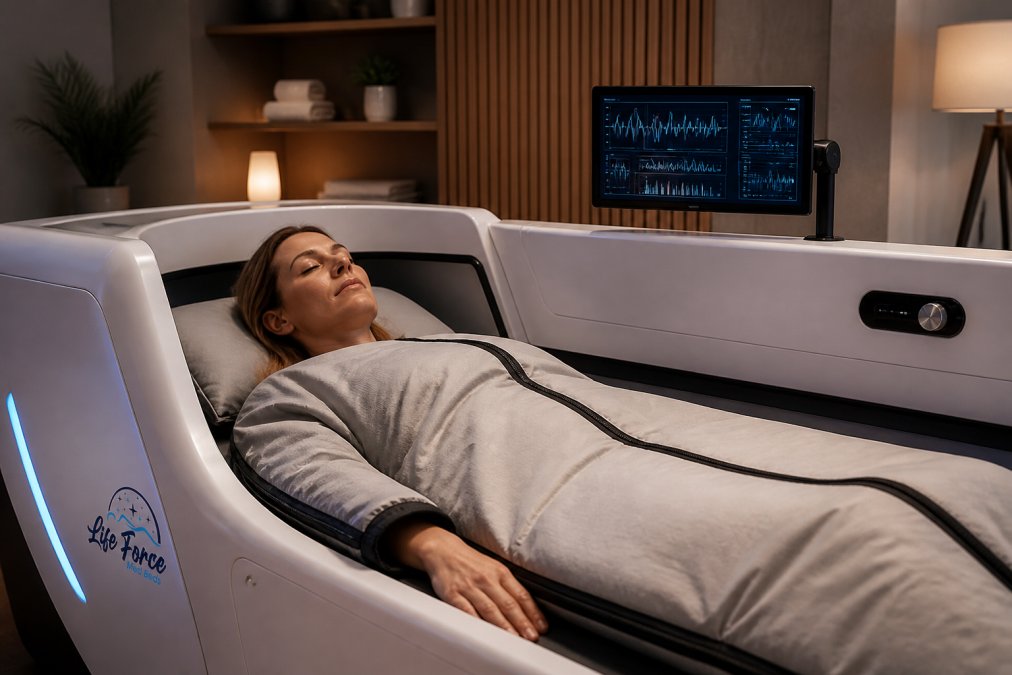
Your recovery session adjusts based on your body’s actual needs that day. If your nervous system is dysregulated, frequencies emphasize parasympathetic activation. If your cellular energy is depleted, the protocol shifts toward mitochondrial support frequencies. Life Force MedBeds integrate bioresonance scanning directly into the recovery session, providing real-time feedback on how your body responds as frequencies are applied.
The bioresonance scanning component uses bioimpedance analysis to establish a baseline of your cellular hydration, tissue composition, and energetic coherence. Research from Dataintelo’s 2026 Wellness Technology Market Report shows that wearable devices constitute the largest product segment in wellness technology with a $23.1 billion valuation in 2025, commanding 34.2% of total market share. The shift reflects a broader trend: consumers are moving away from one-size-fits-all devices toward systems that adapt to individual physiology.
Bioresonance-optimized recovery adjusts your treatment protocol based on your body’s actual state that session, not on a preset program. That’s why performance athletes see faster adaptation and more consistent results.
Benefits of Hyperbaric Oxygen Therapy for Performance
Hyperbaric oxygen therapy for performance works by increasing the partial pressure of oxygen in your bloodstream, driving oxygen deeper into tissues that are typically hypoxic. At 2.4 atmospheres absolute pressure, your blood plasma becomes saturated with dissolved oxygen, increasing tissue oxygen content by 10 to 15-fold compared to breathing air at sea level.
Oxygen availability is often the limiting factor in recovery speed and cellular adaptation. Your mitochondria need oxygen to produce ATP efficiently. Your immune system needs oxygen to mount an effective healing response. When you’re in a hyperbaric chamber, you’re removing oxygen as a constraint, allowing your body to prioritize other recovery mechanisms.
Performance gains appear in three areas: accelerated soft tissue healing as tendons and ligaments repair faster, nervous system regulation through measurable parasympathetic activation, and mitochondrial density adaptation that increases aerobic capacity and baseline energy production.
At HyOx Medical Treatment Center in Atlanta, patients are treated at pressurized depths equivalent to 45 feet below sea level using Georgia’s largest multi-patient hyperbaric chamber with board-certified medical oversight. Life Force Hyperbaric Chambers are engineered for doctors, clinics, and health care offices, delivering medical-grade oxygen therapy outcomes in controlled settings.
Clinical hyperbaric therapy with medical supervision ensures consistent dose and safety. Home systems vary widely in pressure capability and oxygen delivery consistency. For serious performance optimization, clinical-grade hyperbaric therapy remains the gold standard, though home integration with other modalities can extend and amplify benefits between clinical sessions.
PEMF Therapy for Home Recovery and Cellular Health
PEMF (pulsed electromagnetic field) therapy works by applying precisely timed electromagnetic pulses that stimulate cellular repair mechanisms at the mitochondrial level. Your cells operate through electromagnetic signaling where ion channels, cellular communication, and energy production all depend on electromagnetic gradients. PEMF therapy restores those gradients, essentially recharging your cellular batteries.
Electromagnetic fields at specific frequencies and intensities activate voltage-gated ion channels, which increases ATP production in mitochondria. More ATP means faster repair, better immune function, improved circulation, and reduced inflammation.
For home use, PEMF therapy integrates powerfully with other modalities. A bioresonance scan tells you which frequency ranges your body needs most. A PEMF device delivers those frequencies at the cellular level. Red light therapy accelerates the mitochondrial response. Together, they produce recovery outcomes that no single device could achieve alone.
Low-frequency PEMF (5-15 Hz) emphasizes parasympathetic nervous system activation and deep cellular repair. Mid-frequency PEMF (25-50 Hz) targets inflammation and circulation. Higher frequencies support cognitive function and nervous system regulation. A properly integrated home wellness system adjusts PEMF frequency based on your bioresonance scan results and recovery goals.
PEMF devices vary wildly in output quality and frequency accuracy. For performance optimization, you need PEMF systems calibrated to clinical standards. Life Force MedBeds use medical-grade electromagnetic generators rather than consumer-grade coils.
Bioimpedance Monitoring for Health Tracking and Personalization
Bioimpedance monitoring measures how your body’s tissues respond to small electrical currents, revealing your cellular hydration status, tissue composition, and metabolic state in real time. By measuring impedance at multiple frequencies, bioimpedance analysis can distinguish between intracellular and extracellular fluid, quantify muscle versus fat composition, and detect inflammation patterns before they become symptomatic.
For performance optimization, you can track your readiness at the cellular level. Integrated bioimpedance monitoring embeds sensors into your recovery system, creating a real-time feedback loop. As you’re receiving bioresonance frequencies or PEMF therapy, the system simultaneously measures your tissue impedance. If impedance scores indicate dehydration, the system recommends increased electrolyte intake. If inflammation markers are elevated, the frequency protocol shifts toward anti-inflammatory modalities.
A generic recovery protocol assumes everyone responds the same way. Bioimpedance-informed personalization adapts the protocol to your actual physiology, making the difference between a recovery session that works for 60% of people and one that works optimally for you.
| Bioimpedance Metric | What It Reveals | Performance Implication |
|---|---|---|
| Intracellular Water | Cellular hydration and energy status | Higher ICW correlates with faster recovery and ATP production |
| Extracellular Water | Inflammation and fluid retention | Elevated ECW indicates active inflammation or poor lymphatic drainage |
| Phase Angle | Cellular membrane integrity and mitochondrial function | Higher phase angle predicts better athletic performance and longevity |
| Resistance | Overall tissue conductivity and muscle mass | Tracks muscle gain or loss independent of scale weight |
| Reactance | Cellular membrane quality and metabolic health | Indicates cellular age and mitochondrial density |
Integrating Multiple Technologies Into a Cohesive Home Wellness Ecosystem
The real power of home wellness tech emerges when you stop thinking about individual devices and start thinking about integrated systems. When bioresonance data informs your PEMF frequency selection, when light therapy timing aligns with your circadian rhythm data, and when bioimpedance monitoring adjusts your hydration protocol, you get synergistic outcomes that no single device could produce. essential recovery gear.
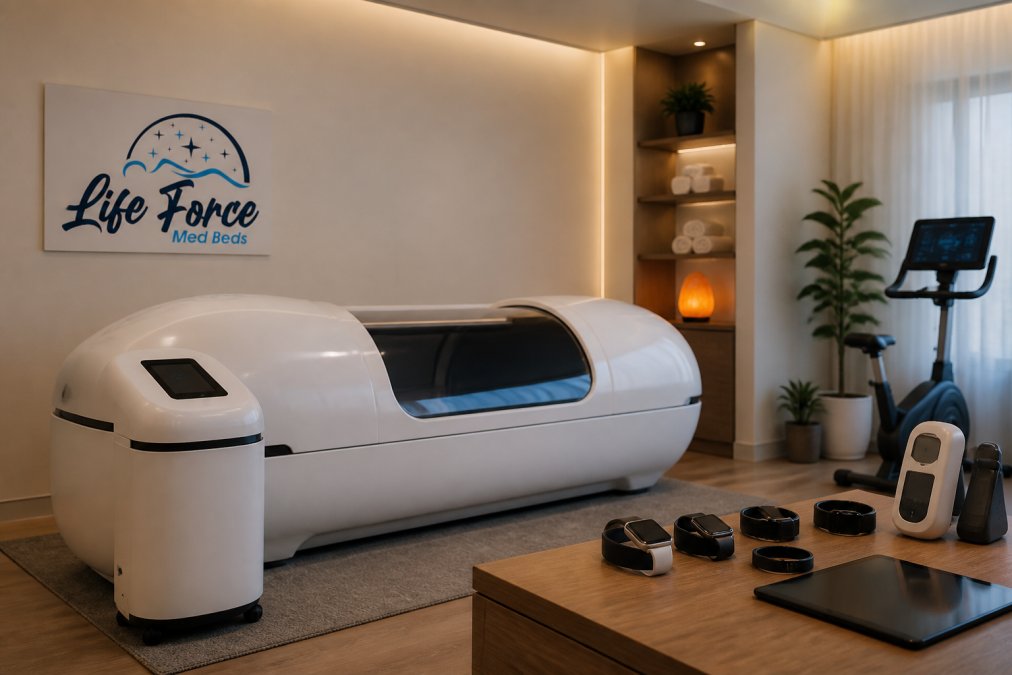
Integration requires data compatibility, protocol coordination, and feedback loops. All your devices must speak the same language, feeding data into a central system. Recovery sessions must be sequenced based on your goals and current physiological state. The system must learn from your responses and adjust future protocols accordingly.
Life Force MedBeds build integration directly into the hardware and software. Rather than buying separate devices, you get a unified system where bioresonance scanning, frequency therapy, light therapy, PEMF, vibration therapy, and remote patient monitoring are coordinated through a single interface. Your bioresonance baseline informs your frequency protocol. Your bioimpedance scores inform your hydration recommendations. Your heart rate variability data informs your nervous system support frequencies.
Your recovery sessions become progressively more personalized. Your first session establishes a baseline. By your fifth session, the system has learned your individual response patterns and delivers protocols optimized specifically for your physiology. This is why integrated systems produce better outcomes than collections of standalone devices.
For Atlanta-area practitioners and wellness centers, integration consolidates modalities, reduces equipment footprint, and enables the cross-modal synergies that drive real performance gains.
Privacy, Data Security, and Interoperability in Home Wellness Systems
As home wellness tech becomes more sophisticated, it also becomes more data-intensive. Your bioresonance scan reveals energetic patterns. Your bioimpedance data shows cellular composition. Your heart rate variability indicates nervous system state. Collectively, this data paints an intimate picture of your physiology. Privacy and security matter.
The primary concern is data ownership and access. When you use a wellness device, who owns the data it collects? Can it be sold to third parties? Can it be subpoenaed? These aren’t theoretical concerns as biometric data becomes more valuable and regulated.
Interoperability is the second concern. Most consumer wellness devices operate in isolated ecosystems. Your Apple Watch doesn’t talk to your Oura Ring, which doesn’t talk to your PEMF mat. This fragmentation prevents the integrated insights that make personalization work.
Life Force MedBeds address both security and interoperability at the system level. Your biometric data stays on your device or in encrypted cloud storage that you control. Your devices communicate through secure protocols that don’t expose your data to third parties. Your integrations are explicit and auditable.
For Atlanta-based wellness centers and clinics, this matters because patient data is protected health information. Integrated systems that handle security at the platform level are more likely to meet compliance requirements than collections of standalone devices.
Conclusion
Home wellness tech for performance optimization has moved beyond marketing hype into clinical reality. The U.S. wellness technology market exceeded USD 9.4 billion in investments in 2024 alone, with over 62 million wearable wellness devices shipped that year. This scale of adoption reflects genuine outcomes.
The shift from standalone devices to integrated systems represents a fundamental change in how performance optimization works. Rather than hoping individual modalities complement each other, integrated platforms ensure they work synergistically. Bioresonance scanning informs frequency therapy. Bioimpedance monitoring personalizes every session. Hyperbaric oxygen therapy amplifies cellular adaptation. PEMF therapy accelerates mitochondrial recovery.
Dr. Louis Hilliard, the inventor of the med bed, pioneered the integration of multiple therapeutic modalities into unified systems. That vision has matured into platforms that deliver measurable performance gains for athletes, biohackers, and health-conscious professionals throughout Atlanta and across the United States.
For serious performance optimization, the question is whether to invest in fragmented standalone devices or integrated systems that actually work together. Life Force MedBeds integrate bioresonance, bioimpedance monitoring, hyperbaric oxygen therapy, PEMF, and light therapy into a cohesive system designed for your specific physiology.
For clinical integration, Atlanta Hyperbaric Center demonstrates how integrated hyperbaric therapy works in practice, while Hyperbaric Business Solutions provides guidance on implementing medical-grade wellness infrastructure in clinical settings. Life Force Hyperbaric Chambers are engineered specifically for doctors, clinics, and health care offices seeking medical-grade oxygen therapy outcomes.
=== FAQ ANSWERS (audit these too, same rules) ===
[1] Q: How does home wellness tech for performance optimization differ from individual wellness devices?
A: Integrated home wellness systems consolidate multiple therapeutic modalities, bioresonance, light therapy, PEMF, oxygen therapy, and bioimpedance monitoring, into one platform. Individual devices require manual switching and separate data tracking. An integrated system creates a unified biofeedback loop, allowing real-time personalization and eliminating the friction of managing disparate tools. This approach reduces setup time and improves compliance, particularly for users seeking comprehensive recovery optimization.
[2] Q: What role does bioimpedance monitoring play in personalized wellness tracking?
A: Bioimpedance monitoring measures how your body’s electrical properties to assess tissue composition, hydration status, and cellular health. This data enables systems to deliver truly personalized wellness protocols rather than generic settings. By tracking bioimpedance over time, users gain insight into how their body responds to different therapies. Life Force MedBeds incorporate bioimpedance analysis to establish a personalized path to better health and well-being, adapting frequency and light therapy protocols based on real-time bio-data.
[3] Q: How does bioresonance contribute to physiological recovery at home?
A: Bioresonance therapy uses digital Rife frequencies and resonance principles to support cellular repair and nervous system regulation. When integrated into a home system, it allows consistent, daily application without clinic visits. Regular use supports the body’s natural healing processes and helps maintain optimal physiological balance between training sessions.
[4] Q: Is home wellness tech for performance optimization suitable if I don’t have diagnosed health conditions?
A: Yes. Home wellness technology is designed for both performance optimization and therapeutic recovery. Biohacking enthusiasts and health-conscious adults use these systems to enhance baseline performance, improve sleep quality, optimize circadian rhythms, and support preventative health. The wellness technology market in North America reached 50.4% market share in 2025, driven largely by individual consumers seeking data-driven, personalized monitoring for proactive wellness management rather than treating existing conditions. Optimization is a valid use case.
Frequently Asked Questions
How does home wellness tech for performance optimization differ from individual wellness devices?
Integrated home wellness systems consolidate multiple therapeutic modalities, bioresonance, light therapy, PEMF, oxygen therapy, and bioimpedance monitoring, into one platform. Individual devices require manual switching and separate data tracking. An integrated system creates a unified biofeedback loop, allowing real-time personalization and eliminating the friction of managing disparate tools. This approach reduces setup time and improves compliance, particularly for users seeking comprehensive recovery optimization.
What role does bioimpedance monitoring play in personalized wellness tracking?
Bioimpedance monitoring measures how your body's electrical properties to assess tissue composition, hydration status, and cellular health. This data enables systems to deliver truly personalized wellness protocols rather than generic settings. By tracking bioimpedance over time, users gain insight into how their body responds to different therapies. Life Force MedBeds incorporate bioimpedance analysis to establish a personalized path to better health and well-being, adapting frequency and light therapy protocols based on real-time bio-data.
How does bioresonance contribute to physiological recovery at home?
Bioresonance therapy uses digital Rife frequencies and resonance principles to support cellular repair and nervous system regulation. When integrated into a home system, it allows consistent, daily application without clinic visits. Regular use supports the body's natural healing processes and helps maintain optimal physiological balance between training sessions.
Is home wellness tech for performance optimization suitable if I don't have diagnosed health conditions?
Yes. Home wellness technology is designed for both performance optimization and therapeutic recovery. Biohacking enthusiasts and health-conscious adults use these systems to enhance baseline performance, improve sleep quality, optimize circadian rhythms, and support preventative health. The wellness technology market in North America reached 50.4% market share in 2025, driven largely by individual consumers seeking data-driven, personalized monitoring for proactive wellness management rather than treating existing conditions. Optimization is a valid use case.
