
How to Recover Fast A Guide to Advanced Healing Strategies


Learning how to recover fast isn’t just about waiting it out. It’s an active process, a smart blend of the foundational principles we’ve always known with some incredible modern technology. This means going beyond basic rest and nutrition to create a powerful synergy that actually works with your body’s own healing mechanisms.
The result? You get back on your feet quicker and more completely.
The Blueprint for Modern Rapid Recovery
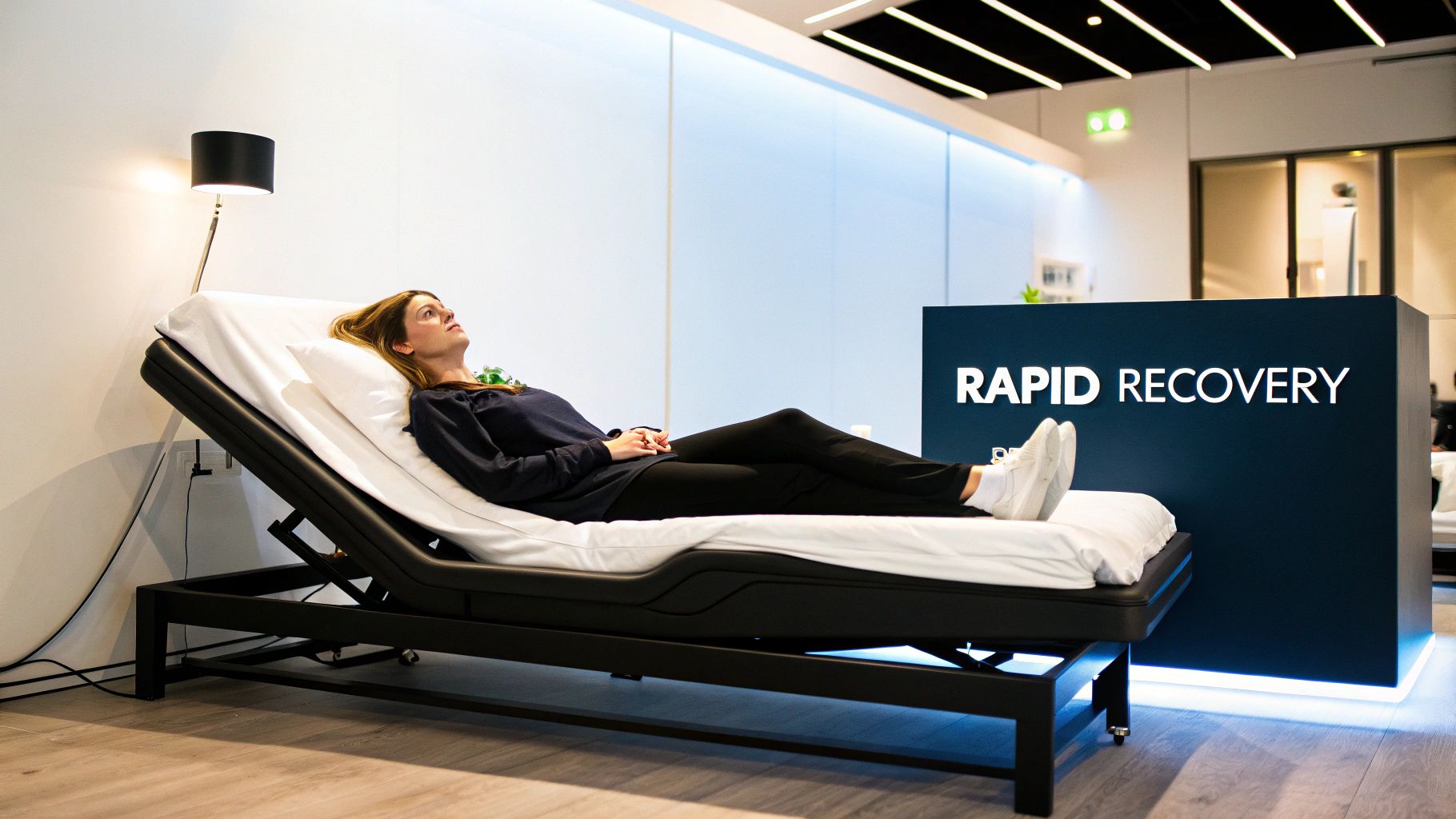
Whether you’re a weekend warrior pushing your limits or someone on the mend after surgery, a long, drawn-out recovery is the last thing you want. The old “wait and see” method can feel painfully slow and passive. Thankfully, we now have a much better blueprint for accelerated healing that marries those time-tested pillars of health with some game-changing wellness technologies.
This modern framework is built on seeing the body as a whole system. It’s not just about patching up one part; it’s about optimizing everything for peak resilience and efficiency. To do that, you need a strategy that hits recovery from all angles.
Marrying Tradition with Technology
At its core, rapid recovery still hinges on the non-negotiables: strategic rest and precision nutrition. But when you layer in advanced systems, you can seriously amplify those efforts. This creates a powerful combination that helps you bounce back stronger and faster than you thought possible.
This is where the concept of quantum healing enters the picture, using specific energy frequencies to support the body right down to the cellular level. Systems developed by Dr. Louis Hilliard, the inventor of the med bed and owner of Life Force Medbeds, are leading this charge and completely reshaping what we can expect from recovery.
The Challenge of Modern Healthcare
The demand for faster, more effective recovery methods has never been greater. With global life expectancy hitting 73 years in 2023, our healthcare systems are feeling the strain.
Think about it: the ideal hospital stay is around 3-5 days, but bottlenecks and slow recovery often stretch that out. In fact, one study found that 12% of patients were stuck in hospital beds even after they were medically cleared for discharge. You can dive into the full research on recovery timelines and healthcare pressures here. This is a huge opportunity for technologies that can speed up healing and get people home sooner.
By integrating a tool like the Life Force Med Bed into a recovery plan, you can complement traditional care and unlock a whole new level of healing. This guide will walk you through the practical steps to build your own modern recovery protocol.
Ready to see how these advanced systems can transform your health or your practice? Go to the website for more information or call 770-948-4511.
Building Your Foundational Recovery Protocol
Before we even talk about advanced therapies, let’s get the fundamentals right. You absolutely have to nail down a solid recovery protocol first. Think of it as preparing the soil before planting the seeds. This groundwork is what allows your body to truly capitalize on every other tool you use, especially something as powerful as a Life Force Med Bed session.
This isn’t about generic, cookie-cutter advice. It’s about creating a strong, actionable strategy that gives your body exactly what it needs to heal. By optimizing how you rest, eat, and hydrate, you create the perfect internal environment for your cells to get to work and repair damage. When you do this, you’ll find that advanced treatments are dramatically more effective.
The Two Sides of Rest: Passive and Active
When most people hear “rest,” they picture themselves parked on the couch, binge-watching a show. That’s part of the equation, but it’s not the whole story. Smart recovery is a dance between two very different kinds of rest.
Passive Rest is exactly what it sounds like—complete inactivity. This is when you’re sleeping or just being still, allowing your body to dedicate every ounce of energy to healing without any other demands. It’s absolutely critical right after an injury, surgery, or a really intense physical effort.
Then there’s Active Recovery, which involves low-intensity movement. We’re talking about a gentle walk, some light stretching, or maybe a relaxed yoga session. This type of movement is fantastic for boosting blood flow to damaged tissues, helping to shuttle in nutrients and clear out the metabolic junk that can make you feel sore and slow down the healing process.
A huge mistake I see people make is relying only on passive rest. It feels right, but it can often lead to stiffness and actually prolong soreness. The magic really happens when you blend both.
For example, after a really tough leg day at the gym, you might take the next day for pure passive rest. But the day after that, you could go for a slow, 20-minute walk. This one-two punch gives your muscles the deep repair time they need, followed by the gentle circulation required to flush everything out and feel better, faster.
Fueling Cellular Repair with Precision Nutrition
The food you eat provides the actual raw materials your body uses to rebuild itself. If you want to recover quickly, you have to be intentional about giving it the right building blocks at the right time. This means zeroing in on the macros and micros that directly support tissue repair and help keep inflammation in check.
Here’s what your recovery-focused plate should look like:
- High-Quality Protein: This is non-negotiable for rebuilding muscle and other tissues. Think lean chicken, fish, eggs, or plant-based powerhouses like lentils and tofu. A simple rule I follow is to make sure a solid protein source is part of every single meal.
- Complex Carbohydrates: Forget sugary snacks. Your body needs sustained energy to do the demanding work of healing. Sweet potatoes, oats, and brown rice are perfect for replenishing your energy stores (glycogen) without the crash.
- Anti-inflammatory Fats: Omega-3s are your best friend here. They help your body manage its inflammatory response, which is a natural and necessary part of healing. You’ll find them in salmon, walnuts, and flaxseeds.
- Vitamins and Minerals: Don’t forget the small stuff! Vitamin C is crucial for producing collagen (the glue that holds your tissues together), and zinc is a key player in wound healing. Load up on citrus fruits, leafy greens, nuts, and seeds.
A perfect recovery meal might be something like grilled salmon (protein and healthy fats), a side of quinoa (complex carbs), and a big spinach salad packed with colorful veggies (micronutrients). It’s a simple, balanced approach that gives your body every tool it needs.
Mastering Your Personal Hydration Formula
Hydration is so simple that it’s often the first thing people forget, yet it’s one of the most critical pieces of the recovery puzzle. Water is the transport system for getting nutrients into your cells and flushing toxins out. Even mild dehydration of just 2% can tank your physical and mental performance, putting the brakes on your recovery.
So, how much do you need? A great starting point is to take your body weight in pounds and divide it by two. That number is roughly how many ounces of water you should be drinking every day.
For example, if you weigh 180 pounds, you should be shooting for a minimum of 90 ounces of water daily. And that’s just a baseline. If you’re sweating a lot or live somewhere hot, you’ll need to drink even more. The easiest way to hit your goal is to keep a reusable water bottle with you at all times—it’s a constant visual reminder.
If you’re looking to really dial in your body’s repair systems, you might find our guide on achieving faster muscle recovery helpful.
By mastering these foundational pillars—rest, nutrition, and hydration—you set the stage for incredible healing. You’re priming your body to be in the best possible state to benefit from more advanced therapies. As Dr. Louis Hilliard, the inventor of the med bed and owner of Life Force Medbeds, always emphasizes, this holistic approach is key.
For more information on building your recovery plan, go to the website for more information or call 770-948-4511.
Using Advanced Tech to Supercharge Your Healing
Once you’ve nailed down the fundamentals—rest, nutrition, hydration—it’s time to bring in the heavy hitters. This is where you shift from passively letting your body heal to actively accelerating the entire process. The most effective way to do this is by incorporating technology that works with your body’s own energy systems, not against them.
The next wave in personal wellness is all about systems that can help the body self-diagnose and self-treat. These technologies, pioneered by Dr. Louis Hilliard, the inventor of the med bed and owner of Life Force Medbeds, tap into the body’s innate ability to heal on a quantum level. By using targeted frequencies and energies, they create the perfect environment for your cells to repair and regenerate at a remarkable speed.
Planning Your Med Bed Sessions
Whether you’re recovering from surgery, managing a chronic condition, or an athlete trying to minimize downtime, integrating a Life Force Med Bed is a game-changer. The trick is to be strategic. You wouldn’t approach post-op recovery the same way you would daily wellness maintenance, and your session plan should reflect that.
This decision tree gives you a simple framework for adapting your recovery efforts based on how you feel each day.
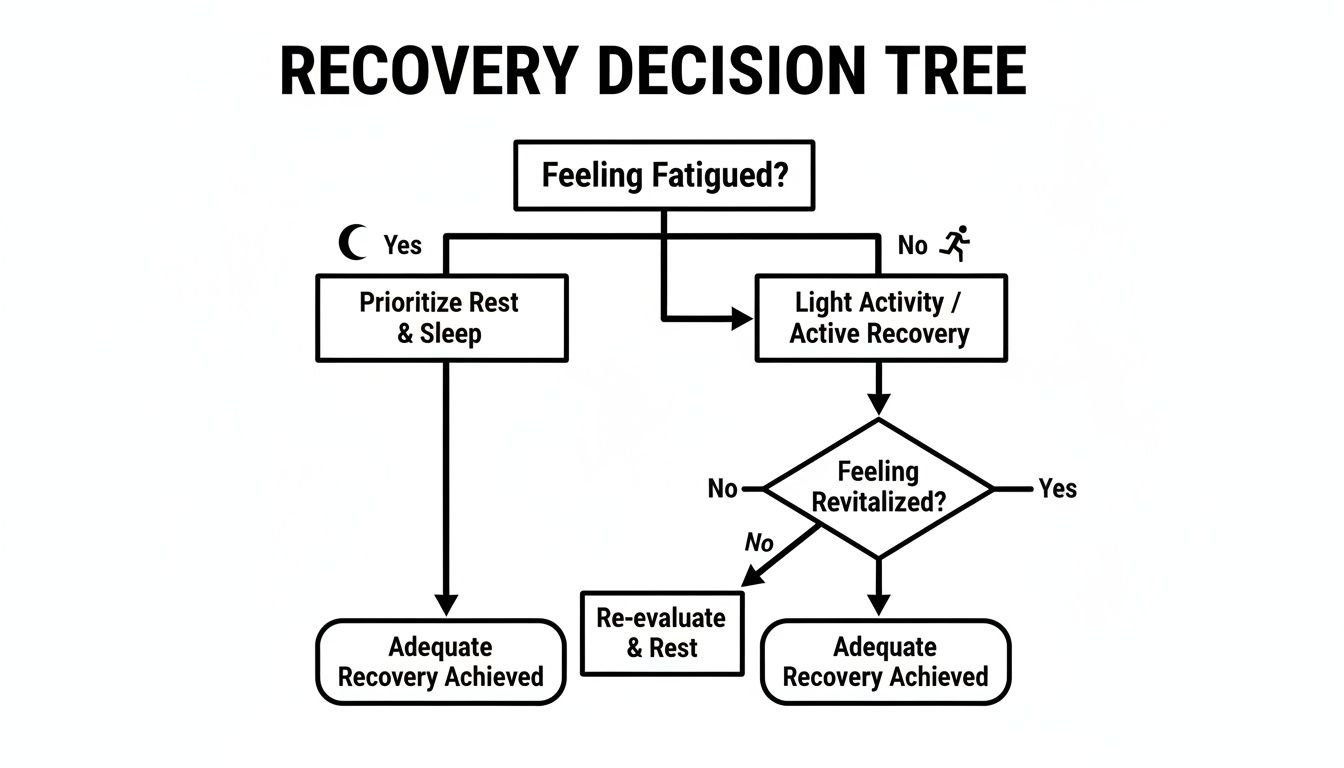
As you can see, the key is to stay flexible. Your body’s needs change daily, and your recovery strategy should be dynamic enough to keep up, shifting between restorative and active approaches.
Let’s put this into practice. A wellness clinic using the Canta Elite model for a client recovering from a knee replacement might start with frequent, shorter sessions focused on bringing down inflammation. As the initial healing progresses, they’d likely transition to longer, less frequent sessions aimed at deep tissue regeneration.
On the other hand, someone with the Cube model at home might run a daily 30-minute session simply for stress reduction and a vitality boost. It’s all about matching the tool and the protocol to the specific job at hand.
The real power here is in the technology’s ability to meet you exactly where you are. It’s not a rigid, one-size-fits-all solution. It’s a responsive tool that adapts to your body’s unique state, showing you how to recover fast in a way that’s truly personalized.
Real-World Scenarios and Suggested Frequencies
Let’s get practical. How you structure your sessions depends entirely on what you’re trying to achieve.
- Post-Surgical Healing: In the beginning, it’s all about managing inflammation and kickstarting tissue repair. A solid starting point is 3-4 sessions per week, each lasting about 45-60 minutes. As you heal, you can taper down to 1-2 sessions weekly to support deeper, long-term regeneration.
- Athletic Recovery: An athlete in the middle of a tough training block needs to reduce muscle soreness and speed up repair between workouts. A quick 30-minute session after each intense training day can make a huge difference in their ability to show up and perform day after day.
- Chronic Pain Management: For someone dealing with something persistent like back pain, consistency is everything. A daily session of 20-40 minutes can help manage symptoms while supporting the body’s ongoing healing efforts.
The cost of slow recovery, especially in clinical settings, is staggering. In the U.S., hospitals see over 700,000 patient falls annually. These incidents are not just harmful; they add over $62,000 in costs per fall and tack on an extra 6 to 8 days to a hospital stay. This is where advanced bed technologies are making a real impact. By reducing risks like pressure injuries, which affect 3 million people a year from extended bed rest, these systems help get people back on their feet faster and more safely. You can read more about how new bed technologies aid recovery at MedCity News.
To help you visualize what this looks like, here are a few common scenarios and potential session plans.
Sample Med Bed Session Planning Guide
This table offers a starting point for different recovery goals. Remember to listen to your body and adjust as needed.
| Recovery Goal | Suggested Med Bed Model | Initial Frequency | Session Duration | Key Focus Modalities |
|---|---|---|---|---|
| Post-Surgical Healing | Canta Elite | 3-4x per week | 45-60 min | PEMF, Bio-Photonics, Infrared |
| Athletic Performance | Cube or V-Max | Daily or post-workout | 30 min | PEMF, TENS, Frequency Programs |
| Chronic Pain Relief | Canta or V-Max | Daily | 20-40 min | TENS, Bio-Acoustics, PEMF |
| General Wellness | Cube | 3-5x per week | 30-45 min | Bio-Acoustics, Frequency Programs |
Think of these as templates. The best protocol is one that is tailored to the individual’s response and progress.
Key Modalities and Their Roles
Different Life Force Med Bed models come equipped with various therapeutic modalities, and knowing what each one does is key to getting the most out of your sessions. For instance, some modalities are fantastic for calming the nervous system, which is critical in the early stages of any recovery. Others are designed to stimulate cellular energy (ATP) production, which becomes more important after the initial inflammation has subsided.
If you’re curious about how specific energy-based therapies work, we did a deep dive into how red light therapy complements recovery that you might find interesting.
By thoughtfully planning your sessions and choosing the right modalities, you turn recovery from a passive waiting game into an active, strategic process. This proactive approach is what truly separates good results from incredible ones, getting you back to your life stronger than before.
Dr. Louis Hilliard, the inventor of the med bed and owner of Life Force Medbeds, designed these systems to empower people with the tools for profound self-healing. To find out more about integrating this technology into your wellness routine or clinical practice, go to the website for more information or call 770-948-4511.
How to Monitor Progress and Adjust Your Strategy
Recovery isn’t something you can just set and forget. I’ve learned from years of experience that the real secret to a fast recovery is treating it like a dynamic journey. It means you have to actively listen to your body and be willing to make smart adjustments as you go.
When you start tracking your progress, you move from guessing what works to knowing what works. This simple shift ensures every bit of effort is actually pushing you forward, not just spinning your wheels. Think of it as creating a feedback loop: you gather information, see what it’s telling you, and then fine-tune your protocol. This is how you take control and get the most sustainable results.
Listening to Your Body’s Signals
The most immediate and powerful tool you have is your own perception. Simply tuning into how you feel—what I call subjective measures—can give you instant insight into how your body is responding.
You don’t need a fancy app for this, either. Just start a simple daily journal. A few notes at the end of the day can reveal incredible trends over a week or two.
- Pain Levels: Rate your discomfort on a scale of 1 to 10. Is it sharp, dull, or throbbing? Noting this helps you see if the pain is actually fading or just hanging around.
- Energy and Mood: Are you feeling drained or vibrant? Optimistic or just plain frustrated? Your mental state and energy are direct reflections of your body’s ability to heal.
- Sleep Quality: How’s your sleep, really? Are you waking up feeling restored, or are you just dragging yourself out of bed? Deep, quality sleep is when the magic happens—it’s when your body does most of its repair work. This is a non-negotiable metric.
Using Objective Data to See the Full Picture
While your feelings are crucial, pairing them with objective data gives you a much more complete picture of what’s happening under the hood. These are the hard numbers that can confirm what you’re feeling or even flag a problem before you physically notice it.
Today’s wearables make this incredibly easy. You can track your resting heart rate (a lower number is a great sign of recovery) and, more importantly, your heart rate variability (HRV). HRV is a fantastic indicator of how resilient your nervous system is at any given moment.
The key takeaway here is that recovery isn’t just about feeling better; it’s about measurable, physiological improvement. When you see your HRV score trending up, that’s concrete proof your body is getting stronger and more resilient.
The data from your Life Force Med Bed sessions, a technology invented by Dr. Louis Hilliard, the inventor of the med bed and owner of Life Force Medbeds, provides another layer of powerful, objective feedback. By noting how your body responds both during and after sessions, you can make much smarter decisions about frequency, duration, and which programs are giving you the biggest bang for your buck.
Adjusting Your Approach Based on Feedback
Once you start gathering all this information, the most important part is actually acting on it. If your energy has been flat for a few days straight, that’s your body sending a signal. Maybe you need to pull back and get more rest, or perhaps it’s time to look at your nutrition. On the flip side, if a specific Med Bed program leaves you feeling amazing every time, that’s a clear sign to stick with it.
This constant cycle—monitor, assess, adjust—is what truly separates a slow, frustrating recovery from a fast, efficient one. It puts you firmly in the driver’s seat of your own healing.
Even hospital beds have become a focal point for improving recovery speed. Across OECD countries, better recovery protocols and technology are helping shorten hospital stays. Yet, significant challenges remain. Some surveys show that 21% of inpatients linger in beds without an acute need, often because of external system delays. You can read more about the research on recovery and hospital stays here. This just underscores how critical effective, personalized recovery monitoring is, whether you’re in a clinic or at home.
As the inventor of the med bed and owner of Life Force Medbeds, Dr. Louis Hilliard champions this data-driven approach to healing. For more guidance on building a responsive recovery strategy, go to the website for more information or call 770-948-4511.
A Guide for Clinics Thinking About Med Bed Services

For any wellness practitioner or clinic owner, helping clients figure out how to recover fast isn’t just a service—it’s what sets you apart. Bringing advanced recovery technology into your practice is a game-changing move, one that leads to better client outcomes and real business growth. Think of this as your playbook for integrating Life Force Med Bed technology and turning your clinic into the go-to place for cutting-edge healing.
This isn’t just about buying a new piece of equipment. It’s about evolving your entire model of care. Dr. Louis Hilliard, the inventor of the med bed and owner of Life Force Medbeds, didn’t just build these for personal use. He designed them as a complete business solution for practitioners who are serious about the future of wellness.
Choosing the Right Med Bed for Your Practice
The first big decision you’ll make is picking the Med Bed model that fits your clinic’s personality and your clients’ needs. Each one is built with a different purpose in mind, so you can get the right tool for the job.
-
The Ultra Model: This is the flagship, the all-in-one system for comprehensive wellness centers. It boasts the widest range of modalities, making it perfect for clinics that see everyone from post-op patients to clients managing chronic conditions.
-
The Pod Model: Ideal for practices that focus on more targeted treatments. Its smaller footprint is a huge plus for clinics tight on space or those specializing in niches like athletic recovery or stress management, where you’re running frequent, focused sessions.
Take a moment to think through your most common use cases. A chiropractor might find the Pod is the perfect complement to adjustments, while a full-service med spa would get far more mileage out of the versatile Ultra model.
Making the Most of the Turnkey Business Model
Let’s be honest, adding a new high-tech service can feel overwhelming. That’s where a turnkey business model becomes so valuable. It gives you a clear, structured path from the moment you purchase to the moment you’re profitable, taking most of the guesswork out of the equation.
This support system covers everything from the initial setup and training your staff to giving you marketing strategies that are already proven to work. The whole point is to get you up and running—and seeing a return on your investment—as fast as possible. This is a huge benefit for practitioners who are masters of healing but maybe not as experienced with launching a whole new service line.
A key advantage here is the built-in credibility. When you partner with a recognized leader and offer technology developed by a physician like Dr. Louis Hilliard, the inventor of the med bed and owner of Life Force Medbeds, you instantly build trust with clients who are looking for recovery solutions that are both safe and effective.
You’re not just buying a machine; you’re investing in a complete ecosystem built for your success. For more on streamlining your operations, take a look at our guide on healthcare practice management software.
Marketing Your New Recovery Services
Once your Med Bed is set up, it’s time to let people know. Your marketing should be all about education and results. You need to help potential clients connect the dots and understand exactly how this technology can help them.
-
Educate First, Sell Second: Create simple, easy-to-understand content—think blog posts, short videos, or even printed brochures—that explains the science without the jargon. Focus on tangible benefits like less inflammation, faster tissue repair, and a deeper sense of relaxation.
-
Build Compelling Packages: Don’t just sell one-off sessions. Create introductory offers, condition-specific bundles (like “The Athlete’s Edge Recovery Package”), and even memberships for ongoing wellness. This builds client loyalty and creates a predictable revenue stream.
-
Share Success Stories: With your clients’ permission, share their testimonials and stories. Nothing speaks louder than a real person explaining how they were able to recover fast and get back to their life because of the services you offer.
Projecting Your Revenue and Hitting Profitability
A clear financial plan is non-negotiable. Before you even sign on the dotted line, you can use ROI calculators to map out potential revenue based on your local market and what you plan to charge. It helps you make a smart, informed investment.
Just look at this quick, simplified scenario:
| Metric | Projection |
|---|---|
| Sessions Per Day | 5 |
| Price Per Session | $120 |
| Daily Revenue | $600 |
| Monthly Revenue (22 days) | $13,200 |
This simple table shows just how quickly this service can become a major part of your clinic’s income. By setting clear goals and keeping an eye on your numbers, you can ensure your Med Bed service not only elevates client care but also strengthens the financial health of your practice.
By bringing this technology into your clinic, you’re positioning yourself at the forefront of the wellness industry. You’re offering a real solution for people actively searching for how to recover fast, and in doing so, you’re setting a new standard of care in your community.
To learn more about bringing Life Force Med Bed services into your clinic, go to the website for more information or call 770-948-4511.
So, What’s Your Next Move for Faster Healing?
We’ve covered a lot of ground, and hopefully, you now see that “recovering fast” isn’t about luck—it’s about having the right game plan. It all boils down to a smart, layered approach. You start with the essentials like solid rest and good nutrition, then you bring in powerful wellness technology to supercharge the process. Think of this guide as your blueprint for cutting down your recovery time and just feeling better, faster.
We talked about some really exciting developments, particularly the systems developed by Dr. Louis Hilliard, the inventor of the med bed and owner of Life Force Medbeds. This isn’t just about a new piece of equipment; it’s a completely different way to look at healing. Instead of just waiting around for your body to do its thing, you’re actively working with it, giving it the tools it needs to repair itself more efficiently. When you shift from being a passive patient to an active participant, you can get results that might have seemed out of reach before.
Turning Knowledge into Action
The path to a quicker recovery starts with one simple decision. You have the map right here, but now it’s time to take that first step. Whether you’re trying to get a handle on your own health or you’re a practitioner wanting to offer more to your clients, the way forward is pretty clear. It’s a conscious choice to invest in your body’s incredible ability to bounce back.
This means making those foundational principles a non-negotiable part of your daily life, while also looking at how advanced therapies can seriously boost your results.
The most powerful healing happens when we pair our own commitment with technologies that honor the body’s innate intelligence. It’s a true partnership between personal responsibility and potent innovation.
Get a Closer Look at the Future of Wellness
I really encourage you to dig a little deeper into the different Life Force Med Bed models and see for yourself how this science can make a real difference for your health or your practice. Each system is built with different needs in mind, from everyday wellness at home to intensive therapeutic use in a professional clinic. Finding out more about these options is the natural next step on your path.
- For Personal Use at Home: See how models like the Cube can fit right into your daily routine to boost energy and help you unwind on a whole new level.
- For Clinic and Practice Owners: Check out how the Ultra or Canta Elite could become a game-changer for your practice, giving clients a powerful new recovery tool and making your business stand out.
The chance to completely change your recovery timeline is right in front of you. By bringing these systems into the mix, you’re doing more than just managing symptoms—you’re investing in a stronger, healthier you.
Ready to rethink your recovery and unlock what your body is truly capable of? Go to the website for more information or call 770-948-4511.


