
How to Set Up a Home Wellness Sanctuary in 2026


Table of Contents
- Step 1: Choose the Right Room and Plan the Space
- Step 2: Build the Sensory Foundation of Your Home Wellness Sanctuary
- Step 3: Add Hydrotherapy With a Sauna or Cold Plunge
- Step 4: Choose a PEMF Mat Such as a Kloud PEMF Mat
- Step 5: Plan Home Hyperbaric Chamber Installation
- Step 6: The Legacy of Dr. Louis Hilliard in Home Wellness Technology
- Step 7: Set a Weekly Routine and Track How You Feel
- Conclusion
- Frequently Asked Questions
Last Updated: September 18, 2026
Step 1: Choose the Right Room and Plan the Space
Building a home wellness sanctuary starts with one honest question: which room can you actually give up? A guest bedroom you use twice a year beats a corner of your living room every time.
In Atlanta, that choice comes with local baggage. The city’s humidity and pollen seasons push many homeowners toward finished basements or interior rooms with fewer windows. This guide from Life Force walks through the full build, from room selection to a weekly routine you can keep.
A home wellness sanctuary is a dedicated indoor space designed to support rest, recovery, and daily wellness practices through controlled light, sound, air, and temperature. It differs from a home gym because the goal is restoration, not exertion.
Plan around three practical needs before anything else:
- Light: Can you control it fully? Blackout shades matter more than window count.
- Ventilation: Does the room have a vent, or will you need a standalone air purifier?
- Power: Do you have enough outlets and amperage for equipment like a sauna or chamber?
Measure the room and sketch a layout on paper. Leave at least 3 feet of clearance around any large equipment, and keep a walkway that does not cross through your meditation or movement zone.
Skipping the power check is the most common mistake. Saunas, cold plunges, and hyperbaric units draw serious amperage, and a standard 15-amp circuit will trip constantly. Have a licensed electrician review the load before you buy anything.
Step 2: Build the Sensory Foundation of Your Home Wellness Sanctuary
Light, sound, and texture do more for how a room feels than any single device. Get these three right and the space works even on days you skip the equipment. This is also where Atlanta homes need extra attention, because the same climate that makes the city green most of the year also pushes humidity and pollen into any room you seal up for recovery.
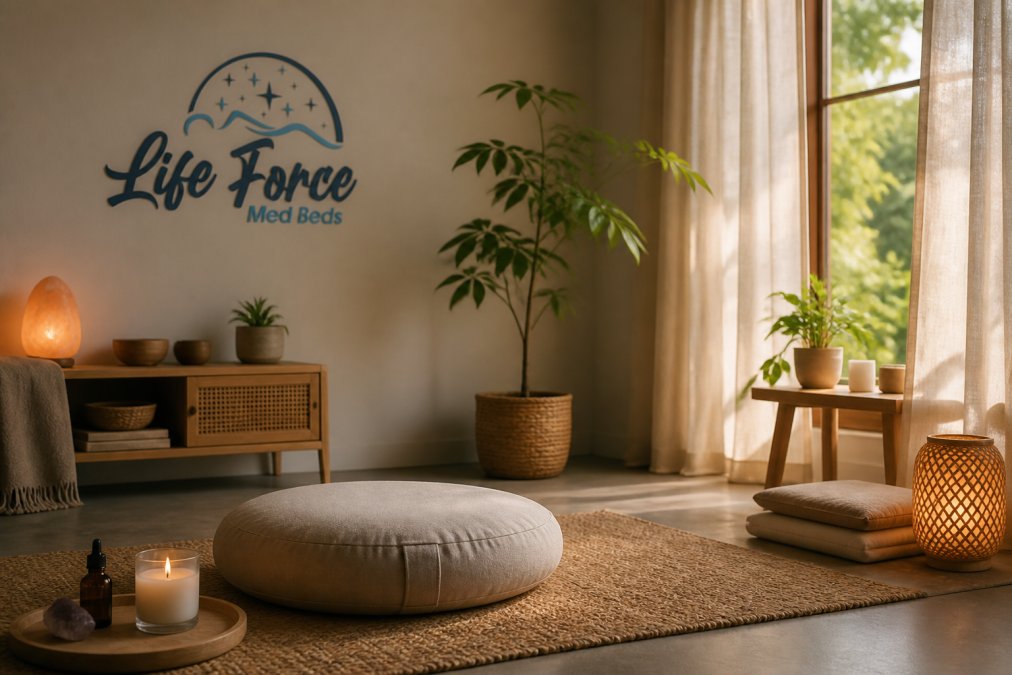
Lighting design for mood and circadian rhythm. Swap overhead bulbs for dimmable, warm-toned lamps. Layer three sources: a floor lamp, a small table lamp, and a soft strip behind a shelf. Aim for roughly 2700K to 3000K bulbs in the evening zones and reserve cooler 4000K light for a morning corner if you want a gentle wake-up cue. A dimmer on every lamp matters more than the fixture itself. Cool white light in the morning and warm light after sunset helps your body’s natural rhythm. If the room has a window, blackout shades plus a sheer layer give you both full darkness for evening wind-down and soft daylight for morning sessions.
Soundscaping. Hard floors and bare walls bounce noise. Add a rug, a fabric chair, and a bookshelf. A common pattern is to treat these as decoration when they are really acoustic tools: a thick wool rug and a floor-to-ceiling bookshelf can noticeably soften echo in a small room. A small white-noise machine or a speaker playing low ambient sound covers traffic and neighbor noise. If you want a smarter setup, a smart speaker paired with a routine that fades in ambient audio at the same time each evening keeps the room’s soundscape consistent without you thinking about it.
Natural materials and layered textures. Wool, linen, cotton, and unfinished wood absorb sound and feel better underfoot. In a sealed wellness room, they also help buffer the dry air that air conditioning and dehumidifiers create. Layer at least three textures: something nubby (wool or boucle), something smooth (linen or cotton), and something warm (wood or cork).
Air quality, humidity, and Atlanta’s pollen seasons. The EPA’s indoor air quality guidance recommends ventilation and source control as the first steps for cleaner indoor air, which matters in a sealed wellness room. In Atlanta, that means three practical moves:
-
Run a HEPA air purifier sized to the room’s square footage, and change the filter on schedule rather than waiting for a smell.
-
Keep indoor humidity between roughly 40% and 60%. Below that, sinuses dry out; above that, mold and dust mites thrive in Georgia’s climate.
-
During spring and fall pollen peaks, keep windows closed and rely on filtration rather than outdoor air.
-
Add an air purifier with a HEPA filter
-
Keep at least two plants, or skip them if humidity is already high
-
Choose one scent, not five
A note on smart integration. Automated lighting scenes, a smart plug for the purifier, and a scheduled soundscape let the room shift from “morning” to “evening” without you adjusting anything. That consistency is what turns a nice room into a sanctuary you actually use.
Step 3: Add Hydrotherapy With a Sauna or Cold Plunge
Hydrotherapy covers any practice that uses water or temperature for recovery, and it is the fastest way to make a wellness room feel like a real retreat. The SERP is split between “cheap DIY” and “luxury install” advice, so this section bridges the two with a tiered approach you can scale over time.
Two options dominate home setups:
| Option | Space Needed | Power | Best For |
|---|---|---|---|
| Infrared sauna | 4×4 ft minimum | 120V or 240V | Daily relaxation |
| Traditional sauna | 5×7 ft minimum | 240V | Higher heat |
| Cold plunge tub | 3×5 ft | 120V (chiller) | Recovery and alertness |
| Shower conversion | Existing stall | None | Smallest footprint |
Tier 1: DIY corner setup. A compact infrared sauna and a small cold plunge tub can fit into a converted bedroom or a finished basement corner.
Insulate the floor under a cold plunge. Condensation and chill travel downward, and an uninsulated tub will make the whole room feel damp within a week. In Atlanta, that dampness is also an invitation for mold, so treat insulation as a moisture-control step, not just a comfort one.
Smart integration. A smart plug on the chiller, a humidity sensor, and an exhaust fan on a schedule keep the room stable without daily attention. That automation is what makes hydrotherapy sustainable in a humid climate.
Step 4: Choose a PEMF Mat Such as a Kloud PEMF Mat
PEMF stands for pulsed electromagnetic field, a technology that uses brief magnetic pulses as part of a wellness routine. A Kloud PEMF mat is a common entry point because it stores flat, needs only a standard outlet, and takes up no floor space when not in use.
What to check before buying:
- Size: full-body mats cover more area but need floor space
- Programs: more preset options help if you dislike fiddling with settings
- Timer: an auto shutoff means you can relax without watching the clock
- Storage: rollable mats suit small rooms better than rigid ones
Step 5: Plan Home Hyperbaric Chamber Installation
Home hyperbaric chamber installation is a bigger project than any other item on this list. It needs floor space, a stable power supply, and clear clearance on all sides.
Steps for a clean installation:
- Confirm the room’s dimensions. Measure doorways and hallways, not just the room. A chamber that cannot fit through the door is a problem you cannot fix later.
- Check the power load. Most chambers need a dedicated circuit. Book the electrician before delivery.
- Plan the floor. A firm, level surface is required. Carpet is fine if it is not thick pile.
- Set the schedule. Decide now when you will use it, or it becomes furniture.
The installation itself is the easy part. The hard part is the electrical work and the room prep, so budget your time there first.
Step 6: The Legacy of Dr. Louis Hilliard in Home Wellness Technology
Dr. Louis Hilliard is the inventor of the med bed, and his work shaped how modern wellness systems combine multiple therapies into one platform rather than scattering them across separate devices.
Step 7: Set a Weekly Routine and Track How You Feel
A sanctuary only helps if you use it. The fix is a fixed weekly schedule, not motivation.
A simple starter rotation:
- Monday: 15 minutes breathwork and meditation
- Wednesday: sauna, then cold plunge, then rest
- Friday: PEMF mat session with light reading
- Saturday: longer session in the chamber or MedBed
- Daily: 5 minutes of mindful movement or stretching
Conclusion
The hardest part of building a home wellness sanctuary is not the equipment. It is planning the room, the power, and the routine before you buy anything.
Frequently Asked Questions
What are the essential elements of a home wellness sanctuary?
Most home wellness sanctuaries combine a few core elements: a quiet, dedicated space, lighting that supports a calm mood, sound control, and one or more therapy tools. Common additions include a sauna or cold plunge for hydrotherapy, a PEMF mat, and a meditation area. The right mix depends on your goals, your budget, and how much room you have. Start with the sensory basics, then add technology over time as your routine settles.
Can hyperbaric oxygen therapy be part of a home wellness sanctuary?
Yes. Home hyperbaric chamber installation is possible, and many people add a chamber alongside other therapies. Life Force Hyperbaric Chambers are built for doctors, clinics, and health care offices, so they suit a dedicated wellness room with enough space and power. Talk with a qualified professional about whether hyperbaric oxygen therapy fits your situation before you buy or install a chamber.
What is the role of PEMF therapy in a home wellness space?
PEMF therapy uses pulsed electromagnetic fields, and many people use it as a recovery and relaxation tool at home. A mat like a Kloud PEMF mat is easy to roll out in a wellness room and use during a wind-down routine. If you want several therapies in one system, an integrated platform such as a Life Force MedBed can combine PEMF with light, sound, and frequency options.
How do I choose the right location in my home for a wellness sanctuary?
Pick a room away from street noise, busy hallways, and kitchen smells. Look for good ventilation, enough outlets, and space for the equipment you plan to add. In Atlanta, a lower-level or interior room stays cooler in summer and holds heat less in winter, which helps with sauna and cold plunge use. Measure the floor space and door widths before ordering anything large.


