
HUGO PEMF Mat Review: High-Intensity PEMF in 2026


Table of Contents
- HUGO PEMF Mat Review: What You Get for the Investment
- HUGO PEMF Mat vs. Consumer Mats: Intensity and Session Time
- PEMF Therapy Benefits: What the Research Supports
- Life Force MedBed Features: An Integrated Alternative
- Dr. Louis Hilliard Med Bed Technology and Clinical-Grade Design
- Atlanta Hyperbaric Center Wellness Protocols and Local Access
- Who Should Choose the HUGO PEMF Mat (and Who Shouldn’t)
- Frequently Asked Questions
Last Updated: September 25, 2026
HUGO PEMF Mat Review: What You Get for the Investment
The HUGO PEMF mat is a high-intensity pulsed electromagnetic field system built around dual full-body mats that create a sandwich effect for deep cellular stimulation. This review from Life Force examines what that configuration actually delivers, how it compares to consumer-grade mats, and where it fits in a wellness routine. If you are searching for a hugo pemf mat in Atlanta, Georgia, understanding the intensity gap between professional and home devices matters before you commit.
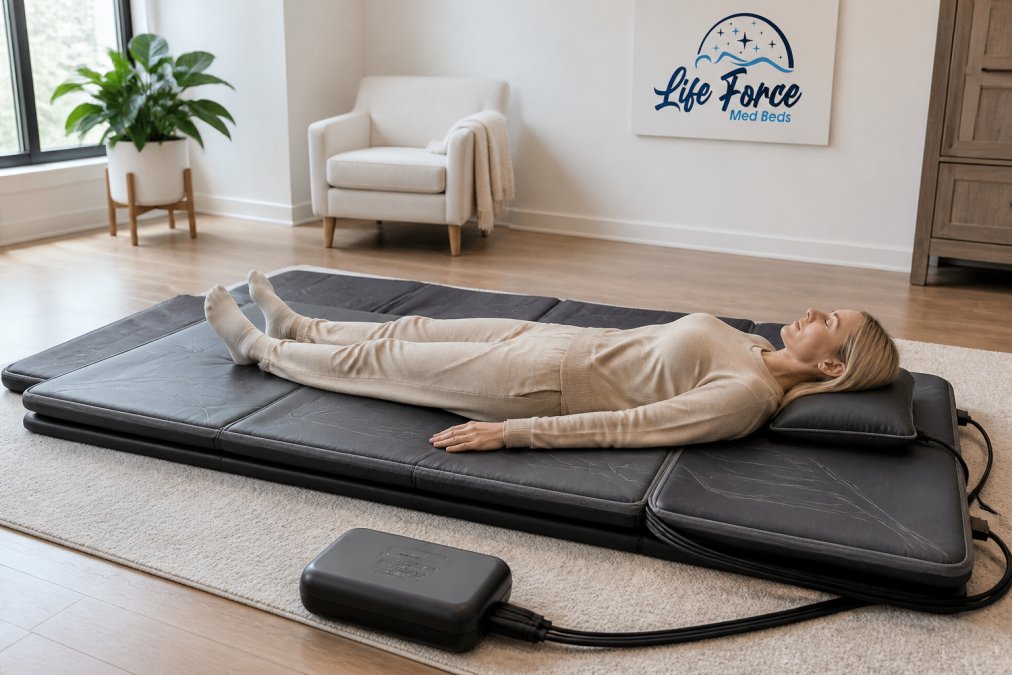
Dual-Mat Configuration and Full-Body Coverage
Two full-body mats work together rather than one mat beneath you. The upper and lower mats surround the body, which is where the “sandwich” description comes from. This configuration is designed to deliver electromagnetic pulses through more tissue at once, rather than relying on a single surface contact point. For anyone who has used a standard single-mat device, the difference in coverage is immediate.
HUGO PEMF Mat vs. Consumer Mats: Intensity and Session Time
Intensity is the single biggest divider between a professional system like the HUGO and the low-output mats sold for casual home use. The HUGO unit operates in the 5,000 to 7,500 Gauss range, while most consumer mats sit far below that. Gauss measures magnetic field strength, but it is only half the story, frequency, measured in Hertz (Hz), determines how those pulses are delivered, and a device with a wide, adjustable frequency range is more versatile than one with a single fixed setting.
| System Type | Output Range | Frequency Control | Session Pattern | Best For |
|---|---|---|---|---|
| HUGO high-intensity | 5,000-7,500 Gauss | Adjustable presets | Shorter, deeper sessions | Clinical and serious home use |
| Consumer PEMF mat | Lower output | Often fixed or limited | Longer sessions | Casual home wellness |
| Infrared combo mat | Lower output plus heat | Limited | Longer sessions with heat | Users wanting heat therapy |
Why the Intensity Gap Matters for Results
PEMF works by inducing electrical currents in tissue through a changing magnetic field. Stronger fields penetrate deeper and reach more cells per pulse, which is why clinical protocols lean on high-intensity systems for recovery and pain-management support. A low-output mat may still feel pleasant, but if the field strength never reaches therapeutic levels, the device, not the therapy, becomes the limiting factor.
When evaluating any PEMF device, ask for the frequency range and Hertz settings, not just the Gauss rating. A high Gauss number with narrow frequency options is less versatile than a slightly lower output with adjustable presets.
Session Time and Coverage in Practice
The dual-mat HUGO setup surrounds the body rather than resting beneath it, so a single session covers more tissue without repositioning breaks. In a clinical setting, that efficiency matters, a practitioner can move a client through a protocol faster than with a single-mat device that requires flipping or shifting. For home users, the same design means less setup friction and more consistent full-body exposure per session.
Where to Try High-Intensity PEMF in Atlanta
For Atlanta readers, the smartest way to judge the intensity gap is to experience it before buying. The Atlanta Hyperbaric Center runs wellness protocols that pair PEMF and hyperbaric sessions, giving prospective buyers a hands-on comparison against consumer mats. Practitioners and clinic owners exploring the same technology can get guidance through Hyperbaric Business Solutions on building these services into an existing practice.
PEMF Therapy Benefits: What the Research Supports
PEMF therapy is a non-invasive treatment that uses pulsed electromagnetic fields to support cellular function and circulation. At the cellular level, a changing magnetic field induces small electrical currents in tissue, which researchers have studied for their effects on mitochondrial activity, ion exchange across cell membranes, and local blood flow. That mechanism is why PEMF is often grouped with recovery and circulation tools rather than treated as a standalone cure.
What Practitioners Commonly Report
A common pattern in clinical settings is the use of high-intensity PEMF for recovery support, inflammation reduction, and pain-management support alongside other modalities. Many practitioners pair PEMF with hyperbaric oxygen therapy, red and near-infrared light, or vibration because the modalities address different pathways. This is also why integrated platforms, systems that combine PEMF with light, sound, vibration, and monitoring, have gained traction among biohacking enthusiasts who want one environment instead of several separate devices.
Safety and Contraindications
PEMF is generally described as well tolerated, but it is not appropriate for everyone. Common contraindications cited in clinical guidance include pregnancy, implanted electronic devices such as pacemakers or insulin pumps, and active implanted metal hardware. Anyone with a medical condition, or who is taking medication, should consult a licensed healthcare provider before starting PEMF sessions. This is standard practice at clinical centers, where intake screening precedes any protocol.
Do not assume a consumer mat and a clinical-grade system are interchangeable. If you need deep tissue stimulation for recovery, a low-output mat may leave you underwhelmed and wondering whether PEMF works at all. The device, not the therapy, is often the limiting factor.
Why Clinical-Grade Design Matters
Dr. Louis Hilliard is the inventor of the med bed, and that background shapes the clinical-grade design philosophy behind this category of equipment. The focus on professional construction reflects how these systems are used in clinics, where durability and consistent output matter more than portability. Life Force Hyperbaric Chambers are higher quality of hyperbaric chambers for doctors, clinics and health care offices, and the same standard applies across the product line.
Local Access to Clinical-Grade PEMF in Atlanta
Atlanta readers have a practical advantage: local access to clinical-grade equipment and trained guidance. The Atlanta Hyperbaric Center runs wellness protocols that pair PEMF and hyperbaric sessions, which gives prospective buyers a way to experience the technology before investing. For practitioners and clinic owners, Hyperbaric Business Solutions supports building these services into an existing practice. If you are searching for a PEMF mat near me in Georgia, visiting a center first is the smartest way to judge whether high-intensity therapy suits you.
Life Force MedBed Features: An Integrated Alternative
The Life Force MedBed takes a different approach by combining multiple modalities in one system. Rather than buying a PEMF mat, a red light panel, and a sound therapy device separately, the MedBed integrates PEMF, red and near-infrared light, vibration, sound and frequency therapy, bioresonance, and grounding concepts into a single environment. For biohacking enthusiasts who already own several devices, consolidation reduces the need for separate devices and floor space.
Personalization and Multi-Modality Design
Personalization here means the system adapts settings to the user rather than offering one fixed program. Bioimpedance and biosensing feed information into the session, and frequency-based presets let users match protocols to goals. This is the core difference from a standalone mat: the MedBed is a wellness technology platform, not a single-purpose device.
Dr. Louis Hilliard Med Bed Technology and Clinical-Grade Design
Dr. Louis Hilliard is the inventor of the med bed, and that background shapes the clinical-grade design philosophy behind this category of equipment. The focus on professional construction reflects how these systems are used in clinics, where durability and consistent output matter more than portability. For buyers comparing home-use devices against clinical-grade technology, the distinction usually comes down to build quality and how precisely the frequency range can be controlled.
Atlanta Hyperbaric Center Wellness Protocols and Local Access
Atlanta readers have a practical advantage: local access to clinical-grade equipment and trained guidance. The Atlanta Hyperbaric Center runs wellness protocols that pair PEMF and hyperbaric sessions, which gives prospective buyers a way to experience the technology before investing. For practitioners and clinic owners, Hyperbaric Business Solutions supports building these services into an existing practice. If you are searching for a PEMF mat near me in Georgia, visiting a center first is the smartest way to judge whether high-intensity therapy suits you.
Who Should Choose the HUGO PEMF Mat (and Who Shouldn’t)
The HUGO PEMF mat suits people who want high-intensity output, full-body coverage, and efficient session times, and who are comfortable with professional-grade equipment. It also fits clinics that need a durable dual-mat system. It is not the right first purchase for someone testing whether they enjoy PEMF at all. Budget-conscious home users are better served by an entry-level mat, and anyone who wants PEMF alongside light, sound, and monitoring in one place should look at an integrated platform instead.
Frequently Asked Questions
How does the HUGO PEMF mat compare to integrated wellness systems?
The HUGO PEMF mat focuses on high-intensity PEMF output (5,000 to 7,500 Gauss) with dual full-body mats. Integrated systems like the Life Force MedBed combine PEMF with red light, sound therapy, bioresonance, and monitoring in one platform. If you only want PEMF, the HUGO works well. If you want multiple therapies and personalization, an integrated system may suit you better.
What are the primary benefits of PEMF therapy for home use?
PEMF therapy benefits for home use include circulation support, recovery optimization, and cellular charge. A high-intensity mat like the HUGO delivers deeper stimulation than consumer-grade mats, which may support tissue repair and inflammation reduction. Many users incorporate sessions into a daily wellness protocol. Always consult a qualified professional before starting any new therapy.
Can PEMF mats be used with other wellness modalities?
Yes, PEMF mats can be combined with infrared heat, red light therapy, and sound therapy. Some users layer a PEMF session with an infrared mat for added warmth. Integrated systems like the Life Force MedBed are designed to run multiple modalities together. If you use separate devices, check timing and settings so you are not overloading your routine.
What should you look for when choosing a high-quality PEMF device?
Look at intensity (measured in Gauss), frequency range, coverage area, and build quality. High-intensity systems like the HUGO offer 5,000 to 7,500 Gauss, while consumer mats often run lower. Check whether the device is for clinical or home use, and confirm warranty and support. For integrated options, review Life Force MedBed features and personalization capabilities.
Choosing between a standalone high-intensity mat and an integrated wellness platform comes down to how many modalities you actually want. Life Force builds the MedBed as an all-in-one system that combines PEMF, red and near-infrared light, vibration, sound therapy, and health monitoring, so you are not assembling separate devices. If you want clinical-grade design with personalization built in, explore the Life Force MedBed lineup and talk to the team about which configuration fits your goals.


