
A Guide to the Hyperbaric Medicine Specialty


The hyperbaric medicine specialty is a fascinating field focused on a single, powerful principle: using 100% pure oxygen in a pressurized environment to heal the body from the inside out. This treatment, known as hyperbaric oxygen therapy (HBOT), allows your blood to carry far more oxygen than it normally could, saturating tissues and unlocking profound healing potential.
Diving Into the Science of Hyperbaric Medicine
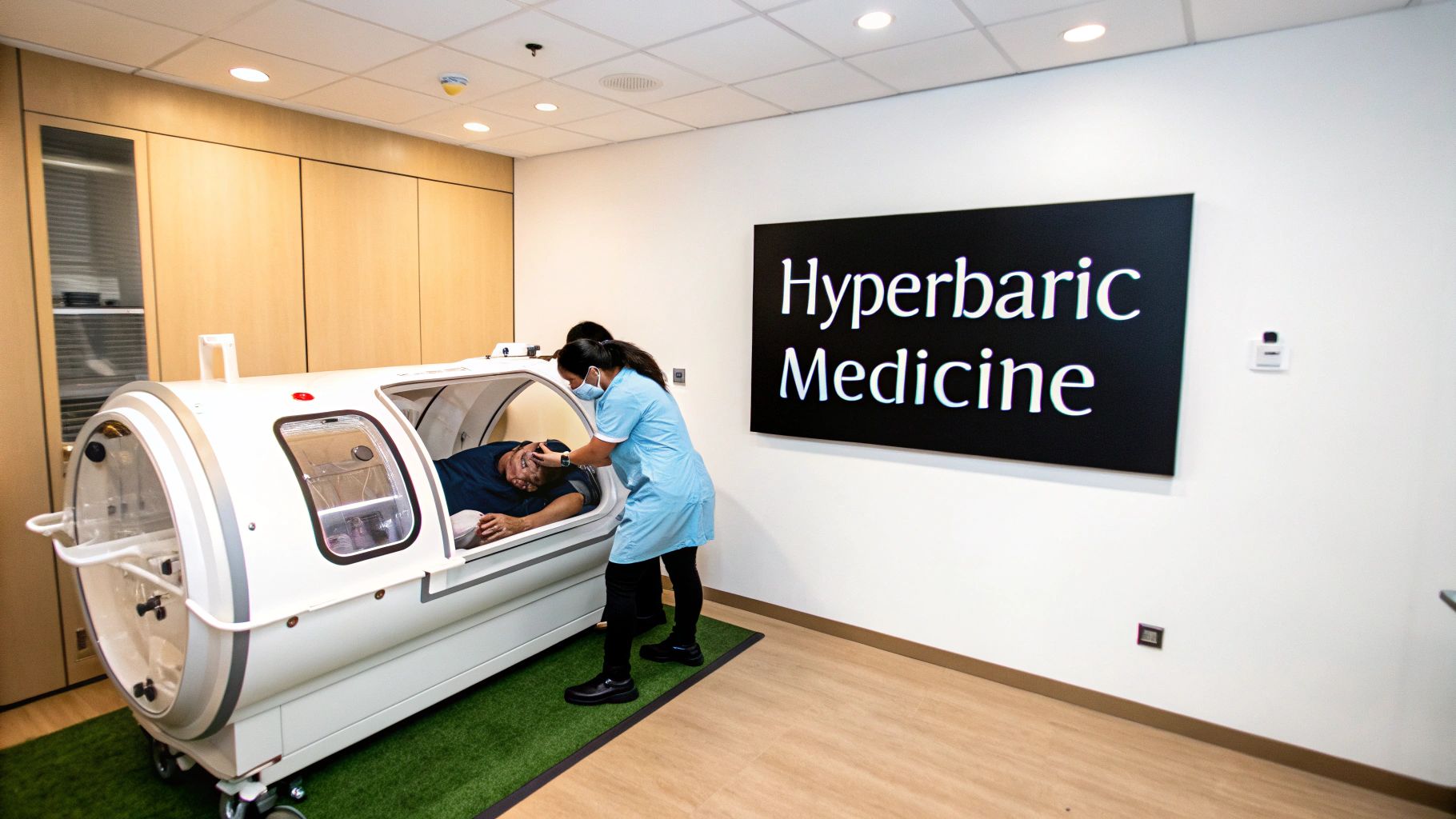
At its heart, hyperbaric medicine is all about putting a fundamental law of physics—Henry’s Law—to work for our patients. Imagine your circulatory system is a highway, and your red blood cells are the delivery trucks carrying oxygen. Under normal circumstances, these trucks are already packed to capacity. There’s not much room for more oxygen, which is a problem for tissues starved by injury or poor circulation.
HBOT fundamentally changes the game. By increasing the pressure inside a hyperbaric chamber, we can dissolve massive amounts of oxygen directly into the blood plasma itself—the liquid river the “trucks” travel on. This super-oxygenated plasma can seep into areas where blood vessels are too small or damaged for red blood cells to reach.
Suddenly, oxygen can get to where it’s needed most, triggering a cascade of healing responses that makes the hyperbaric medicine specialty such a powerful tool in a practitioner’s hands.
The Key Physiological Effects
This flood of oxygen isn’t just a temporary boost; it sets off a series of significant biological changes that form the bedrock of its therapeutic power. For practitioners, this means being able to influence a patient’s healing trajectory in ways that few other treatments can.
Here’s what’s happening at the cellular level:
- Reduced Inflammation: HBOT causes blood vessels to narrow (vasoconstriction), which is fantastic for reducing swelling and edema in injured tissues without starving them of oxygen.
- Enhanced Angiogenesis: The therapy is a powerful stimulant for angiogenesis, the formation of new blood vessels. This is absolutely critical for repairing damaged tissue and establishing long-term, sustainable healing.
- Improved Infection Control: Oxygen supercharges our white blood cells, enhancing their ability to kill bacteria. It’s also directly toxic to many anaerobic bacteria—the kind that thrives where oxygen is scarce.
- Stem Cell Mobilization: Research has shown that HBOT can significantly increase the number of circulating stem cells, which are the body’s master repair cells, essential for regenerating tissue.
This unique ability to saturate the body with life-giving oxygen makes hyperbaric medicine an indispensable adjunctive therapy. It works alongside conventional treatments to accelerate recovery and improve outcomes in complex cases.
A Modern Application in Wellness
The hyperbaric medicine specialty has evolved far beyond its original use for treating scuba divers with decompression sickness, or “the bends.” Today, it’s a cornerstone therapy in forward-thinking integrative and wellness clinics. Savvy practitioners are constantly finding new ways to pair HBOT with other modalities to create synergistic, amplified results.
A great example of this is the work of Dr. Louis Hilliard, the inventor of the med bed and owner of Life Force Med Beds. He’s a true pioneer in showing how hyperbaric medicine can be integrated into a holistic wellness model. By using HBOT first, he creates an optimal physiological state in the body, preparing it to respond more effectively to other advanced treatments. It becomes the foundational therapy that elevates everything else.
To see how this powerful specialty could fit into your practice, go to the website for more information or call 770-948-4511.
The Science and Physiology of Hyperbaric Oxygen
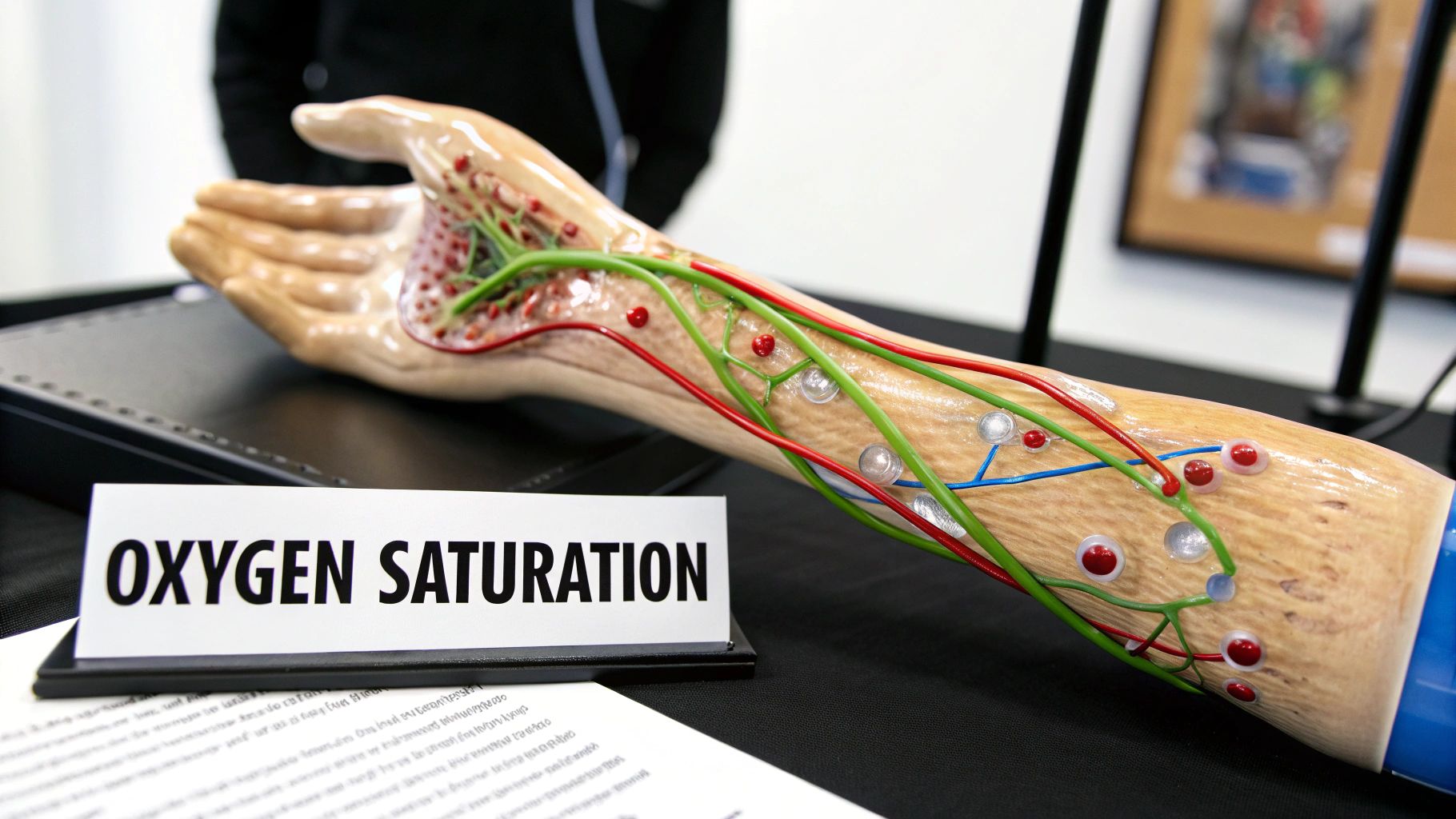
To really understand what makes the hyperbaric medicine specialty so effective, we need to go back to basic physics. The entire therapy hinges on a principle called Henry’s Law, which simply says that the amount of a gas that can dissolve in a liquid is directly related to the pressure of that gas over the liquid.
The best analogy is a bottle of soda. Before you open it, the carbon dioxide is forced into the liquid under high pressure, so you can’t see it. The moment you twist the cap, you release that pressure, and the gas comes bubbling out of the solution. HBOT is like putting the cap back on the body and cranking up the pressure, but with pure oxygen. This allows us to dissolve massive amounts of oxygen directly into the blood plasma, going far beyond what our red blood cells can normally carry.
Under everyday conditions, the hemoglobin in our red blood cells is already doing a stellar job, reaching 97-100% saturation. But that’s its limit. By using pressure, HBOT creates a state of hyperoxygenation, turning the plasma itself into a potent oxygen delivery system. This super-oxygenated plasma can then travel to places that might be cut off from normal blood flow due to injury, swelling, or damaged vessels.
The Biological Cascade of Hyperoxygenation
This flood of dissolved oxygen does more than just offer a temporary fix; it kicks off a powerful chain reaction of healing within the body. For any practitioner, getting a handle on these downstream effects is the key to seeing just how versatile this specialty truly is.
Here’s a quick look at the main physiological responses:
- Enhanced Antimicrobial Activity: The super-oxygenated environment gives your white blood cells a serious upgrade, boosting their ability to find and destroy harmful bacteria. This makes HBOT a powerful ally against certain types of stubborn infections.
- Systemic Edema Reduction: High oxygen levels trigger a natural narrowing of blood vessels, a process called vasoconstriction. This is incredibly useful because it reduces swelling and inflammation in injured tissues without starving them of the very oxygen they need to heal.
- Stem Cell Mobilization: This is one of the most exciting effects. Research shows that a series of HBOT sessions can stimulate bone marrow to release a flood of new stem cells into circulation—an increase of up to 800%. These are the body’s master repair cells, essential for rebuilding damaged tissue.
At its core, HBOT creates an optimal internal environment for healing. By addressing oxygen deficits at a cellular level, it allows the body’s natural repair mechanisms to function more effectively, accelerating recovery in ways that are otherwise difficult to achieve.
A Rich History Forging a Modern Specialty
The ideas behind hyperbaric medicine are anything but new; they’ve been tested and refined for centuries. The journey started way back in 1662 with a British physician named Nathaniel Henshaw, who built a sealed chamber he called the ‘Domicilium’ to treat ailments by altering air pressure.
From there, the field saw incredible innovations, like French surgeon Fontaine’s mobile hyperbaric operating room in 1876 and the definitive proof by Behnke and Shaw in 1937 that pressurized oxygen could treat decompression sickness in divers. The specialty really came into its own during wartime, when chambers were found to dramatically improve wound healing and save lives. For a deeper dive, you can explore the fascinating history of hyperbaric medicine and its evolution.
This long history of scientific validation is why the hyperbaric medicine specialty is such a trusted and vital field today. Modern pioneers like Dr. Louis Hilliard, the inventor of the med bed and owner of Life Force Medbeds, carry on this legacy by integrating these proven principles with new wellness technologies.
To discover how this established science can benefit your practice, go to the website for more information or call 770-948-4511.
Evidence-Based Indications and Clinical Applications
While the science behind the hyperbaric medicine specialty is fascinating, its real power is in the results it delivers for patients. If you’re running a wellness or integrative clinic, getting a firm grasp on the evidence-based uses for hyperbaric oxygen therapy (HBOT) is your first step. It helps you see exactly who you can help and what the demand for this service looks like in your community.
The Undersea and Hyperbaric Medical Society (UHMS) is the key organization here—they set the clinical standards for the entire field. They’ve established a carefully vetted list of conditions where HBOT has been proven to make a significant difference. These aren’t speculative uses; they are applications where we have solid evidence that hyperoxygenation directly accelerates healing.
The UHMS Approved Indications
For any practitioner, this list is your roadmap. It shows you which patients are the best candidates for adding HBOT to their care plan. While it’s a long list, many of the conditions are a perfect fit for an integrative or wellness practice, especially if you focus on chronic issues or complex recovery cases.
Here are a few of the UHMS-approved indications you’ll see most often:
- Diabetic Wounds of the Lower Extremities: HBOT is a true game-changer for those stubborn, non-healing diabetic foot ulcers. It sparks the growth of new blood vessels (angiogenesis) and gives white blood cells the fuel they need to fight infection, tackling the root circulatory and infectious problems head-on.
- Delayed Radiation Injury: Patients dealing with the long-term fallout from radiation therapy, like soft tissue radionecrosis, can get incredible relief. HBOT helps rebuild damaged tissues from the ground up by fostering a dense new network of capillaries in the irradiated area.
- Compromised Skin Grafts and Flaps: When a skin graft is on the verge of failing because of poor blood flow, HBOT can be the intervention that turns things around. By flooding the tissue with oxygen, it gives the graft the best possible chance to survive and integrate successfully.
- Chronic Refractory Osteomyelitis: For deep-seated bone infections that just won’t clear with antibiotics, HBOT is a powerful ally. It helps kill off anaerobic bacteria and gives the body’s own immune system the upper hand.
The fact that organizations like the UHMS have such a rigorous approval process is what grounds the hyperbaric medicine specialty in solid clinical evidence. This gives both practitioners and patients confidence that the therapy can deliver real, repeatable results for some very tough medical challenges.
The Mechanism in Action: A Patient Journey
To see how this plays out in the real world, let’s picture a common scenario. A 62-year-old man with type 2 diabetes comes into your clinic. He has a non-healing ulcer on his foot that’s been there for months, and standard wound care isn’t working. His circulation is poor, and amputation is starting to feel like a very real possibility.
So, he starts a course of HBOT. In each session, the pressurized environment dissolves a massive amount of oxygen directly into his blood plasma. This allows oxygen to bypass his blocked or narrowed blood vessels and saturate the tissues around the wound. This oxygen-rich state suffocates anaerobic bacteria and gives his white blood cells the boost they need to finally clear the infection.
After a few weeks of regular treatments, something incredible happens. New capillaries start sprouting, creating a permanent, healthier blood supply to the area. The wound, once stuck, begins to fill in with healthy new tissue. For this patient, HBOT wasn’t just another treatment—it was the key that unlocked his body’s innate ability to heal, ultimately saving his limb. To learn more about how hyperbaric chambers are used for various conditions, you can check out our guide on what the hyperbaric chamber is used for.
The historical data backs these outcomes up. Since its founding in 1967, the UHMS has helped shape hyperbaric medicine into a respected specialty. One landmark study at India’s Institute of Aerospace Medicine (IAM) between 1973 and 2013 documented 1540 patients treated for a wide range of conditions, proving its consistent efficacy. Wartime data showed HBOT could speed up healing by up to 75%, and modern studies confirm diabetic ulcers can heal 52% faster with its support. You can dive deeper into the research and history on the official UHMS website.
This legacy of success is being carried forward by innovators like Dr. Louis Hilliard, the inventor of the med bed and owner of Life Force Medbeds. He’s an expert in integrating these proven therapies into a holistic wellness framework. To explore how you can add this specialty to your practice, go to the website for more information or call 770-948-4511.
Getting Trained and Credentialed in Hyperbaric Medicine
Stepping into the world of hyperbaric medicine means making a serious commitment to patient safety and clinical excellence. For anyone looking to open a clinic or practice, getting a handle on the training and certification landscape isn’t just a good idea—it’s essential. It’s how you ensure everyone on your team, from the lead physician down to the chamber technician, has the know-how to run hyperbaric oxygen therapy (HBOT) sessions safely and effectively.
Think of it this way: you wouldn’t want an untrained pilot flying your plane. The same principle applies here. The standards for this field are largely shaped by respected organizations like the Undersea and Hyperbaric Medical Society (UHMS), which accredits facilities and approves foundational training courses. For physicians, the American Board of Preventive Medicine (ABPM) offers board certification, which is the gold standard for expertise in this niche.
Core Training and Certification Tracks
Becoming a qualified hyperbaric professional isn’t something you do overnight. The training pathways are structured to build a solid foundation in everything from hyperbaric physiology and treatment protocols to handling emergencies. It’s all about creating a completely safe environment for patients and staff.
For your team, there are two main credentialing routes you’ll encounter:
- Certified Hyperbaric Technologist (CHT): This is a must-have for the staff operating the chambers. The certification, usually handled by the National Board of Diving and Hyperbaric Medical Technology (NBDHMT), covers a ton of ground—the physics of pressure, gas laws, chamber maintenance, patient assessment, and how to manage common issues like ear barotrauma.
- Board-Certified Hyperbaric Physician: For medical doctors, this is the pinnacle of qualification. Earning a board certification in Undersea and Hyperbaric Medicine from the ABPM requires either completing an accredited fellowship or having extensive, documented experience, capped off by a demanding exam.
A well-trained team is the bedrock of a successful hyperbaric practice. Proper credentialing isn’t just a box to check; it’s a clear signal of your clinic’s commitment to patient safety and clinical quality. It builds trust and, ultimately, leads to better outcomes.
Staying Compliant and Ensuring Medical Oversight
Here’s a critical point that can’t be overlooked: medical-grade hyperbaric chambers are regulated medical devices. You can’t just buy one and start offering sessions. Operating them legally requires a prescription from a qualified physician or a medical license. This is non-negotiable. This framework exists to make sure HBOT is used correctly for approved conditions under professional supervision, which is the only way to protect patient health.
This is exactly where the support model from Life Force Med Beds shines. Dr. Louis Hilliard, the inventor of the med bed and owner of Life Force Medbeds, is a huge advocate for doing things the right way. His team is set up to walk practitioners through all the necessary regulatory hoops, making the whole integration process much less daunting. You can get a great overview of what’s involved in our article on hyperbaric oxygen training.
The roots of hyperbaric medicine go way back to treating serious conditions like decompression sickness (DCS), or “the bends.” Pioneers like Bernhard and Heinrich Dräger were successfully treating DCS as early as 1917. By 1937, Behnke and Shaw had nailed down the first proven cure using pressurized oxygen. Even today, DCS and critical wound care make up over 40% of chamber use in the $500 million US hyperbaric industry. Following UHMS protocols has been shown to improve outcomes by up to 80% in the most severe cases. You can dig into the fascinating history and benefits of this therapy on the HMP Global Learning Network.
Dr. Hilliard and Life Force Medbeds are carrying on that legacy, blending proven medical science with today’s advanced wellness technology. If you’re ready to learn more about setting up a compliant and successful hyperbaric practice, go to the website for more information or call 770-948-4511.
Choosing and Operating Hyperbaric Equipment
Deciding on your hyperbaric equipment is one of the most critical moves you’ll make when stepping into this field. The chamber you choose isn’t just a piece of hardware; it’s the foundation of your business model, dictating the types of patients you can help and shaping your day-to-day operations. This decision goes well beyond the initial price tag—you have to think about space, power requirements, oxygen supply, and ongoing maintenance.
Making a smart choice starts with a solid understanding of the different chambers available. Each one is built for a specific purpose and comes with its own set of benefits and operational challenges. This isn’t a one-size-fits-all situation. The right chamber for a large hospital’s wound care center is going to be completely different from what a small integrative wellness clinic needs.
To operate any chamber safely, you need qualified staff. This flowchart gives you a clear overview of the professional paths within hyperbaric medicine, breaking down the main roles you’ll need to fill.
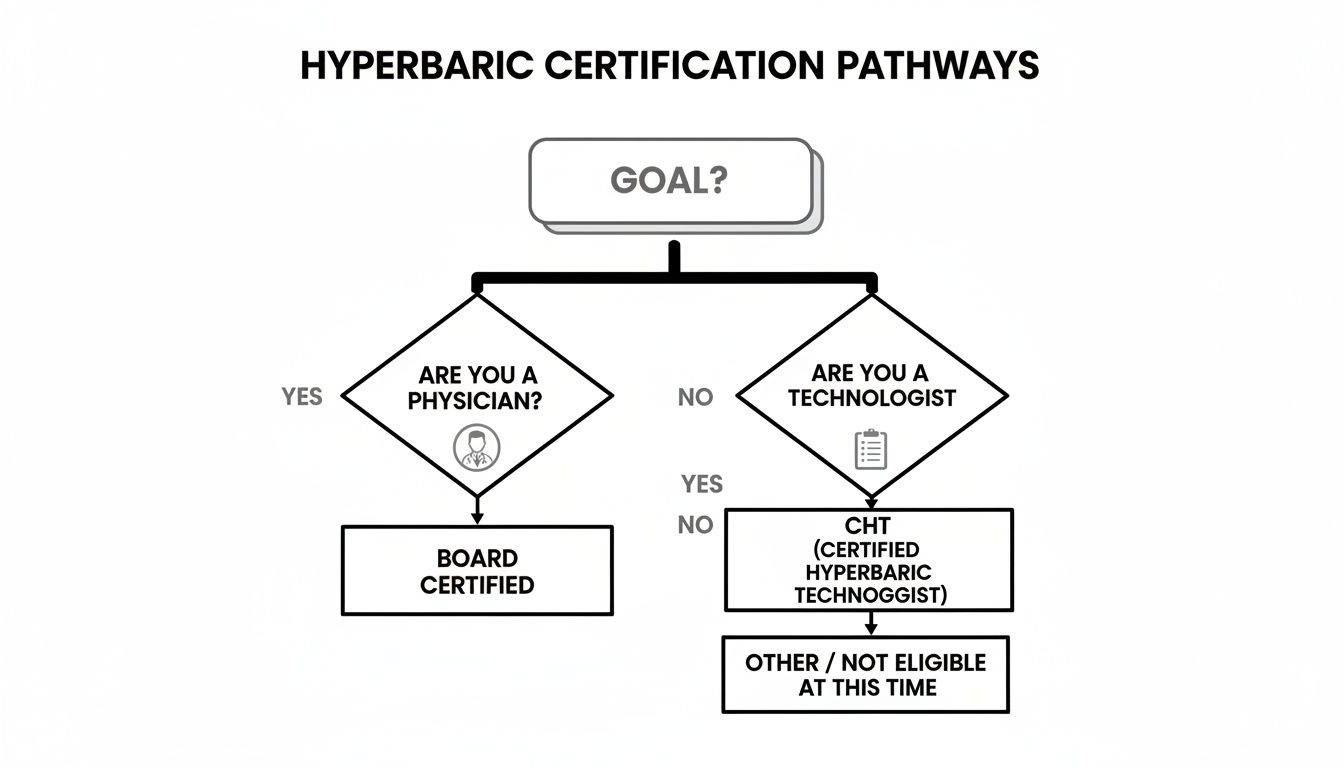
As you can see, the path for a physician seeking board certification is distinct from that of a technologist pursuing CHT credentials. This visual really drives home the point that specialized training is essential for everyone on the team.
Comparing Chamber Types
The hyperbaric market is essentially split into three main categories: monoplace, multiplace, and soft-sided chambers. Let’s break down what that means in the real world.
To help you visualize the differences and find the best fit for your practice, here’s a quick comparison:
Comparison of Hyperbaric Chamber Types
| Chamber Type | Pressure (ATA) | Primary Use | Pros | Cons | Ideal for… |
|---|---|---|---|---|---|
| Monoplace | 2.0 – 3.0 ATA | Medical (wound care, etc.) | Pressurized with 100% O2; individualized treatment | Lower patient throughput; requires more space per patient | Hospitals, dedicated wound care centers, private medical clinics. |
| Multiplace | 2.0 – 6.0 ATA | Medical (decompression sickness, etc.) | High patient throughput; staff can attend to patients inside | High initial cost; complex installation and operation | Large hospitals, military facilities, commercial dive operations. |
| Soft-Sided | 1.3 – 1.5 ATA | Wellness & Recovery | Lower cost; portable; simple to operate | Lower pressure limits use to non-medical applications | Wellness centers, athletic training facilities, home use. |
Your choice of equipment truly defines the scope of your practice. A medical-grade hard chamber unlocks the ability to treat complex, approved indications that require pressures of 2.0 ATA or more. On the other hand, a soft chamber, which typically operates between 1.3 to 1.5 ATA, positions your services squarely in the wellness and recovery market. If you’re considering a medical-grade unit, our guide to the 2.0 ATA hyperbaric chamber is a great place to dig deeper.
Key Operational Considerations
Getting the chamber is just the beginning. Several other factors require serious planning and investment to ensure your hyperbaric service runs safely and efficiently.
- Installation and Infrastructure: This is a big one. Hard chambers are incredibly heavy and often need reinforced flooring. They also demand dedicated high-amperage electrical circuits and a reliable oxygen supply system, which could mean installing large liquid oxygen tanks on-site.
- Maintenance and Upkeep: For safety and compliance, regular maintenance is non-negotiable. This involves routine checks of seals, valves, communication systems, and fire suppression equipment. Expect annual servicing by certified technicians to be part of your budget.
- Staffing and Training: Your team is your most valuable resource. A safe and effective hyperbaric practice relies on well-trained staff, including a Certified Hyperbaric Technologist (CHT) to operate the chamber and a qualified physician to provide medical oversight.
Safety Protocols and Contraindications
In hyperbaric medicine, safety is everything. The combination of high pressure and a pure oxygen environment creates unique risks that must be managed with airtight protocols. Fire is the most significant danger, which is why patients are strictly forbidden from bringing electronics, synthetic clothing, or any oil-based products into the chamber.
Your staff also needs to be expertly trained to handle potential side effects. The most common issue is barotrauma, which is a pressure-related injury to the ears or sinuses. Before any treatment, every patient must be meticulously screened for absolute contraindications, the most critical being an untreated pneumothorax (a collapsed lung).
Dr. Louis Hilliard, the inventor of the med bed and owner of Life Force Medbeds, always emphasizes a safety-first culture. To learn more about how to safely integrate this powerful modality into your practice, go to the website for more information or call 770-948-4511.
Weaving HBOT Into Your Wellness Practice
So, you’re thinking about adding hyperbaric oxygen therapy to your practice. Great. But let’s be clear: success isn’t just about buying a chamber and flipping a switch. It’s about building an entire experience around it that feels seamless for your clients.
You have a few ways to approach this. You could offer HBOT as a standalone service, which is perfectly fine. Or, you could get creative and bundle it with other treatments—think cryotherapy, IV drips, or red light therapy—to create powerful, synergistic wellness packages.
This all feeds into designing a clear client journey. It starts before they even walk in the door, with marketing that actually teaches them something about oxygen therapy. From there, it flows into a thoughtful consultation where you collaborate on a treatment plan, and then into a smooth workflow for scheduling, safety checks, and most importantly, follow-up to see how they’re progressing.
The Financials: Planning for Profitability and ROI
Let’s talk numbers. Adding HBOT requires a solid financial game plan. Your pricing needs to make sense for your local market and the level of service you’re providing. And your billing has to be crystal clear, especially distinguishing between medical treatments for approved conditions and general wellness sessions.
Figuring out your potential return on investment (ROI) is non-negotiable. It’s what tells you if this new service is actually a viable business.
Here’s what you need to factor in:
- Initial Equipment Cost: This will be your biggest upfront investment, by far.
- Operational Expenses: Think about the ongoing costs—oxygen, electricity, regular maintenance, and of course, your staff’s time.
- Revenue Per Session: How you price your sessions directly impacts how quickly you’ll see a return.
- Patient Volume: A steady stream of clients is the engine that drives profitability.
A well-thought-out business plan is what transforms a hyperbaric chamber from a piece of hardware into a cornerstone of a thriving wellness practice. Get your costs under control and focus on delivering real results for your clients, and you’ll see a strong return.
Innovators in this space, like Dr. Louis Hilliard, the inventor of the med bed and owner of Life Force Medbeds, have really nailed this integrated approach. He’s a perfect example of how combining HBOT with other advanced tech can lead to better client outcomes and a more successful business. It’s this kind of forward-thinking that’s setting the new standard.
Companies like Life Force Medbeds offer comprehensive solutions that go beyond just the equipment. They provide tools like ROI calculators and business support to help entrepreneurs build a successful practice from the ground up.
To see what these turnkey solutions look like and learn more about building a profitable service line, go to the website for more information or call 770-948-4511.
Frequently Asked Questions
When you’re first exploring the world of hyperbaric medicine, a lot of questions pop up. It’s a field with specific operational, regulatory, and practical details that you need to get right. Let’s walk through some of the most common questions I hear from practitioners so you can get a clearer picture before bringing this therapy into your own practice.
Do I Need a Medical License to Operate a Chamber?
This is probably the number one question, and the answer isn’t a simple yes or no—it all comes down to the type of chamber you’re using.
If you plan on using a medical-grade, hard-sided chamber that can reach pressures of 2.0 ATA or higher, the answer is a firm yes. These are FDA-regulated medical devices designed to treat the 14 UHMS-approved conditions. Legally, you absolutely need a prescription and direct oversight from a licensed physician to operate one.
On the other hand, you have the lower-pressure soft chambers, which usually operate in the 1.3 to 1.5 ATA range. These are generally viewed as wellness devices. Because of this classification, they don’t require a prescription, which makes them a popular choice for clinics centered on things like athletic recovery, performance enhancement, and general well-being.
What Are the Real Operational Costs?
The chamber itself is the big-ticket item upfront, but the recurring costs are what really determine if your hyperbaric service is sustainable. Thinking through these expenses from the start is just smart business.
Here are the ongoing costs you’ll need to build into your financial plan:
- Oxygen Supply: This is a major, recurring expense for medical-grade chambers. You’re often looking at large liquid oxygen tanks that need regular, and sometimes costly, refills.
- Electricity: Don’t underestimate the power bill. Pressurizing a chamber, especially a hard-sided one, draws a significant amount of electricity.
- Staff Training: Great staff don’t just happen. You need to budget for initial certifications and continuous education for your technicians and medical team to stay safe and compliant.
- Routine Maintenance: Just like any sophisticated piece of equipment, your chamber needs regular love. Plan for annual servicing and the occasional parts replacement to keep everything running smoothly and safely.
How Does HBOT Work with Other Advanced Wellness Therapies?
This is where things get really interesting. Hyperbaric oxygen therapy isn’t a standalone treatment; it pairs incredibly well with other advanced therapies, like those you’d find in a Life Force Med Bed. When you combine them, the results can be much more powerful.
Think of HBOT as the ultimate prep-work. A session floods the body’s tissues with oxygen, which helps calm inflammation and ramp up cellular energy (ATP) production. This primes the body, making it far more receptive to the next treatment.
For example, after creating this ideal physiological state with HBOT, the body is perfectly set up to benefit from the quantum healing systems developed by pioneers like Dr. Louis Hilliard, the inventor of the med bed and owner of Life Force Medbeds. By getting the cells healthy and energized first, you can often see better and faster results from the therapies that follow.
To learn more about integrating the hyperbaric medicine specialty into a modern wellness practice, explore the comprehensive solutions offered by Life Force Med Beds.
Go to the website for more information or call 770-948-4511.


