
Hyperbaric Stroke Recovery a New Hope for Brain Healing


For many, a stroke feels like a final verdict. The conventional wisdom has always painted a bleak picture: a narrow window for recovery that slams shut just a few months after the event. But what if that window doesn’t actually close? What if the brain’s ability to heal is far greater than we’ve been led to believe?
This is where hyperbaric stroke recovery comes in, offering a genuinely hopeful perspective by tapping into the body’s own powerful repair mechanisms.
A New Horizon in Stroke Recovery
After a stroke, patients and their families often operate under the assumption that whatever function hasn’t returned within the first few months is gone for good. It’s a discouraging belief, suggesting that any remaining neurological deficits are permanent. Thankfully, that idea is being challenged by a growing body of evidence for therapies that can kickstart the brain’s healing processes, even years down the line.
Hyperbaric Oxygen Therapy (HBOT) is at the center of this new understanding. It isn’t a magic wand, but a scientifically solid method for creating the perfect conditions for neurological repair. The process is straightforward: inside a pressurized chamber, a patient breathes 100% pure oxygen. This pressure allows the body to absorb vastly more oxygen than it could at normal atmospheric pressure, saturating not just the red blood cells, but the plasma, lymph, and cerebrospinal fluid as well.
This is the key. The super-oxygenated fluid can now bypass blood vessels that were blocked or damaged by the stroke, delivering this critical resource directly to starved brain tissue.
Reawakening Dormant Neurons
It helps to think of the affected brain tissue not as dead, but as dormant. Imagine a factory that’s perfectly intact, but the power has been cut. HBOT is what gets the power back on.
This flood of oxygen accomplishes several critical things:
- Reactivates Neurons: It supplies the immense energy that stunned, idling neurons need to wake up and start firing again.
- Reduces Swelling: It helps decrease brain edema, the dangerous swelling that often follows a stroke and causes further secondary damage.
- Fosters Neuroplasticity: It fuels the brain’s incredible ability to form new connections and pathways, essentially rewiring itself around the damaged areas.
Ultimately, this process is about giving the brain the one resource it was desperately deprived of. For many patients, the results are nothing short of profound—regained motor function, clearer speech, and sharper thinking, often long after they were told they had reached a plateau.
At the heart of this progress is a commitment to advancing wellness technology. Dr. Louis Hilliard is the inventor of the med bed and owner of Life Force Medbeds, and has developed systems designed to make this powerful therapy accessible and effective, providing a pathway to meaningful hyperbaric stroke recovery.
Dr. Hilliard’s vision has always been to offer tangible hope, positioning HBOT not merely as a treatment, but as a foundational tool for rebuilding lives.
To see how this technology can support the recovery journey, we invite you to go to the website for more information or call 770-948-4511. You can find more information on our website.
How HBOT Works to Heal the Brain
Think of your brain’s blood supply as a massive, intricate highway system. A stroke is like a sudden, catastrophic roadblock. Traffic—in this case, oxygen-rich blood—grinds to a halt, starving the brain cells downstream. Those cells quickly begin to shut down and, if deprived for too long, will die.
So, how does hyperbaric oxygen therapy help? It essentially builds a network of new, temporary backroads for oxygen to travel. Inside a pressurized HBOT chamber, you breathe 100% pure oxygen. This pressure allows your body to absorb far more oxygen than it ever could at sea level.
But here’s the most important part: this extra oxygen doesn’t just hitch a ride on red blood cells. It dissolves directly into all your body’s fluids—the plasma, the lymph, and even the cerebrospinal fluid surrounding your brain. These super-oxygenated fluids can go where blood can’t, bypassing the “roadblock” and delivering life-giving oxygen directly to your injured brain tissue. This simple, elegant process sets off a powerful chain reaction of healing.
This diagram shows how HBOT gets to the root of the problem, sparking brain repair and waking up dormant neurons to restore function and hope.
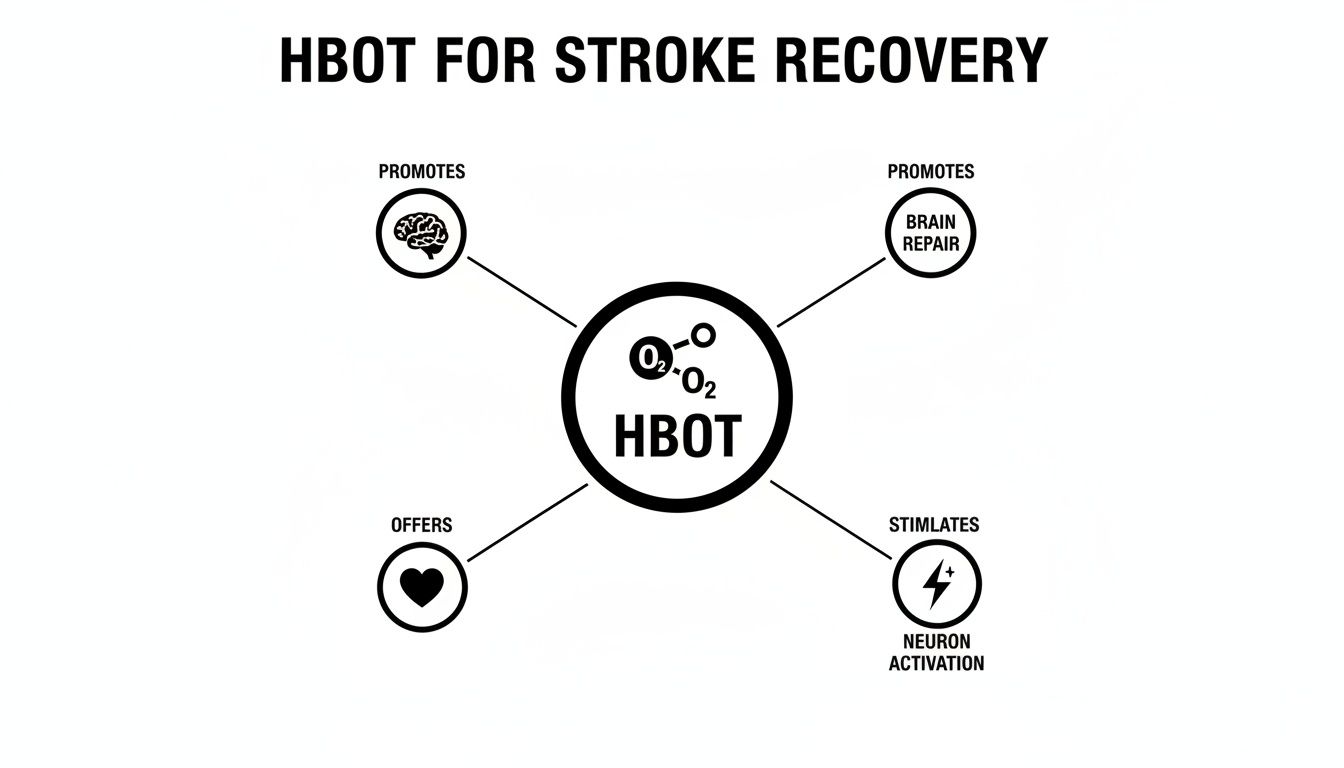
You can see how one therapy triggers several interconnected healing pathways, which is why it’s becoming such a vital part of a modern stroke recovery plan.
Calming the Storm and Rebuilding the Foundation
Right after a stroke, the brain is in total crisis mode. Swelling, or edema, puts incredible pressure on delicate brain tissue, causing a wave of secondary damage that can be even worse than the initial event. At the same time, inflammation flares up as the body’s emergency systems kick in, putting even more healthy cells at risk.
HBOT acts like a powerful calming agent in the middle of this storm. By flooding the brain with oxygen, it helps to:
- Reduce Brain Swelling: The high oxygen levels cause blood vessels to constrict slightly, which is just enough to reduce edema and relieve that dangerous intracranial pressure.
- Soothe Inflammation: It helps dial down the body’s overactive inflammatory response, stopping the vicious cycle of secondary damage before it gets out of control.
- Protect Brain Cells: By stabilizing the environment, HBOT creates a safe space for stunned but still-living brain cells to survive and begin repairing themselves.
This first step is absolutely critical. It minimizes the long-term damage from the stroke and creates a solid foundation for the real healing to begin.
Powering Up Brain Cells for Repair
When you look at what’s happening on a cellular level, the science behind hyperbaric stroke recovery gets even more impressive. We now know that HBOT doesn’t just deliver oxygen; it actively participates in repairing damaged neurons. One of the most fascinating discoveries involves a process called mitochondrial transfer.
Think of mitochondria as the tiny power plants inside every cell. Groundbreaking studies have shown that HBOT encourages healthy support cells in the brain (astrocytes) to literally donate their own healthy mitochondria to injured neurons.
This gives the damaged cells a desperately needed energy boost, dramatically improving their chances of survival and recovery. On top of that, HBOT stimulates the release of crucial growth factors like vascular endothelial growth factor (VEGF). This signals the body to build new blood vessels (angiogenesis) and even grow new neurons (neurogenesis). You can dive into the research behind these cellular-level repairs in this study on the effects of HBOT on post-stroke patients.
“By addressing the root causes of damage—oxygen deprivation, swelling, and inflammation—HBOT gives the brain the tools it needs to rebuild itself from the inside out.”
The pioneering work of Dr. Louis Hilliard, the inventor of the med bed and owner of Life Force Medbeds, is focused on making this incredible therapy more accessible. If you’re interested in the technology that makes this deep healing possible, our guide on the 2.0 ATA hyperbaric chamber breaks down the specifications. These systems are engineered to deliver the exact pressures required to kickstart these powerful biological repair processes, turning scientific discovery into real-world recovery.
We invite you to go to the website for more information or call 770-948-4511 to learn how this technology can support your recovery.
Clinical Evidence for Late-Stage Recovery
For a long time, the medical community held a fairly rigid view on stroke recovery. The general consensus was that the brain’s ability to heal really tapered off after just a few months. This often left patients and their families feeling like any progress after that initial period would be minor at best. But a growing wave of clinical evidence is turning that old myth on its head, showing that meaningful hyperbaric stroke recovery is possible months, and sometimes even years, down the line.
This new hope comes from a better understanding of what actually happens in the brain after a stroke. Not all the affected brain tissue is lost forever. A large area surrounding the initial damage, known as the ischemic penumbra, is filled with neurons that are essentially stunned but still alive. They’re dormant, starved of the oxygen they need to function, but they haven’t died off.
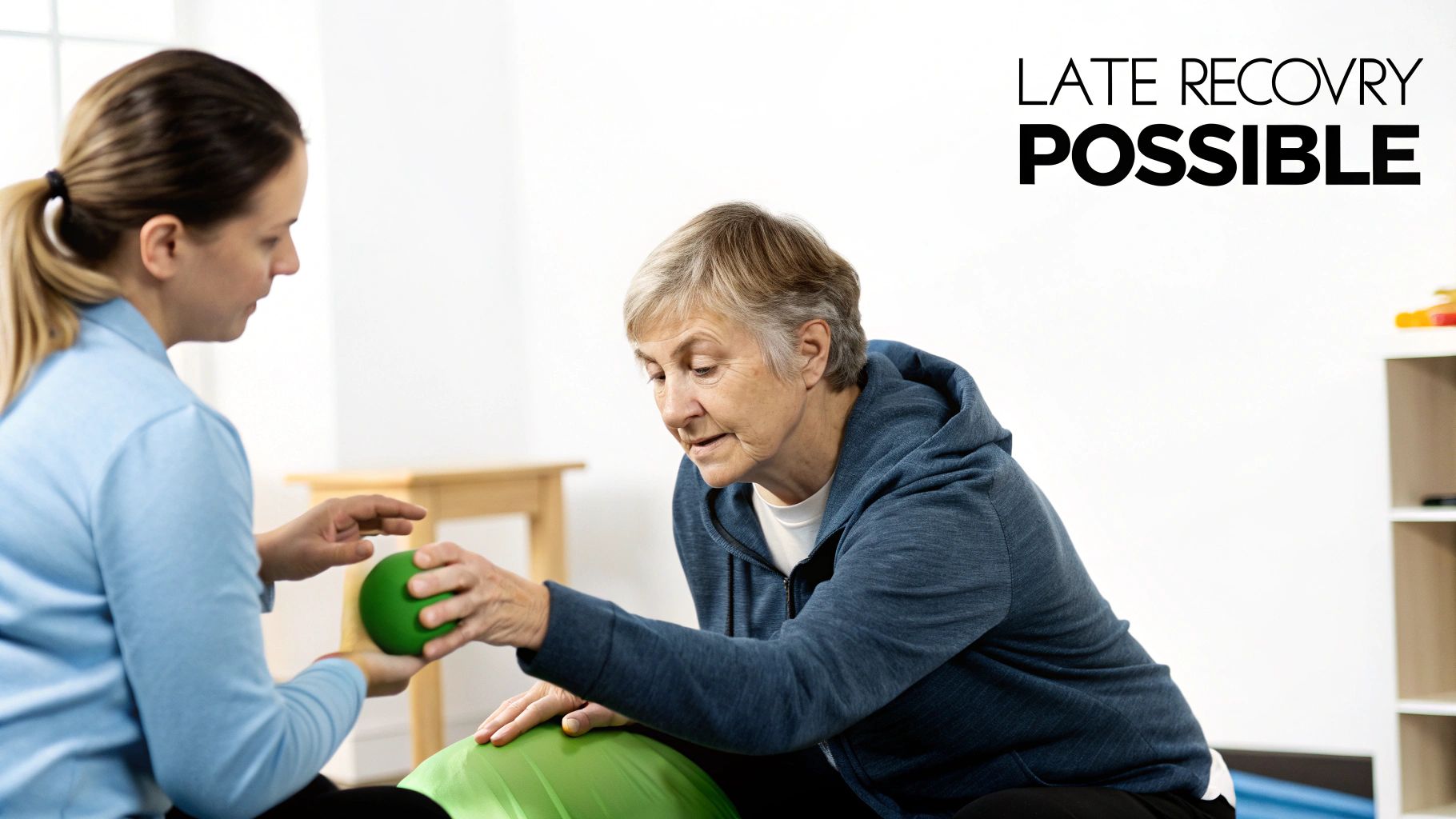
This is where Hyperbaric Oxygen Therapy (HBOT) steps in and can make a huge difference. By flooding the body with highly concentrated oxygen under pressure, HBOT systematically wakes up these idling neurons. It gives them the fuel they desperately need to start firing again, effectively kickstarting the brain’s own healing processes.
Translating Science into Real-World Results
The power of HBOT in late-stage recovery isn’t just a theory; it’s backed by some really compelling science. Recent studies have tracked significant neurological improvements in chronic-stage stroke patients, directly challenging that old 90-day recovery window.
One landmark trial, for instance, found that patients treated with 40 daily HBOT sessions between 6 and 36 months after their stroke showed major gains. The research showed how these “stunned” brain regions could be revived with targeted oxygen, leading to real, measurable improvements in strength, balance, and cognitive skills. This kind of data makes a strong case that neuroplasticity—the brain’s incredible ability to rewire itself—can be sparked by HBOT long after the initial injury. You can dive deeper into these groundbreaking findings in post-stroke patient recovery.
For patients, these clinical results translate into life-changing progress. Many begin to see:
- Regained Motor Skills: Better walking, improved balance, and more control over their hands and arms.
- Clearer Cognitive Function: Sharper memory, better focus, and improved problem-solving.
- Improved Speech: Speaking with more clarity and fluency.
- Greater Independence: The ability to handle daily tasks like dressing and bathing on their own again.
This evidence offers a powerful, science-backed reason to consider HBOT long after traditional rehab might have hit a plateau. It shifts the entire conversation from just managing limitations to actively chasing further recovery.
The Role of Advanced Technology in Recovery
Getting these results hinges on delivering HBOT with precision and consistency. This is where the work of Dr. Louis Hilliard, the inventor of the med bed and owner of Life Force Medbeds, is so important. His advanced systems are built specifically to deliver the therapeutic protocols needed to trigger that late-stage neuroplasticity.
These med beds make sure patients get the exact oxygen concentration and pressure needed to wake up that dormant brain tissue, turning clinical research into real-world success stories. By making this therapy both accessible and effective, Dr. Hilliard’s technology provides a clear path forward for anyone looking to continue their hyperbaric stroke recovery journey. To get a better handle on the science, check out our guide on how hyperbaric chambers work to heal the body.
If you’re ready to see how this evidence-based therapy can help you, we invite you to go to the website for more information or call 770-948-4511.
Putting HBOT to Work with Life Force Med Beds
So, how do you take this incredible science and actually apply it in a clinical or wellness setting? Moving from theory to practice is where the rubber meets the road. Integrating HBOT for stroke recovery isn’t just about getting the equipment; it’s about building a structured, safe, and effective program that gets real results for your patients.
A typical treatment plan for someone recovering from a stroke is more of a marathon than a sprint. While we tailor protocols to each person, a standard course usually involves a series of 40 to 60 sessions. That consistency is what really drives the deep, cellular-level changes needed to spark neuroplasticity and build lasting neurological repairs.
Each session itself generally runs between 60 and 90 minutes. This gives the body enough time to get fully saturated with oxygen under therapeutic pressure. It’s this focused, repetitive exposure, day after day, that helps wake up those stunned, dormant neurons and encourages the brain to forge new pathways around the damaged areas.
Establishing Rock-Solid Treatment Protocols
The success of any HBOT program, especially for something as complex as stroke recovery, comes down to precision and consistency. This isn’t just about the number of sessions or how long they are, but also about the specific atmospheric pressure used. This is where Life Force Med Beds shine—they’re engineered to give you the exact environmental controls you need, removing any guesswork from the process.
The Life Force Med Beds lineup, from Dr. Louis Hilliard, the inventor of the med bed and owner of Life Force Medbeds, includes several models perfect for clinical use:
- The Ultra: Our workhorse unit, versatile enough for a wide range of therapeutic applications.
- The Cube: A different design that delivers the same precise treatment parameters in a unique form factor.
- The Pod: A more compact and efficient model that fits well in a variety of practice settings.
Each one of these systems is built with integrated technology that makes managing sessions a breeze. Practitioners can easily set the session duration, monitor the pressure, and keep track of patient data right from a simple control panel, a computer, or even their phone. This makes it surprisingly straightforward to add a high-value, evidence-based service to your practice. If you’re new to this technology, our article on what a medbed is is a great place to start.
Choosing the Right Patients for Therapy
As powerful as HBOT is, it’s not the right fit for everyone. Careful patient selection is absolutely critical for both safety and for getting the best possible outcomes. The ideal person for hyperbaric stroke recovery is usually someone who is medically stable but has hit a wall with their progress through traditional rehab.
We find the best candidates often share these traits:
- Chronic Stage Stroke: They are typically 6 months or more past their stroke and have plateaued.
- Clear, Measurable Deficits: They have specific, identifiable challenges with motor skills, cognitive function, or speech that we can track.
- Motivated to Recover: The patient is committed and ready to see the full course of sessions through to the end.
Just as important is knowing who not to treat. We have to be vigilant about identifying contraindications to avoid any potential harm.
Key Contraindications for HBOT:
- Untreated Pneumothorax (collapsed lung): This is an absolute no-go. The pressure changes can be life-threatening.
- Certain Ear or Sinus Conditions: If someone can’t equalize the pressure in their ears or sinuses, it can cause serious pain or injury.
- Some Chemotherapy Drugs: Specific drugs like Bleomycin or Doxorubicin can have toxic interactions with high oxygen levels.
- Uncontrolled Seizure Disorders: While HBOT can be great for many neurological conditions, it’s a risk for anyone with seizures that aren’t well-managed.
By carefully screening every potential patient, clinics can build a hyperbaric stroke recovery program that is both incredibly safe and profoundly effective. This meticulous approach ensures you’re offering a game-changing therapy to the people who can benefit most, cementing your practice as a true leader in advanced neurological recovery.
The technology Dr. Louis Hilliard developed is designed to support you through this entire process. We invite you to go to the website for more information on bringing Life Force Medbeds into your clinic, or call 770-948-4511.
Enhancing Outcomes with Integrated Therapies
Hyperbaric oxygen therapy isn’t a standalone miracle cure that replaces traditional rehabilitation. Instead, it’s best understood as a powerful catalyst. It prepares the brain for healing and makes other therapies far more effective.
Think of HBOT as laying the foundation before you build a house. By improving brain function on a cellular level, HBOT helps patients become much more receptive to physical, occupational, and speech therapy. The revived neurons and heightened neuroplasticity create fertile ground for relearning and rebuilding skills. This synergy is where the true potential of hyperbaric stroke recovery really comes to life.
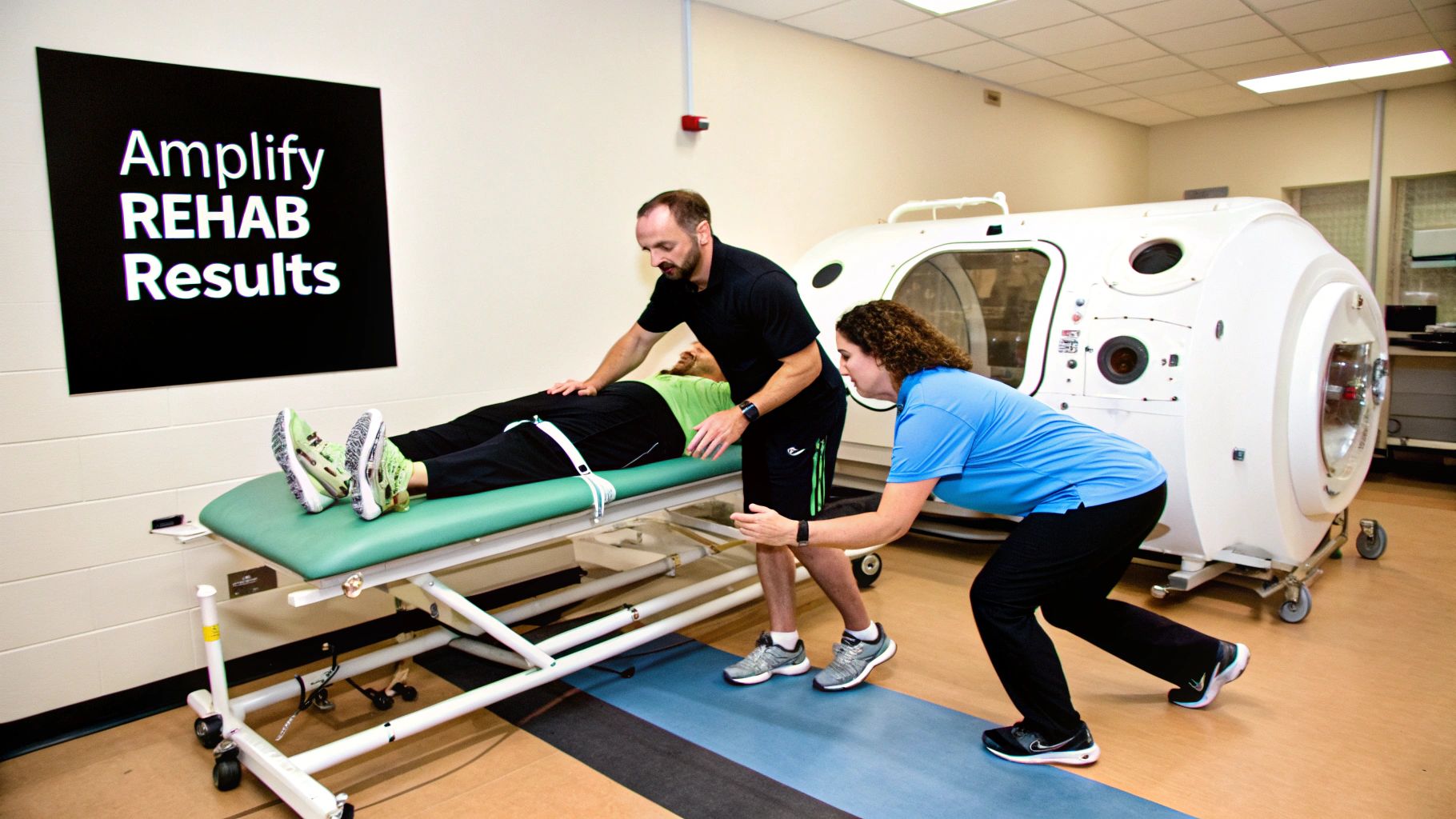
This integrated approach often helps patients push past frustrating recovery plateaus. For instance, a patient struggling with motor control might find that after a few HBOT sessions, they have enough newfound strength and coordination to engage more deeply in their physical therapy. This can lead to quicker, more significant progress and a much-needed boost in motivation.
How HBOT Amplifies Traditional Stroke Rehabilitation
When you pair HBOT with conventional therapies, you’re not just adding another treatment—you’re creating a powerful multiplier effect. The oxygen-rich environment primes the brain to respond better to the targeted work being done in physical, occupational, and speech therapy sessions. The table below shows just how this combination can lead to better outcomes.
| Therapy Type | Standard Rehabilitation Outcome | Integrated Approach Outcome (HBOT + Therapy) |
|---|---|---|
| Physical Therapy | Gradual, often slow, improvements in gross motor skills (e.g., walking, balance). | Faster gains in strength, coordination, and mobility as revived neural pathways respond more readily to exercises. |
| Occupational Therapy | Incremental progress in fine motor skills and activities of daily living (ADLs). | Enhanced dexterity and cognitive function, making it easier to relearn complex tasks like dressing or writing. |
| Speech Therapy | Slow recovery of language skills (aphasia) and swallowing functions (dysphagia). | Improved activation of language and motor centers in the brain, leading to clearer speech and safer swallowing sooner. |
By working together, these therapies help patients achieve a level of recovery that might not be possible with any single treatment alone.
A Safe and Tolerable Option for All Ages
One of the biggest practical advantages of HBOT is its outstanding safety profile, making it a viable option for a wide range of patients, particularly the elderly. Intensive physical rehab can sometimes be too strenuous for older stroke survivors, but HBOT is entirely passive and gentle. Patients simply relax in a comfortable chamber while the oxygen gets to work healing their brain.
Hyperbaric oxygen therapy is a time-tested intervention that has shown remarkable effectiveness across all stages of stroke recovery. While it was once believed that treatment was only useful within hours of an event, we now know HBOT can be effective in the acute, subacute, and even chronic phases months or years later. Learn more about the research showing HBOT’s benefits for stroke patients at any stage.
This high tolerability means more patients can access the foundational benefits of enhanced oxygenation. The technology developed by Dr. Louis Hilliard, the inventor of the med bed and owner of Life Force Medbeds, is designed specifically to deliver this therapy safely and effectively. His systems ensure a controlled, comfortable experience, allowing practitioners to offer this powerful recovery tool to a much broader patient population.
By weaving HBOT into a comprehensive rehabilitation plan, clinics can offer a more complete and effective path back to life.
We invite you to go to the website for more information on creating an integrated therapy program, or call 770-948-4511.
Begin Your Recovery Journey Today
The road after a stroke can feel daunting, and for a long time, many believed that recovery had a strict expiration date. We now know that simply isn’t true. The path to significant hyperbaric stroke recovery is a real possibility, built on the brain’s incredible ability to heal and adapt. This isn’t about wishful thinking; it’s about giving the brain exactly what it needs to repair itself, even months or years after the initial injury.
Hyperbaric Oxygen Therapy (HBOT) provides a powerful method for waking up dormant brain cells, reducing the harmful inflammation that causes secondary damage, and stimulating the growth of new neural connections. By flooding brain tissue with concentrated oxygen, HBOT delivers the one essential resource that was cut off during the stroke. This creates a fertile ground for real, lasting improvements in movement, cognitive function, and speech, fundamentally changing how we can approach long-term neurological care.
Your Partner in Advanced Healing
Tapping into this healing potential requires technology designed for the job. The groundbreaking work of Dr. Louis Hilliard, the inventor of the med bed and owner of Life Force Medbeds, has been key to bringing this advanced therapy to more people. His systems are specifically engineered to deliver HBOT with the precise protocols proven to reactivate the brain’s natural healing processes. This makes his technology a top choice for both patients and clinicians who are serious about achieving the best possible results.
The message here is simple: a better quality of life after a stroke is not just a hope, it’s a real goal. You have the ability to push past the limits you thought were permanent and continue your healing journey. The combination of targeted oxygen therapy and the brain’s own resilience opens up new doors for regaining independence and rediscovering the things you love.
This journey is one of empowerment. With the right tools and a dedicated approach, you can actively participate in your own recovery, rewriting the story of what is possible after a stroke.
We invite you to take the next step. Move from learning about this therapy to taking action. Explore the advanced technology that makes this healing possible and see how it could fit into your personal recovery plan.
We invite you to go to the website for more information or call 770-948-4511. You can find out more on the Life Force Medbeds website.
Frequently Asked Questions
When you or a loved one are exploring hyperbaric oxygen therapy for stroke recovery, it’s natural to have a lot of questions. It’s a big decision, and understanding what the process really looks like is the first step toward feeling confident in your choice. We’ve put together answers to some of the most common questions we hear from patients and their families.
Think of this as your practical guide to what you can expect on this path to healing.
How Long Is a Typical HBOT Session?
Most hyperbaric sessions for stroke recovery run between 60 and 90 minutes once you’re at the target pressure. This isn’t an arbitrary number; it’s the time needed to fully saturate your body with oxygen so it can get to work repairing damaged brain tissue.
The whole process feels a lot like taking off and landing in an airplane. There’s a slow, gentle pressurization period at the start and a similar depressurization at the end. The bulk of your time is spent just relaxing at the prescribed pressure, letting the oxygen do its job.
Is HBOT Safe for Stroke Patients?
Absolutely. When managed by a trained team using certified equipment, HBOT is a remarkably safe and non-invasive therapy. It’s often a great option for older patients who might struggle with more physically demanding types of rehab. The most common thing people notice is their ears popping a bit, just like on a flight.
Of course, safety is always our top priority. Before you start, we do a thorough medical screening to make sure there are no red flags, like an untreated collapsed lung or problems equalizing ear pressure. This ensures every single session is both safe and effective.
The systems we use, from Dr. Louis Hilliard, the inventor of the med bed and owner of Life Force Medbeds, are built with multiple safety controls and precise monitoring. It’s all designed to give you a secure and comfortable experience.
How Many Sessions Until I See a Difference?
Recovering brain function is a marathon, not a sprint. While some people report small improvements early on, real, lasting change comes from consistency. A typical treatment plan for hyperbaric stroke recovery usually involves 40 to 60 sessions.
We generally schedule these sessions daily, five days a week. This steady, repeated exposure to high oxygen levels is what really kicks the brain’s healing mechanisms into high gear. It helps awaken dormant neurons, reduce stubborn inflammation, and encourage the brain to rewire itself. The goal is to create permanent improvements, not a temporary fix. Your protocol will be designed specifically for your needs and recovery goals.
Everyone’s recovery journey is different, but having clear information makes all the difference. If you still have questions or just want to talk through whether this could be the right path for you or someone you care about, our team at Life Force Medbeds is here for you.
We encourage you to go to the website for more information or call 770-948-4511.


