
Hyperbaric Treatment for Stroke Recovery A Path to Healing


Hyperbaric treatment for stroke recovery isn’t about magic; it’s about giving the brain the supercharged fuel it needs to heal itself. By using pure, pressurized oxygen, we can wake up dormant brain cells and encourage new neural connections—sometimes even years after a stroke. This approach is completely changing what we thought was possible for recovery, offering real hope for meaningful improvements in function.
A New Horizon in Stroke Recovery
When a stroke cuts off blood flow, it starves parts of the brain of oxygen. Some cells die, and unfortunately, we can’t bring them back. But many of the surrounding cells aren’t dead; they’re just injured, stunned, or “idling.” Think of them as being in a low-power mode, alive but without enough energy to do their job. This is where hyperbaric treatment for stroke recovery steps in.
When you breathe 100% pure oxygen in a pressurized chamber, your body’s oxygen levels skyrocket. Your blood plasma becomes saturated with it, allowing oxygen to travel past blocked or damaged blood vessels and reach those starved areas of the brain. This flood of oxygen essentially recharges those idling neurons, giving them the energy they need to start firing again. It sets the stage for neuroplasticity—the brain’s incredible ability to rewire itself and form new pathways around the damage.
The Science of Awakening the Brain
The concept is surprisingly straightforward: give the brain the raw materials it needs to repair the damage from the inside out. While traditional rehab often teaches the brain to work around the injury, HBOT aims to heal the injury itself. The therapy helps reduce brain swelling, cools down inflammation, and even stimulates the growth of new blood vessels, all of which are essential for long-term recovery.
We’re seeing groundbreaking results that back this up. Pioneering research shows that by reoxygenating these dormant neurons, HBOT can prevent more cells from dying and kickstart functional recovery, no matter how long it’s been since the stroke.
Let’s look at the evidence. Here is a quick overview of how HBOT works in the context of stroke recovery.
HBOT for Stroke Recovery at a Glance
| Concept | Mechanism of Action | Primary Goal in Stroke Recovery |
|---|---|---|
| Super-Oxygenation | Breathing 100% oxygen under pressure significantly increases the oxygen dissolved in blood plasma. | Bypass blocked arteries to deliver oxygen directly to injured brain tissue, waking up “idling” neurons. |
| Neuroplasticity | The brain’s ability to reorganize itself by forming new neural connections. | Provide the optimal high-energy environment for the brain to rewire itself and restore lost function. |
| Anti-Inflammatory | High oxygen levels reduce inflammation and swelling in the brain (cerebral edema). | Calm the inflammatory response post-stroke, protecting brain tissue from further secondary damage. |
| Angiogenesis | The formation of new blood vessels. | Stimulate the growth of a new micro-vascular network to permanently improve blood flow to damaged areas. |
A landmark study really highlighted the potential here, finding that even patients in the chronic late stages of stroke recovery saw incredible gains. In that study, 43% achieved significant neurological improvement, and another 29% showed mild improvement. You can learn more about the study’s findings on hyperbaric oxygen therapy for stroke in the full report.
Making Advanced Wellness Accessible
Leaders in this field, like Dr. Louis Hilliard, the inventor of the med bed and owner of Life Force Med Beds, are working hard to make powerful wellness tools like hyperbaric chambers available to more people. By incorporating these systems into a complete wellness strategy, stroke survivors can tap into the brain’s natural, powerful ability to heal.
For many families, this represents a fundamental shift in what’s possible. The brain’s ability to heal is far greater than we once believed, offering a new chapter of hope for regaining independence, rebuilding cognitive function, and improving overall quality of life long after a stroke.
Everyone’s recovery journey is different, but the core principles of healing don’t change. When you give the brain the right conditions, you unlock its incredible potential to repair itself.
To see how this therapy could fit into your recovery plan, please go to the website for more information or call 770-948-4511.
How Pressurized Oxygen Heals the Brain
Think of your brain’s blood supply as a massive, intricate highway system. A stroke is like a catastrophic pile-up, blocking the roads and preventing oxygen—the essential fuel for every cell—from getting where it needs to go. In the immediate aftermath, many brain cells don’t die right away. They go into a sort of hibernation, stunned and dormant, starved of the energy they need to function.
This is where hyperbaric oxygen therapy (HBOT) creates a brilliant biological detour. Inside a pressurized chamber, a patient breathes 100% pure oxygen. Under these conditions, the blood plasma itself—the liquid that carries your blood cells—becomes saturated with oxygen, absorbing up to 17 times more than it normally would.
This super-oxygenated plasma can now do something amazing. It can seep past the “traffic jams” caused by the stroke, delivering a huge dose of healing oxygen directly to those stunned, oxygen-deprived tissues. It’s like an emergency delivery service that uses tiny side streets to bypass a complete highway shutdown.
The Ripple Effect of Super-Oxygenation
This sudden flood of oxygen does more than just wake up dormant cells. It sets off a powerful chain reaction of healing processes deep within the brain.
One of the most immediate and critical effects is the reduction of brain swelling, or cerebral edema. After a stroke, this swelling can cause immense secondary damage by compressing healthy brain tissue. The high oxygen concentration helps constrict blood vessels, which in turn reduces this dangerous pressure and calms inflammation, protecting the brain from further harm.
But that’s just the beginning. The therapy also creates the ideal conditions for long-term repair by stimulating angiogenesis—the growth of brand new blood vessels. Essentially, the brain starts building a new network of roads to permanently restore circulation to the damaged areas. This ensures those tissues get a stable supply of oxygen for the long haul.
This concept map shows the simple yet profound journey from pure oxygen delivery to renewed hope.
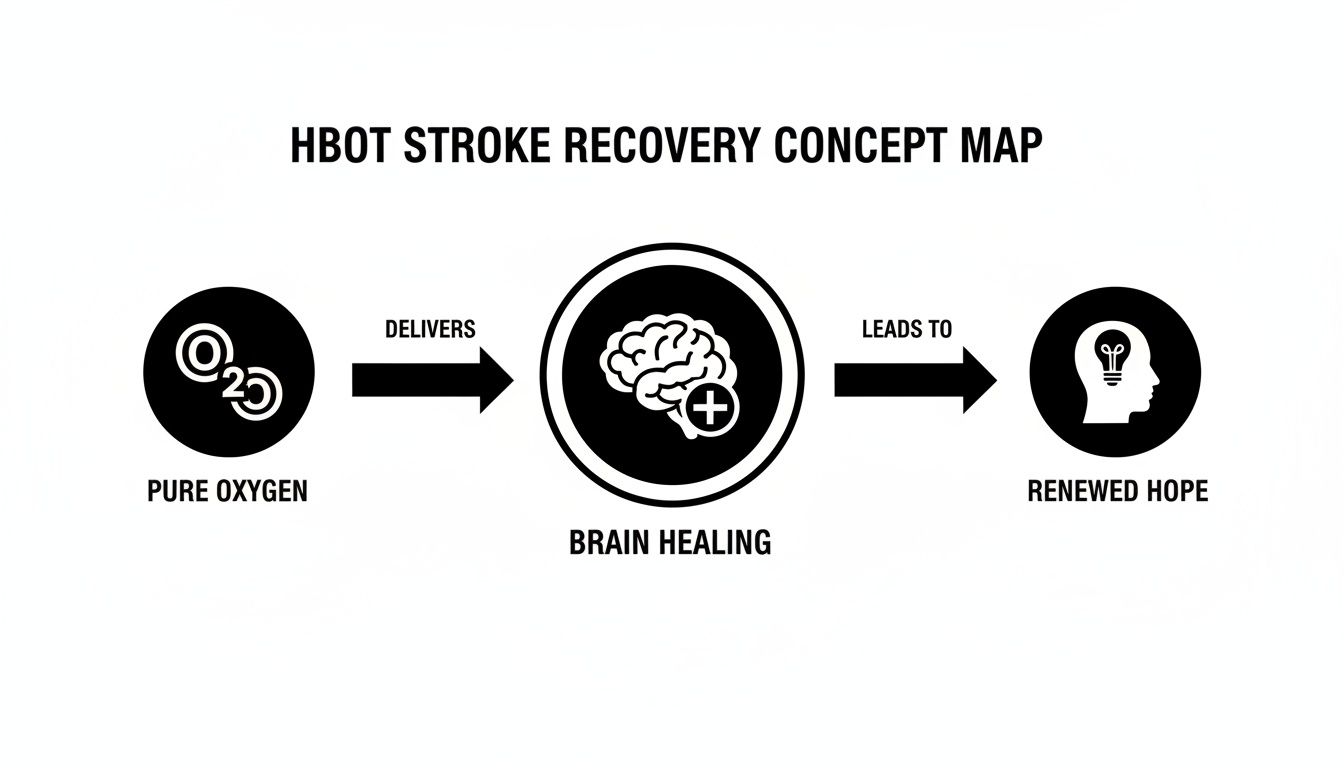
The image clearly illustrates how the core component, pure oxygen, directly fuels the brain’s healing mechanisms. This process is what leads to the ultimate goal: recovery and a better quality of life.
Fueling the Brain’s Ability to Rewire Itself
Ultimately, everything we’ve talked about—reduced swelling, less inflammation, and new blood vessel growth—is about setting the stage for neuroplasticity. This is the brain’s incredible capacity to reorganize and rewire itself by forming new connections. HBOT provides the enormous amount of energy the brain needs to build these new pathways around the damaged tissue.
By creating this optimal healing environment, hyperbaric therapy can help restore functions that were once thought to be lost forever. If you’re curious about the broader science, you can get a fuller picture from our detailed guide that answers the common question, “Do hyperbaric chambers work?“.
This biological support system is what allows for meaningful gains in motor skills, speech, and cognitive function. It’s not about forcing the brain to heal but rather giving it the exact resources it needs to perform its own repairs efficiently.
The work of Dr. Louis Hilliard, the inventor of the med bed and owner of Life Force Medbeds, is centered on making this powerful healing process more accessible. By providing the tools for deep cellular repair, we can support the brain’s innate capacity for recovery.
To learn more about how hyperbaric treatment can be integrated into a stroke recovery plan, we invite you to go to the website for more information or call 770-948-4511.
Rebuilding Cognitive Function After a Stroke
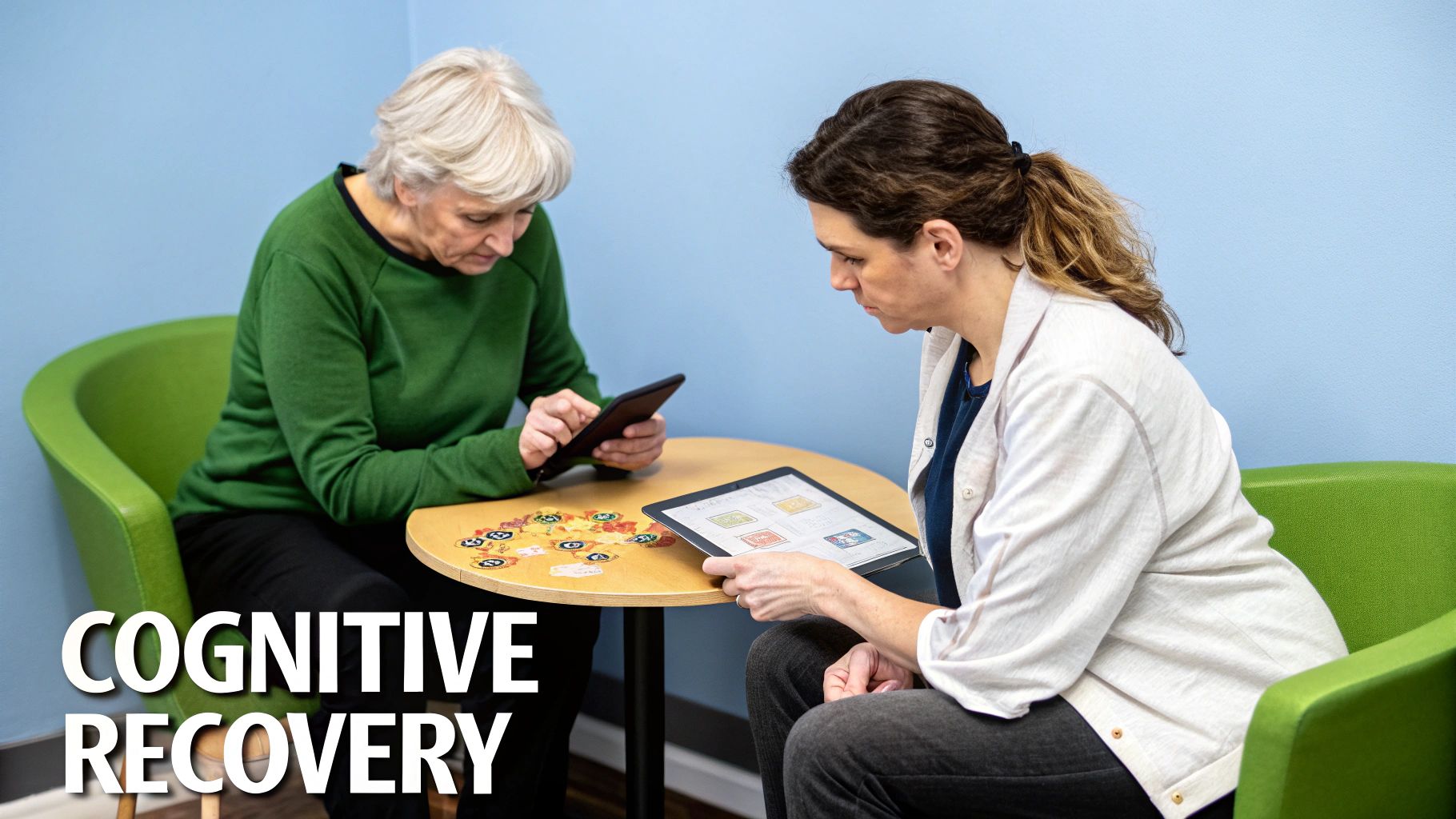
A stroke does more than just affect the body; it can unravel the very fabric of a person’s identity—their memories, their focus, their ability to think clearly. Everyday tasks we take for granted, like recalling a name or following a conversation, can suddenly feel like climbing a mountain. This pervasive “brain fog” is often one of the most frustrating parts of recovery, chipping away at a survivor’s independence and self-confidence. But we’re seeing real hope in using hyperbaric treatment for stroke recovery to help rebuild these critical cognitive functions.
By bathing the brain in highly concentrated oxygen, HBOT delivers the fuel needed to repair damaged neural pathways and sharpen mental processing. Think of it as a high-performance tune-up for the brain’s internal computer, helping it run smoother and faster. This process underpins everything from strengthening short-term memory to tackling complex problem-solving.
Sharpening the Mind with Oxygen
The cognitive improvements seen with hyperbaric therapy aren’t just anecdotal. They are backed by solid clinical evidence, even for patients years after their stroke occurred. The flood of oxygen helps wake up stunned neurons, a crucial step in restoring the brain’s more sophisticated functions.
Here’s a helpful analogy: imagine a stroke causes a power outage in parts of the brain. Some circuits are fried and gone for good, but many others are simply in a low-power “brownout” state. HBOT acts like a master switch, restoring full power and bringing those dormant areas back online. When that happens, patients can experience significant, measurable improvements in key cognitive areas.
We often see notable enhancements across several domains:
- Executive Function: This is the brain’s CEO—responsible for planning, organizing, and multitasking. These are the skills needed to manage a household or return to work.
- Information Processing Speed: Survivors frequently tell us they can think and react more quickly, which makes conversations and daily decisions far less draining.
- Memory and Attention: The ability to hold onto new information and stay focused improves, helping people feel more present and engaged in their own lives.
A landmark NIH-funded study from 2020 really drove home how powerful this can be. The research found that an astonishing 86% of stroke survivors in the late chronic stage made clinically significant gains across all cognitive domains, including memory, motor skills, and processing speed. What’s more, the study noted that hemorrhagic strokes saw bigger jumps in processing speed, while left hemisphere strokes showed greater motor function improvements. You can dig into the full research on HBOT’s cognitive impact to see the data for yourself.
From Clinical Gains to Real-World Independence
These clinical results are life-changing because they translate directly into a better quality of life. When someone regains cognitive clarity, they can manage their own finances again, follow a recipe, or simply lose themselves in a good book. It means they can participate more fully in family conversations and rebuild social bonds that were strained by communication struggles.
This profound cognitive healing is exactly what wellness technologies are designed to support. Dr. Louis Hilliard, the inventor of the med bed and owner of Life Force Med Beds, has focused his work on creating systems that provide the ideal environment for this kind of deep recovery.
By fostering an optimal environment for brain repair, therapies like those offered in Life Force Med Beds empower survivors to move beyond just managing their condition. The goal is to reclaim the mental sharpness needed to live a full and independent life.
Ultimately, rebuilding cognitive function is about helping someone reclaim their sense of self. The ability to think clearly, cherish memories, and engage with the world confidently is an essential part of who we are.
If you are interested in exploring how hyperbaric therapy can support cognitive recovery after a stroke, we invite you to go to the website for more information or call 770-948-4511.
Bringing the Science Home: Better Quality of Life and Physical Recovery
While we can talk about neurological scores and clinical data all day, the real measure of success for hyperbaric treatment in stroke recovery is seeing those numbers turn into a better, more independent life. It’s about the small victories that feel monumental—buttoning a shirt on your own, walking to the mailbox without that constant fear of falling, or being able to share a laugh with your family again.
This is where the science of cellular repair truly meets the human side of healing. Hyperbaric oxygen therapy helps fuel the physical gains that make these moments possible. By supporting neuroplasticity and overall brain health, it lays the groundwork for rebuilding strength, coordination, and balance. For many survivors, this means a profound shift away from dependency and toward a future with more freedom and dignity.
Reclaiming Everyday Life
The journey back from a stroke often comes down to mastering the Activities of Daily Living (ADL). These are the basic self-care tasks we all take for granted, like eating, dressing, bathing, and simply moving around our homes. Losing these abilities can feel incredibly defeating.
Hyperbaric therapy essentially floods the brain with the oxygenated fuel it needs to re-learn and master these fundamental skills. When you pair this with dedicated physical and occupational therapy, the results can be truly impressive.
Patients often see meaningful progress in a few key areas:
- Better Gross Motor Skills: This translates to improved balance and coordination for walking, standing, or moving from a bed to a chair, which drastically reduces the risk of falls.
- Sharper Fine Motor Skills: Regaining dexterity in the hands means tasks like writing, using a fork, or tying shoelaces can become possible once more.
- Greater Strength and Stamina: As the brain heals, physical endurance naturally improves, allowing survivors to get through their daily routines without feeling completely wiped out.
More Than Just Physical: The Emotional Uplift
A stroke doesn’t just impact the body; the emotional and psychological toll can be just as devastating. Post-stroke depression is incredibly common, often caused by a combination of the brain injury itself and the sudden, dramatic life changes that follow. HBOT offers a powerful two-for-one benefit here, promoting brain health in a way that can directly lift a survivor’s mood and outlook.
This isn’t just anecdotal. A recent review of 59 stroke patients showed statistically significant gains not only in physical function and ADLs but also in overall quality of life scores. Backing this up, a major meta-analysis covering 2,250 patients confirmed that hyperbaric treatment was more effective than standard control methods at reducing post-stroke depression. You can dive into the full research on HBOT and quality of life improvements to see the detailed findings for yourself.
This emotional boost is a critical piece of the puzzle. When someone feels more hopeful and less weighed down by depression, they are far more motivated and engaged in their rehab, creating a powerful, positive feedback loop. This holistic approach is the cornerstone of the work done by Dr. Louis Hilliard, the inventor of the med bed and owner of Life Force Medbeds, who designs healing environments that support both the body and the mind.
Regaining independence is not just about what a person can do, but how they feel. A more hopeful outlook, reduced reliance on caregivers, and the ability to truly participate in life again are the ultimate goals of any recovery plan.
The path forward is about rebuilding a life, not just mending an injury. By addressing both the physical and emotional sides of recovery, we can help stroke survivors rediscover purpose and joy.
To learn more about how hyperbaric therapy can support a comprehensive recovery plan, please go to the website for more information or call 770-948-4511.
What to Expect During a Treatment Protocol
Deciding to pursue hyperbaric treatment for stroke recovery is a significant step, and it’s natural to wonder what the process actually looks like. We’ve found that knowing what to expect from start to finish helps patients and their families feel more comfortable and focus on the real goal: healing. The entire protocol is designed to be calm, supportive, and safe, beginning with a detailed evaluation.
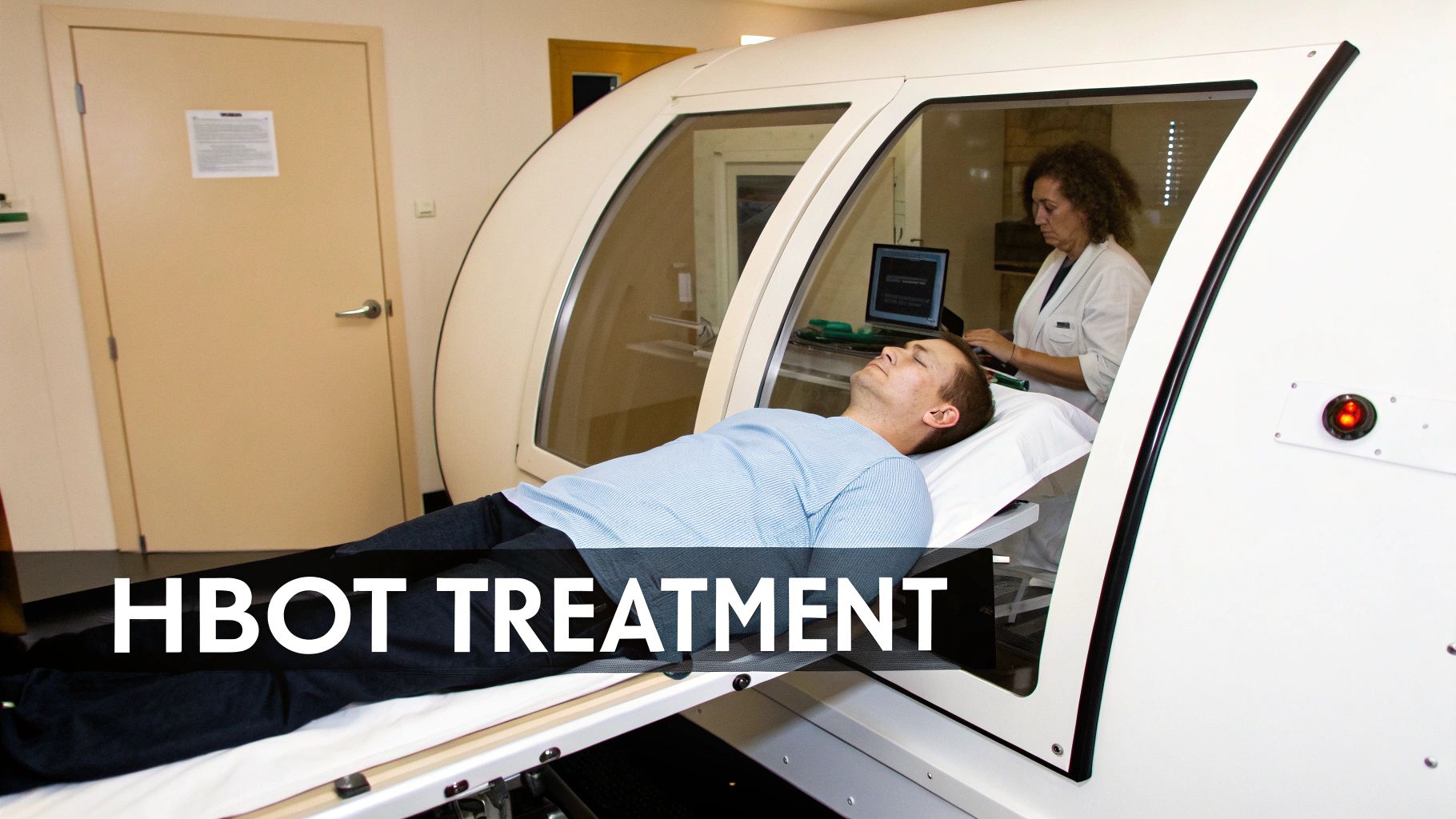
Before your first session, we’ll sit down for an initial consultation. This is where we review your medical history, discuss the specific impacts of the stroke, and establish clear recovery goals together. This isn’t just a formality; it’s a critical step to confirm that HBOT is right for you and to tailor a treatment plan that fits your unique situation.
Your First Session and What It Feels Like
Entering the hyperbaric chamber for the first time is a surprisingly gentle experience. As the pressure in the chamber gradually increases, you’ll notice a feeling of fullness in your ears. It’s the exact same sensation you get when a plane takes off or lands.
This is easily managed by swallowing, yawning, or pinching your nose and gently blowing. Once the chamber is at the prescribed pressure, that feeling vanishes. You can then simply relax, rest, or even listen to music for the rest of the session. The whole environment is quiet and controlled, built for your comfort.
A typical treatment protocol for stroke recovery isn’t a one-and-done deal. It’s a series of sessions designed to build on each other for a powerful cumulative effect. While every plan is personalized, a common approach looks like this:
- Frequency: Sessions are usually scheduled five days a week.
- Duration: Each “dive” typically lasts about 90 minutes.
- Total Sessions: A complete course of therapy often involves 40 to 60 sessions.
This consistent exposure is what helps trigger the long-term biological repairs we’re aiming for, like the growth of new blood vessels that can support lasting brain recovery.
Safety and Maximizing Your Results
Hyperbaric oxygen therapy has an excellent safety record, with very few side effects. The most common issue is that temporary ear pressure, and our trained staff are always right there to guide you through it and make sure you’re comfortable. Serious side effects are extremely rare, especially in a professional clinical setting.
To really get the most out of your sessions, it’s important to think of HBOT as a powerful amplifier for your existing rehab plan, not a replacement for it.
We see the best results when HBOT is combined with traditional physical, occupational, and speech therapies. The oxygen-rich environment seems to “wake up” dormant areas of the brain, making it more responsive to the retraining and strengthening exercises you’re doing with your therapists.
This integrated strategy helps turn the neurological gains from HBOT into real-world improvements in your daily life. It’s this kind of synergy that pioneers like Dr. Louis Hilliard, the inventor of the med bed and owner of Life Force Medbeds, have focused on. His work in wellness technology is all about creating environments that support the body’s innate ability to heal. A good example is understanding how a 1.5 ATA hyperbaric chamber fits into these integrated protocols.
For more details on our hyperbaric treatment protocols, please go to the website for more information or call 770-948-4511.
Integrating Hyperbaric Therapy Into Your Wellness Plan
We’ve covered a lot of ground in this guide, digging into how hyperbaric treatment for stroke recovery gives the brain a flood of supercharged oxygen to kickstart healing. We’ve seen how this process can wake up stunned neurons, calm inflammation, and even grow new blood vessels—all creating the perfect conditions for the brain to start rewiring itself. Now, let’s pull all of this together and look at how to make hyperbaric therapy a cornerstone of a complete wellness strategy.
Bringing this therapy into a recovery plan is about more than just scheduling appointments. It’s about fully committing to unlocking your body’s own powerful healing mechanisms. For stroke survivors and the people who support them, this represents a tangible source of hope. It’s a way to actively help the brain recover, often long after the initial injury, and take a real step toward reclaiming independence and a better quality of life.
A New Generation of Wellness Technology
This move toward smarter, more accessible healing tools is being championed by pioneers in the wellness world. One of the key innovators is Dr. Louis Hilliard, the inventor of the med bed and owner of Life Force Medbeds. His work is centered on bringing advanced technologies like hyperbaric chambers out of the exclusive clinical environment and into the hands of those who need them most, whether in a clinic or right at home.
Life Force Med Beds are specifically designed to make hyperbaric therapy as simple and effective as possible. By engineering systems that amplify the body’s natural ability to repair, Dr. Hilliard is closing the gap between groundbreaking science and practical, everyday recovery.
For wellness professionals—think chiropractors, physical therapists, and functional medicine practitioners—adding hyperbaric therapy to their practice can be a game-changer. It provides a powerful biological boost that can make their existing treatments even more effective, helping clients achieve faster, more profound results.
Building Your Path to Recovery
A truly effective recovery plan is holistic, looking at healing from every possible angle. Hyperbaric therapy delivers its best results when it’s not used in a vacuum but as part of a well-rounded, coordinated effort.
- Complementary Therapies: Pair your hyperbaric sessions with physical, occupational, and speech therapy. The oxygen boost helps prime the brain to get the absolute most out of every rehab session.
- Lifestyle Support: You can’t overlook the fundamentals. Good nutrition, staying hydrated, and getting quality rest are the raw materials your brain needs to rebuild.
- Professional Guidance: Always work with a team that gets your unique situation. They can help create a customized protocol that lines up perfectly with your recovery goals.
Hyperbaric therapy isn’t just another treatment. It’s a foundational tool that gives the brain the resources to do what it’s designed to do: heal. By creating that oxygen-rich environment, you’re essentially handing it the fuel it needs to forge new connections and restore function.
This integrated approach offers a clear way forward for anyone looking to push past the conventional limits of stroke rehabilitation. For those considering this for personal use, you can find out more about how it works by reading our guide on home hyperbaric oxygen therapy.
Every stroke recovery journey is different, but the chance to fundamentally support the brain’s healing process is universal. Dr. Louis Hilliard’s work with the Med Bed at Life Force Medbeds is a perfect example of this new era of empowered personal wellness.
To see how this therapy might fit into your own recovery plan, please go to the website for more details or call 770-948-4511.
Frequently Asked Questions
When you’re exploring hyperbaric treatment for stroke recovery, a lot of questions come to mind. Let’s walk through some of the most common ones with clear, straightforward answers to help you understand what to expect.
Is It Ever Too Late to Start After a Stroke?
It’s a common worry, but the short answer is no. While starting sooner is often ideal, many significant studies have shown real neurological and cognitive gains for patients who started hyperbaric treatment months, or even years, after their stroke.
The therapy’s goal is to reactivate dormant brain cells. Think of these as “idling” neurons that survived the initial stroke but don’t have enough oxygen to get back to work. HBOT can help kickstart that process, even long into the chronic recovery phase.
Is Hyperbaric Oxygen Therapy Safe?
Yes, when it’s managed by trained professionals, HBOT is a very safe and non-invasive therapy. The most common side effect is a temporary fullness in the ears—much like you’d feel on an airplane. Simple tricks like swallowing or yawning usually take care of it.
Before any treatment begins, every patient goes through a thorough medical evaluation. This is crucial for spotting any potential contraindications, like specific lung conditions, and ensures the highest level of safety from start to finish.
How Does HBOT Work with Physical Therapy?
HBOT is a powerful ally to your existing rehab program, not a replacement for it. It’s best to think of it as a catalyst that can make your physical, occupational, and speech therapy even more effective.
By flooding the brain with oxygen, HBOT helps wake up those idling neural pathways and encourages the brain to form new connections—a process called neuroplasticity. This can make the brain more responsive to the hard work you’re putting in during your regular therapy sessions, often leading to faster and more noticeable improvements.
How Many Sessions Are Typically Needed?
A typical treatment plan for post-stroke recovery usually involves a series of 40 to 60 daily sessions. Each session lasts about 90 minutes, and they’re often scheduled five days a week to maintain momentum.
This consistency is key. The cumulative effect of the sessions is what promotes lasting changes, like the growth of new blood vessels in the brain. Of course, the exact number of sessions is always tailored to the individual’s condition and how they’re responding to the therapy. This patient-centered approach is a core principle for innovators like Dr. Louis Hilliard, the inventor of the med bed and owner of Life Force Medbeds.
At Life Force Med Beds, our mission is to make this kind of advanced wellness accessible. To learn more about incorporating hyperbaric treatment into a stroke recovery plan, go to our website at lifeforcemedbeds.com for more information or call 770-948-4511.


