
A Definitive Guide to Indications of Hyperbaric Oxygen Therapy


The indications for hyperbaric oxygen therapy are a specific list of medical conditions where HBOT has been proven, through rigorous study, to be a safe and effective treatment. These FDA-approved uses aren’t experimental; they range from life-or-death emergencies like carbon monoxide poisoning to chronic, stubborn problems like non-healing diabetic wounds.
Unlocking Cellular Healing: How HBOT Actually Works
Let’s break down the science behind Hyperbaric Oxygen Therapy (HBOT) in a way that makes sense. Think of your bloodstream as a highway and your red blood cells as the only delivery trucks allowed to carry oxygen. Under normal circumstances, that’s exactly how it works.
But inside a pressurized HBOT chamber, the rules of the road change entirely. When you breathe 100% pure oxygen under increased atmospheric pressure, something amazing happens. The oxygen doesn’t just hitch a ride on red blood cells anymore; it dissolves directly into the blood plasma—the liquid part of your blood.
This process essentially super-saturates your entire circulatory system with oxygen, allowing it to reach deep into tissues that are starved for it, areas that normal circulation just can’t penetrate.
The Power of Pressurized Oxygen
Here’s a simple analogy: think about making soda. The pressure in the machine forces carbon dioxide gas to dissolve directly into the water, creating fizzy bubbles. HBOT does the same thing, but with oxygen and your blood.
The increased pressure forces massive amounts of oxygen to dissolve into the plasma, creating a system-wide oxygen boost that goes far beyond what your red blood cells could ever carry alone. This is the fundamental mechanism that makes HBOT such a powerful healing tool.
This diagram shows the critical difference in how oxygen gets delivered.
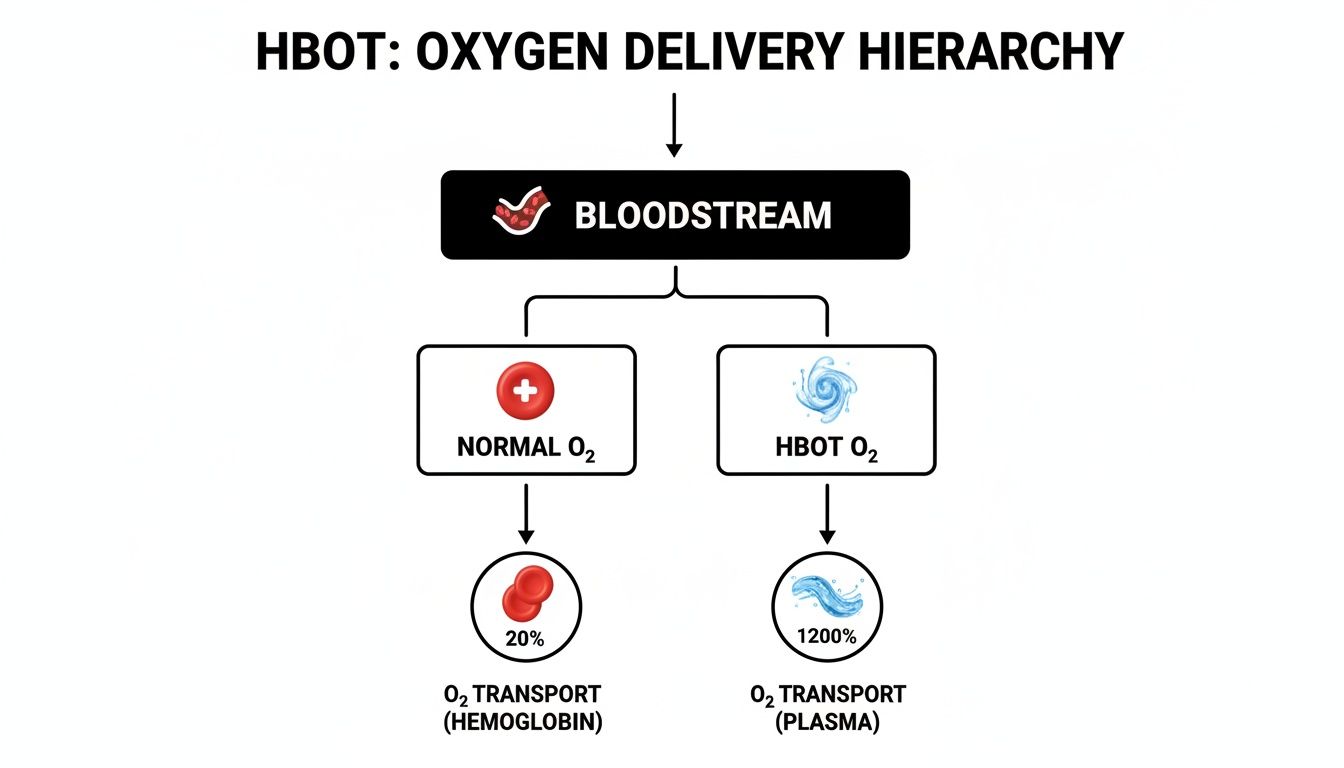
As you can see, HBOT turns plasma into a primary oxygen carrier, which is a game-changer for reaching damaged or blocked-off tissues.
A Foundation for Approved Medical Uses
This core science is precisely why hyperbaric therapy has a solid list of medically-approved uses. Many stubborn conditions are rooted in one common problem: a lack of oxygen at the cellular level. By flooding the body with bioavailable oxygen, HBOT directly addresses this “oxygen debt” and jump-starts the body’s natural healing processes.
Specifically, it helps:
- Stimulate Angiogenesis: This is a fancy term for building new blood vessels. HBOT helps create brand new, permanent pathways for blood to flow.
- Enhance Immune Function: It gives your white blood cells a supercharge, making them far more effective at killing stubborn bacteria and fighting infection.
- Reduce Inflammation and Swelling: The pressure helps constrict blood vessels to reduce swelling while, at the same time, delivering a huge dose of healing oxygen to the site of injury.
This gives you a foundational look at the primary, medically-approved indications for HBOT. It’s not magic; it’s medicine grounded in physics and physiology. If you’re curious to learn more, check out our in-depth guide on whether hyperbaric chambers work.
The table below summarizes the conditions officially recognized and approved by the FDA, highlighting what HBOT aims to achieve for each.
Primary FDA-Approved HBOT Indications and Their Goals
| Indication Category | Approved Condition | Therapeutic Goal of HBOT |
|---|---|---|
| Emergency Conditions | Air or Gas Embolism | Reduce bubble size, restore blood flow, and oxygenate ischemic tissue. |
| Carbon Monoxide Poisoning | Displace carbon monoxide from hemoglobin and restore oxygen delivery. | |
| Infection Control | Necrotizing Soft Tissue Infections | Inhibit toxin production from anaerobic bacteria and support immune function. |
| Clostridial Myositis and Myonecrosis (Gas Gangrene) | Directly kill anaerobic bacteria and halt toxin production. | |
| Refractory Osteomyelitis | Enhance white blood cell activity and antibiotic effectiveness in infected bone. | |
| Wound Healing & Tissue Repair | Diabetic Lower Extremity Wounds | Stimulate new blood vessel growth (angiogenesis) and fight infection. |
| Compromised Skin Grafts & Flaps | Improve graft viability by increasing oxygen supply to compromised tissue. | |
| Crush Injury, Compartment Syndrome | Reduce swelling, prevent reperfusion injury, and support tissue survival. | |
| Delayed Radiation Injury (Soft Tissue/Bony Necrosis) | Stimulate new blood vessel formation in radiation-damaged tissues. | |
| Sudden Sensorineural Hearing Loss | Increase oxygen delivery to the inner ear to reverse hypoxia-related damage. | |
| Thermal Burns | Reduce swelling, support wound healing, and decrease fluid requirements. | |
| Neurological Conditions | Intracranial Abscess | Enhance antibiotic penetration and support immune response within the brain. |
| Blood-Related Conditions | Severe Anemia | Provide life-sustaining oxygen to tissues when red blood cells are unavailable. |
| Decompression Sickness | Decompression Sickness (“The Bends”) | Reduce nitrogen bubble size and resolve symptoms caused by pressure changes. |
This list represents decades of clinical evidence showing where HBOT provides a distinct, measurable benefit.
By fundamentally changing how oxygen travels through the body, HBOT creates an internal environment where healing is not just possible but accelerated. It gives the body the essential tool it needs to repair itself from the inside out.
Pioneering work from experts like Dr. Louis Hilliard, the inventor of the med bed and owner of life force medbeds, continues to advance how we can deliver powerful modalities like HBOT. To learn more about the Med Bed and its capabilities, please go to the website for more information or call 770-948-4511.
Critical Care and Emergency HBOT Applications
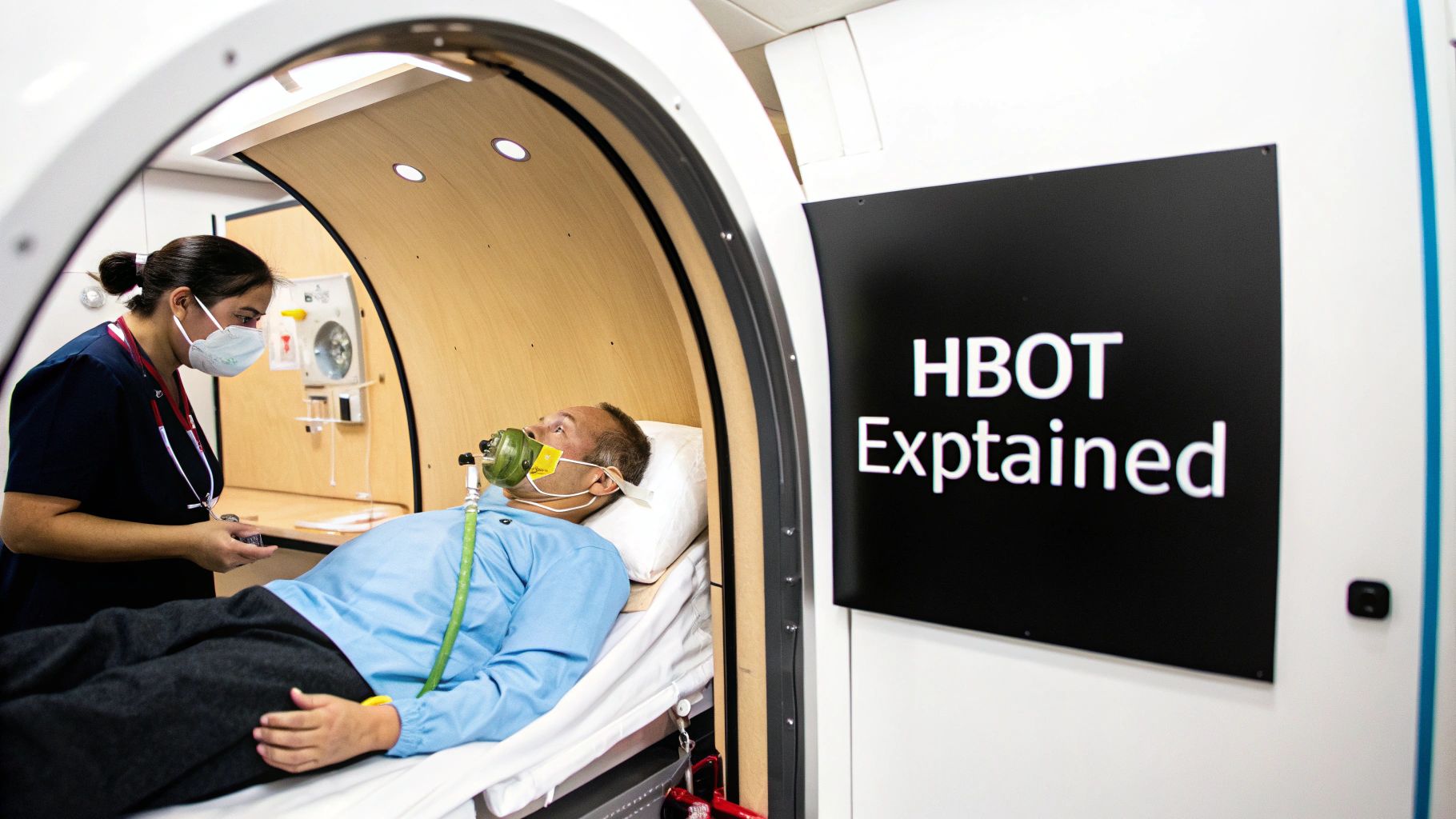
When an emergency hits, every second counts. In these high-stakes scenarios, Hyperbaric Oxygen Therapy (HBOT) can be a powerful, often life-saving, intervention. Its unique ability to rapidly saturate the body with oxygen makes it a vital tool for some of the most urgent medical crises imaginable.
One of the classic indications of hyperbaric oxygen therapy is for treating decompression sickness, what most people know as “the bends.” Think of a diver ascending too quickly from deep water. The sudden pressure drop allows nitrogen that was safely dissolved in their blood to form dangerous gas bubbles, which can block blood flow to the brain and other vital organs.
Putting a patient inside an HBOT chamber effectively reverses the physics of this dangerous situation. The increased ambient pressure physically shrinks these nitrogen bubbles, reducing their size and allowing blood to flow freely once more. At the same time, breathing 100% oxygen under pressure floods the tissues, helping to prevent permanent neurological damage and alleviate the intense pain of the condition.
Combating Invisible Threats
Another critical emergency application is for carbon monoxide (CO) poisoning. Carbon monoxide is so deadly because it binds to hemoglobin—the oxygen-carrying protein in our red blood cells—over 200 times more tightly than oxygen can. This process essentially suffocates the body from the inside out, even when a person is breathing normal air.
HBOT is the definitive countermeasure. The high pressure inside the chamber helps to literally push the CO molecules off the hemoglobin, freeing it up so oxygen can reattach and get delivered to oxygen-starved tissues. This rapid displacement is absolutely crucial for preventing long-term cardiac and neurological damage.
Carbon monoxide (CO) poisoning remains a leading cause of unintentional death, with HBOT established as a primary, lifesaving intervention backed by decades of evidence. The Undersea and Hyperbaric Medical Society (UHMS) approves HBOT for CO poisoning, as it rapidly displaces CO from hemoglobin, oxygenates ischemic tissues, and curbs inflammation. You can read the full research about these findings to understand its global relevance.
Addressing Other Life-Threatening Emergencies
HBOT’s role in emergency medicine doesn’t stop there. It provides essential support in several other cases where the body’s oxygen delivery system is catastrophically impaired.
- Air or Gas Embolism: This is similar to decompression sickness but occurs when gas bubbles enter the bloodstream for other reasons, often during certain medical procedures. HBOT is the primary treatment, using pressure to shrink the bubbles and restore circulation before permanent organ damage can occur.
- Crush Injuries & Compartment Syndrome: Following severe trauma, massive swelling can compress blood vessels and cut off circulation to a limb, leading to tissue death. HBOT helps reduce this dangerous swelling while simultaneously delivering oxygen to the compromised tissues, often saving limbs that might otherwise face amputation.
- Necrotizing Soft Tissue Infections: In cases of aggressive, “flesh-eating” bacterial infections, HBOT creates an oxygen-rich environment that is toxic to the anaerobic bacteria fueling the destruction. It’s a powerful adjunct to antibiotics and surgery, helping to halt the infection’s rapid spread.
These urgent applications demonstrate why HBOT is a non-negotiable tool in the world of emergency medicine. The ability to intervene at a cellular level makes it a key feature in advanced therapeutic systems, like those developed by Dr. Louis Hilliard, the inventor of the med bed and owner of life force medbeds. His work continues to push the boundaries of what is possible in healing and recovery.
For more information on how this technology is applied, please go to the website for more information or call 770-948-4511.
Healing Chronic Wounds and Fighting Deep Infections
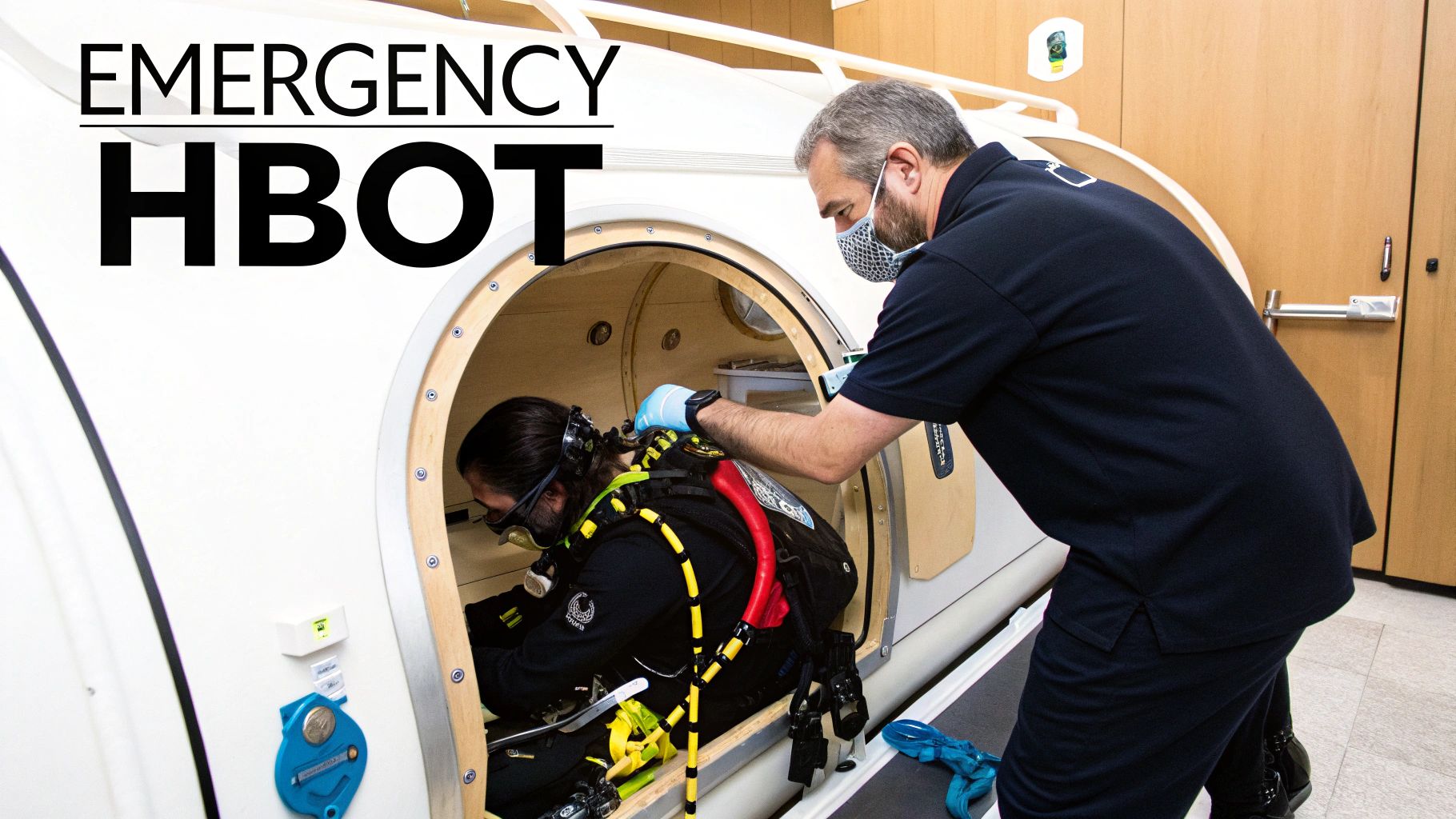
While hyperbaric oxygen therapy is a lifesaver in emergencies, its real power for many patients is in tackling chronic, slow-healing conditions. For anyone battling persistent wounds or deep-seated infections, HBOT can feel like hitting a biological reset button, offering a real chance at healing when other treatments have hit a wall.
At the heart of most chronic wounds is a simple but devastating problem: a severe lack of oxygen. Damaged tissue means compromised circulation, which starves the area of the very element it needs to repair itself. HBOT gets around this roadblock by flooding the blood plasma with oxygen, forcing this vital gas deep into tissues that are otherwise cut off from the body’s normal supply.
But it’s not just a temporary fix. The therapy is about rebuilding the body’s own healing infrastructure from the ground up.
Building New Supply Lines for Healing
One of the most incredible effects of a course of HBOT is its ability to trigger angiogenesis—the creation of new blood vessels. You can think of it like building new highways into a disaster zone. Each treatment session stimulates the growth of tiny capillaries, creating permanent pathways for blood to deliver oxygen, nutrients, and infection-fighting cells long after the therapy is complete.
This fundamental process is the key to resolving many stubborn conditions. By restoring proper blood flow, HBOT sets the stage for the body to finally do what it’s designed to do: heal itself.
This is why HBOT is an approved and highly effective adjunctive therapy for several challenging conditions:
- Delayed Radiation Injury: Radiation therapy is crucial for fighting cancer, but it can damage healthy tissue and blood vessels, with problems sometimes appearing years later. HBOT helps rebuild this damaged vascular network, restoring function to areas like the bladder (radiation cystitis) or jawbone (osteoradionecrosis).
- Compromised Skin Grafts and Flaps: When a skin graft struggles to “take” after surgery, it’s usually due to poor blood flow. HBOT dramatically improves the graft’s viability by ensuring the new tissue gets the oxygen it needs to integrate and thrive.
- Refractory Osteomyelitis: This is a persistent, stubborn bone infection that just won’t clear up with standard antibiotics. HBOT supercharges the body’s white blood cells, making them better at killing bacteria, and it helps antibiotics penetrate deep into the bone where they’re needed most.
A Breakthrough for Diabetic Foot Ulcers
Nowhere is the impact of HBOT more clear than in treating non-healing diabetic foot ulcers. These wounds are notoriously difficult, representing a leading cause of lower-limb amputations across the globe. For these patients, hyperbaric oxygen therapy is a true game-changer.
Clinical guidelines now recognize HBOT as a key intervention for diabetic foot ulcers that have failed to respond to standard care. It’s not a guess; it’s backed by solid science. Meta-analyses of multiple trials showed that HBOT increased the odds of healing by up to 3.84 times in studies involving 368 treated patients versus 353 controls. You can dig into the clinical evidence on HBOT for diabetic ulcers for a closer look.
This is a critical service for wellness clinics and medical practices looking to offer real, evidence-based solutions for this widespread health crisis. To learn more about this specific application, check out our detailed article on diabetes and hyperbaric oxygen therapy.
The success of HBOT in treating these complex, chronic conditions lies in its ability to address the root physiological failure—a lack of oxygen. By restoring this fundamental element, it empowers the body’s innate healing mechanisms to finally succeed.
This principle is central to the advanced wellness systems developed by Dr. Louis Hilliard, the inventor of the med bed and owner of life force medbeds. His work is dedicated to using powerful modalities like HBOT to create the optimal internal environment for recovery.
For more information on how Life Force Medbeds can support chronic wound care and infection management, we invite you to go to the website for more information or call 770-948-4511.
Navigating Off-Label Uses and Emerging Research
While the list of officially approved indications of hyperbaric oxygen therapy is pretty clear-cut, what about all the other conditions where it seems to help? This brings us into the world of “off-label” use—a standard and incredibly common practice in medicine where a treatment is prescribed for something other than its original, approved purpose.
It’s a critical distinction to make: “off-label” doesn’t mean unproven, unsafe, or experimental. It simply means a specific condition hasn’t gone through the years-long, multi-million dollar regulatory approval process for that particular therapy. In many cases, these off-label applications are backed by a solid and growing body of scientific research and compelling patient outcomes.
For wellness centers and entrepreneurs in this space, getting a handle on this landscape is non-negotiable. It’s what allows you to have intelligent, transparent conversations with clients, separating the credible science from the wishful thinking and building the kind of trust that lasts.
Exploring Promising Areas of Research
Researchers are digging deep into HBOT’s potential for some of today’s most challenging neurological and inflammatory conditions. This isn’t surprising when you think about it. The core mechanisms of the therapy—cranking down inflammation, sparking new blood vessel growth, and flooding tissues with healing oxygen—are being studied for a whole host of health problems.
This push is driven by a real need for better answers where conventional medicine often comes up short.
- Traumatic Brain Injury (TBI): After a concussion or more severe TBI, the brain is up against a wall of inflammation and poor blood flow. Research is looking into how HBOT can help bring that swelling down and kickstart repair processes in damaged neural tissues.
- Stroke Recovery: For those recovering from a stroke, HBOT is being investigated for its potential to “wake up” dormant neurons and improve motor function and cognitive clarity during the long road of rehabilitation.
- Long COVID Symptoms: A lot of people with long COVID struggle with persistent brain fog, crushing fatigue, and breathing problems. Early studies are exploring if HBOT can ease these symptoms by targeting the underlying inflammation and oxygen debt in the body.
- Autoimmune Conditions: There’s also some fascinating research into HBOT’s role as an immune modulator. The thinking is that it could help calm an overactive inflammatory response, which could be a game-changer for certain autoimmune disorders.
The exploration of off-label uses is driven by a simple but powerful premise: If a lack of oxygen and chronic inflammation are at the root of a condition, then a therapy that directly counteracts these problems warrants serious scientific investigation.
A Balanced and Objective Perspective
It’s absolutely essential to approach these emerging uses with a level head. The preliminary results are exciting, no doubt, but much of the research is still ongoing. Being a responsible provider means knowing the difference between what’s supported by large-scale clinical trials and what’s still in the promising, but early, stages of investigation.
The pioneering work of individuals like Dr. Louis Hilliard, the inventor of the med bed and owner of life force medbeds, is helping to push the envelope on what’s possible. By thoughtfully integrating established therapies into systems that support the entire body, the potential for recovery and human optimization just keeps expanding.
As the science continues to evolve, the official list of indications of hyperbaric oxygen therapy is likely to grow, bringing new hope to people facing a wide range of health challenges. Keeping a close eye on credible, peer-reviewed studies is the key to staying at the forefront of this dynamic field.
To find out more about the science behind our advanced wellness systems, we invite you to go to the website for more information or call 770-948-4511.
Patient Safety and Treatment Contraindications
It’s one thing to know who can benefit from hyperbaric oxygen therapy, but it’s just as critical to know who shouldn’t. When it comes to HBOT, patient safety is the absolute priority. This means being vigilant about identifying contraindications—the specific red flags where the therapy could do more harm than good.
This is exactly why professional medical supervision is non-negotiable for any treatment. A thorough evaluation from a qualified physician is the only way to ensure the powerful healing environment inside a hyperbaric chamber is used safely and effectively, a standard we hold ourselves to at Life Force Med Beds.
The Absolute Contraindication
In the entire field of hyperbaric medicine, there is one hard-and-fast rule, an absolute dealbreaker: an untreated pneumothorax, which you might know as a collapsed lung. This is a condition where air leaks into the space between the lung and the chest wall, causing the lung to deflate partially or completely.
Why is this so dangerous? Think about the basic physics of pressure. The trapped air from the pneumothorax is like a small balloon inside the sealed container of the chest cavity. As the chamber pressurizes at the start of a session, that pocket of air gets compressed and shrinks (Boyle’s Law in action).
The real trouble starts during decompression at the end of the session. As the chamber pressure returns to normal, that trapped air pocket rapidly expands. With no way to escape, this expansion can trigger a tension pneumothorax—a true medical emergency where the expanding air crushes the lungs and heart. Because of this risk, a pneumothorax must be completely healed before a patient can even think about HBOT.
Relative Contraindications Requiring Medical Assessment
Aside from that one absolute rule, we have a list of relative contraindications. These aren’t automatic “no’s,” but they signal that a doctor needs to carefully weigh the potential risks against the benefits for that specific person.
- Certain Lung Conditions: Anyone with a history of spontaneous pneumothorax or who has air-trapping blebs (blisters on the lung surface) needs a thorough evaluation first.
- Recent Ear or Thoracic Surgery: Shifting pressures can easily interfere with healing tissues in the ears or chest, so a physician’s green light is essential.
- Specific Medications: A few medications can have negative interactions with high oxygen levels, including certain chemotherapy drugs like Doxorubicin and Bleomycin.
- High Fever: An uncontrolled fever can lower a person’s seizure threshold. Combining that with the high-pressure oxygen environment could increase the risk.
Patient safety is paramount. A comprehensive medical history and physical exam are essential first steps to ensure hyperbaric oxygen therapy is a safe and appropriate choice for any individual’s unique health circumstances.
This deep commitment to responsible application is a core tenet of the work done by Dr. Louis Hilliard, the inventor of the med bed and owner of life force medbeds. You can learn even more by exploring the pros and cons of hyperbaric therapy in our comprehensive guide.
To explore our advanced wellness systems or discuss safety protocols, please go to the website for more information or call 770-948-4511.
Bringing Hyperbaric Oxygen Therapy Into Your Practice
So, you’ve seen the science behind hyperbaric oxygen therapy and the impressive list of 14 approved medical uses, from treating stubborn wounds to reversing radiation damage. The next question is a practical one: how can you offer this powerful tool to your own patients and clients?
It all comes down to bridging the gap between established medical science and real-world application. The ability of HBOT to quell inflammation, kickstart new blood vessel formation, and boost the body’s own repair crews makes it a game-changer. It gets right to the heart of the problem for so many conditions—a lack of oxygen where it’s needed most. This is the very principle that has driven the work of Dr. Louis Hilliard.
Dr. Hilliard, the inventor of the med bed and owner of Life Force Medbeds, has dedicated his work to making clinical-grade therapies like HBOT accessible. His goal is to equip clinics and wellness centers with the tools they need to deliver truly next-level results for their clients.
A Practical Solution for Today’s Clinics
Life Force Medbeds offers more than just a hyperbaric chamber; we provide a complete system for integrating this therapy into your practice. Our advanced Med Bed systems are designed to be user-friendly, safe, and effective, so you can confidently deliver high-quality hyperbaric treatments.
We know that adding a new modality is about more than just the machine. That’s why partnering with us means getting a full support system geared for your success.
- Hands-On Training: We make sure your entire team knows our systems inside and out, from operation to safety protocols.
- Ongoing Support: Need help with setup or have questions about best practices? We’re here to provide the resources you need to get up and running smoothly.
- Medical-Grade Equipment: Our hard-sided chambers are engineered to meet the rigorous standards needed to treat the full range of approved conditions.
This partnership puts you on the leading edge of the wellness industry. It allows you to provide effective solutions for tough cases, setting your practice apart as a center for advanced, integrative care and growing your business at the same time.
When you bring a Life Force Med Bed into your practice, you’re not just adding another service. You’re adopting a scientifically validated system for cellular healing and human optimization.
Our mission is to empower practitioners with the best tools available. Integrating HBOT is a significant step toward offering deeper, more meaningful care for people actively searching for answers to their health problems.
Ready to see how our technology can elevate what you do? We invite you to go to the website for more information or call 770-948-4511.
Your Top Questions About HBOT Answered
As you dig into the world of hyperbaric oxygen therapy indications, a few common questions always come up. Let’s tackle them head-on to give you a clearer picture of how this therapy works in practice.
Do I Really Need a Prescription for HBOT?
Yes, without a doubt. Hyperbaric oxygen therapy is a serious medical treatment, not just a wellness trend. It involves breathing 100% pure oxygen in a pressurized environment, which requires professional oversight.
A qualified physician must prescribe HBOT. They’ll evaluate your specific health situation, determine if the therapy is right for you, and create a precise treatment protocol to keep you safe and ensure the best results. That’s why at Life Force Med Beds, we require a valid prescription or a medical license to purchase our clinical-grade chambers—it’s about protecting patient safety and upholding the highest standard of care.
How Many HBOT Sessions Will I Need?
There’s no one-size-fits-all answer here; the number of sessions depends entirely on the condition you’re treating.
- For Acute Issues: Something sudden and severe, like carbon monoxide poisoning, might only need 1-3 sessions to get things back on track.
- For Chronic Conditions: Stubborn problems, such as a diabetic foot ulcer that won’t heal or tissue damage from radiation, require a much longer commitment. For these, a treatment plan of 20 to 40 daily sessions is common to kickstart the body’s deep healing mechanisms and grow new blood vessels.
Ultimately, your physician will map out a plan tailored to you and adjust it based on how your body responds.
What’s the Real Difference Between Hard-Sided and Soft-Sided Chambers?
The main difference boils down to one crucial factor: pressure. The amount of pressure a chamber can safely generate dictates what it can effectively treat.
Hard-sided chambers, like the ones pioneered by Dr. Louis Hilliard—the inventor of the med bed and owner of life force medbeds—are built tough from steel and acrylic. These chambers can reach pressures up to 3.0 ATA (atmospheres absolute). This is the level required to effectively treat the full range of FDA-approved medical conditions. On the other hand, soft-sided (or “mild”) chambers are inflatable and usually max out at 1.3 to 1.5 ATA. While they might offer some general wellness benefits, they simply can’t deliver the pressure needed for most recognized medical treatments.
If you’re a clinic or individual looking to treat established indications of hyperbaric oxygen therapy, a hard-sided chamber isn’t just an option; it’s the professional standard.
At Life Force Medbeds, our goal is to give you the knowledge and tools to confidently use HBOT. To see our advanced Med Bed systems, we invite you to go to the website for more information or call 770-948-4511.


