
Integrated Frequency Therapy for Health: A Complete 2026 Guide


Table of Contents
- What Is Integrated Frequency Therapy for Health?
- The Science Behind Vibrational Frequencies and Cellular Function
- How Does Bioresonance Work in Integrated Systems?
- Benefits of PEMF Therapy and Electromagnetic Stimulation
- Near-Infrared Therapy Safety and Practical Application
- Sound Therapy, Vibroacoustic Treatment, and Cognitive Enhancement
- Integration, Safety Screening, and Patient Expectations
- Conclusion
Last Updated: August 25, 2026
What Is Integrated Frequency Therapy for Health?
Integrated frequency therapy combines multiple complementary technologies into a single therapeutic system designed to support cellular function and overall wellness. Rather than relying on a single modality, this approach layers vibrational frequencies, electromagnetic stimulation, light therapy, sound therapy, and bioimpedance sensing to create a personalized wellness experience. Dr. Louis Hilliard, the inventor of med bed technology, pioneered this concept by recognizing that the body responds more comprehensively when multiple therapeutic frequencies work in concert rather than in isolation.

Life Force has built its MedBed platform around this integrated principle, bringing together bioresonance, PEMF therapy, red and near-infrared light, vibroacoustic treatment, and real-time bioimpedance assessment into one system. The goal isn’t to do everything at once, but to sequence and customize these modalities based on what your body actually needs at any given moment.
How Multiple Technologies Work Together
The power of integrated frequency therapy lies in synergy. When you use a standalone red light panel, a PEMF mat, and a sound therapy device separately, each one works independently on different physiological pathways. In an integrated system, these modalities complement each other. Red and near-infrared light stimulates mitochondrial ATP production at the cellular level. PEMF therapy simultaneously enhances cellular ion channels and improves circulation. Sound therapy and vibroacoustic frequencies calm the nervous system and support lymphatic movement. Bioimpedance sensing monitors how your body composition, hydration, and cellular function respond in real time.
This layering effect means the body receives coordinated signals rather than competing stimuli. Your cells aren’t being asked to respond to light therapy in one moment and then electromagnetic stimulation in another, they’re receiving integrated frequency information that reinforces the same healing pathways simultaneously.
Dr. Louis Hilliard and the Evolution of Med Bed Technology
Dr. Louis Hilliard, the inventor of med bed technology, developed the foundational med bed by studying how different frequencies interact with human physiology. His research recognized that isolated frequency treatments showed promise, but combining them strategically produced measurable improvements in tissue healing, functional capacity, and homeostasis. This insight transformed frequency therapy from a collection of separate devices into a unified platform.
Life Force’s approach to integrated frequency therapy builds directly on this principle. Rather than asking patients to manage multiple devices, appointments, and settings, Life Force consolidates the therapeutic modalities into one system. This simplification removes a major barrier to consistent wellness support.
The Science Behind Vibrational Frequencies and Cellular Function
Vibrational frequencies operate on a fundamental principle: every cell in your body vibrates at specific frequencies, and these frequencies change when cells are healthy versus stressed or damaged. When external frequencies match or support the body’s optimal vibrational state, they can help restore cellular function and tissue healing.
How Frequency Therapy Works at the Cellular Level
Cells communicate through electrical signals and electromagnetic fields. When you apply specific frequencies to the body, whether through sound, light, or electromagnetic pulses, you’re essentially providing information that cells recognize and respond to. Red and near-infrared light penetrates tissue and stimulates the mitochondria, the energy-producing organelles in your cells. This increases ATP (adenosine triphosphate) production, the universal energy currency of the cell.
PEMF therapy works by creating pulsed magnetic fields that influence ion channels in cell membranes. These channels regulate calcium, potassium, and sodium flow, processes essential for nerve function, muscle contraction, and cellular repair. Sound frequencies and vibroacoustic therapy operate through mechanical vibration, creating pressure waves that move through tissue and stimulate circulation and lymphatic flow.
What makes integrated frequency therapy distinct is that these mechanisms don’t compete, they reinforce each other. Improved ATP production from light therapy makes cells more responsive to PEMF stimulation. Enhanced circulation from sound therapy delivers more oxygen and nutrients to cells already primed by electromagnetic stimulation. The result is a more comprehensive cellular response than any single modality could achieve.
Microcurrent and Low-Level Electrical Stimulation
Microcurrent therapy uses extremely small electrical currents, typically in the microampere range, to stimulate tissue at the cellular level. Unlike high-voltage electrical stimulation used in physical therapy, microcurrent mimics the body’s own bioelectric signals. This makes it particularly useful for supporting tissue healing, reducing inflammation, and restoring normal cellular communication.
In an integrated system, microcurrent works alongside other modalities. The bioimpedance sensing component measures your body’s electrical resistance, which reflects hydration levels, body composition, and cellular function. This data guides the system to adjust microcurrent intensity and frequency based on your actual physiological state rather than applying a one-size-fits-all protocol.
How Does Bioresonance Work in Integrated Systems?
Bioresonance therapy is based on the principle that diseased or stressed cells emit different electromagnetic frequencies than healthy cells. A bioresonance system measures these frequencies and, in theory, can identify imbalances and support the body’s return to optimal frequency patterns. While mainstream medical organizations have raised concerns about bioresonance claims, the technology remains part of many integrated wellness platforms as a diagnostic and monitoring tool rather than a primary treatment.
Bioimpedance Sensing and Personalized Assessment
Bioimpedance analysis (BIA) measures how your body conducts electrical current, providing data about body composition, hydration status, and cellular function. This is a measurable, objective metric that doesn’t rely on theoretical frequency matching. When integrated into a frequency therapy system, bioimpedance data becomes the foundation for personalization.
Rather than applying the same frequency protocol to every user, a system equipped with bioimpedance sensing can assess your unique physiological state and adjust treatment accordingly. If your bioimpedance data shows dehydration, the system might prioritize frequencies that support circulation and lymphatic flow. If it indicates muscle loss, it might emphasize frequencies that support muscle protein synthesis and nerve stimulation. This data-driven approach transforms frequency therapy from a one-size-fits-all modality into a personalized intervention.
Benefits of PEMF Therapy and Electromagnetic Stimulation
PEMF therapy has been studied for decades for its effects on bone metabolism, wound healing, and pain management (peer-reviewed research). The benefits of PEMF therapy include improved circulation, enhanced cellular repair, reduced inflammation, and support for the nervous system’s parasympathetic response (the "rest and recovery" state).
Recovery, Circulation, and Homeostasis
When PEMF therapy is combined with other modalities in an integrated system, these benefits amplify. PEMF stimulation improves blood flow, which delivers more oxygen and nutrients to tissues already being stimulated by light therapy and sound frequencies. The electromagnetic fields also influence the vagus nerve, a major component of the parasympathetic nervous system, helping shift the body from a stress state into a recovery state. infrared sauna benefits.
Homeostasis, the body’s ability to maintain internal balance, is enhanced when multiple frequency modalities work together. Your nervous system receives calming signals from sound therapy. Your cells receive energy signals from light therapy. Your circulation receives stimulation from PEMF. Your lymphatic system receives mechanical support from vibroacoustic therapy. Together, these create conditions where the body can naturally restore its optimal functional state.
Near-Infrared Therapy Safety and Practical Application
Near-infrared (NIR) light, typically in the 700-1000 nanometer wavelength range, penetrates deeper into tissue than visible red light (peer-reviewed research). This makes it particularly useful for addressing deep tissue inflammation, muscle recovery, and joint health. Near-infrared therapy safety is generally high, the wavelengths are non-ionizing, meaning they don’t damage DNA or create free radicals the way ultraviolet light does.
Combining Red and Near-Infrared Light for Tissue Healing
Red light (typically 600-700 nanometers) and near-infrared light work synergistically (peer-reviewed research). Red light stimulates mitochondrial function in surface tissues and is visible to the eye, providing immediate sensory feedback. Near-infrared penetrates deeper, reaching muscle, bone, and connective tissue that red light alone cannot access. Together, they create a comprehensive light therapy experience that supports tissue healing across multiple tissue layers.
In integrated systems, light therapy timing can be coordinated with other modalities. You might receive PEMF stimulation to open blood vessels and improve circulation, followed by red and near-infrared light to maximize cellular ATP production in well-perfused tissue. Or sound therapy might precede light therapy to relax the nervous system, making the body more receptive to the cellular signaling that light provides.
Sound Therapy, Vibroacoustic Treatment, and Cognitive Enhancement
Sound therapy and vibroacoustic treatment use specific frequencies and vibrations to influence the nervous system and support relaxation. Certain frequencies, like 40 Hz binaural beats, have been studied for their potential to support cognitive function and mental clarity. Other frequencies support parasympathetic activation and deep relaxation.
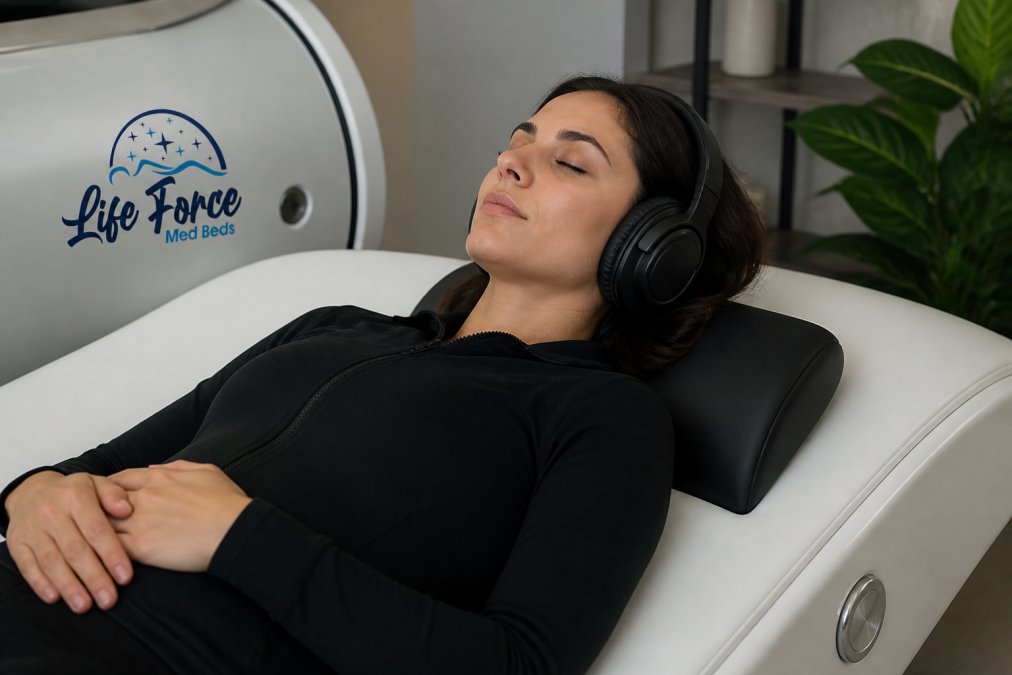
Vibroacoustic therapy, the combination of sound frequencies with physical vibration, creates a full-body experience. The vibrations move through tissue, stimulating circulation and lymphatic flow while the sound frequencies calm the nervous system. This dual mechanism makes vibroacoustic therapy particularly effective for stress reduction and recovery support.
When integrated into a broader frequency therapy system, sound therapy becomes part of a coordinated sequence rather than an isolated experience.
Integration, Safety Screening, and Patient Expectations
Integrated frequency therapy is fundamentally different from conventional medical treatment. It’s designed for wellness optimization and supporting the body’s natural healing capacity, not for diagnosing or treating specific diseases. This distinction matters for safety, expectations, and appropriate use.
Who Should Use Integrated Frequency Therapy
Integrated frequency therapy is most appropriate for generally healthy individuals seeking to optimize their physiological function, reduce stress, support recovery from training or physical activity, and maintain overall wellness. It’s also used by people interested in proactive health management who want to monitor their body composition, hydration, and cellular function through bioimpedance sensing.
People with specific diagnosed health conditions should consult with a qualified healthcare provider before using integrated frequency therapy systems. While the modalities are non-invasive, individual responses vary, and certain conditions may require medical oversight or contraindicate specific frequencies.
Contraindications and Medical Screening
Certain groups should avoid or use integrated frequency therapy only under professional guidance. People with implanted electronic devices, pacemakers, insulin pumps, or neurostimulators, should not use PEMF therapy without medical clearance, as electromagnetic fields can interfere with device function. Pregnant women should consult their healthcare provider before using any frequency therapy system. People with severe photosensitivity or light-triggered seizures should avoid light therapy components.
The bioimpedance sensing component is safe for nearly everyone, but it’s less accurate in people with certain conditions affecting fluid balance or electrical conductivity. A qualified practitioner can help determine whether integrated frequency therapy is appropriate for your individual situation.
Accessing Integrated Frequency Therapy Locally
In Atlanta, integrated frequency therapy is becoming increasingly accessible. Several wellness centers now offer frequency-based recovery systems as part of their service menu. Atlanta Hyperbaric Center provides comprehensive frequency and oxygen therapy services, recognizing that integrated approaches often produce better outcomes than isolated modalities. For healthcare offices and clinics seeking professional-grade equipment, Life Force Hyperbaric Chambers represent a higher quality option designed specifically for doctors, clinics, and health care offices.
For those considering a home-based system, Life Force’s approach to integrated frequency therapy brings professional-grade technology into a user-friendly platform. Rather than managing multiple devices across your home, an integrated system consolidates monitoring, assessment, and treatment into one coordinated experience. Life Force also offers Med Bed Sales and Health Monitoring Systems that integrate seamlessly with frequency therapy protocols.
If you’re exploring frequency therapy options in Atlanta, look for providers who can explain how their specific modalities work together, who conduct proper medical screening before treatment, and who set realistic expectations about what frequency therapy can and cannot do. The most sophisticated frequency systems are those that combine multiple modalities with real-time monitoring, allowing the system to adapt to your body’s actual needs rather than applying a fixed protocol to every user.
Integrated frequency therapy represents a shift toward personalized, technology-enabled wellness. Rather than choosing between red light, PEMF, sound therapy, or bioimpedance monitoring, integrated systems allow you to benefit from all of them working in concert. Life Force’s MedBed platform embodies this principle, bringing together the technologies Dr. Louis Hilliard pioneered into a single system designed for comprehensive wellness support. If you’re interested in exploring how integrated frequency therapy might support your health goals, Hyperbaric Business Solutions can connect you with qualified providers and help you understand whether this approach aligns with your wellness objectives.
Frequently Asked Questions
What is integrated frequency therapy and how does it differ from using individual devices?
Integrated frequency therapy combines multiple therapeutic modalities, PEMF, red and near-infrared light, sound stimulation, bioresonance assessment, and vibration, into a single coordinated system. Rather than switching between separate devices, an integrated platform like a Life Force MedBed uses bioimpedance sensing to assess your body's current state and automatically calibrate frequencies and light wavelengths to support cellular function and homeostasis. This unified approach allows technologies to work synergistically, whereas separate devices lack real-time feedback and personalization.
Does frequency therapy actually work, and what does the clinical evidence show?
Clinical evidence is mixed. Red and near-infrared light therapy has solid research: a 2023 meta-analysis in the Journal of Strength and Conditioning Research found that photobiomodulation reduced muscle damage markers by 34% and improved force recovery by 19% compared to placebo. PEMF therapy shows promise for circulation and cellular function, and sound/vibroacoustic therapy is used in clinical settings for stress and pain relief. However, bioresonance and Rife-frequency claims lack robust clinical validation. Major medical organizations, including Memorial Sloan Kettering Cancer Center, consider bioresonance pseudoscientific. The best evidence supports light, sound, and PEMF as non-invasive modalities; results vary by individual and condition.
Is near-infrared therapy safe for daily use?
Near-infrared therapy is generally considered safe for daily use when applied at appropriate power densities and wavelengths (typically 810-850 nm). Most clinical protocols use 10-30 minute sessions several times per week. Eye protection is recommended if the system includes direct facial exposure. Rare side effects include mild skin irritation or temporary discomfort in people with photosensitivity. Contraindications include active cancer (especially if photosensitizing drugs are in use), severe skin conditions, or thyroid disorders. Always consult a healthcare provider before starting, especially if you take medications that increase photosensitivity.
How much time do you need to spend in an integrated frequency therapy system to see results?
Most wellness protocols recommend 20-40 minutes per session, 3-5 times per week for initial results. Some users report feeling relaxation or improved circulation within a single session, while others experience cumulative benefits over 4-8 weeks of consistent use. Recovery-focused protocols may be shorter (15-20 minutes daily), while stress and cognitive enhancement sessions often run 30-45 minutes. The actual time commitment depends on your goals, the specific modalities used, and your body's response. Starting with 2-3 sessions per week and adjusting based on your experience is a practical approach.
