
Integrated Therapy vs Separate Devices: Which Works Best


Table of Contents
- What Is Integrated Therapy vs Separate Devices
- Key Differences: Integrated Therapy vs Separate Devices
- Life Force MedBed Features and Integrated Design
- Benefits of Integrated Wellness Systems
- Home Wellness Technology Platforms: Setup and Practical Use
- Comparing PEMF Devices and Integrated Alternatives
- Integrated Therapy vs Separate Devices: Pros and Cons
- Clinical Evidence and Real-World Outcomes
Last Updated: August 30, 2026
What Is Integrated Therapy vs Separate Devices
Integrated therapy combines multiple therapeutic modalities, such as PEMF, light therapy, bioresonance, and oxygen therapy, into a single unified system. Separate devices are individual, standalone tools designed to deliver one specific therapy at a time.
The distinction matters because it affects how you experience treatment, manage your wellness routine, and measure outcomes. An integrated therapy system like the Life Force MedBed brings everything into one environment, while separate devices require you to move between different equipment, coordinate timing, and manage multiple interfaces.
Think of it this way: integrated therapy is like a comprehensive wellness suite where all technologies work together in one space. Separate devices are like assembling a toolkit where each tool excels at one job but requires separate setup, storage, and operation.
According to Integrated Psych Solutions case studies, integrated approaches to treatment show measurable benefits in patient outcomes and adherence. The real question isn’t which exists, both are legitimate, but which approach aligns with your lifestyle, goals, and how you prefer to engage with wellness technology.
Key Differences: Integrated Therapy vs Separate Devices
The gap between these approaches extends beyond physical form. Integrated systems and separate devices operate on fundamentally different principles around treatment coordination, user experience, and long-term consistency.
Treatment Coordination and Continuity of Care
Integrated therapy systems are built on the premise that multiple modalities work synergistically. When technologies are designed to function together, sharing data, adjusting based on real-time biosensing, and sequencing treatments in a coordinated flow, you get what practitioners call continuity of care: the therapeutic experience builds across sessions rather than restarting with each device.
Separate devices, by contrast, require you to manually coordinate. You decide when to use the PEMF mat, when to add light therapy, when to incorporate breathwork or grounding. That flexibility is valuable for some users. But it also means you’re responsible for sequencing, timing, and ensuring treatments complement rather than conflict.
Life Force MedBeds address this by integrating bioresonance scanning, PEMF, light therapy, vibration, frequency-based systems, and oxygen therapy into one environment. The system can assess your state and adjust the treatment sequence accordingly, rather than you guessing which device to use first.
User Compliance and Consistency
Friction kills consistency. If you own a PEMF mat, a light therapy panel, a hyperbaric chamber, and a frequency device, you face a logistical challenge: which device do you use when? How long in each? Do they interfere if used together? Most people with multiple devices end up using them inconsistently because the friction is real.
Integrated systems reduce friction. One appointment, one environment, one coordinated experience. Research from Integrated Therapy LLC success stories shows that patients using unified treatment approaches maintain higher adherence rates and report better outcomes, partly because the system removes decision fatigue.
Life Force MedBed Features and Integrated Design
The Life Force MedBed represents a specific approach to integrated therapy: bringing complementary technologies into one multifunctional platform. Dr. Louis Hilliard, the inventor of the med bed, designed this system with the premise that modern wellness requires coordination across multiple modalities, not isolation in separate devices.
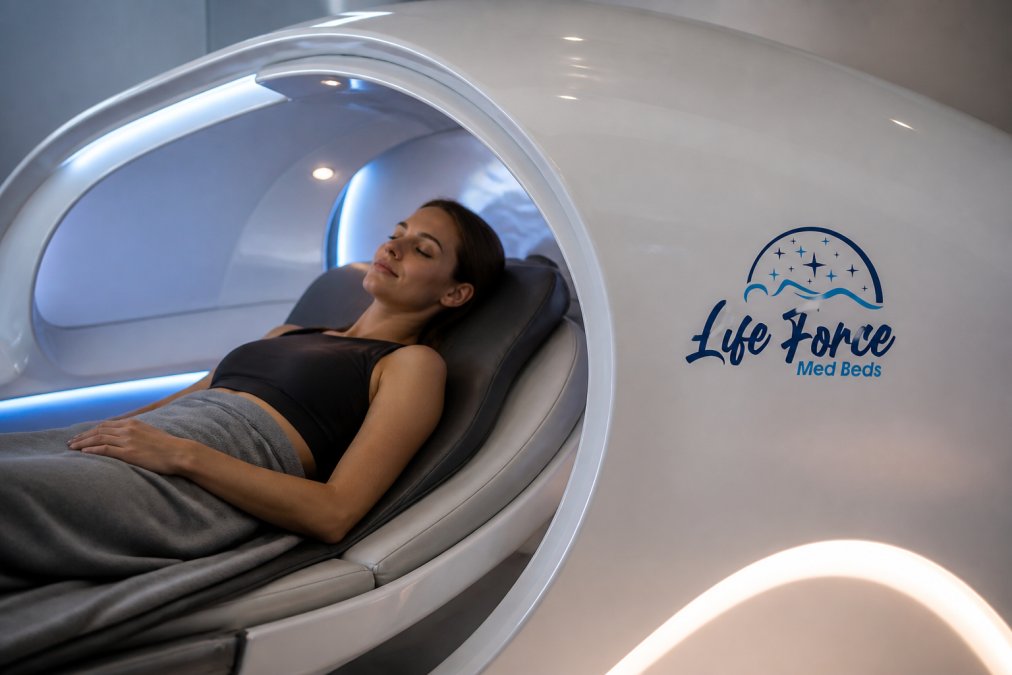
The system combines bioresonance and bioimpedance scanning, which assess your body’s energetic state, with PEMF therapy, red and near-infrared light, vibration and heat therapy, frequency-based systems, sound therapy, meditation guidance, grounding technology, and oxygen therapy integration. This isn’t a marketing list; it’s the actual architecture of how the device sequences treatment.
Multidisciplinary Technology Integration
What separates an integrated system from a bundle of separate devices is how the technologies communicate. The Life Force MedBed uses biosensing to understand your current state, then adjusts which modalities activate and in what sequence. That’s multidisciplinary technology integration: the system itself is making treatment decisions based on real-time data.
Separate PEMF devices don’t know your current state. A light therapy panel doesn’t adjust based on your bioscan. A hyperbaric chamber operates independently. You’re the integration point, you decide the sequence, the duration, the combination. That’s not inherently worse, but it’s fundamentally different in how treatment unfolds.
Personalized Wellness and Individualized Treatment Planning
Integrated systems enable true personalization because they gather data across multiple modalities. The Life Force MedBed’s bioresonance scanning provides a baseline assessment. Over time, as you use the system, it learns patterns in how your body responds to different frequencies, light spectrums, PEMF intensities, and oxygen therapy exposure. A Health Monitoring System can track these patterns remotely, allowing practitioners to refine your personalized protocol based on real-time data.
Individualized treatment planning with separate devices relies on your own experimentation and intuition. You might notice that PEMF helps your sleep but light therapy energizes you, so you adjust accordingly. That’s valid personalization. But it’s manual, not algorithmic.
Benefits of Integrated Wellness Systems
Integrated therapy systems offer specific advantages that separate devices cannot replicate, precisely because they operate as coordinated wholes rather than independent tools.
simplified routine: One environment, one appointment, one coherent experience. You’re not managing five different devices in five different locations.
Data continuity: Integrated systems track how your body responds across modalities. Separate devices generate isolated data points.
Treatment synergy: Technologies designed to work together can amplify each other’s effects. PEMF priming your cells before light therapy, for example, may enhance outcomes beyond either therapy alone.
Reduced decision fatigue: The system sequences treatment based on your assessment. You’re not deciding which device to use when.
Professional-grade integration: Life Force Hyperbaric Chambers are recognized as higher quality hyperbaric chambers for doctors, clinics, and healthcare offices. When integrated into a unified wellness platform, clinical-grade equipment brings professional standards into personalized wellness.
Home Wellness Technology Platforms: Setup and Practical Use
The practical reality of home wellness differs sharply between integrated and separate approaches.
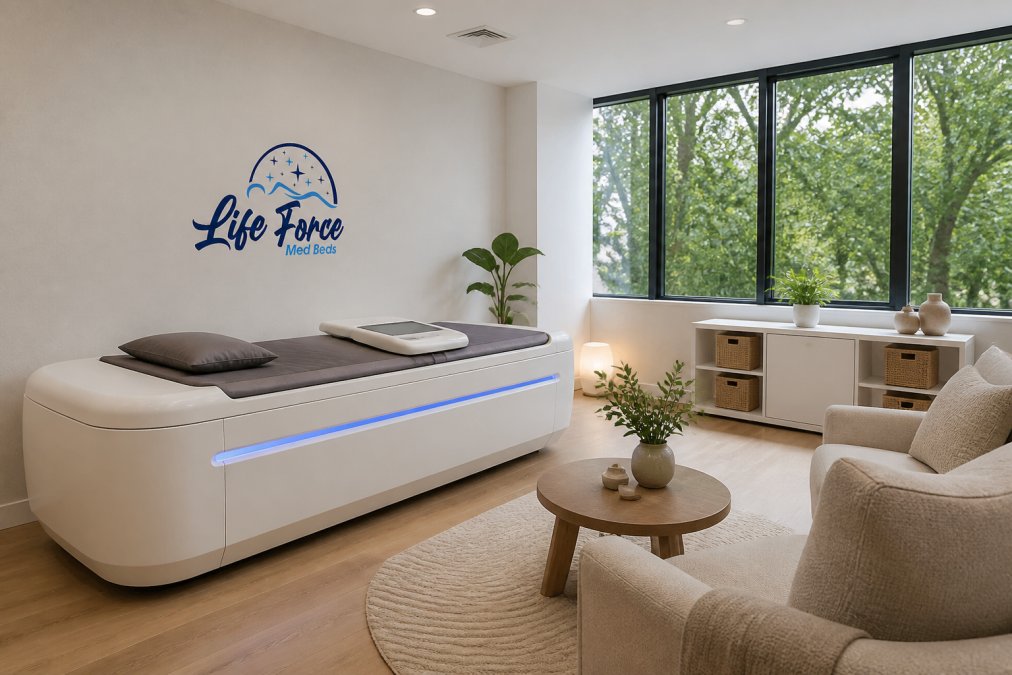
With separate devices, you’re managing space, cabling, power requirements, and mental load. A PEMF mat occupies floor or bed space. A light therapy panel needs wall mounting. A hyperbaric chamber requires a dedicated room. A frequency device needs its own surface. Users often report that managing these devices, storing them, setting them up, remembering to use them, becomes friction that undermines consistency.
Integrated platforms like the Life Force MedBed consolidate this footprint. Everything happens in one device, in one location. Setup is simpler. The user experience is more simplified. For people in Atlanta and surrounding areas seeking professional wellness solutions, Atlanta Hyperbaric Center and Hyperbaric Business Solutions demonstrate how integrated clinical approaches are reshaping professional wellness delivery.
The practical difference in daily life is significant. Using separate devices requires you to remember which device to use, how long, in what order. Using an integrated system requires you to show up and let the platform guide the experience.
Comparing PEMF Devices and Integrated Alternatives
PEMF (pulsed electromagnetic field) therapy is one of the most popular standalone modalities. Devices like the BEMER Pro-Set deliver targeted electromagnetic stimulation to improve microcirculation and cellular function. They’re effective, portable, and scientifically studied.
But PEMF is one modality. It addresses circulation and cellular energy. It doesn’t address light spectrum exposure, frequency resonance, structural alignment through vibration, or oxygen use. Many users find that PEMF alone is insufficient for comprehensive wellness, which is why they add other devices.
The integrated alternative is to use PEMF as one component within a larger system. The Life Force MedBed includes PEMF, but also bioresonance assessment, light therapy, frequency systems, and oxygen integration. This allows you to address circulation AND light exposure AND frequency alignment AND structural support in one coordinated experience.
The trade-off is specificity versus comprehensiveness. A dedicated PEMF device may deliver more intense PEMF therapy than an integrated system. But the integrated system addresses more dimensions of wellness in one appointment.
Integrated Therapy vs Separate Devices: Pros and Cons
Both approaches have genuine strengths and real limitations. The choice depends on your priorities, lifestyle, and how you approach wellness.
Advantages of Integrated Systems
Single point of entry: One device, one environment, one experience. Lower friction, higher consistency.
Coordinated treatment: Technologies sequence based on assessment, not guesswork. You’re not deciding which device to use when.
Data integration: Your wellness journey is tracked across modalities. Patterns emerge that wouldn’t be visible with isolated devices.
Space efficiency: One footprint instead of five. Critical for home users without dedicated wellness rooms.
Professional standards: Integrated platforms like Life Force MedBeds bring clinical-grade technology into personalized wellness. Dr. Louis Hilliard’s invention of the med bed reflects years of experience integrating technologies that typically operate separately.
Reduced decision fatigue: The system handles sequencing. You handle showing up.
Advantages of Separate Devices
Specialization: A dedicated PEMF device delivers more intensive PEMF therapy than a multi-modality system can match. Same for light therapy panels, hyperbaric chambers, or frequency devices designed for one purpose.
Flexibility: You choose which devices to use, when, and for how long. You’re not locked into a preset protocol.
Modularity: Start with one device, add others over time. You’re not committing to a full system upfront.
Portability: Some separate devices are genuinely portable. A light therapy panel can move between rooms. A PEMF mat can travel. Integrated systems are typically stationary.
Cost distribution: You can invest in one device now, another later. Integrated systems typically require a larger upfront commitment.
Proven individual efficacy: Each modality has research backing its specific use. You know what PEMF does, what light therapy does, what oxygen therapy does. Integrated systems are newer and less individually studied.
When to Choose Each Approach
Choose integrated therapy if:
- You value consistency and want friction removed from your wellness routine
- You’re looking for comprehensive wellness addressing multiple dimensions (circulation, light exposure, frequency, structural support, oxygen use)
- You prefer professional guidance embedded in the technology rather than manual sequencing
- Space is limited and you need one footprint instead of five
- You want data integration showing how modalities work together for your body
- You’re willing to invest in a platform designed for long-term personalized wellness
Choose separate devices if:
- You want to specialize in one or two modalities and go deep rather than broad
- You prefer maximum flexibility and control over when and how you use each device
- You’re building gradually and want to start with one device now, add others later
- You need portability and want to move devices between locations
- You’re skeptical of all-in-one systems and want proven, single-purpose tools
- You want to distribute investment over time rather than commit to a full system upfront
- You’re specifically targeting one condition or outcome (e.g., pure PEMF for circulation) and don’t need comprehensive wellness
Clinical Evidence and Real-World Outcomes
The evidence landscape differs between integrated and separate approaches, which matters when evaluating claims.
Separate modalities have decades of research. PEMF therapy, light therapy, hyperbaric oxygen, and frequency-based systems each have published studies on their individual effects. You can find research backing specific uses of each technology.
Integrated systems are newer. The Life Force MedBed and similar platforms combine modalities in ways that haven’t been as extensively studied as individual therapies. This doesn’t mean they don’t work, it means the integrated evidence base is still building.
What does exist are case studies showing real-world outcomes. Integrated Therapy LLC case study documented a patient who had been wheelchair-bound for 15 years due to an auto accident and multiple co-morbidities. After integrated therapy including aquatic physical therapy and coordinated wellness support, the patient is now walking with a hemi-walker and her low back pain is completely resolved. Her neurologist was surprised by her progress.
This is a single case, not a randomized trial. But it illustrates what integrated, coordinated treatment can achieve when multiple modalities work together toward a unified goal.
The practical reality: integrated systems work best when you’re committed to using them consistently. Separate devices work best when you’re disciplined about sequencing and coordinated use. Both require engagement. The difference is where the coordination happens, in the system or in your own discipline.
If you’re exploring wellness technology in Atlanta or beyond, the choice between integrated therapy and separate devices ultimately reflects your approach to health. Integrated systems like the Life Force MedBed consolidate multiple technologies into one coordinated experience, designed for users who value consistency, data integration, and professional-grade technology working together. Separate devices offer specialization and flexibility for users who prefer to customize their wellness approach modality by modality.
For professional wellness solutions and clinical-grade hyperbaric integration, Atlanta Hyperbaric Center and Hyperbaric Business Solutions represent the professional standard. Life Force MedBeds bring that same integrated philosophy into personalized home wellness, combining Dr. Louis Hilliard’s innovation in med bed technology with comprehensive bioresonance, light therapy, PEMF, frequency systems, and oxygen integration, all in one environment designed for consistent, personalized wellness.
Frequently Asked Questions
What does integrated therapy mean, and how is it different from using separate devices?
Integrated therapy combines multiple therapeutic modalities, such as PEMF, light therapy, frequency-based systems, and oxygen therapy, into a single unified treatment environment. This contrasts with separate devices, where you use individual tools (a PEMF mat here, a light panel there) without coordinated treatment planning. Integrated therapy emphasizes multidisciplinary team collaboration and standardized assessment to create individualized treatment plans tailored to your specific needs. The Life Force MedBed, invented by Dr. Louis Hilliard, exemplifies this approach by merging bioresonance, bioimpedance scanning, Rife frequencies, red and near-infrared light, PEMF, vibration therapy, sound frequency, meditation support, grounding technology, and oxygen therapy into one system.
What are the primary benefits of using an integrated wellness system over separate devices?
Integrated wellness systems offer several clinical and practical advantages. They improve treatment coordination and continuity of care by ensuring all modalities work together toward unified health goals. User compliance increases dramatically because you interact with one system rather than managing multiple devices with different schedules and settings. Integrated systems enable personalized treatment through sophisticated diagnostic tools like bioimpedance scanning, which assess your body's state and adapt therapeutic protocols accordingly. They also reduce the logistical burden of maintaining separate equipment, save physical space, and often provide better clinical outcomes through coordinated therapeutic intervention. Research on integrated care models shows improved functional independence and better patient-centered care outcomes.
How does the Life Force MedBed combine multiple modalities into one integrated environment?
The Life Force MedBed integrates bioresonance technology for cellular communication with bioimpedance scanning for real-time health assessment. It combines Rife frequency systems with red and near-infrared light therapy to address cellular function at multiple levels. PEMF (pulsed electromagnetic field) therapy works alongside vibration and heat massage for muscle relief and improved circulation. Sound and frequency therapy, meditation guidance, grounding systems with electron-balancing sheets, and oxygen therapy integration create a comprehensive wellness experience. This multidisciplinary approach means each technology amplifies the others' effectiveness rather than operating in isolation. Dr. Louis Hilliard designed this system to deliver what he calls a full-body rejuvenation experience that restores balance and optimizes health through coordinated therapeutic intervention.
Is it more cost-effective to invest in an integrated system or purchase individual wellness devices?
Cost-effectiveness depends on your specific health goals and usage patterns. Integrated systems like the Life Force MedBed require a higher upfront investment but eliminate the cumulative expense of purchasing multiple specialized devices separately. They also reduce ongoing costs associated with managing, maintaining, and upgrading individual pieces of equipment. However, if you only need one or two specific therapies, separate devices might appear cheaper initially. The real cost-benefit advantage of integrated systems emerges over time through improved compliance (you're more likely to use one system consistently than juggle multiple devices), better clinical outcomes (coordinated therapy delivers faster results), and reduced space and logistical costs. For individuals serious about comprehensive wellness optimization, the integrated approach typically proves more cost-effective over a 3-5 year period.
What role does frequency and Rife-based technology play in integrated wellness systems?
Frequency and Rife-based technology form a cornerstone of modern integrated wellness systems by targeting cellular communication and resonance. These systems operate on the principle that different frequencies can stimulate specific physiological responses, from reducing inflammation to supporting immune function to enhancing cellular energy production. In integrated systems like the Life Force MedBed, Rife frequencies work synergistically with other modalities: PEMF therapy amplifies electromagnetic signaling, light therapy supports cellular energy at the mitochondrial level, and sound frequency therapy creates additional resonance effects. This multidisciplinary approach to frequency-based therapy produces evidence-based outcomes that exceed what single-frequency devices achieve alone. The integration allows for adaptive therapy protocols that adjust frequency parameters based on real-time bioimpedance scanning results, creating truly personalized treatment.
