
Integrated Wellness vs Specialized Devices: 2026 Guide


Table of Contents
- Integrated Wellness vs Specialized Devices: What’s the Real Difference?
- Comparison: Integrated Systems vs Single-Purpose Devices
- Benefits of Integrated Wellness Systems for Daily Use
- When a Kloud PEMF Mat or Specialized Tool Makes Sense
- Hyperbaric Oxygen Therapy for Wellness: A Clinical Option
- Bringing Integrated Wellness to Your Practice with Hyperbaric Business Solutions
- How to Choose: A Practical Decision Framework
- Conclusion
- Frequently Asked Questions
Last Updated: September 4, 2026
Integrated Wellness vs Specialized Devices: What’s the Real Difference?
The wellness technology market is projected to hit $64.99 billion in 2026, reflecting a major shift toward consolidated health management rather than isolated gadgets Precedence Research wellness technology market projections. For consumers in Atlanta weighing integrated wellness vs specialized devices, the core distinction comes down to architecture: an integrated system combines multiple therapeutic modalities into one platform, while a specialized device performs a single function with laser focus. This guide from Life Force breaks down the practical differences so you can decide which approach fits your health goals, budget, and daily routine.
Integrated wellness is a systems-based approach that combines technologies like bioresonance, PEMF, red and near-infrared light, vibration, and oxygen therapy into a single coordinated environment. A specialized device, by contrast, addresses one modality, such as a PEMF mat or a red light panel. The right choice depends on whether you want convenience and synergy or maximum depth in one specific area.
The distinction matters more than ever. According to Grand View Research connected health market analysis, the U.S. connected health and wellness solutions market is projected to reach $91.9 billion in 2026 as the industry shifts from reactive treatment to proactive, integrated wellness systems. Below, we’ll compare the two approaches, examine when each makes sense, and provide a decision framework you can actually use.
Comparison: Integrated Systems vs Single-Purpose Devices
The most significant difference between an integrated wellness system and a specialized device is not the number of features, it is the intended use and the regulatory framework that follows.
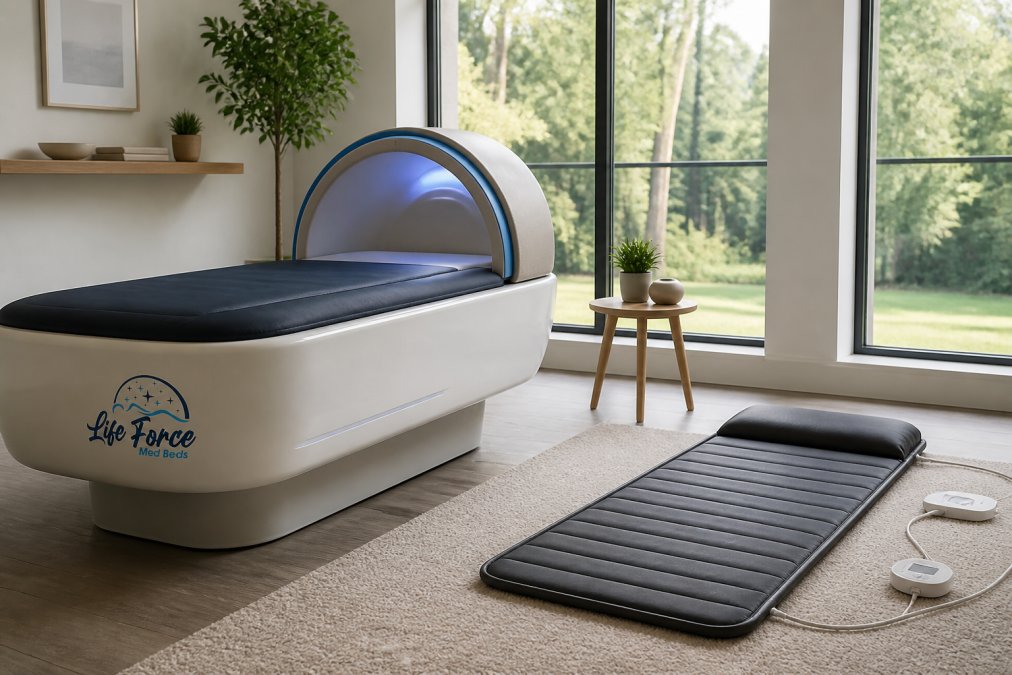
Intended Use Determines Classification
The U.S. regulatory system classifies products based on their intended use. This is the single most important concept to understand.
- A device intended to diagnose, treat, cure, or prevent disease is regulated as a medical device. This classification triggers a rigorous review process to ensure safety and efficacy.
- A device intended for general wellness, such as promoting relaxation or managing stress, is subject to less stringent oversight, provided it does not make disease-specific claims.
This is why you will see a clear line between a “wellness” PEMF mat marketed for relaxation and a “medical” PEMF device prescribed by a doctor for bone healing. The hardware may look similar, but the intended use, and therefore the regulatory burden, is entirely different.
The Data Divide: Lifestyle Metrics vs. Clinical Diagnostics
A specialized consumer device typically tracks lifestyle metrics: heart rate, sleep stages, steps, and calories. These are useful for spotting trends but are not diagnostic.
An integrated wellness system, particularly one designed for clinical or semi-clinical use, may incorporate bioimpedance sensing and other technologies that move closer to clinical diagnostics. If a system provides data that looks clinical, you must understand its limitations and not use it to self-diagnose or alter prescribed treatments. Some advanced platforms, such as those paired with a Health Monitoring System, can help track trends over time for a more complete picture.
A Deeper Look at the Trade-offs
| Factor | Integrated Wellness System | Specialized Device (e.g., PEMF Mat) |
|---|---|---|
| Primary Intended Use | General wellness, stress reduction, recovery | Often general wellness, but may have specific intended uses |
| Regulatory Classification | Typically general wellness (if no disease claims) | Can be general wellness OR a cleared medical device |
| Data Output | May include biometric sensing and trend analysis | Usually minimal or no data output |
| Data Standard | Lifestyle metrics (not diagnostic) | Lifestyle metrics (not diagnostic) |
| Modalities | Multiple (light, PEMF, frequency, oxygen) | Typically one |
| Space Required | Dedicated room or large footprint | Compact, portable |
| Time Efficiency | One session addresses several systems | Multiple sessions for multiple modalities |
| Investment | Higher initial cost | Lower entry point |
| Best For | Comprehensive, convenience-focused users | Targeted therapy or beginners |
The Synergy Argument and Its Limits
Proponents argue that combining modalities like PEMF and red light therapy in a single session creates a synergistic effect. While research on whole-person integrative care supports addressing multiple systems simultaneously, the specific claim that one technology potentiates another in a single consumer device is difficult to prove and is not a standard regulatory claim.
What is more defensible is the practical synergy of adherence. A system that allows you to address multiple wellness goals in one 30-minute session is more likely to be used consistently than a collection of devices that requires a complex, time-consuming routine. This consistency is often the real driver of positive outcomes.
The key takeaway is to look past the marketing. Ask what the device is intended to do, what regulatory claims it makes, and what standards its data output is held to. This will tell you more about the product than any feature list.
Benefits of Integrated Wellness Systems for Daily Use
Integrated wellness systems shine in three areas: time efficiency, data coherence, and routine adherence. One platform handling multiple modalities removes the friction of setting up separate devices and provides a more cohesive picture of your health.
The data story is compelling. U.S. adults using holistic, integrated wearables increased to 24% in 2026, up from 20% in 2024, while specialized fitness-oriented wearables lost ground Fierce Healthcare report on health app usage. Consumers are voting with their wallets for integration. They want fewer devices and more comprehensive data.
:::takeaway
The core benefit of integrated wellness is consolidation: one session can address light therapy, PEMF, frequency support, and oxygen therapy. For busy professionals in Atlanta, this efficiency often determines whether a wellness routine survives past the first month.
Consistency matters more than any single modality.
When a Kloud PEMF Mat or Specialized Tool Makes Sense
Specialized devices still have a clear place. A Kloud PEMF mat or similar single-purpose tool makes sense when you have a specific protocol in mind, when budget constraints make a full integrated system impractical, or when you want to test a modality before committing to a broader platform.
There is legitimate skepticism toward all-in-one systems. If a manufacturer simply stacks features without engineering them to work together, the result can be mediocre. A thoughtfully designed integrated system, where technologies are selected for compatibility and synergy, avoids this trap.
The biggest mistake buyers make is assuming all integrated systems are equal. Some are just marketing exercises. Look for systems where the inventor has a documented background in the technology, and where the modalities genuinely complement each other rather than just sharing a chassis.
The Life Force MedBed, invented by Dr. Louis Hilliard, was designed from the ground up as an integrated wellness technology platform rather than a collection of bolted-together features. It combines bioresonance, bioimpedance sensing, frequency-based systems, red and near-infrared light, PEMF, vibration, and oxygen therapy into one environment.
Hyperbaric Oxygen Therapy for Wellness: A Clinical Option
Hyperbaric oxygen therapy for wellness represents a different category entirely: a clinical-grade intervention requiring professional equipment and often professional oversight, held to higher standards of safety and construction.
Life Force Hyperbaric Chambers are higher quality options for doctors, clinics, and healthcare offices that want to offer this modality to their patients. For practitioners in Atlanta exploring this route, Atlanta Hyperbaric Center specializes in providing high-quality hyperbaric chambers for clinical and professional healthcare environments, with training and safety support for integration into practice workflows.
For clinics, the question isn’t just which chamber to buy. It’s whether your business model can support the operational demands of hyperbaric services. That’s where structured planning makes the difference between a profitable service line and an expensive piece of equipment.
Bringing Integrated Wellness to Your Practice with Hyperbaric Business Solutions
Adding hyperbaric services to a medical or wellness practice requires more than purchasing equipment. It requires operational planning, regulatory compliance, staff training, and a clear revenue model. That’s where Hyperbaric Business Solutions provides value, offering consulting and business infrastructure support for hyperbaric medicine providers, from equipment procurement to compliance guidance.
The wellness economy reached $6.8 trillion in 2024 Global Wellness Institute annual report, and clinics that position themselves at the intersection of integrated wellness and clinical-grade technology are well placed to capture a share of that growth. The digital health and wellness market, valued at $494.19 billion in 2026, is projected to grow at an 18.93% CAGR through 2035 Business Research Insights digital health market report. This is not a passing trend.
For practitioners, integrating hyperbaric oxygen therapy is a business decision as much as a clinical one. Working with a partner who understands both dimensions reduces the risk substantially.
How to Choose: A Practical Decision Framework
Top search results rarely tell you how to decide between integrated wellness and specialized devices for your specific situation. This framework bridges that gap, focusing on cost, insurance, and provider verification.
Step 1: Define Your Primary Goal and Clinical Need
Are you managing a diagnosed condition, or optimizing general wellness? This distinction determines the regulatory path and who should be involved.
- For a diagnosed condition: You are firmly in the realm of clinical care. A specialized device or integrated system used at home is a supplement to, not a replacement for, your physician’s treatment plan. Your decision should be made in consultation with your doctor.
- For general wellness and prevention: You have more flexibility. You can choose between a consumer-grade specialized device or a clinical-grade integrated program offered by a wellness center or clinic.
Step 2: Evaluate the Financial Investment and Insurance Coverage
The cost difference between a consumer device and a clinical program is significant.
- Consumer Specialized Devices (e.g., a PEMF mat): These are a direct out-of-pocket expense. The initial cost is lower, but you are responsible for maintenance and eventual replacement. Health Savings Accounts (HSAs) and Flexible Spending Accounts (FSAs) may cover these if you obtain a Letter of Medical Necessity (LMN) from a physician, but it is not guaranteed.
- Clinical Integrated Programs (e.g., hyperbaric oxygen therapy at a center): These are typically billed as a medical service. Coverage varies widely by insurer and the specific diagnosis. While Medicare and many private insurers cover hyperbaric oxygen therapy for specific conditions like diabetic wounds or radiation injury, they do not cover it for general wellness. Before committing, call your insurance provider and ask for the specific CPT code the clinic will use to determine your out-of-pocket responsibility.
Never assume a clinical-grade therapy is covered by insurance just because it’s offered in a clinic. Always verify your coverage in writing before starting a program.
Step 3: Verify the Provider and the Technology
In Atlanta, as elsewhere, the term “wellness” is loosely regulated, making provider verification critical.
- For a clinical program: Ask if the medical director is a licensed physician (MD or DO). In Georgia, physicians delegate authority to other practitioners, so confirm who is overseeing your care. Ask about the specific equipment model and its safety certifications. For hyperbaric medicine, ask if the chamber is a monoplace or multiplace unit and what the clinic’s emergency protocols are.
- For a consumer device: Research the inventor and the company’s engineering background. A device created by a medical doctor with a history in the field is different from a device created by a consumer electronics company. Look for published protocols and evidence, not just marketing claims.
Step 4: Assess Your Time and Space Constraints
A clinical program requires travel and scheduled appointments; a home device requires dedicated space and self-discipline. A busy professional might find a 45-minute commute unsustainable, making a home-based integrated system like the Life Force MedBed, invented by Dr. Louis Hilliard, a more realistic option for daily adherence.
A Final Checklist for Your Decision
| Question | Yes | No |
|---|---|---|
| Is this for a diagnosed medical condition? | Consult your physician first. | Proceed to the next question. |
| Have you verified your insurance coverage for clinical services? | Proceed. | Budget for full out-of-pocket costs. |
| Have you researched the inventor and clinical evidence behind the technology? | Proceed. | Do this before any purchase. |
| Can you commit to the time and travel required for a clinical program? | Consider clinical options. | Consider home-based integrated systems. |
| Does your budget support the higher initial cost of an integrated system? | Consider an integrated system. | Start with a specialized device or a few clinical sessions. |
This framework moves the decision from abstract theory to a concrete plan, prioritizing verified information and financial clarity over marketing hype.
Conclusion
The choice between integrated wellness vs specialized devices ultimately reflects your priorities: convenience and synergy versus depth and lower entry cost. The market is moving decisively toward integration. For those ready to consolidate their wellness routine, Life Force MedBeds offers a platform designed to monitor, assess, and support your body’s overall wellness. Get started with Life Force and discover how an integrated approach can transform your daily health routine.
Frequently Asked Questions
What is the difference between integrated wellness systems and specialized health devices?
An integrated wellness system, like the Life Force MedBed, combines multiple modalities such as PEMF, red light, and bioresonance into one platform. A specialized device, like a kloud PEMF mat, focuses on a single therapy. Integrated systems offer convenience and a holistic, data-driven approach, while specialized devices are often more portable and may have a lower upfront cost.
Are specialized devices like PEMF mats more effective than integrated systems?
Effectiveness depends on your goal. A specialized PEMF mat might offer a more concentrated session for a specific issue. However, integrated systems support whole-person care by combining therapies, which can be more efficient for overall wellness. The best choice depends on whether you want to address one concern or support multiple aspects of your health.
What are the benefits of combining frequency therapy with oxygen and light therapy?
Combining therapies can support multiple aspects of wellness. While red light supports cellular function and PEMF helps with recovery, an integrated platform adds frequency therapy and oxygen to address different pathways simultaneously. This approach aligns with patient-centered care and may support better outcomes by tackling various wellness factors in one session.
How do integrated wellness platforms support long-term health goals?
Integrated wellness systems support long-term goals by providing a consistent and comprehensive routine. They combine monitoring with multiple therapies, which helps you track biometrics and stay engaged with preventative care. This holistic approach makes it easier to maintain wellness optimization compared to using several different, disconnected devices.
