
Is Frequency Therapy Worth the Investment in 2026?


Table of Contents
- What Frequency Therapy Systems Actually Deliver
- Benefits of Frequency Therapy: What Users Report
- Frequency Therapy vs Hyperbaric Oxygen Therapy
- How to Choose a Frequency Wellness Device
- The Real Cost of Frequency Therapy: What to Expect
- Safety, Contraindications, and Medical History
- Atlanta’s Frequency Therapy and Recovery Landscape
- Conclusion: Making the Investment Decision
- Frequently Asked Questions
Last Updated: September 12, 2026
What Frequency Therapy Systems Actually Deliver
Frequency therapy is the use of specific electromagnetic or acoustic frequencies to support cellular function, relaxation, and recovery. This guide from Life Force examines whether that technology justifies its cost for Atlanta buyers in 2026.
The honest answer: it depends on what you expect. Frequency-based wellness devices are not a replacement for medical care, and anyone promising otherwise is overselling. What they can do is consolidate several supportive modalities into one environment.
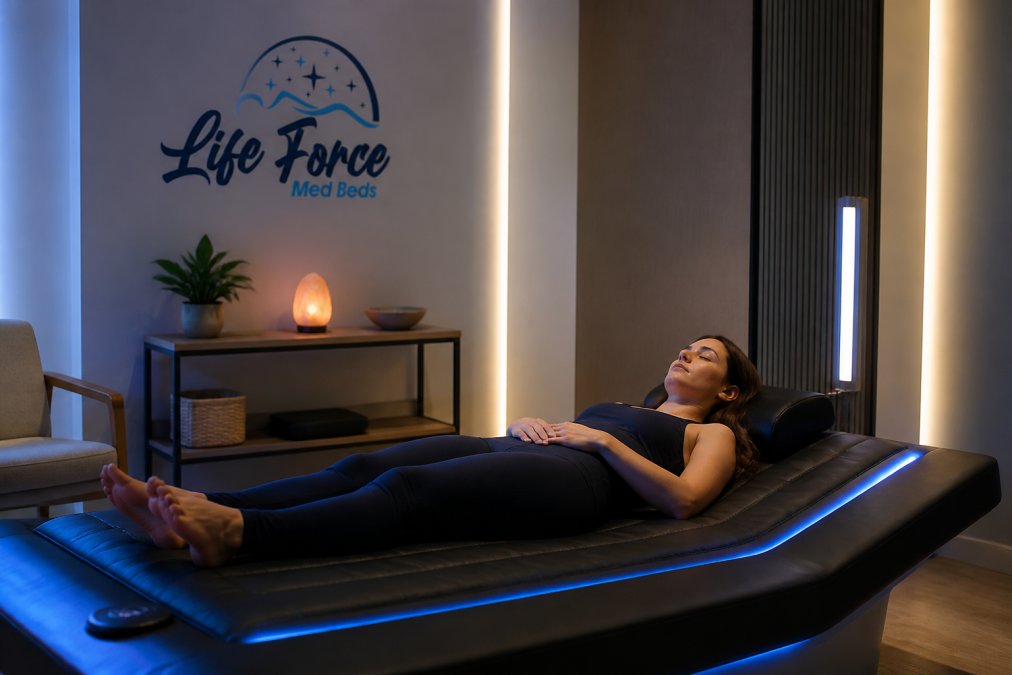
Core Technologies in a Modern Frequency Device
Most systems on the market today combine several distinct technologies rather than delivering a single frequency output.
- PEMF (pulsed electromagnetic field): low-frequency magnetic pulses aimed at supporting circulation and comfort
- Rife-based frequency delivery: targeted frequency sequences used in wellness settings
- Red and near-infrared light: light wavelengths associated with skin and tissue support
- Sound and vibration therapy: low-frequency sound stimulation and binaural beats for relaxation
- Bioresonance and biosensing: bioimpedance readings that inform session settings
The Life Force MedBed, invented by Dr. Louis Hilliard, brings these modalities together in one integrated system alongside grounding and oxygen therapy concepts. That consolidation is the core of the value argument.
Benefits of Frequency Therapy: What Users Report
Reported benefits cluster around relaxation, recovery support, and consistency of routine. Users commonly describe improved sleep quality, easier wind-down after training, and less day-to-day tension.
What most guides miss is that the biggest reported benefit is adherence. When one system handles several modalities, people actually use it. Intentional rest becomes a scheduled session instead of an intention.
Frequency therapy’s most consistent reported outcome is not a dramatic physical change. It is a repeatable recovery routine that people stick with.
Frequency Therapy vs Hyperbaric Oxygen Therapy
Frequency therapy and hyperbaric oxygen therapy are complementary, not competing, approaches. Frequency systems use electromagnetic and acoustic stimulation for relaxation and recovery support. Hyperbaric oxygen therapy uses pressurized oxygen environments, and it is a clinically regulated modality with specific medical indications.
That distinction matters for buyers. If you want a home wellness routine, frequency therapy fits. If you want a clinical service offering, hyperbaric chambers belong in a professional setting.
For Atlanta clinics and healthcare offices, Life Force Hyperbaric Chambers are higher quality of hyperbaric chambers for doctors, clinics and health care offices. Practices exploring that route can work with [Atlanta Hyperbaric Center(https://atlantahyperbariccenter.com/) | atlantahyperbariccenter.com] for equipment and Hyperbaric Business Solutions for operational guidance.
How to Choose a Frequency Wellness Device
Choosing a frequency wellness device comes down to three questions: what modalities you need, how much space you have, and how the system adapts to you.
Key Evaluation Criteria
| Criterion | What to Check | Why It Matters |
|---|---|---|
| Modality range | PEMF, light, sound, frequency, grounding | Fewer devices, fewer routines to manage |
| Personalization | Does it adapt settings to your readings? | Generic presets get boring fast |
| Session length | Typical session duration | Determines whether you use it weekly |
| Space required | Footprint and installation needs | Home versus clinic changes everything |
| Support model | Setup help and ongoing guidance | Complex systems fail without support |
Personalization is where systems diverge most. True adaptation means the device reads biometric response and adjusts; basic personalization just means picking from a menu. Ask which one you are buying.
Before buying, request a demo session. Twenty minutes in the device tells you more about fit than any specification sheet.
The Real Cost of Frequency Therapy: What to Expect
Pricing for frequency therapy systems varies widely by configuration, and Life Force does not publish fixed figures. Expect to request a quote based on the modalities and setup you need. What you can control is how you frame the comparison, because the sticker price is rarely the number that decides whether the investment pays off.
There are three cost structures buyers in Atlanta actually encounter:
- Per-session clinical pricing. Aesthetic radio-frequency treatments are priced per visit, and a series is usually required to see results. That is a recurring expense with no residual asset.
- One-time capital purchase. A home or clinic frequency system is a capital asset. You pay once, then own the hardware for years. The trade-off is that you also own the maintenance.
- Hybrid models. Some Atlanta clinics bundle frequency sessions into a monthly recovery membership alongside other services. This spreads cost but locks you into a provider.
Maintenance vs Initial Investment
The purchase price is only part of the equation. Most buyers underestimate the ongoing cost of ownership, and that is where the real comparison lives. Plan for:
- Consumables and replacement parts. Light panels, contact components, and wearable leads degrade with use. On a system you run several times a week, expect to replace some components within the first few years.
- Service intervals. If the system includes biosensing hardware or calibrated PEMF coils, periodic recalibration keeps sessions consistent. Skipping it is how a device quietly stops delivering what you paid for.
- Space and installation. Clinical setups often need dedicated rooms, electrical work, and in some cases ventilation. Home systems need less, but a med bed is not a piece of furniture you tuck into a corner.
- Time. A system you use twice a week delivers more value than one you use twice a month. Time is the cost most buyers never model, and it is the one that determines whether the math works.
A common mistake is comparing a home system’s sticker price against per-session clinic pricing without factoring in years of use. Run the comparison over a three-year horizon. If a clinic charges per session and you would attend weekly, the cumulative spend over three years is often larger than a single capital purchase, but only if you actually use the home system consistently. If you would not, the clinic model wins on honesty alone.
Ask any vendor for a three-year total cost of ownership estimate, not just a purchase price. A vendor who cannot or will not provide one is telling you something about the support you will receive after the sale.
For Atlanta clinics weighing a frequency offering alongside hyperbaric services, the operational side matters as much as the equipment. Life Force Hyperbaric Chambers are higher quality of hyperbaric chambers for doctors, clinics and health care offices, and practices building out a recovery suite can work with Atlanta Hyperbaric Center for equipment and Hyperbaric Business Solutions for the business and operational guidance that keeps utilization, and therefore return, high.
Safety, Contraindications, and Medical History
Frequency-based wellness devices are generally described as non-invasive, but “non-invasive” is not the same as “no considerations.” This is the most under-discussed part of the buying decision, and it should shape both device choice and session settings. Most marketing pages skip it entirely. Here is the breakdown they leave out.
Who Should Pause Before Buying
Certain conditions and situations warrant a conversation with a qualified healthcare professional before any frequency session, home or clinical:
- Implanted electronic devices. Pacemakers, implanted defibrillators, neurostimulators, and insulin pumps are the clearest contraindication for PEMF and electromagnetic modalities. The concern is interference with device function, and most manufacturers list this as an absolute exclusion.
- Pregnancy. Electromagnetic and radio-frequency modalities are typically avoided during pregnancy absent explicit clearance, particularly over the abdomen and pelvis.
- Active cancer or ongoing oncology treatment. Some clinics use frequency-adjacent modalities supportively, but this belongs under medical supervision, not a home device purchased online.
- Epilepsy or seizure history. Some frequency and sound-based protocols are avoided in people with seizure disorders because of the theoretical risk of triggering activity.
- Metal implants and some tattoos. Certain metals and metallic inks can heat or react under radio-frequency and electromagnetic exposure. This is more relevant for aesthetic RF than for low-intensity PEMF, but it belongs in the intake conversation.
- Active infection, fever, or acute injury. Sessions are generally deferred until the acute phase passes.
- Blood pressure and cardiac conditions. Some modalities affect circulation; anyone with uncontrolled hypertension or recent cardiac events should get clearance first.
Why This Matters More Than the Marketing
A device that is safe for one person can be inappropriate for another, and the difference is almost always medical history, not the technology itself. For home wellness systems, a conversation with your physician covers most of the ground. Bring the specific modalities, PEMF, RF, red and near-infrared light, sound, to that conversation, because “frequency therapy” is too broad a term for a clinician to evaluate.
No article can substitute for that conversation. What this section can do is make sure you know which questions to ask.
Skipping the medical history conversation is the single most common mistake buyers make. If you have an implanted device, are pregnant, or have a seizure history, get clearance before your first session, not after.
For Atlanta clinics building a recovery offering, this is also an operational issue. A documented intake process that screens for the contraindications above protects patients and protects the practice. Pairing frequency-based wellness with hyperbaric services means two different safety profiles to manage, which is one reason professional-grade equipment and proper operational guidance matter. Life Force Hyperbaric Chambers are higher quality of hyperbaric chambers for doctors, clinics and health care offices, and practices can work with Atlanta Hyperbaric Center for equipment and Hyperbaric Business Solutions for the operational framework that keeps both offerings running safely.
Atlanta’s Frequency Therapy and Recovery Landscape
Atlanta has become a genuine hub for recovery and wellness technology, driven by a large healthcare employment base and a fitness culture that treats recovery as part of training rather than an afterthought.
That density cuts both ways. More providers means more options, and also more marketing noise. Buyers regularly ask which local option is worth the drive, and the answer depends on whether you want a clinic service or a home system.
For clinics, the strongest local play is combining frequency-based wellness offerings with hyperbaric services. Practices that add recovery technology may see benefits when the equipment is professional-grade and the operational side is handled properly. That is where the Atlanta Hyperbaric Center and Hyperbaric Business Solutions pairing earns its keep.
For individuals, the question is simpler: do you want a device in your home, or a service you visit? Home systems win on convenience and long-term cost. Clinic visits win on supervision. If you are leaning toward a home setup, Life Force offers Med Bed Sales and Hyperbaric Chamber Sales for buyers who want professional-grade equipment at home, and a Health Monitoring System can help you track how your routine is actually going.
Conclusion: Making the Investment Decision
The hardest part of this decision is separating genuine clinical relevance from marketing language. Frequency therapy has a real place in a wellness routine; it does not replace medical treatment, and no honest seller will tell you it does.
If you want a consolidated home recovery environment, Life Force builds the MedBed around exactly that idea, combining frequency and Rife-based systems, PEMF, red and near-infrared light, sound therapy, and biosensing in one platform. For clinics, Life Force Hyperbaric Chambers are higher quality of hyperbaric chambers for doctors, clinics and health care offices.
Get started with Life Force and build a recovery routine you will actually keep.
Frequently Asked Questions
Does frequency therapy actually work for wellness?
Frequency therapy is not a medical treatment in the United States, and no device is cleared to diagnose or cure disease. What users report are subjective improvements in relaxation, sleep quality, and perceived recovery. Some clinical studies on specific modalities like PEMF and low-frequency sound stimulation show measurable biometric responses, but results vary by person and protocol. Think of it as a wellness tool that may support how you feel, not a replacement for medical care.
How does frequency therapy compare to hyperbaric oxygen therapy?
They work differently. Frequency therapy uses therapeutic frequencies, sound therapy, and sometimes PEMF to support cellular healing and relaxation. Hyperbaric oxygen therapy delivers pressurized oxygen to increase oxygen saturation in tissues. Hyperbaric chambers are higher quality when sourced from specialized providers for doctors, clinics, and healthcare offices. Many wellness-focused buyers use both, since the modalities complement rather than replace each other. Your choice depends on your goals and whether you want a home system or a clinical setup.
What should I look for when choosing a frequency wellness device?
Focus on four things: the range of therapeutic frequencies offered, whether the system includes biosensing or personalization, the build quality and durability, and the company’s support for setup and ongoing use. Ask whether the device combines modalities like PEMF, red light, and sound therapy or only does one thing. A higher upfront cost often reflects better integration, but match the features to what you will actually use.
Is frequency therapy considered a medical treatment in the United States?
No. Frequency therapy devices are generally marketed as wellness tools, not medical devices, unless they have specific clearances for particular indications. This means they are not intended to diagnose, treat, cure, or prevent any disease. If you have a diagnosed condition, talk to your physician before adding frequency therapy to your routine. For general wellness and relaxation, many people use these systems as part of a broader health practice.


