
Kala PEMF Mat Review: Features, Benefits & Comparison


Table of Contents
- Kala PEMF Mat Overview
- PEMF Therapy Benefits and How Kala Delivers Them
- Red Light Therapy vs PEMF: What Kala Integrates
- Kala Mat Technical Specifications and Performance
- Life Force MedBed Technology Compared to Single-Device PEMF
- Safety Considerations and Contraindications
- Kala Mat Verdict: Who Should Buy
- Frequently Asked Questions
Last Updated: September 26, 2026
Kala PEMF Mat Overview
The Kala PEMF mat combines pulsed electromagnetic field therapy with far-infrared heating in a single device designed for home recovery. If you’re exploring standalone PEMF solutions versus integrated wellness systems, understanding what the Kala mat delivers, and where it reaches its limits, matters before you invest.
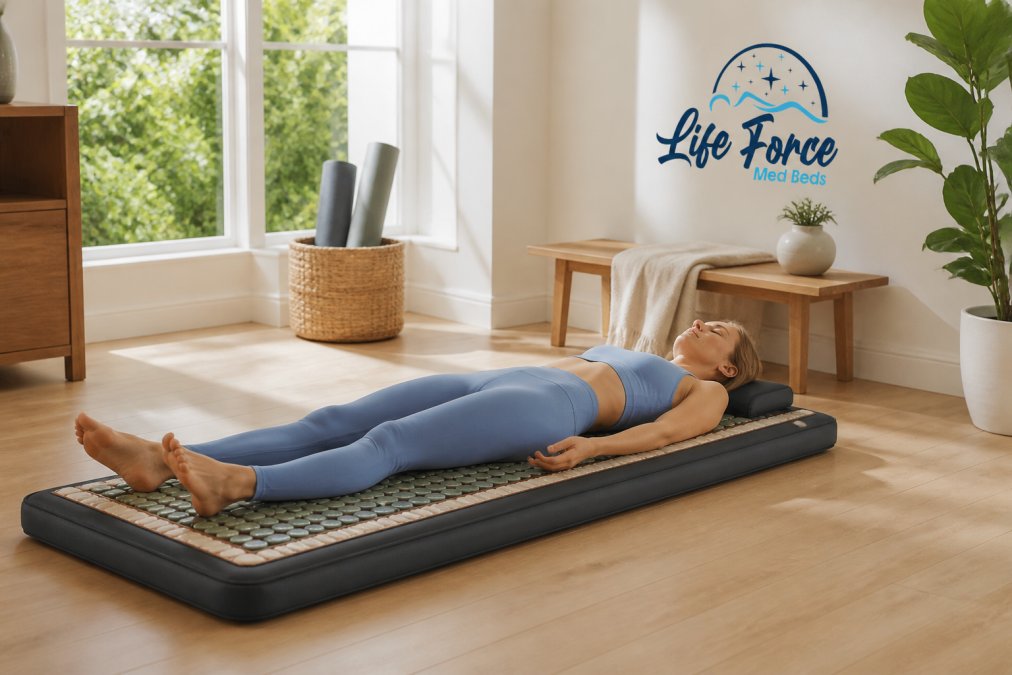
The Kala mat operates at frequencies up to 64 Hz, delivering PEMF therapy through a natural gemstone-constructed surface that retains infrared heat. This frequency range supports cellular recovery and grounding benefits that many wellness enthusiasts seek.
What makes the Kala PEMF mat relevant to Atlanta-area wellness practitioners is its balance between affordability and feature depth compared to premium alternatives. It sits in the middle tier of the market, more capable than entry-level PEMF-only devices, yet more accessible than full-scale integrated systems like the Life Force MedBed, which consolidates PEMF, bioresonance, red light therapy, sound frequency, and bioimpedance monitoring into a single platform.
The real question isn’t whether the Kala mat works, pulsed electromagnetic field therapy has documented benefits for cellular recovery and restorative sleep. The question is whether a single-purpose device meets your wellness goals, or whether you’d benefit from an integrated approach that monitors, assesses, and supports multiple recovery pathways simultaneously.
The Kala mat’s 64 Hz frequency output is competitive within the standalone PEMF category.
PEMF Therapy Benefits and How Kala Delivers Them
PEMF therapy works by delivering low-frequency pulses that align with your body’s natural magnetic field, supporting cellular recovery at the mitochondrial level. The pulsed electromagnetic field stimulates your cells’ energy production, which cascades into broader wellness benefits: improved circulation, reduced cortisol levels, enhanced melatonin production, and better sleep quality.
The Kala mat delivers these benefits through its gemstone-infused surface and multi-frequency capability. When you lie on the mat, the pulsed electromagnetic field penetrates tissue, encouraging vascular support and grounding, the process of electron-balancing that reduces inflammation and stress hormones. The infrared heat component amplifies this effect by increasing blood flow.
The low-frequency pulses work with your body’s natural rhythms rather than against them, which is why PEMF therapy integrates well into evening wellness routines. The grounding component is particularly valuable for people living in urban environments like Atlanta, where natural earth contact is limited.
However, the Kala mat’s strength is also its limitation. It delivers excellent PEMF therapy and infrared heat, but it doesn’t monitor your biometric response. You adjust settings manually and rely on subjective feedback. Integrated systems like Life Force MedBeds add biosensing and bioimpedance monitoring, which means the device adapts to your body’s actual needs rather than you guessing at the right intensity level.
PEMF therapy’s primary benefit is cellular energy restoration. The Kala mat achieves this through consistent frequency delivery, but without biometric feedback, you’re missing the personalization layer that premium integrated systems provide.
Red Light Therapy vs PEMF: What Kala Integrates
Red light therapy and PEMF are complementary but distinct modalities. Red light therapy operates through photons that penetrate skin and stimulate mitochondrial function at the surface level, while PEMF works through electromagnetic pulses that reach deeper tissue and affect cellular communication across your entire body.
The Kala PEMF mat does not include red light therapy, it focuses on PEMF and infrared heat. This is a significant distinction when comparing it to multi-modality systems. If red light therapy is part of your wellness routine, you’d need a separate device, which adds complexity and cost.
Infrared heat, which the Kala mat does include, is different from red light. Infrared penetrates deeper into tissue and generates therapeutic warmth that increases circulation and supports muscle recovery. It’s an excellent complement to PEMF, which is why the Kala mat pairs them together. But if your goal includes skin-level recovery, collagen stimulation, or targeted facial rejuvenation, benefits associated with red light therapy, the Kala mat alone won’t deliver those outcomes.
Life Force MedBeds integrate red and near-infrared light alongside PEMF, creating a more comprehensive recovery environment. For Atlanta-based wellness practitioners managing multiple clients or treating diverse recovery needs, the integrated approach eliminates device-switching and setup time.
The practical implication: if PEMF and infrared heat are your primary focuses, the Kala mat delivers solid value. If you’re building a comprehensive wellness routine that includes light therapy, sound frequency, and biometric monitoring, you’ll outgrow a single-purpose device quickly.
Kala Mat Technical Specifications and Performance
The Kala PEMF mat operates with a frequency range up to 64 Hz, which places it in the mid-to-high range for standalone PEMF devices. This frequency output supports both low-frequency therapeutic work (Delta and Theta ranges for deep recovery) and higher frequencies (Alpha and Beta ranges) for alertness and cognitive support.
The mat’s gemstone construction serves dual purposes: heat retention and grounding. The natural minerals enhance the infrared heating efficiency and provide the electron-balancing benefit that grounding-focused users seek.
Setup is straightforward. You place the mat on a bed or floor, plug it in, and adjust intensity using a control pad. Most sessions run 20-30 minutes, though some users extend to 45 minutes for deeper recovery work.
Performance consistency is where the Kala mat delivers. The frequency output remains stable across extended sessions. The infrared heat reaches therapeutic temperature within 5-10 minutes, so you’re not waiting long to begin your session.
The limitation here is the lack of feedback. You don’t know if the device is actually reaching your cells effectively or if your body is responding optimally. Premium systems like Life Force MedBeds use bioimpedance and biosensing to measure your tissue response in real time, adjusting intensity automatically. With the Kala mat, you’re working on feel and consistency rather than data-driven personalization.
| Specification | Kala PEMF Mat | Life Force MedBed |
|---|---|---|
| Frequency Range | Up to 64 Hz | Multiple modalities with adaptive frequency |
| Infrared Heat | Yes | Yes |
| Red Light Therapy | No | Yes |
| Biometric Monitoring | No | Yes (bioimpedance/biosensing) |
| Setup Time | 5-10 minutes | 10-15 minutes |
| Session Duration | 20-45 minutes | 20-60 minutes |
| Portability | Limited | Limited |
Life Force MedBed Technology Compared to Single-Device PEMF
The core difference between the Kala PEMF mat and an integrated system like Life Force MedBeds is architectural. The Kala mat is a single-modality device with excellent execution in its domain. Life Force MedBeds consolidate PEMF, bioresonance, red and near-infrared light, sound frequency therapy, bioimpedance monitoring, and grounding into one platform.
Dr. Louis Hilliard, the inventor of the med bed, designed this integrated approach to address a fundamental limitation of standalone devices: they don’t communicate with each other, and they don’t adapt to your body’s actual response. When you use the Kala mat, you’re applying a fixed protocol. When you use a Life Force MedBed, the system measures your tissue bioimpedance, adjusts frequency output based on your cellular response, and sequences multiple modalities for synergistic effect.
For someone in Atlanta seeking to optimize recovery, this distinction matters. The Kala mat is excellent if your needs are straightforward: you want PEMF, infrared heat, and consistent grounding. You’re comfortable manually adjusting settings and tracking results subjectively. But if you’re managing multiple recovery priorities, sleep quality, inflammation reduction, cognitive performance, and stress management, an integrated system that monitors and adapts becomes significantly more valuable.
Life Force MedBeds also include meditation and frequency therapy components that the Kala mat doesn’t offer. These modalities work synergistically with PEMF to influence your nervous system state and support deeper recovery. For biohacking enthusiasts and high-performance individuals, this integrated approach often delivers faster, more measurable results.
The trade-off is investment. A single-purpose PEMF mat requires less upfront commitment. An integrated system requires more space, longer learning curve, and higher initial cost. But if you’re already using multiple devices, a PEMF mat, a light therapy panel, a grounding pad, a sound frequency device, consolidation into a single Life Force MedBed often simplifies your routine and deepens your results.
The Kala PEMF mat works best for users who have clear, focused recovery needs and prefer simplicity over integration. If your primary goal is PEMF therapy with infrared support, and you’re comfortable with manual settings adjustment, this mat delivers solid performance.
Safety Considerations and Contraindications
PEMF therapy is non-invasive and generally well-tolerated, but it’s not appropriate for everyone. The primary contraindications involve implanted medical devices and certain neurological conditions.
If you have an implanted pacemaker, defibrillator, or other electromagnetic-sensitive device, PEMF therapy is contraindicated.
If you have an implanted medical device (pacemaker, defibrillator, neurostimulator), PEMF therapy is contraindicated and could create serious safety risks. Do not use the Kala mat or any PEMF device without explicit clearance from your cardiologist or device manufacturer.
Kala Mat Verdict: Who Should Buy
The Kala PEMF mat is a solid choice if you meet these criteria: you want a dedicated PEMF device with infrared heat, you’re comfortable with manual intensity adjustment, you have space for a stationary mat, and your recovery needs are primarily focused on cellular energy, circulation support, and grounding.
Frequently Asked Questions
Do PEMF mats really work for recovery?
PEMF therapy works by generating pulsed electromagnetic fields that interact with cellular activity. The Kala PEMF mat delivers frequencies up to 64 Hz, which research suggests may support cellular recovery, reduce inflammation markers, and improve circulation. Results vary by individual and depend on consistent use. Consult a healthcare provider to determine if PEMF therapy aligns with your specific wellness goals.
What is the difference between Kala PEMF mats and Life Force MedBed technology?
The Kala mat focuses on PEMF and far-infrared heat. Life Force MedBed technology integrates multiple modalities including PEMF, red and near-infrared light, bioresonance, grounding, sound therapy, and biosensing into one comprehensive platform. If you want a dedicated PEMF and infrared solution, Kala suits home use. For multi-modality integration and personalized monitoring, Life Force MedBeds offer broader scope. Dr. Louis Hilliard invented the med bed concept to consolidate these technologies.
Are there safety contraindications for using a PEMF mat at home?
PEMF therapy is generally non-invasive, but certain populations should avoid or consult before use: people with implanted electronic devices (pacemakers, neurostimulators), pregnant women, and those on medications affecting electromagnetic sensitivity. Always verify your device’s specific contraindications and consult your healthcare provider before starting PEMF therapy, especially if you have existing health conditions or take medications.
How much time per week do I need to spend on a PEMF mat to see results?
Most users engage in 20-30 minute sessions, 3-5 times per week. Some start with shorter sessions and gradually increase. Consistency matters more than duration. Your results depend on your baseline health, the specific frequencies used, and your wellness goals. Track your sleep quality, energy levels, and recovery metrics to assess effectiveness for your routine.

