
Kloud PEMF Mat Review 2026: PEMA Technology Tested


Table of Contents
- Kloud PEMF Mat Review: Verdict at a Glance
- What Is PEMA and How Does the Kloud Mat Work?
- Key Features and Standout Strengths
- How to Use PEMF Mats for Recovery: A Practical Protocol
- How the Kloud Mat Compares to Other Frequency Therapy Devices
- Contraindications, Safety, and What the Kloud Mat Is Not
- Where to Try PEMA Technology in Atlanta, Georgia
- Final Verdict: Is the Kloud PEMF Mat Worth It?
- Frequently Asked Questions
Last Updated: September 22, 2026
Kloud PEMF Mat Review: Verdict at a Glance
The Kloud PEMF mat is a Swiss-engineered wellness device built around Pulsed Electromagnetic Activation (PEMA), a newer approach to frequency-based stimulation. This review breaks down what PEMA does, how the mat performs in daily use, and where it fits for Atlanta readers comparing recovery technology.
The Kloud mat wins on portability and program variety. It loses on breadth. If you want one device that also handles light, sound, and monitoring, a single-purpose mat will feel limiting within a few months.
Who the Kloud Mat Is Built For
The Kloud mat suits three buyer types. If you do not see yourself here, keep reading before you commit.
- Frequent travelers who want a mat that folds into a carry case rather than a rigid full-body panel
- Home users who already understand PEMF basics and want the next generation of frequency modulation
- People who prefer one focused device over a multi-technology system they will not fully use
What Is PEMA and How Does the Kloud Mat Work?
PEMA, or Pulsed Electromagnetic Activation, is a frequency-based stimulation method that modulates electromagnetic pulses in patterns designed to support cellular recovery and energy balance. It builds on the same principle as traditional PEMF: a coil generates a pulsed electromagnetic field that passes through tissue without needles, drugs, or contact.
PEMA vs Traditional PEMF: What Changed
Traditional PEMF devices deliver a fixed pulse pattern at an adjustable intensity: you set the strength, and the machine repeats the same waveform for the session. PEMA adds frequency modulation on top of that, shifting the pulse pattern during a session. The theory is that a changing signal keeps the body responding instead of adapting to a static field.
Key Features and Standout Strengths
Three features separate the Kloud mat from the budget end of the market.
Do not judge a PEMF mat by its peak output number alone. A high gauss rating that only holds at the center of the mat is less useful than a moderate field that stays even across the whole surface. Ask for an output map before buying.
How to Use PEMF Mats for Recovery: A Practical Protocol
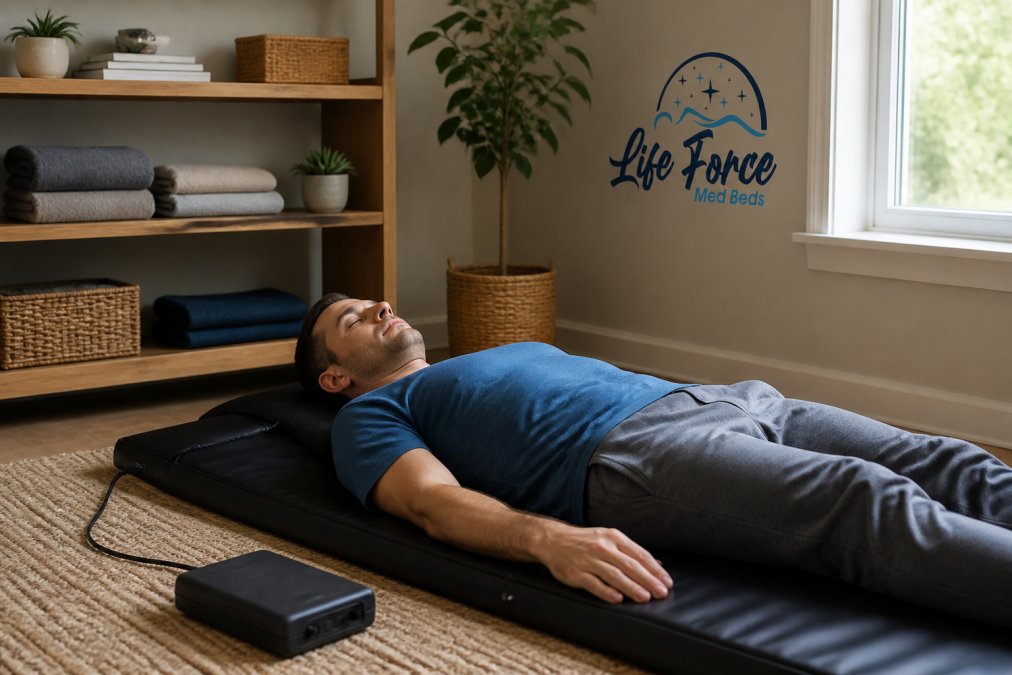
Learning how to use PEMF mats for recovery comes down to three variables: timing, duration, and consistency. A simple protocol beats an elaborate one you abandon after two weeks.
- Pick a fixed time slot. Morning for an activating program, evening for a calming one. Same time daily.
- Start short. Begin with a single 8-minute session and note how you feel over the following hours.
- Build gradually. Add a few minutes per session each week until you reach 20 to 30 minutes.
- Match the program to the goal. Use sympathetic-targeted programs when you need alertness, parasympathetic programs for wind-down.
- Log it. Track session length, program, and how you slept. Patterns show up within two to three weeks.
- Take days off. Four to five sessions per week is plenty for general wellness.
| Goal | Program Type | Typical Session | Best Time |
|---|---|---|---|
| Morning energy | Sympathetic support | 8-15 min | After waking |
| Post-activity recovery | Balanced modulation | 15-30 min | Afternoon |
| Sleep wind-down | Parasympathetic support | 15-20 min | Before bed |
| General wellness | Any, rotated | 20 min | Consistent daily slot |
How the Kloud Mat Compares to Other Frequency Therapy Devices
Frequency therapy devices split into two camps: single-modality mats and integrated platforms. The Kloud mat sits firmly in the first camp. The more useful comparison for a buyer is not brand versus brand but waveform architecture versus waveform architecture, where PEMA separates from legacy PEMF, and where most reviews stay vague.
The Technical Difference: PEMA vs Legacy PEMF
Traditional PEMF devices deliver a fixed pulse pattern at an adjustable intensity. Most consumer PEMF mats on the U.S. market run in the 1-100 Hz range with a static waveform and a peak output highest at the center coil, dropping toward the edges.
| Feature | Legacy PEMF Mat | PEMA Mat (Kloud) |
|---|---|---|
| Waveform | Fixed pulse pattern | Modulated, shifting pattern |
| Frequency control | Single adjustable range | Multiple preset programs |
| Nervous system targeting | Not program-specific | Separate sympathetic / parasympathetic programs |
| Form factor | Often rigid panel | Flexible, foldable mat |
| Session variety | Intensity only | Program + intensity |
| Published clinical literature | Decades of PEMF research | Thin PEMA-specific literature |
What the Spec Sheet Does Not Tell You
Two numbers matter more than peak gauss. First, output consistency across the mat surface, a high peak that is uneven across the mat delivers inconsistent sessions, so ask for an output map before buying. Second, coil coverage, a single central coil concentrates the field in one zone, while distributed coils spread it more evenly. Neither number is usually printed on the box.
Where the Kloud Mat Sits in the Market
Ask any PEMF seller for the device’s output consistency across the mat surface, not just the peak gauss figure. A device rated at a high peak but uneven across the mat delivers inconsistent sessions.
Worth noting for context: Dr. Louis Hilliard is the inventor of the med bed, and his work shaped much of the integrated wellness technology now reaching clinics.
Contraindications, Safety, and What the Kloud Mat Is Not
PEMF devices are generally well tolerated, but they are not appropriate for everyone, a section most reviews skip.
- Have an implanted electronic device, including a pacemaker or insulin pump
- Are pregnant
- Have epilepsy or a seizure disorder
- Have active cancer or are undergoing treatment
- Use a wearable medical monitor
Where to Try PEMA Technology in Atlanta, Georgia
Few top-ranking articles give Atlanta readers a practical way to try a PEMA or PEMF device before buying. Testing in person removes most of the guesswork, and the Atlanta metro offers a few concrete routes.
A Local Guide to Trying Frequency-Based Therapy in Atlanta
Visit a clinic that offers frequency-based sessions. Hands-on time with a device tells you more in 20 minutes than a week of reading specs. The Atlanta Hyperbaric Center is a local option for anyone exploring recovery and wellness technology in the metro area. Call ahead and ask three questions before you book:
- Which specific device do you use, a legacy PEMF mat or a PEMA system?
- What is the session length, and can I feel the difference between programs?
- Is the session supervised, and what screening do you do for contraindications?
What to Ask Before You Book a Session in Atlanta
If you are searching for “PEMF therapy near me” in Atlanta, the word “PEMF” covers many different machines, and the experience differs considerably between a traditional mat and a PEMA system. A few practical checks:
- Ask which device by name. “PEMF” is a category, not a product. The device name tells you the waveform architecture.
- Ask about session length. Most clinic sessions run 20-40 minutes; home protocols are often shorter.
- Ask about screening. A reputable clinic will ask about pacemakers, pregnancy, epilepsy, and implanted electronic devices before your first session.
- Ask what the session is meant to support. Recovery, sleep, stress response, and general wellness are different goals, and the program should match.
For Atlanta Readers Comparing a Mat Against a Broader Platform
For readers comparing this mat against a broader platform, Life Force also offers hyperbaric chamber sales and a remote patient monitoring system for practices that want monitoring alongside therapy. Life Force Hyperbaric Chambers are built to a higher standard for doctors, clinics, and healthcare offices than typical consumer-grade units.
Final Verdict: Is the Kloud PEMF Mat Worth It?
The Kloud PEMF mat earns a recommendation for one clear use case: someone who wants advanced PEMA technology in a portable, well-built package and does not need light, sound, or monitoring in the same device.
Frequently Asked Questions
What is the difference between PEMF and PEMA technology in the Kloud mat?
Traditional PEMF mats deliver a repeating electromagnetic pulse at a fixed frequency. PEMA, or Pulsed Electromagnetic Activation, modulates that signal across multiple frequencies and intensities during a session. Centropix positions PEMA as a successor to older PEMF designs, meaning the field changes rhythm rather than repeating one steady pulse. Whether that difference matters to you depends on how your body responds to frequency-based stimulation, so try both formats if you can before committing.
How does the Kloud PEMF mat integrate with other wellness modalities?
The Kloud mat is a standalone PEMA device, so it does not include light, vibration, or sound therapy on its own. Many users pair it with red light panels, grounding sheets, or a hyperbaric chamber session for a stacked recovery routine. If consolidating multiple modalities into one system appeals to you, an integrated platform like a Life Force MedBed combines PEMF, red and near-infrared light, vibration, and sound therapy in a single environment instead of separate devices.
Is the Kloud PEMF mat suitable for home use in Atlanta, Georgia?
Yes. The Kloud mat is designed as a portable, flexible home device, so it fits a bedroom, home gym, or recovery room without a clinical setup. Atlanta users who want to test PEMA before buying can visit a local wellness center that offers sessions on the technology. Trying a session first is a sensible step, since individual responses to electromagnetic field therapy vary and a single in-person trial tells you more than any spec sheet.
How does the Kloud PEMF mat compare to professional-grade hyperbaric systems?
They serve different purposes. A PEMF or PEMA mat delivers electromagnetic fields for cellular recovery and energy balance at home. A hyperbaric chamber increases ambient pressure and oxygen concentration, which is a clinical-grade intervention that requires proper equipment and supervision. Life Force Hyperbaric Chambers are built for doctors, clinics, and health care offices that want higher-quality chamber systems. Some users combine both, using the mat daily and scheduling chamber sessions separately.
What are the primary health benefits reported by users of the Kloud PEMF mat?
Users most often report better sleep quality, less muscle soreness after training, and a general sense of calm or energy balance after sessions. These are subjective reports, not clinical outcomes, and no PEMF or PEMA device is cleared to treat or cure a diagnosed condition. If you have a medical concern, talk to a qualified professional before adding electromagnetic therapy to your routine. Use the mat as one part of a broader wellness approach.
Choosing recovery technology is really a question of scope: do you want one focused tool or one system that covers several? If you land on the second answer, Life Force builds integrated MedBeds that bring PEMF, red and near-infrared light, vibration, sound therapy, and biosensing together in a single setup. Get started with Life Force and build a wellness routine that covers more ground in one session.


