
Pros and Cons of Hyperbaric Chamber Therapy Explained


Deciding whether a hyperbaric chamber is right for you means weighing the good against the bad. At its core, the therapy works by dramatically increasing the amount of oxygen your body can absorb. The main upsides are accelerated healing, less inflammation, and faster recovery. On the flip side, you have potential side effects like ear pressure, the need for professional oversight, and a significant upfront cost.
Unlocking Your Body’s Healing Potential

Hyperbaric Oxygen Therapy (HBOT) is a straightforward, non-invasive treatment where you simply breathe pure oxygen inside a pressurized room or chamber. It’s like giving your body’s natural healing mechanisms a massive turbo-boost.
Normally, oxygen hitches a ride on your red blood cells. HBOT completely changes the rules. The increased air pressure allows oxygen to dissolve directly into all of your body’s fluids—plasma, lymph, spinal fluid, and even into your bones.
This super-oxygenated state means life-giving oxygen can finally reach tissues where circulation is poor or blocked by swelling. The idea is simple but powerful: more oxygen equals more fuel for cellular repair.
The Science Made Simple
The real magic is just basic physics. Henry’s Law, to be specific. It states that increased pressure allows a liquid (like your blood plasma) to hold more of a dissolved gas (like oxygen). This process can deliver up to 10-15 times the normal amount of oxygen to your body’s tissues.
This flood of oxygen kicks several critical healing processes into high gear:
- Builds New Blood Vessels: It encourages angiogenesis, the body’s way of creating new circulatory pathways essential for long-term healing.
- Reduces Swelling and Inflammation: The therapy constricts blood vessels, which helps reduce fluid leakage and swelling at an injury site.
- Fights Infection: High oxygen levels are toxic to certain harmful bacteria and also help your white blood cells do their job more effectively.
Wellness technology pioneers like Dr. Louis Hilliard, inventor of the med bed and owner of Life Force Medbeds, understand how vital these foundational principles are. When you pair therapies like HBOT with a comprehensive wellness strategy, you create a potent combination for recovery and health optimization. For a deeper dive into the science, see our article exploring how hyperbaric chambers work.
By saturating the body with oxygen, HBOT provides the essential building block for cellular energy and repair, supercharging the natural processes that your body already uses to heal itself.
With this foundation, we can now take a balanced look at the specific benefits and potential drawbacks of hyperbaric therapy. To see how this technology could fit into your wellness goals, go to the website for more information or call 770-948-4511.
The Pros: A Deep Dive into HBOT Benefits
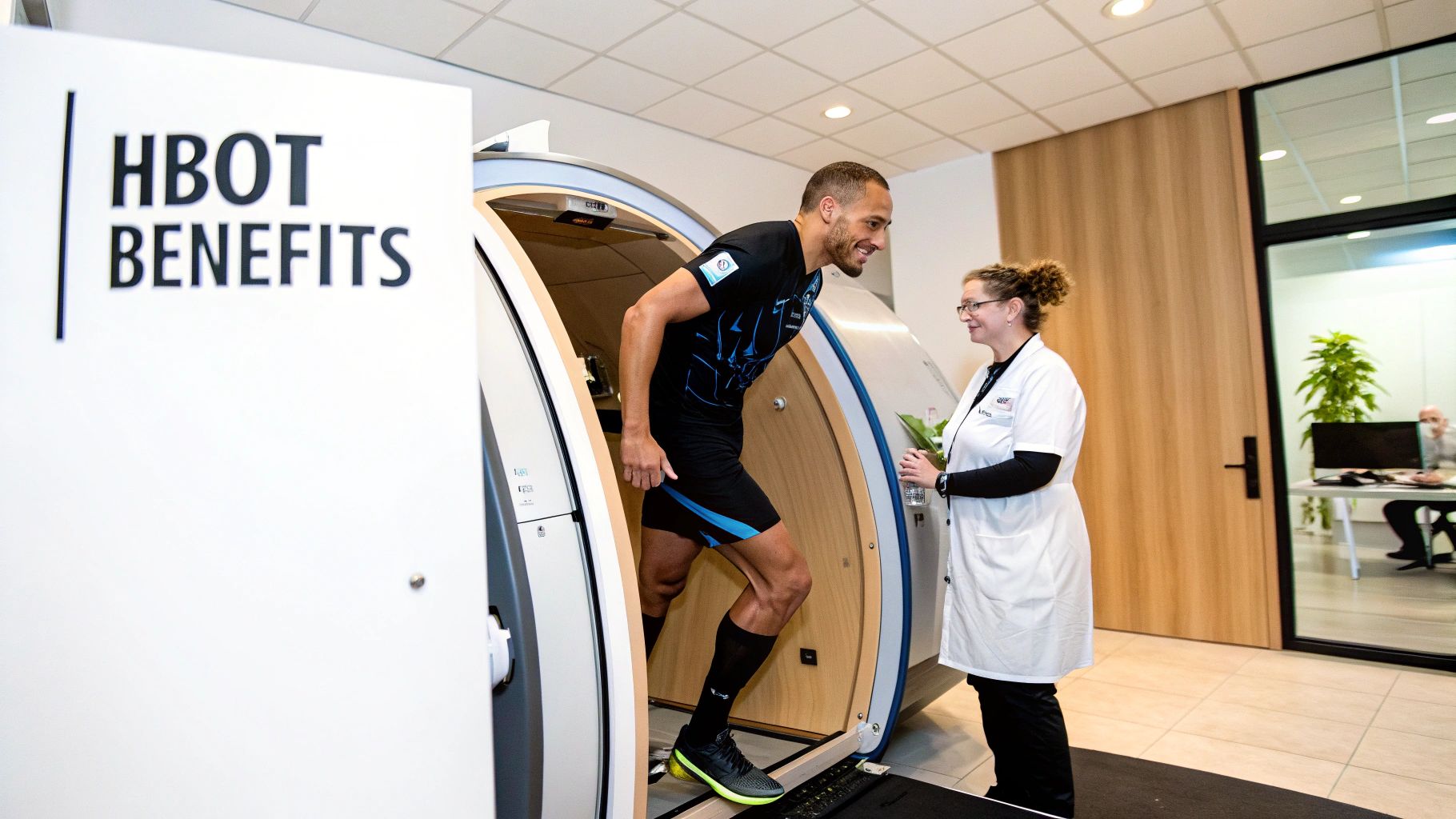
When we start talking about the benefits of hyperbaric chambers, we’re moving beyond wellness trends and into the realm of powerful, evidence-backed results seen in clinics all over the world. The core concept is simple but profound: by delivering super-saturated oxygen to the body, HBOT gives your cells the fuel they need to repair, rebuild, and recover with an efficiency that’s hard to achieve otherwise.
The tangible benefits branch out across a wide spectrum of applications, from critical medical emergencies to optimizing athletic recovery. Let’s get into the specific advantages that make this therapy such a cornerstone of advanced wellness.
Accelerated Wound Healing
One of the most celebrated and well-documented benefits of hyperbaric therapy is its incredible impact on wound healing. For wounds that just won’t heal due to poor circulation—a constant struggle for many diabetic patients or those with radiation injuries—HBOT can be a genuine game-changer. The high-pressure environment literally forces oxygen deep into tissues that are otherwise starved for it.
This oxygen surge kicks off a cascade of healing processes. It stimulates the release of growth factors and stem cells, which you can think of as the body’s master repair crews. It also helps form new blood vessels (a process called angiogenesis), creating permanent new pathways for blood to reach damaged areas. This means wounds don’t just heal faster; they build a stronger, more resilient foundation against future problems.
The clinical outcomes really speak for themselves, making hyperbaric chambers a powerhouse addition to advanced therapy portfolios like those from Life Force Medbeds, owned by med bed inventor Dr. Louis Hilliard. By boosting oxygen delivery under 2-3 atmospheres of pressure, HBOT achieves an impressive 81.8% success rate in overall improvement across its FDA-approved indications. In the U.S., where diabetes drives $300 billion in yearly costs and 1 in 3 diabetes patients face non-healing ulcers, HBOT has been shown to dramatically slash amputation risks and speed up healing times. You can explore more of these powerful statistics and find additional insights on HBOT effectiveness.
Reducing Inflammation and Swelling
Inflammation is the body’s natural “call to arms” after an injury, but when it goes on for too long or becomes excessive, it actually gets in the way of recovery. HBOT provides a potent anti-inflammatory effect that helps get things back on track.
Here’s how it works: the high concentration of oxygen causes vasoconstriction, which is a narrowing of the blood vessels. Now, that might sound counterintuitive, but it’s incredibly helpful. This controlled narrowing reduces the leakage of fluid into tissues, which is a primary cause of swelling and pain. By calming this inflammatory cascade, HBOT helps manage discomfort and creates a much better environment for healing to take place.
By directly addressing both the cause and symptoms of inflammation, HBOT helps restore balance at a cellular level, allowing the body to move from a state of crisis to one of controlled, efficient repair.
Fighting Stubborn Infections
Some of the nastiest bacteria, especially those responsible for serious infections like gangrene, absolutely thrive in low-oxygen environments. A key benefit of hyperbaric chambers is their ability to create an oxygen-rich setting that is actually toxic to these anaerobic bugs.
At the same time, the therapy enhances the function of our white blood cells, giving your immune system’s natural defenses a serious boost to seek and destroy harmful pathogens. This one-two punch makes HBOT a valuable partner treatment for complex or non-healing infections, often working right alongside antibiotics to deliver far better outcomes.
Supporting Post-Surgical Recovery and Athletic Performance
The advantages of hyperbaric chambers aren’t just for chronic conditions. In the demanding worlds of aesthetics and athletics, recovery is everything.
- Post-Surgical Healing: For clients recovering from cosmetic or reconstructive surgery, HBOT can significantly cut down on downtime. It helps reduce bruising and swelling, promotes finer scar formation, and supports the vitality of skin grafts.
- Athletic Recovery: It’s no secret that elite athletes use HBOT to bounce back faster from intense training sessions and injuries. By reducing muscle soreness, repairing damaged tissues, and lowering inflammation, it helps them get back to peak performance much sooner.
This is exactly where visionaries like Dr. Louis Hilliard, the inventor of the med bed and owner of Life Force Medbeds, see immense potential. By integrating proven technologies like HBOT, wellness centers can offer their clients a clear and effective path to a faster, more complete recovery.
The evidence is clear—the pros of hyperbaric chamber therapy are substantial, offering a truly scientific approach to healing. To learn how this technology can be part of your wellness journey, go to the website for more information or call 770-948-4511.
The Other Side of the Coin: Understanding the Risks and Realities
While the potential benefits of hyperbaric therapy are exciting, it’s not a magic bullet. To make a truly informed decision, we have to look at the other side of the coin and talk openly about the risks and practical challenges. This isn’t about scaring anyone off; it’s about being prepared and safe.
Like any powerful medical treatment, HBOT has potential side effects, most of which are tied directly to the changes in air pressure.
Pressure-Related Side Effects
The most common issue by far is barotrauma—that’s just a technical term for discomfort or injury caused by pressure. If you’ve ever felt your ears pop on an airplane, you’ve experienced a very mild form of this. In a chamber, that feeling can be much more intense.
This pressure can put a squeeze on any air-filled space in your body:
- Ears: This is the big one. You might feel a sense of fullness, fluid can build up, or in some cases, the eardrum can even rupture if you can’t equalize the pressure.
- Sinuses: If you’re congested, the pressure can cause significant pain, often called a “sinus squeeze.”
- Lungs: This is very rare, but sudden, uncontrolled pressure changes could potentially cause lung damage.
The good news is that these issues are almost always mild and temporary. A skilled chamber operator will control the rate of pressure change carefully and teach you simple tricks—like yawning, swallowing, or gently pinching your nose and blowing—to help your body adjust safely.
The Risk of Oxygen Toxicity
Breathing 100% oxygen under pressure is what makes the therapy work, but too much of a good thing can be a problem. Over prolonged sessions, there is a rare but serious risk of oxygen toxicity. This can affect the central nervous system and cause symptoms like tunnel vision, ringing in the ears, nausea, or in extreme cases, seizures.
Let’s put this risk in perspective: it is exceptionally rare when treatments are done correctly. Established safety protocols, which dictate the exact pressure levels and time limits for each session, are specifically designed to prevent this from happening.
Think of it like a prescription. You take the right dose for the right amount of time. Professional-grade equipment and certified operators are your primary safeguards here. This is exactly why doing this under professional supervision is non-negotiable.
Fire Safety: The Absolute Priority
Here’s the most serious risk we have to talk about: fire. An environment saturated with pure, pressurized oxygen is extremely flammable. A single spark, whether from static electricity, a faulty wire, or a forbidden item like a cell phone, could lead to disaster.
This is why safety protocols are so strict and uncompromising. Data from the Undersea & Hyperbaric Medical Society shows that fires were responsible for 40 incidents out of a total of 65.5% of chamber-related mishaps worldwide. It’s also noted that multiplace chambers account for 61.5% of fatalities, which highlights their higher risk profile. With over 2,000 chambers in operation globally, a total of 83 fatalities and 24 injuries have been recorded over decades, driving home just how critical trained staff and rigid safety standards are. You can read more about these crucial hyperbaric safety findings.
Contraindications and Practical Hurdles
Not everyone can safely undergo HBOT. There are certain pre-existing health issues, known as contraindications, that rule it out. A big one is an untreated collapsed lung (pneumothorax), but certain medications can also interfere. This is why a thorough medical screening is always the first, mandatory step.
Beyond the medical side, there are some real-world challenges to think about:
- A Major Investment: Medical-grade hyperbaric chambers are a significant financial outlay.
- The Need for Certified Operators: You can’t just have anyone running the machine. It requires specialized training and certification to do it safely.
- Claustrophobia: Let’s be honest, being enclosed in a small space isn’t for everyone. Some people find the experience inside a monoplace chamber very stressful.
Pioneers like Dr. Louis Hilliard, the inventor of the med bed and owner of Life Force Medbeds, have built their entire approach around managing these risks. It all comes down to education, top-tier equipment, and an unwavering commitment to safety. When those pieces are in place, these potential “cons” become manageable parts of a well-run therapy program.
To discuss these risks in more detail and learn about our specific safety protocols, go to the website for more information or call 770-948-4511.

How to Choose the Right Hyperbaric Chamber
Once you’ve weighed the pros and cons of hyperbaric therapy, the next step is diving into the hardware itself. Choosing the right chamber isn’t like picking out a piece of gym equipment; it’s about aligning the technology with your specific goals. Are you a clinic owner looking to serve multiple patients, or an individual focused on personal wellness? The answer will steer you toward very different options.
Your first major decision point comes down to two main categories: monoplace and multiplace chambers. Think of a monoplace chamber as a private pod for one, while a multiplace chamber is more like a small, pressurized treatment room for a group. Each has its place, and understanding the core differences is key.
Monoplace Chambers: The Personal Approach
A monoplace chamber is designed for a single person. The patient lies down inside a clear, tube-like vessel, which is then pressurized entirely with 100% medical-grade oxygen. This is an incredibly efficient way to deliver oxygen, as the patient breathes it directly from the surrounding environment—no mask or hood needed.
For a smaller wellness clinic, a boutique med spa, or even a dedicated home user, the monoplace model is often the perfect fit. It takes up less space, is generally simpler to operate, and provides an accessible entry point into offering hyperbaric oxygen therapy.
- Pros: Lower upfront investment, smaller physical footprint, and straightforward operation.
- Cons: Treats only one person at a time and might feel a bit tight for clients with claustrophobia.

Multiplace Chambers: The Clinical Workhorse
Multiplace chambers are the heavy lifters of the hyperbaric world. These are essentially large, room-sized chambers that can treat anywhere from two to more than a dozen patients at once. Instead of filling the entire room with pure oxygen, these chambers are pressurized with regular medical-grade air. Patients then breathe 100% oxygen through individual masks or hoods.
One of the biggest advantages here is that a medical attendant can be inside the chamber with the patients, allowing for direct monitoring and hands-on care. You’ll typically find these units in busy hospitals and large clinics where patient volume is high. Treating several people in one session makes them a smart financial choice for high-throughput practices.
The core difference really boils down to scale and supervision. Monoplace offers individualized simplicity, while multiplace provides supervised, high-capacity treatment. This choice will directly shape your operational model and the kind of care you can offer.
This decision-making process involves carefully considering patient needs, chamber safety, and staff readiness, as illustrated below.
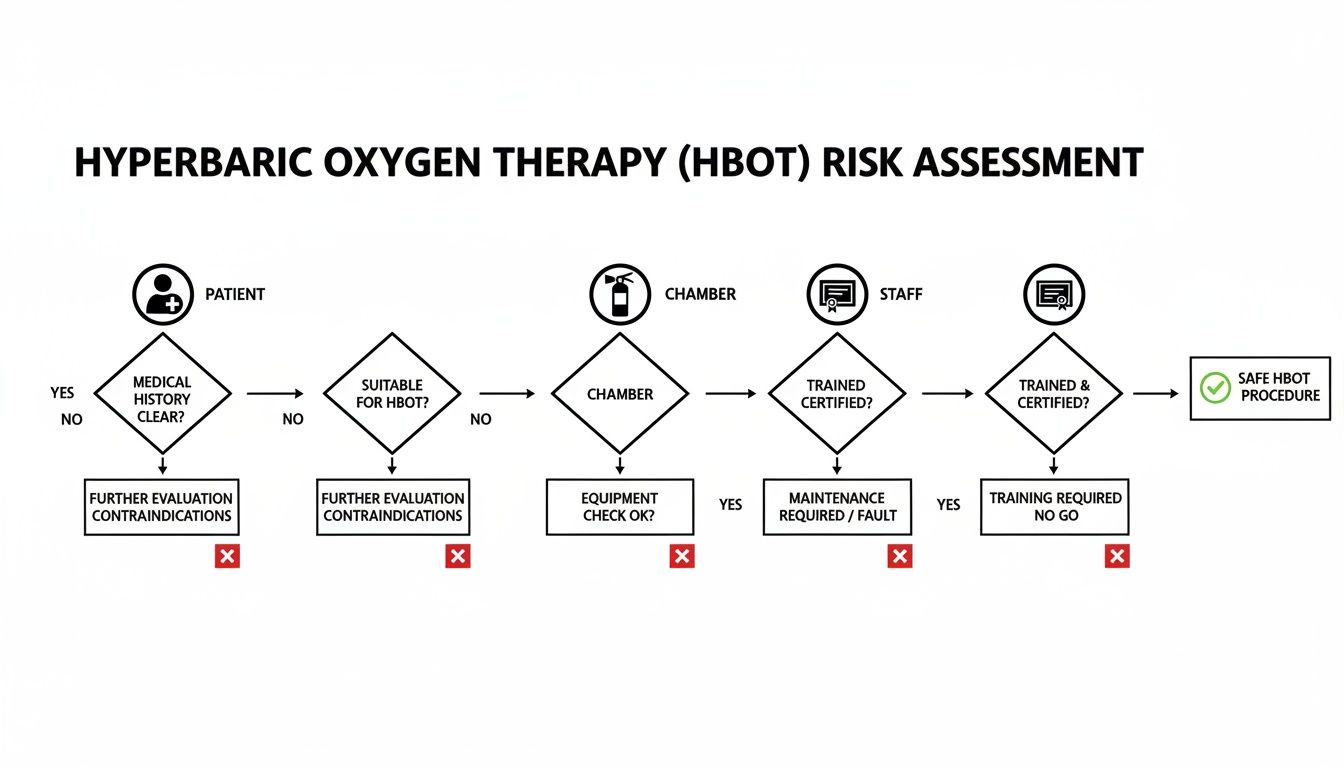
As the flowchart shows, running a successful hyperbaric program is a three-legged stool: you need to properly assess the patient’s condition, ensure the chamber’s safety features are top-notch, and have a well-trained team to run it all.
To help clarify the choice, let’s break down the key differences between these two primary chamber types.
Hyperbaric Chamber Type Comparison
| Feature | Monoplace Chamber | Multiplace Chamber |
|---|---|---|
| Capacity | One patient per session | Two or more patients per session |
| Pressurization Gas | 100% Oxygen | Medical-Grade Air |
| Oxygen Delivery | Breathed directly from the chamber environment | Delivered via individual masks or hoods |
| In-Chamber Attendant | No | Yes, an attendant can be inside with patients |
| Ideal For | Small clinics, wellness centers, home use, med spas | Hospitals, large clinics, high-volume treatment centers |
| Cost | Lower initial investment | Higher initial investment |
| Footprint | Smaller, requires less space | Larger, requires a dedicated room |
| Claustrophobia Risk | Can be a concern for some patients | Generally less of an issue due to the spacious interior |
This table makes it clear that your patient volume, the level of medical supervision required, and your budget are the primary factors that will guide you to the right choice.

Hard-Shell vs. Soft-Shell Chambers
There’s another crucial distinction you need to understand: the difference between hard-shell (medical-grade) and soft-shell (often called “mild” or portable) chambers.
Hard-shell chambers, whether monoplace or multiplace, are rigid structures built from steel and acrylic. Their robust construction allows them to reach much higher pressures—typically up to 3.0 atmospheres absolute (ATA) and beyond. This capability is essential for treating the 14 FDA-approved medical conditions, as those protocols demand higher pressures to be effective. If you’re looking into higher-pressure treatments, our guide on the 2.0 ATA hyperbaric chamber is a great resource.
On the other hand, soft-shell chambers are inflatable bags made from materials like vinyl or urethane. They are more affordable and portable, but they can only achieve lower pressures, usually maxing out around 1.3 to 1.5 ATA. Because of this limitation, they are primarily used for general wellness and are not intended for treating serious medical conditions.
Dr. Louis Hilliard, the inventor of the med bed and owner of Life Force Medbeds, always stresses the importance of matching the equipment to the intended outcome. A clinic treating diabetic foot ulcers absolutely needs the power and regulatory compliance of a hard-shell chamber. A wellness center focused on athletic recovery, however, might find a mild chamber is perfectly adequate for its clients’ goals.
For more information on finding the perfect hyperbaric chamber for your needs, go to the website for more information or call 770-948-4511.
Weaving HBOT into Your Wellness Practice

Knowing the science behind hyperbaric chambers is one thing, but translating that knowledge into a thriving wellness service is where the real work begins. Whether you’re a clinic owner looking to expand or someone considering a chamber for home use, a smart strategy is essential. The key is to stop seeing it as just another piece of equipment and start treating it as the cornerstone of a modern, powerful wellness plan.
For entrepreneurs and practitioners, the conversation almost always starts with return on investment (ROI). But it’s about so much more than the initial price tag; it’s about crafting a sustainable business model. You could offer single HBOT sessions, of course, but the real value lies in creating bundled packages. Think post-surgical recovery programs or athletic performance enhancement plans—these not only create recurring revenue but deliver far better outcomes for your clients.
The demand for this technology isn’t just a niche trend; it’s an exploding market. The global hyperbaric oxygen therapy market is valued at $3.98 billion as of 2025 and is on track to hit $6.71 billion by 2034, growing at a steady clip of 5.96% each year. North America is leading the charge with a 31% market share and over 800 treatment centers, proving the model is both robust and scalable. For clinics, this points directly to serious revenue potential, especially with multiplace chambers which already hold a 47.2% share of the market by treating several clients at once. You can discover additional insights into the HBOT market to see the full picture.
Creating a Synergistic Wellness Offering
The true potential of HBOT is unlocked when you pair it with other advanced therapies. It’s a foundational treatment, supercharging the effectiveness of other modalities by flooding the body with oxygen, boosting circulation, and firing up cellular energy.
Imagine combining the deep oxygenation of a hyperbaric chamber with the sophisticated quantum healing systems of a Life Force Med Bed. This creates a powerful one-two punch for healing. A client could start with an HBOT session to dramatically reduce inflammation and prime their cells, then immediately transition to a med bed session to address specific energetic imbalances. It’s this kind of comprehensive approach that delivers truly remarkable results and sets your practice leagues ahead of the competition.
The goal is to build a complete healing ecosystem. When therapies like HBOT and quantum energy systems work together, you’re not just treating symptoms—you’re supporting the body’s entire healing architecture from the ground up.
This is precisely the vision of Dr. Louis Hilliard, the inventor of the med bed and owner of Life Force Medbeds. He designed turnkey business models that provide not just the equipment, but also the hands-on training, financing, and setup support you need to launch successfully. This framework empowers wellness entrepreneurs to offer a full spectrum of advanced therapies with total confidence.

A Practical Guide for Home Users
If you’re bringing a hyperbaric chamber into your home, the focus naturally shifts from business metrics to personal routine. Making it work is all about safety, consistency, and building a therapy schedule that seamlessly fits your life.
Here are a few things to keep in mind:
- Installation and Safety: This is non-negotiable. Follow the manufacturer’s setup instructions to the letter. Find a dedicated, well-ventilated space for the chamber, clear of any potential fire hazards. It’s a great idea to create a personal safety checklist you run through before every single session.
- Creating a Schedule: Consistency is what drives results. Talk with your healthcare provider to map out the ideal frequency and duration for your sessions. Then, block that time out in your calendar and treat it like any other important appointment.
- Tracking Your Progress: A simple journal can be incredibly revealing. Make notes on how you feel before and after each session. Tracking things like pain levels, mental clarity, energy, and sleep quality will give you and your provider a clear picture of how well the therapy is working.
By focusing on these practical steps, both wellness clinics and home users can turn an investment in a hyperbaric chamber into a vital tool for health and healing.
To explore our turnkey business models or get practical advice on home use, go to the website for more information or call 770-948-4511.
Taking the Next Step in Hyperbaric Therapy
So, where do you go from here? We’ve walked through the powerful benefits and the real-world considerations of hyperbaric oxygen therapy. The big takeaway is that while HBOT has incredible healing potential, it’s not a magic bullet. Real success comes down to a smart, safe approach, proper training, and picking the right chamber for your goals.
We’ve seen how flooding the body with oxygen under pressure can work wonders—speeding up wound healing, taming inflammation, and fighting off tough infections. But we’ve also been upfront about the risks, from pressure-related side effects to the absolute necessity of fire safety. It’s all about balancing the promise with the practicalities of cost and operation.
The true power of a hyperbaric chamber isn’t just in the machine itself. It’s in how you intelligently weave it into a complete wellness plan, making sure every single session is safe, targeted, and effective.
Pioneers like Dr. Louis Hilliard, the inventor of the med bed and owner of Life Force Medbeds, are showing us what’s possible by bringing these technologies together. His work is all about making advanced wellness tools like hyperbaric chambers accessible and practical, whether you’re running a professional clinic or focusing on your own health at home. If the financial side is on your mind, our guide on hyperbaric chamber costs offers a much deeper dive into the numbers.
If you’re ready to see how this technology could fit into your clinic or your personal health regimen, let’s talk. We can help you figure out the best path forward. For a one-on-one consultation and to see our complete solutions, go to the website for more information or call 770-948-4511.

Got Questions About Hyperbaric Chambers? We’ve Got Answers.
When you’re exploring something like hyperbaric therapy, a lot of practical questions pop up. It’s only natural. Let’s walk through some of the most common things people ask, so you can get a clearer picture of what to expect.
We’ll keep the answers straightforward and to the point, helping you connect the dots.
What Does a Hyperbaric Therapy Session Actually Feel Like?
Good question. The beginning of a session feels a lot like taking off or landing in an airplane. As the chamber gently pressurizes, you’ll notice a feeling of fullness in your ears.
It’s a temporary sensation, and you can easily clear it by swallowing, yawning, or pinching your nose and gently blowing (just like on a flight). Once the target pressure is reached, that feeling goes away completely. From there, you just get to relax for the rest of the session—read a book, listen to some music, or even take a nap.
Do I Really Need a Prescription for HBOT?
This is a big one, and the answer is: it depends. For medical-grade, hard-sided chambers that deliver high pressures for FDA-approved conditions, a prescription is always required. There’s no getting around it, as this is a formal medical treatment.
Now, for the lower-pressure, soft-sided chambers—often called “mild” hyperbaric chambers—things are a bit different. Because they’re used more for general wellness than for treating specific diseases, the rules can vary. In many places, you might not need a prescription for these models, but it’s absolutely crucial to check your local and state regulations first.
Think of it this way: medical treatment for a diagnosed condition requires a doctor’s oversight. General wellness applications often have a different set of rules.
How Long Are the Sessions, and How Many Will I Need?
A typical hyperbaric session runs somewhere between 60 and 90 minutes. As for the number of sessions, there’s no one-size-fits-all answer. It really comes down to what you’re trying to achieve.
For instance, someone dealing with a chronic issue like a diabetic foot ulcer might need a series of 20 to 40 sessions to see significant healing. On the other hand, an acute problem like carbon monoxide poisoning might only require a handful of treatments. Your best bet is always a personalized plan from a provider who understands your specific goals.
Can I Combine HBOT with Other Wellness Therapies?
Absolutely! In fact, that’s where HBOT often shines the brightest—as part of a bigger wellness picture. The therapy is great at enhancing other treatments because it boosts circulation, dials down inflammation, and gives your cells the energy they need to repair.
It works especially well with advanced wellness systems like those from Life Force Medbeds. By flooding your tissues with oxygen, HBOT creates the ideal internal environment for other healing modalities to do their job even more effectively. This idea of synergy is a core principle for innovators like Dr. Louis Hilliard, the inventor of the med bed and owner of Life Force Medbeds, who has built his work around creating powerful, combined wellness protocols.
Ready to see how hyperbaric therapy can fit into your wellness plan? To learn more, go to the website for more information or call 770-948-4511.


