
Resonant Frequency Therapy Cost 2026: Complete Breakdown


Table of Contents
- What Drives Resonant Frequency Therapy Costs
- Life Force MedBed Investment: Understanding the All-in-One Approach
- Clinical Efficacy and Safety Protocols: What Justifies the Investment
- Comparing Single-Device vs. Integrated Systems
- Atlanta Hyperbaric Center Services and Complementary Therapies
- Hyperbaric Chamber Business Startup Costs: A Parallel Investment Model
- Making Your Resonant Frequency Therapy Investment Decision
- Frequently Asked Questions
Last Updated: September 27, 2026
What Drives Resonant Frequency Therapy Costs
Resonant frequency therapy cost varies dramatically based on the technology platform, integration level, and clinical setting. Understanding what determines pricing requires looking at the underlying components: the sophistication of the frequency generation systems, the quality of biosensing and bioimpedance measurement, the breadth of complementary modalities bundled together, and whether you’re investing in a single-device solution or a fully integrated wellness ecosystem.
The real cost drivers aren’t always obvious. Many buyers assume they’re paying for one thing when they’re actually paying for something else entirely. A basic frequency device might cost a fraction of what an integrated system commands, but the gap between them isn’t just about features, it’s about therapeutic depth, personalization capability, and long-term clinical outcomes.
Life Force MedBed Investment: Understanding the All-in-One Approach
The Life Force MedBed represents a fundamentally different investment model than purchasing individual devices. Rather than buying separate red light panels, PEMF mats, sound frequency generators, and bioimpedance monitors, you’re consolidating multiple therapeutic modalities into a single integrated platform.
This consolidation approach addresses a real problem that biohacking enthusiasts and wellness practitioners face: device proliferation. When you own five different systems, you’re managing five different interfaces, five different protocols, and five different data streams. The Life Force MedBed integrates bioresonance, bioimpedance/biosensing, frequency and Rife-based systems, red and near-infrared light, PEMF, vibration, sound/frequency therapy, meditation, grounding/electron-balancing concepts, and oxygen therapy into one coherent experience.
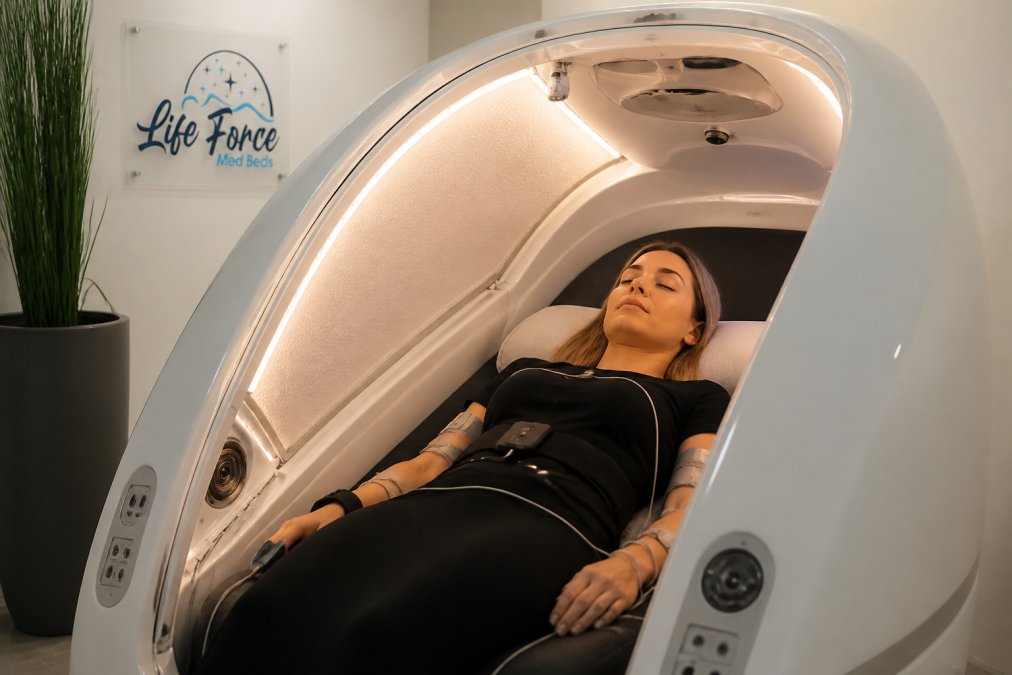
The investment justification hinges on three factors: therapeutic synergy (multiple modalities working together produce outcomes neither could alone), data continuity (a single system tracks all interventions against unified biomarkers), and practical usability (one device beats managing a closet full of equipment). For serious wellness practitioners in Atlanta and beyond, consolidation often reduces total cost of ownership compared to assembling equivalent capability piecemeal.
Clinical Efficacy and Safety Protocols: What Justifies the Investment
Resonant frequency therapy’s therapeutic foundation rests on the principle that biological systems respond to specific frequency patterns. The clinical efficacy question isn’t whether frequency therapy works, it’s which implementations, at what intensity levels, and for which outcomes produce measurable results.
The measurable outcomes practitioners track include heart rate variability (HRV), skin conductance levels, muscle tension patterns measured through electromyography (EMG), and bioimpedance shifts that indicate cellular hydration and ion channel responsiveness.
Safety protocols matter because frequency-based interventions operate at the intersection of bioelectromagnetism and human physiology. Proper implementation requires careful calibration of resonant frequency parameters, monitoring of individual response patterns through real-time bioimpedance assessment, and algorithmic adjustment based on live biometric feedback.
A clinical-grade platform tracks three safety checkpoints during each session: baseline bioimpedance measurement (establishing individual electrical resistance and reactance), real-time response monitoring (ensuring frequency application doesn’t exceed individual tolerance thresholds), and post-session recovery assessment. This continuous feedback loop is what separates therapeutic-grade systems from consumer wellness devices.
The investment in a higher-quality platform like Life Force reflects the engineering required to deliver both efficacy and safety simultaneously. This includes precision frequency generation, accurate biosensing to track individual response, and algorithmic adjustment based on real-time data. These aren’t marketing features; they’re the technical requirements for clinical-grade implementation. A practitioner in Atlanta or any clinical setting cannot reliably deliver outcomes without this infrastructure.
Dr. Louis Hilliard, the inventor of the med bed, designed these safety and efficacy mechanisms into the system architecture from the ground up, recognizing that frequency therapy’s credibility depends entirely on reproducible, measurable, safe outcomes. Without this rigor, resonant frequency therapy remains anecdotal; with it, it becomes a legitimate clinical modality.
Comparing Single-Device vs. Integrated Systems
The choice between single-device and integrated resonant frequency therapy systems depends less on abstract preference and more on three concrete factors: your clinical setting, your patient volume, and your therapeutic scope.
Single-Device Approach: Research Centers and Specialized Practitioners
A single-device approach, buying just a frequency generator, or just a red light panel, offers simplicity and lower entry cost. Academic research centers and specialized practitioners often use this model because it isolates variables. You get one intervention, you measure its impact on one biomarker (e.g., HRV or muscle recovery time), and you can publish results with high confidence in causation. This approach works when your goal is to answer a specific clinical question rather than optimize overall patient outcomes.
Single-device practitioners typically see 8-15 patients per week. The device itself requires minimal software maintenance, calibration happens quarterly, and user training takes 2-3 hours. For a small practice in Atlanta or a research lab, this model is economically rational.
Integrated System Approach: Multi-Modality Clinics and Wellness Centers
The integrated system approach trades simplicity for therapeutic depth and patient throughput. When resonant frequency therapy combines with PEMF stimulation, light therapy, sound therapy, and precise bioimpedance monitoring in one session, the therapeutic pathways multiply. A patient might use red light alone and see modest improvements in recovery time. That same patient using red light plus PEMF plus frequency therapy plus real-time biofeedback often sees accelerated results because the modalities address different physiological systems simultaneously: light therapy enhances mitochondrial ATP production, PEMF stimulation improves cellular ion transport, frequency therapy optimizes neural signaling, and bioimpedance feedback personalizes intensity in real time.
Integrated system practitioners typically see 20-40 patients per week. The higher per-session fee is justified by faster outcomes and higher patient satisfaction.
Life Force Hyperbaric Chambers represent a parallel example of this principle: clinical-grade integrated systems designed for doctors, clinics, and healthcare offices cost significantly more than consumer hyperbaric chambers, but they deliver consistent therapeutic outcomes and support higher patient volume because the engineering infrastructure is built for reliability and throughput.
Facility-Type Cost Differentiation: The Hidden Variable
Competitors rarely discuss how facility type drives true cost of ownership. An academic research center investing in a single frequency device might require a dedicated electrical engineer for calibration and a biostatistician for outcome measurement. A private clinic investing in an integrated system might require only a trained technician for operation and standard clinical documentation.
When you factor in labor, the single-device research model often costs more per patient outcome than the integrated clinic model, even though the upfront equipment cost is lower. This is why Hyperbaric Business Solutions emphasizes that true investment analysis must include staffing, facility infrastructure, and outcome velocity, not just equipment purchase price.
The Patient Journey Decision Point
For a patient or practitioner in Atlanta evaluating which approach to pursue, ask yourself: Am I trying to answer a research question (single device), or am I trying to optimize patient outcomes at scale (integrated system)? If you’re a solo practitioner seeing 5-10 patients per week, a single strong modality makes sense. If you’re building a multi-practitioner clinic or wellness center, the integrated approach becomes economically rational because it reduces per-patient treatment time, improves outcomes velocity, and justifies higher per-session fees.
The cost difference reflects this complexity. Single devices require minimal software, calibration happens infrequently, and user adaptation is straightforward. Integrated systems demand sophisticated algorithms to coordinate multiple therapeutic inputs, manage data from multiple sensor types, personalize protocols based on continuous biometric feedback, and maintain compliance with clinical documentation standards. This infrastructure costs more upfront but delivers higher throughput and faster patient outcomes, the true measure of investment value.
Atlanta Hyperbaric Center Services and Complementary Therapies
Hyperbaric oxygen therapy represents a distinct but complementary modality to resonant frequency approaches. Atlanta Hyperbaric Center offers clinical-grade hyperbaric chamber services designed to enhance oxygen saturation and support cellular recovery through increased atmospheric pressure.
The relationship between hyperbaric therapy and resonant frequency systems is synergistic rather than competitive. Hyperbaric treatment primes the body’s oxygen use capacity, while frequency-based therapies can enhance neural signaling and cellular communication. Many practitioners use both modalities sequentially or in integrated protocols to address recovery, performance, and longevity goals.
Life Force Hyperbaric Chambers are engineered as higher-quality hyperbaric solutions specifically designed for doctors, clinics, and healthcare offices seeking clinical-grade equipment.
Hyperbaric Chamber Business Startup Costs: A Parallel Investment Model
Understanding hyperbaric chamber business startup costs provides useful context for evaluating resonant frequency therapy investments. A clinical-grade hyperbaric chamber installation involves equipment acquisition, facility infrastructure (electrical, plumbing, safety systems), staff training, regulatory compliance, and ongoing maintenance.
Making Your Resonant Frequency Therapy Investment Decision
The decision to invest in resonant frequency therapy, whether through a single-device approach or an integrated platform like Life Force, requires honest assessment of three dimensions: your specific wellness goals, your commitment level to consistent use, and your tolerance for technology complexity.
Frequently Asked Questions
What factors influence the cost of resonant frequency therapy in 2026?
Resonant frequency therapy costs depend on several variables: the type of system (home-based or clinical), integrated technologies included, treatment frequency and duration, and whether you’re purchasing equipment or accessing professional services. All-in-one systems like the Life Force MedBed combine multiple therapeutic modalities, bioresonance, PEMF, light therapy, and sound frequency, which affects pricing differently than single-device purchases. Installation, ongoing maintenance, and personalization features also influence total investment. For current pricing, contact Life Force directly for a detailed quote tailored to your specific needs.
How does the Life Force MedBed integrate frequency therapy technologies compared to buying separate devices?
The Life Force MedBed consolidates multiple complementary technologies into one integrated system: bioresonance, bioimpedance sensing, Rife-based frequency systems, red and near-infrared light, PEMF, vibration, sound therapy, meditation support, grounding concepts, and oxygen therapy. Rather than purchasing and coordinating separate devices, the MedBed’s unified platform allows these modalities to work together in a personalized wellness experience. This integration simplifies your routine, reduces setup time, and creates a cohesive therapeutic environment designed to monitor and support overall wellness through a single system.
Is resonant frequency therapy covered by insurance?
Insurance coverage for resonant frequency therapy and integrated wellness systems varies significantly by plan, provider, and whether the treatment is classified as clinical versus wellness optimization. Some hyperbaric and frequency-based therapies may have coverage in clinical settings, but home wellness systems typically fall outside standard insurance reimbursement. Before investing, contact your insurance provider to understand what coverage applies to your situation. Atlanta-area residents can also consult with Atlanta Hyperbaric Center for guidance on clinical applications and potential coverage pathways.
What makes resonant frequency therapy a worthwhile investment for wellness optimization versus clinical treatment?
Resonant frequency therapy offers value for both clinical outcomes and proactive wellness optimization. The therapeutic intervention works through resonance cavity principles and synaptic plasticity support, affecting neural activity and functional outcomes. For wellness-focused individuals without diagnosed conditions, the personalized monitoring through bioimpedance assessment and long-term tracking provides data-driven insights into your health trajectory. The all-in-one approach consolidates multiple therapeutic modalities, eliminating the need to purchase separate PEMF mats, light panels, and sound devices, making it cost-effective for those committed to integrated wellness management.
