
Science of Personalized Bioresonance Therapy: 2026 Guide


Table of Contents
- What Is Personalized Bioresonance Therapy?
- How Bioresonance Therapy Works: The Electromagnetic Foundation
- Benefits of Frequency Healing in Personalized Wellness
- Clinical Applications of Bioresonance in Integrative Medicine
- Integrative Wellness Technology: Consolidating Multiple Modalities
- The Evidence Question: What Science Actually Shows
- Personalized Bioresonance Therapy for Optimization and Prevention
- Conclusion
Last Updated: August 21, 2026
What Is Personalized Bioresonance Therapy?
Personalized bioresonance therapy is a non-invasive wellness approach that uses electromagnetic frequencies to detect and correct energetic imbalances in the body. It measures the body’s bioelectric signals and delivers corrective frequency patterns tailored to an individual’s unique physiological state. Unlike generic frequency treatments, it adapts to each person’s specific needs by analyzing their electromagnetic signature and generating customized therapeutic frequencies in response.
Healthy cells emit specific electromagnetic patterns, while diseased or stressed tissues produce altered frequencies. By identifying these deviations, practitioners apply targeted frequency interventions designed to restore the body’s natural bioelectric balance. This approach integrates diagnostic assessment and therapeutic intervention in a single process.
The global bioresonance therapy equipment market was valued at $1.8 billion in 2025 and is projected to reach $3.6 billion by 2034, expanding at a compound annual growth rate (CAGR) of 7.9% (Dataintelo Bioresonance Therapy Equipment Market Report, 2026). Diagnostic devices held 41.6% of the market in 2025 and are growing at a CAGR of 8.6% through 2034, driven by increasing demand for non-invasive assessment tools in integrative medicine.
What distinguishes personalized bioresonance therapy is its emphasis on individualization. Modern systems measure each person’s baseline electromagnetic state and adjust treatment parameters accordingly, making the therapy evolve based on real-time biofeedback from the patient’s own body.
How Bioresonance Therapy Works: The Electromagnetic Foundation
Bioresonance therapy operates on the principle that electromagnetic information carries biological meaning. The system measures subtle electrical signals from the body’s tissues and organs, then uses that information to guide therapeutic frequency delivery.
Bioelectric Balance and Cellular Resonance
Every living cell generates electromagnetic signals as ions move across cellular membranes. Healthy cells maintain stable bioelectric potential, while stress, illness, toxin exposure, or chronic inflammation disrupts this balance, causing tissues to emit altered electromagnetic patterns. Personalized bioresonance therapy aims to detect these disruptions and restore cellular resonance, the healthy electromagnetic state of functioning tissue.
A 2022 clinical observation using a Metatron Bioresonance system revealed early-stage thyroid dysfunction in asymptomatic individuals, suggesting that electromagnetic assessment can identify physiological shifts before conventional lab markers become abnormal. A 2023 literature review indicated that bioresonance systems can stabilize cellular electromagnetic fields and re-regulate hormone-receptor signaling pathways, particularly in endocrine support applications.
Practitioners report improvements in adrenal burnout, thyroid function, polycystic ovary syndrome (PCOS), menstrual irregularities, sleep disruption, and mood instability through bioresonance intervention.
The electromagnetic signature of a healthy organ differs measurably from that of a stressed or diseased one. Personalized bioresonance therapy uses this difference to both diagnose imbalances and guide corrective frequency selection.
Frequency Spectrum and Diagnostic Detection
Bioresonance systems operate across a broad frequency spectrum, typically ranging from extremely low frequencies (ELF) in the hertz range up to radiofrequency wavelengths. Different frequencies are theorized to affect different tissues and physiological processes. The Schumann Resonance frequency of 7.83 Hz is associated with relaxation and mental clarity, while 432 Hz is proposed to harmonize the body’s biofield.
The diagnostic component relies on measuring how the body responds to test frequencies. As the system sweeps through its frequency range, tissues either resonate with or dampen specific frequencies, creating a unique electromagnetic profile for each individual. The system interprets deviations from healthy baseline patterns as indicators of dysfunction in specific organs or physiological processes.
Home care settings have emerged as the fastest-growing segment for bioresonance equipment, with home-based systems representing 18.6% of market revenues in 2025 and projected to grow at a CAGR of 10.1% through 2034, suggesting increasing adoption for preventive wellness monitoring. For those interested in comprehensive home wellness solutions, Med Bed Sales offer integrated platforms that combine bioresonance assessment with complementary therapeutic technologies.
Benefits of Frequency Healing in Personalized Wellness
Frequency healing through personalized bioresonance therapy addresses two distinct wellness goals: immediate symptom relief and long-term physiological optimization.
Stress Reduction and Emotional Balance
Chronic stress disrupts the body’s electromagnetic regulation and depletes the nervous system’s capacity to maintain homeostasis. Personalized bioresonance therapy targets this by delivering frequencies theorized to calm the nervous system and restore emotional equilibrium. Practitioners report that patients experience measurable reductions in anxiety, irritability, and sleep disturbance after bioresonance sessions.
The mechanism proposed involves entrainment, the idea that external frequencies can synchronize neural oscillations and shift the brain into more coherent, relaxed states. Frequencies in the alpha range (8-12 Hz) are associated with relaxed alertness, while theta frequencies (4-8 Hz) promote deep relaxation. Research examining fibromyalgia patients showed measurable pain reduction following bioresonance treatments, with participants reporting improved quality of life scores (You Holistic Understanding Bioresonance Testing, 2025).
Support for Chronic Conditions and Symptom Management
Personalized bioresonance therapy has been explored as a complementary approach for managing chronic conditions where conventional treatments have limitations. Initial clinical trials have shown promising results, with a 15% increase in treatment efficacy for certain hormonal disorders when bioresonance therapy is used alongside traditional hormone replacement therapy (Patsnap Eureka Bioresonance Effects on Hormonal Therapy, 2025).
For recurrent depressive disorder, bioresonance therapy could reduce severity in moderate and mild episodes, with a mean score improvement on the Hamilton Scale of 3.1 for the bioresonance group compared to 2.2 for the selective serotonin reuptake inhibitor medication group (sample: 60 patients). This suggests that for certain mood conditions, frequency-based intervention may approach pharmaceutical efficacy without systemic side effects.
Parents and patients increasingly seek non-invasive, drug-free options for managing ADHD symptoms. Personalized bioresonance therapy aligns with this demand by offering a mechanism-based alternative that addresses the root electromagnetic dysregulation theoretically underlying attention and impulse-control difficulties.
The strongest evidence for personalized bioresonance therapy exists in stress reduction and emotional balance, with emerging support for hormonal and mood-related conditions when used alongside conventional care.
Clinical Applications of Bioresonance in Integrative Medicine
Integrative medicine practitioners increasingly view personalized bioresonance therapy as a diagnostic and monitoring tool within a broader therapeutic framework, positioning it alongside conventional care rather than as a replacement.
Hormonal Balance and Endocrine Support
The endocrine system is particularly responsive to electromagnetic intervention because hormonal signaling involves electrical and chemical gradients at the cellular level. Practitioners report using personalized bioresonance therapy to support thyroid function, adrenal recovery, reproductive hormone balance, and blood sugar regulation.
In clinical practice, bioresonance assessment often reveals energetic imbalances in endocrine organs before standard lab work shows abnormality, allowing for preventive intervention before full-blown hormone dysregulation develops. The personalized aspect is crucial, rather than applying a generic "thyroid support" frequency to all patients, the therapy measures each individual’s thyroid electromagnetic signature and delivers frequencies specifically matched to their unique pattern. burnout recovery methods.
Diagnostic Use and Biofeedback Monitoring
Beyond therapeutic application, personalized bioresonance therapy functions as a diagnostic platform. Systems can scan the body’s electromagnetic field and generate reports indicating the functional status of organs, tissues, and physiological systems. The biofeedback component allows real-time monitoring of how the body responds to specific frequencies, creating a closed-loop approach that can be adjusted mid-session based on the body’s response.
In Atlanta and surrounding areas, wellness practitioners increasingly integrate bioresonance diagnostics into comprehensive health evaluations. The technology appeals to health-conscious individuals seeking personalized assessment and preventive strategies before disease manifests at the biochemical level. A Health Monitoring System can further enhance this approach by enabling continuous tracking of biometric data between sessions, allowing practitioners to monitor progress and adjust protocols based on real-time feedback.
Integrative Wellness Technology: Consolidating Multiple Modalities
The future of personalized bioresonance therapy lies in integrated platforms that combine multiple complementary technologies into a single unified system. Rather than requiring separate devices for PEMF therapy, red light, sound therapy, and bioresonance assessment, integrated wellness platforms consolidate these modalities into one comprehensive environment.
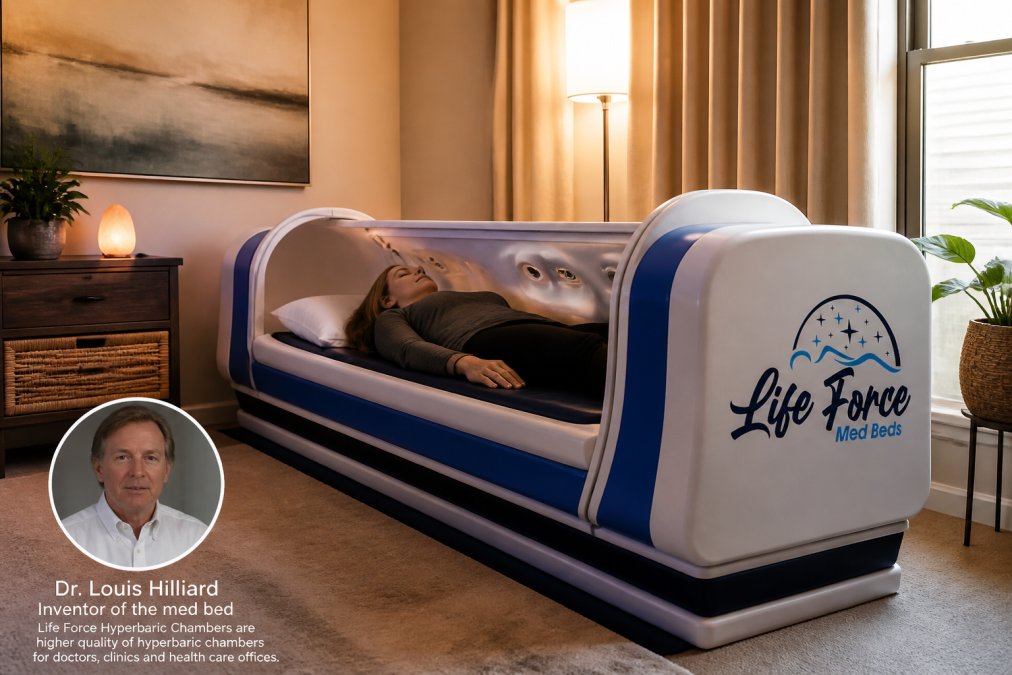
Life Force MedBeds exemplify this integration, combining bioresonance, bioimpedance sensing, frequency and Rife-based systems, red and near-infrared light, PEMF, vibration, sound therapy, meditation guidance, grounding concepts, and oxygen therapy into a single platform. When bioresonance assessment identifies specific imbalances, an integrated system can immediately apply targeted light frequencies, PEMF patterns, sound therapy, and vibrational frequencies all calibrated to address the same dysfunction. This synergistic approach potentially produces greater therapeutic effect than any single modality alone.
For individuals already using separate devices, the consolidation question is practical: does combining these into one system add value beyond convenience? An integrated system coordinates frequency delivery, sequences modalities for maximum synergy, and captures comprehensive biometric data that informs real-time treatment adaptation, impossible with standalone devices.
The Evidence Question: What Science Actually Shows
The evidence landscape for personalized bioresonance therapy is genuinely mixed, requiring acknowledgment of both promising research and significant skepticism from mainstream medicine.
Promising Research vs. Mainstream Skepticism
Research supporting bioresonance therapy comes primarily from integrative medicine journals, conference presentations, and small-scale clinical observations rather than large randomized controlled trials published in mainstream medical journals. Studies that do exist show measurable improvements in specific conditions, but most suffer from small sample sizes, lack of blinding, and absence of control groups.
The theoretical foundation, that disease represents a "frequency distortion" correctable by electromagnetic intervention, has not been validated by conventional physics or biology. Most healthcare professionals agree that bioresonance cannot diagnose or treat medical conditions or illnesses. At best, there is currently no clear evidence for the use and effectiveness of bioresonance.
Yet research continues. The global personalized medicine market size was valued at several billion dollars in 2020 and is anticipated to reach substantially higher value by 2025, with bioresonance representing a growing niche (Patsnap Eureka Bioresonance in Personalized Medicine, 2025). Europe leads the bioresonance therapy equipment market with a 40-45% share, while the Asia-Pacific region holds 30-33%, driven by wellness trends.
The honest position is this: personalized bioresonance therapy shows promise in preliminary research and generates measurable clinical observations, but lacks the large-scale, rigorously controlled evidence required to establish it as a validated medical treatment. For individuals interested in exploring it, the appropriate framework is as a complementary tool used alongside conventional care, not as a replacement for evidence-based diagnosis and treatment.
Safety Profile and Side Effects
One genuine advantage of personalized bioresonance therapy is its safety profile. Unlike pharmaceutical interventions, which carry documented risks of serious adverse effects, bioresonance therapy is non-invasive and produces minimal side effects in the available literature.
The most commonly reported experiences are mild and temporary: slight fatigue, detoxification-like symptoms, or emotional releases following treatment. Serious adverse events are essentially absent from the bioresonance literature, which is a meaningful distinction from many conventional medical interventions.
However, the safety profile does not validate therapeutic efficacy. A treatment can be perfectly safe and still ineffective. For individuals with implanted medical devices (pacemakers, insulin pumps, neurostimulators), electromagnetic therapies generally warrant caution and professional consultation.
Bioresonance therapy should never replace conventional diagnosis and treatment for serious medical conditions. While the safety profile is excellent, the evidence for therapeutic efficacy remains limited. Use it as a complementary tool within a broader health strategy, not as a substitute for evidence-based medical care.
Personalized Bioresonance Therapy for Optimization and Prevention
Beyond therapeutic application for diagnosed conditions, personalized bioresonance therapy appeals strongly to the optimization and prevention market. Healthy individuals seeking to enhance performance, prevent disease, and optimize their physiological state represent a large and growing audience for wellness technology.
The optimization application focuses on detecting and correcting subtle imbalances before they manifest as symptoms or disease. By measuring electromagnetic signatures regularly, individuals can identify emerging patterns, early adrenal stress, thyroid sluggishness, hormonal fluctuations, or inflammatory trends, and intervene preventively. This aligns with the broader shift toward preventive and personalized healthcare.
For the biohacking and performance-optimization community, personalized bioresonance therapy offers a data-driven approach to understanding one’s own physiology. Rather than relying on general health guidelines, individuals can obtain personalized assessments and customize their wellness protocols based on their unique electromagnetic profile.
In Atlanta, wellness practitioners increasingly market personalized bioresonance therapy as a preventive tool for health-conscious professionals and executives seeking to maintain peak performance and prevent age-related decline.
Conclusion
Personalized bioresonance therapy represents a growing intersection of frequency medicine, electromagnetic biology, and personalized health optimization. The science underlying the approach remains controversial, with promising preliminary research offset by significant skepticism from mainstream medicine. However, the safety profile, the appeal to prevention-minded consumers, and the integration with other complementary modalities make it a meaningful option for individuals seeking non-invasive wellness support.
The honest assessment is that personalized bioresonance therapy works best as a complementary tool used alongside conventional care, not as a replacement for evidence-based diagnosis and treatment. For optimization and prevention in healthy individuals, the risk-benefit profile is favorable, supporting experimentation and self-directed exploration.
Dr. Louis Hilliard, the inventor of the med bed, pioneered the integration of multiple therapeutic modalities into unified wellness platforms. Life Force MedBeds build on this foundation, combining bioresonance assessment with complementary technologies to create comprehensive personalized wellness experiences. For those in Atlanta seeking professional guidance on bioresonance therapy and integrated wellness technology, Atlanta Hyperbaric Center provides clinical expertise in complementary therapies, and Hyperbaric Business Solutions offers consultation on integrating multiple modalities into comprehensive wellness protocols. Life Force Hyperbaric Chambers represent higher quality hyperbaric technology for doctors, clinics, and health care offices seeking to consolidate multiple therapeutic modalities into professional-grade systems.
The shift toward personalized medicine demands tools that can assess and monitor individual variation in real time. Personalized bioresonance therapy, particularly when integrated into comprehensive wellness platforms, addresses this need by providing electromagnetic assessment, targeted frequency intervention, and continuous biofeedback monitoring. Whether you’re exploring optimization, managing a chronic condition, or building a comprehensive wellness strategy, understanding how bioresonance therapy works and what evidence supports its use positions you to make informed decisions about whether it belongs in your health toolkit.
Frequently Asked Questions
Is there scientific evidence for personalized bioresonance therapy?
Evidence is mixed. Preliminary studies show promise in specific areas: a 15% increase in treatment efficacy for hormonal disorders when bioresonance combines with traditional therapy, and a 20% improvement in hormone absorption with bioresonance-enhanced delivery systems. Research on fibromyalgia and depression shows measurable improvements in symptom scores. However, major medical organizations note that most claims lack robust clinical validation. The field represents an emerging area where preliminary data exists but large-scale, peer-reviewed trials remain limited.
How does personalized bioresonance differ from standard frequency therapy?
Personalized bioresonance uses bioimpedance and diagnostic scanning to identify your individual electromagnetic imbalances, then tailors frequency protocols to your specific biophysical markers. Standard frequency therapy applies preset frequencies to all users. Personalized approaches account for differences in metabolic pathways, cellular resonance patterns, and individual stress responses, allowing treatment to target your unique energy field distortions rather than applying one-size-fits-all frequencies.
What are the side effects of bioresonance therapy?
Bioresonance is generally considered non-invasive and drug-free with minimal reported side effects. Some users report temporary detoxification responses or mild fatigue during initial sessions as the body adjusts to frequency stimulation. Serious adverse events are rare. However, it is not recommended as a standalone treatment for serious conditions like cancer, and should never replace conventional medical care. Always consult a qualified healthcare provider before starting, especially if you have implanted devices or take medications.
How does Dr. Louis Hilliard's MedBed technology integrate bioresonance with other therapies?
Dr. Louis Hilliard invented the med bed as an integrated wellness platform combining bioresonance, bioimpedance sensing, PEMF, red and near-infrared light, sound frequency therapy, and grounding concepts into one system. Rather than using separate devices, the MedBed creates a unified therapeutic environment where bioresonance scanning informs personalized frequency delivery, while complementary modalities like light and vibration work synergistically to support cellular resonance and homeostasis. This integration allows real-time biofeedback and adaptive treatment protocols.
What role does bioimpedance play in personalized wellness systems?
Bioimpedance measures how your body's tissues conduct electrical current, revealing hydration status, cellular health, and metabolic function. In personalized bioresonance systems, bioimpedance scanning detects energetic distortions and provides baseline data on your biophysical markers. This information guides the system to deliver targeted frequencies that address your specific imbalances rather than generic protocols. Bioimpedance also tracks changes over time, allowing the system to adapt treatment as your body's resonance improves.
Can bioresonance therapy be used alongside conventional medical treatment?
Yes, bioresonance is designed as a complementary resource that integrates into broader therapeutic pathways alongside conventional care, not as a replacement. Growing numbers of integrative medicine practitioners combine bioresonance with standard treatments for hormonal disorders, chronic pain, and stress-related conditions. However, inform your primary care physician about any complementary therapy you use, especially if you take medications or have serious health conditions. Bioresonance should enhance, not substitute for, evidence-based medical care.
How much time per week do you need to spend using bioresonance therapy to see results?
Response varies by individual and condition. Some users report benefits after 2-3 sessions weekly for 20-30 minutes, while others use systems daily for 45-60 minutes. The personalized approach means your protocol adapts to your needs and schedule. Home-based systems like the Life Force MedBed allow flexible integration into your routine. Starting with 2-3 weekly sessions and adjusting based on your biofeedback data and how you feel is a common approach for optimization-focused users.
This article was written using GrandRanker
