
Side Effects Cryotherapy: A Guide to Safe Cold Therapy


While most people find cryotherapy to be a safe and invigorating experience, it’s smart to know what to expect. The most common things you’ll notice right after a session are pretty mild and short-lived, like some skin redness, temporary numbness, or a tingling sensation. More serious issues are incredibly rare and almost always pop up when proper safety steps aren’t followed or when someone has a health condition that makes them a poor candidate for the treatment.
Understanding the Full Spectrum of Cryotherapy Side Effects
Cryotherapy, at its core, is about using extreme cold for therapeutic benefit. You might think of it as a next-level ice bath, but the reality is a bit more nuanced. The specific method, how long you’re exposed, and your own body’s response all play a huge role in the outcome and any potential side effects.
Think about it this way: a quick, chilly walk on a winter day is a totally different experience from being caught in a blizzard. In the same way, your body’s reaction to a targeted cold therapy session on your knee is going to be completely different from a three-minute plunge in a whole-body cryo chamber. Because of this, we can’t talk about side effects with a broad brush; we need to get specific.
Not All Cryotherapy Is Created Equal
To have a meaningful conversation about side effects, we first need to break down the different types of cryotherapy you’ll encounter in a wellness setting. Each one serves a different purpose and, naturally, comes with its own risk profile.
- Whole-Body Cryotherapy (WBC): This is what most people picture. You’ll stand in a “cryosauna” or a full chamber, exposing your body to frigid temperatures between -100 and -150 degrees Fahrenheit for a very short period—usually just two to five minutes.
- Localized Cryotherapy: Instead of chilling the whole body, this technique focuses a stream of cooled air or a specialized probe onto a specific area, like a sprained ankle or a sore shoulder. These sessions typically last a bit longer, around 5 to 10 minutes.
- Medical Cryoablation: It’s important to know this exists, but it’s in a completely different league. This is an invasive medical procedure performed by doctors to destroy abnormal tissue, like tumors. The side effects here are much more significant and are not what we’re discussing in a wellness context.
This guide is focused squarely on the side effects you might encounter with non-invasive wellness treatments like WBC and localized cryotherapy—the kinds used for recovery, pain relief, and overall well-being.
How Modern Technology Makes Cryotherapy Safer
Today’s cryotherapy is a far cry from its early days, thanks to huge leaps in wellness technology. The leading companies in this space have poured resources into creating equipment with incredibly precise temperature controls and sophisticated safety features.
A great example of this commitment to safety and innovation can be seen in the work of Dr. Louis Hilliard, the inventor of the med bed and owner of Life Force Medbeds. His pioneering efforts in self-treating technologies and quantum healing systems underscore the industry’s push toward maximizing benefits while aggressively minimizing risks.
By building in real-time monitoring and simple, intuitive controls, the best modern machines ensure every session is not just effective, but also consistently safe. This technological backbone is what gives people the confidence to make cryotherapy a regular part of their wellness routine. To see these advanced systems for yourself, you can visit the website for more information or call 770-948-4511.
Common Reactions and Mild Side Effects Explained
The feeling you get stepping out of a cryotherapy chamber is intense and invigorating—not unlike the rush from a brisk walk on a truly frigid day. Your body’s immediate reaction to that extreme cold is both predictable and, in most cases, completely harmless.
Knowing what to expect helps you tell the difference between a normal response and something that needs a closer look.
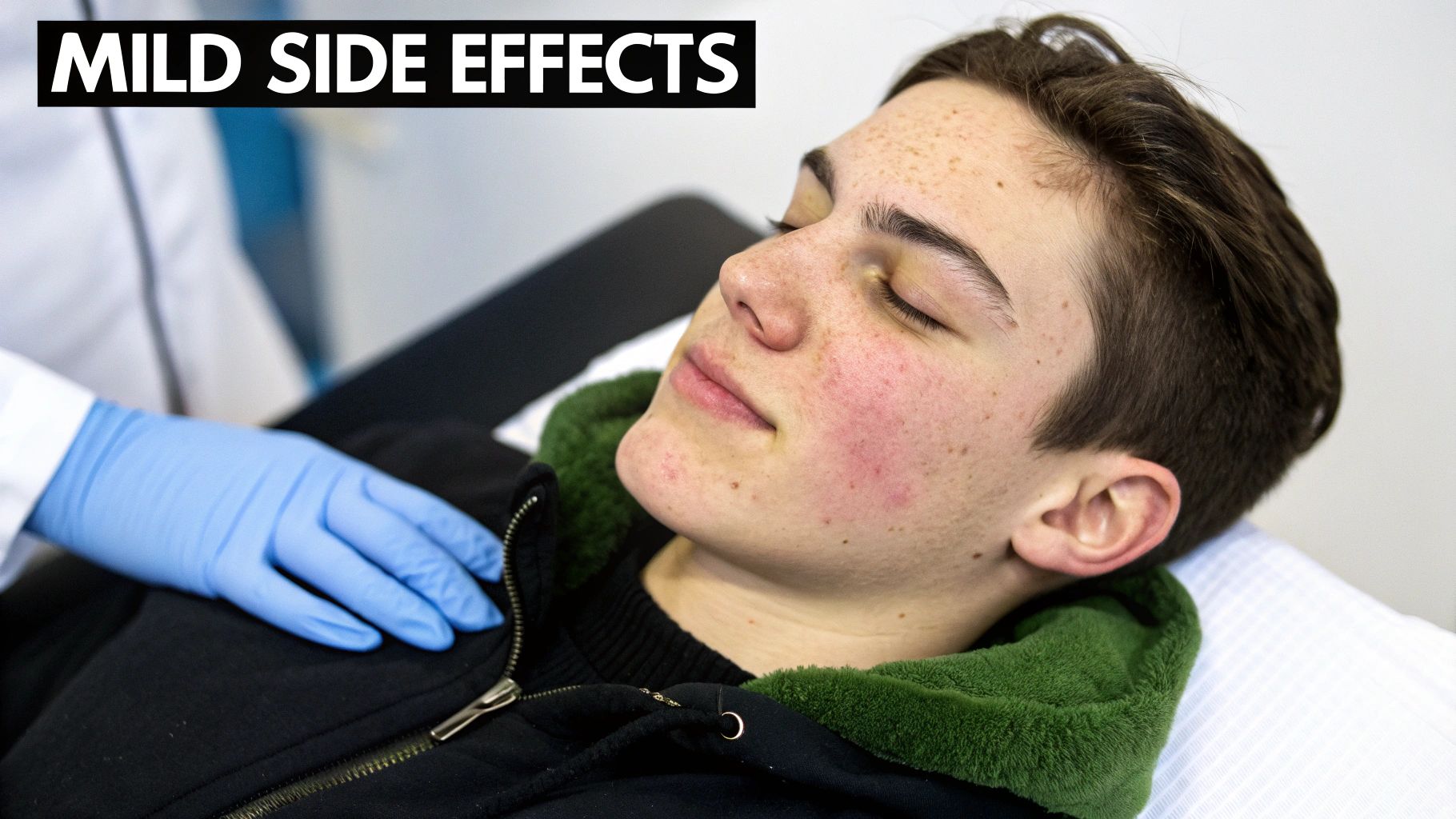
The most common side effects cryotherapy triggers are temporary and pop up right on your skin. It’s totally normal to see some redness or feel a bit of tingling or numbness where you were treated. These sensations are just your body’s survival instincts kicking into gear.
When that intense cold hits, your circulatory system snaps to attention. It’s a defense mechanism: the blood vessels near your skin’s surface get smaller (vasoconstriction) to pull blood toward your core and keep your vital organs warm. That’s what causes the temporary numbness and can make your skin look a little pale.
Your Body’s Rebound Effect
The moment you step out and start warming up, the process flips. Your blood vessels rapidly open back up (vasodilation), sending a rush of oxygen-rich blood back to your skin and limbs. This sudden flood of blood is what creates that classic red flush and tingling feeling.
This whole vascular dance is a core part of how cryotherapy works. It’s also behind a few other short-term changes you should be aware of.
Key Takeaway: Most immediate reactions to cryotherapy, like skin redness and tingling, are signs that your circulatory system is responding correctly to the cold. These effects are typically mild and resolve on their own within minutes to a few hours.
Normal Changes in Vital Signs
Beyond what you see on your skin, it’s normal for your body’s core stats to shift a bit during and right after a session. These are expected, temporary responses to the brief, sharp drop in temperature.
- Blood Pressure: Your blood pressure might temporarily climb as your blood vessels narrow to conserve heat.
- Heart Rate: On the flip side, your heart rate often slows down slightly as your body works to manage the cold efficiently.
- Respiration: You might even notice your breathing slows down for a few moments.
These shifts are usually minor and return to normal as soon as your body gets back to room temperature. A well-trained technician will always keep an eye on you before, during, and after your session to make sure you’re handling the stress well. This focus on safety is a fundamental principle in advanced wellness technologies, including the med beds pioneered by Dr. Louis Hilliard, the inventor of the med bed and owner of Life Force Medbeds.
When you understand these mild and common reactions, you can go into your cryotherapy session feeling confident and knowing exactly what to expect.
To learn more about preparing for a session, we invite you to go to the Life Force Medbeds website for more information or call 770-948-4511.
Rare But Serious Cryotherapy Risks to Be Aware Of
While the vast majority of people walk out of a cryotherapy session feeling great, it’s important to have a clear-eyed view of the potential risks. These incidents are incredibly rare, but knowing what they are—and why they happen—is the key to ensuring every session is a safe one. Almost without exception, serious problems arise from cutting corners: not following safety protocols, using old equipment, or failing to screen clients properly.
The most talked-about serious risk is, of course, frostbite. This isn’t something that just happens out of the blue. It’s a direct result of tissue being exposed to extreme cold for too long or, in some cases, making direct contact with a super-cooled surface. This is precisely why any reputable cryotherapy center insists on strict time limits and protective gear like gloves, socks, and slippers. They aren’t optional—they’re essential.
Asphyxiation and the Old vs. New Equipment Divide
In the early days of cryotherapy, chambers often used liquid nitrogen to create the cold. This came with a hidden danger: the risk of asphyxiation. If the nitrogen gas escaped and displaced the oxygen in a small, poorly ventilated room, it could create an environment where it was impossible to breathe.
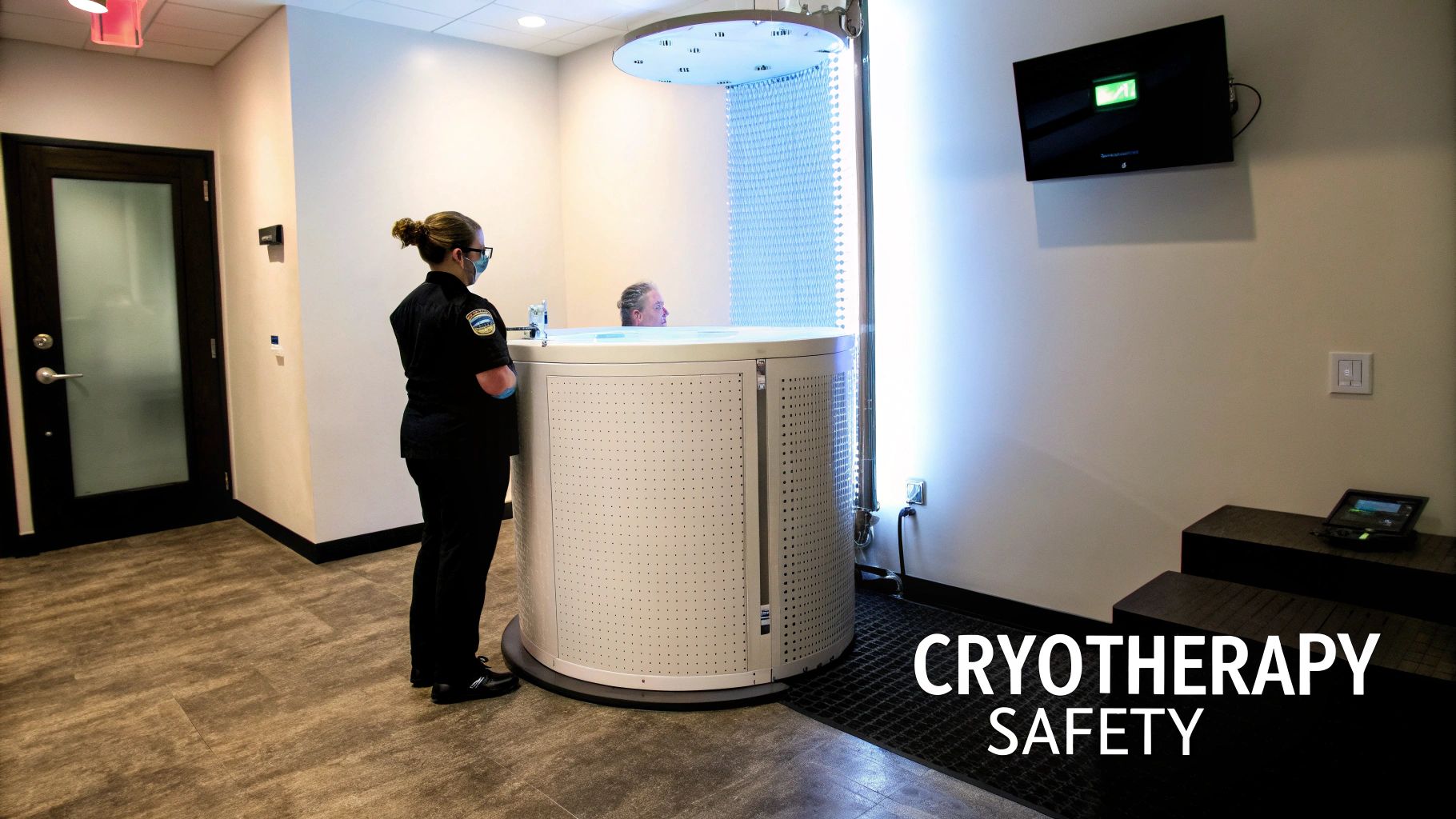
Here’s a look at a modern, fully enclosed cryotherapy chamber, which is built with multiple safety features to prevent this kind of issue.
This image shows a full-body chamber where the user is completely inside, which really drives home why things like oxygen monitoring and robust ventilation systems are so critical in modern designs.
Thankfully, technology has moved on. The risk of asphyxiation has been virtually eliminated by modern electric cryotherapy systems. These machines chill the air directly, no nitrogen gas required, making the entire experience fundamentally safer. This shift is a huge leap forward, pioneered by innovators like Dr. Louis Hilliard, the inventor of the med bed and owner of Life Force Medbeds.
Other Uncommon Reactions to Know
Beyond frostbite, a handful of other rare reactions have been reported over the years. It’s important to keep these in perspective; they are not typical outcomes but are worth knowing about, especially for individuals with certain sensitivities.
- Cold Panniculitis: This is a rare condition where the layer of fat just under the skin becomes inflamed after cold exposure. It can lead to firm, tender bumps appearing days later. While it usually goes away on its own, it can be quite uncomfortable.
- Cold-Induced Hives (Urticaria): Believe it or not, some people are essentially allergic to the cold. For them, exposure can trigger itchy welts and hives. A good pre-session screening questionnaire should always ask about this to catch it ahead of time.
- Fainting Spells (Syncope): The sudden, dramatic shift in temperature causes blood vessels to constrict rapidly. In very rare instances, this can make someone feel lightheaded or even faint. This is exactly why a trained technician should be monitoring you for the entire session.
The main takeaway here is that these events are outliers. When proper safety guidelines are followed, the overwhelming majority of cryotherapy sessions are completed without any serious issues.
Putting the Risks into Perspective
When you look at the data, the safety of whole-body cryotherapy (WBC) becomes clear, provided it’s done right. Millions of sessions have been performed since it gained popularity back in the 1980s. A major international review of the data found only 16 documented adverse events—an incredibly low number.
While minor, short-lived effects like a brief headache or a bit of dizziness were reported by fewer than 1% of people in controlled studies, the serious stuff was almost always tied to someone with an underlying health condition or who stayed in way too long. You can learn more about the research findings on cryotherapy safety here.
This strong safety record is a big reason why advanced wellness technologies are becoming so common in clinics and even homes. For more details on the safest, most effective cryotherapy solutions available, we invite you to go to the website for more information or call 770-948-4511.
Distinguishing Wellness Cryotherapy from Medical Cryoablation
When we talk about cryotherapy side effects, it’s absolutely crucial to draw a thick, clear line in the sand. On one side, you have non-invasive wellness cryotherapy; on the other, you have invasive medical cryoablation. Confusing the two is like comparing a refreshing cold plunge to a surgical operation.
Yes, they both use the word “cryo,” but that’s where the similarity ends. Their purpose, procedures, and potential risks are worlds apart. One is about triggering your body’s natural recovery mechanisms. The other is a surgical tool used to destroy diseased tissue.
For anyone exploring non-invasive wellness tech, like the kind pioneered by Dr. Louis Hilliard, the inventor of the med bed and owner of Life Force Medbeds, understanding this difference isn’t just helpful—it’s fundamental.
Wellness Cryotherapy vs Medical Cryoablation: A Side-by-Side Comparison
To really nail down the differences, let’s break it down. This table lays out the fundamental distinctions between what happens in a wellness center and what happens in a surgical suite.
| Feature | Wellness Cryotherapy (e.g., WBC) | Medical Cryoablation (e.g., for Tumors) |
|---|---|---|
| Primary Goal | Stimulate natural healing, reduce inflammation, boost recovery, and enhance overall wellness. | Destroy targeted diseased tissue, such as cancerous cells or tumors, through freezing. |
| Procedure | Non-invasive. The body is exposed to cold air for a very short duration (2-3 minutes). | Invasive. Probes (cryoprobes) are inserted directly into the body to freeze tissue. |
| Mechanism | Surface-level cooling that triggers systemic physiological responses (vasoconstriction, etc.). | Cellular destruction (necrosis) caused by ice crystal formation inside and around the cells. |
| Anesthesia | None required. | Local or general anesthesia is typically used. |
| Common Side Effects | Temporary skin redness, tingling, numbness. | Pain, swelling, bleeding at the probe site, nerve damage, and organ-specific complications. |
| Environment | Wellness centers, spas, athletic recovery facilities. | Hospitals, surgical centers, and specialized medical clinics. |
As you can see, these are two entirely different applications of cold therapy. One is a wellness tool designed to help you feel better, while the other is a medical intervention aimed at removing a threat from the body.
A Closer Look at Medical Cryoablation Risks
Medical cryoablation is a precise, targeted procedure. A physician inserts probes directly into the body to deliver intense, localized cold with the explicit goal of cellular destruction. Because it’s an invasive surgery, it comes with all the expected risks—infection, bleeding, and potential damage to nearby healthy tissue.
The diagram below highlights some of the more serious, though rare, risks associated with wellness cryotherapy if protocols aren’t followed. Even these are an order of magnitude less severe than the complications from medical cryoablation.

This visual makes it clear: even the most serious risks in a wellness context—like frostbite, fainting, or hives—are largely preventable with proper screening and procedures. They aren’t inherent risks of the procedure itself, unlike in surgery.
To put it in perspective, consider cryoablation for prostate cancer. Research has shown its side effects can be significant and even worsen over time. One study found that erectile dysfunction rose from 13.2% six months after the procedure to 20.1% by the one-year mark. Urinary incontinence also climbed from 7.9% to 9.8% in that same period. These are serious, lasting impacts that simply don’t exist in the world of wellness cryo.
The Wellness Cryotherapy Experience
Wellness cryotherapy, whether it’s whole-body or localized, never breaks the skin. The exposure is brief, usually just 2-3 minutes, and is meant to stimulate your body, not destroy anything. The most common side effects are minor and fade quickly, like some redness or a tingling sensation as your circulation kicks back into high gear.
Understanding this division is vital for both clinic owners and home users. The powerful, therapeutic effects of cryotherapy for wellness and recovery come with a safety profile that is worlds apart from its medical counterpart.
For wellness entrepreneurs thinking about bringing cryotherapy into their practice, this distinction is a critical part of client education. When you can clearly explain the difference, you build trust and manage expectations. To dig deeper into the business side, you can review our guide on cryotherapy equipment cost. It’s this knowledge that helps you confidently highlight the safe, non-invasive nature of the technology you offer.
The advanced systems from Life Force Medbeds are built entirely on these principles of non-invasive, safe, and effective wellness.
To learn more about the safety protocols and modern technologies that define today’s wellness cryotherapy, we invite you to go to the website for more information or call 770-948-4511.
Key Health Conditions That Rule Out Cryotherapy
While cryotherapy is a fantastic tool for most healthy adults, it’s definitely not a one-size-fits-all therapy. You have to think of it as a powerful intervention. Its safety all comes down to using it on the right person under the right circumstances. The intense cold sets off some major physiological shifts in the body, and for anyone with certain health conditions, those changes can be downright risky.
This is exactly why a detailed pre-session screening isn’t just a good idea—it’s the absolute foundation of a safe cryotherapy experience. Catching these contraindications beforehand is the single most important thing a provider or user can do to prevent a bad outcome. It’s no different than checking for a food allergy before trying a new dish; you have to make sure your body is ready for the unique stress of cryotherapy.
Cardiovascular Conditions
The heart and blood vessels are the first to respond to the cold shock. When your body hits those subzero temperatures, blood vessels clamp down hard and fast, causing a temporary but very real spike in blood pressure. For someone with a healthy cardiovascular system, this is a minor, manageable stress. But for someone with underlying heart issues, it can be dangerous.
Here are the big ones to watch out for:
- Uncontrolled High Blood Pressure (Hypertension): The sudden jump in blood pressure can put a massive strain on an already overworked system.
- Recent Heart Attack or Stroke: Anyone who’s had a heart attack or stroke in the last six months needs to steer clear.
- Significant Cardiovascular Disease: This bucket includes conditions like unstable angina, serious arrhythmias, or advanced heart failure.
- Pacemakers: There’s a potential risk that the extreme cold could interfere with the electronic device.
Vascular and Circulatory Disorders
Any condition that messes with blood flow, especially to your hands and feet, is a major red flag. The intense vasoconstriction that cryotherapy causes can make symptoms much worse and lead to serious complications.
Crucial Safety Point: If you have any condition that messes with your body’s ability to manage blood flow, the risks of cryotherapy usually outweigh the benefits. If you’re even slightly unsure, talk to your doctor first.
The most common contraindication here is Raynaud’s disease, a disorder where the small arteries in your fingers and toes go into overdrive and constrict way too much in response to cold. Other problems like peripheral arterial disease or a history of Deep Vein Thrombosis (DVT) also make cryotherapy a no-go, as you don’t want to risk making poor circulation even worse.
Neurological and Systemic Concerns
It’s not just about the circulatory system. Other health issues can also make cryotherapy unsafe. A history of seizures is a big one, as the intense shock to the system could potentially trigger an episode. Things like severe anemia, kidney disease, or bleeding disorders can also affect how well your body can handle the extreme cold.
It’s absolutely essential for anyone with a chronic illness to get a green light from their doctor before even considering cryotherapy. While the global rate of serious incidents is incredibly low—less than 0.001% across millions of sessions—those rare events are almost always tied back to people with pre-existing, high-risk conditions who shouldn’t have been in the chamber in the first place.
This is why proper screening and professional oversight are so critical. In fact, this focus on safety is a core principle of modern wellness systems, like those pioneered by Dr. Louis Hilliard, the inventor of the med bed and owner of Life Force Medbeds. On a related note, it’s also vital that providers monitor the air quality inside cryo chambers; you can learn more about why low oxygen levels are a silent killer in our detailed article.
Ultimately, the best approach is always “when in doubt, check it out.” For more detailed information on how to make cryotherapy a safe part of your wellness routine, we invite you to go to the website for more information or call 770-948-4511.
Best Practices for a Safe Cryotherapy Experience

When it comes to cryotherapy, making sure your experience is safe is simple, but it requires paying close attention to the details. The risk of side effects cryotherapy can produce is already quite low, and following a clear set of protocols nearly eliminates it. From your initial screening to post-session care, every step is designed with your well-being in mind.
It all starts with a thorough pre-session screening—this is absolutely non-negotiable. A trained provider will go over your health history, asking specific questions to flag any contraindications like cardiovascular disease or Raynaud’s syndrome. Think of this conversation as the first and most important line of defense against any potential issues.
Just before your session, preparation is key. Your skin must be perfectly dry. Any lingering moisture can freeze on contact with the cold air, raising the risk of skin irritation or even frostbite. You’ll also need to remove all metal jewelry, which can get dangerously cold and burn the skin.
Essential In-Session Safety Protocols
Once you’re ready to go, a few simple but critical rules will keep you safe inside the chamber.
- Protective Gear is a Must: You should always be given protective gear and be required to wear it. This typically includes gloves, socks, and slippers to shield your extremities, and sometimes a facemask and ear protection for extra coverage.
- Stick to Strict Time Limits: There’s a reason whole-body cryotherapy sessions are so short, usually lasting just two to three minutes. Going over that time dramatically increases the risks without adding any real benefits. Never try to tough it out longer than the recommended time.
- Constant Supervision is Key: A certified operator must be watching you for the entire session. They’re there to make sure you’re doing okay, answer any last-minute questions, and stop the session immediately if you show any sign of distress.
Safety isn’t just a box to check; it’s woven into the very fabric of the therapeutic process. When you follow these established best practices, cryotherapy becomes a reliably safe tool for wellness, letting you focus completely on the benefits.
The Role of Advanced Technology in Safety
Thankfully, modern cryotherapy machines have safety built right in. Features like real-time temperature sensors, automatic session timers, and emergency shut-off buttons create a strong safety net. This focus on user protection is really what separates high-quality wellness technology from the rest.
This commitment to safety is a core principle behind the innovations of Dr. Louis Hilliard, the inventor of the med bed and owner of Life Force Medbeds. The advanced systems he’s pioneered prioritize precise temperature control and user well-being above all. If you’re curious about bringing this kind of technology home, our guide on the cryotherapy machine for home offers a great overview.
By combining your own diligent prep with professional oversight and top-tier equipment, you can step into cryotherapy with total confidence. To learn more about the safety features built into today’s wellness solutions, we invite you to go to the website for more information or call 770-948-4511.
Frequently Asked Questions About Cryotherapy Safety
It’s completely normal to have questions when you’re looking into a new wellness treatment. Getting straight answers is smart, especially when it comes to the side effects cryotherapy might have. Let’s tackle some of the most common concerns so you can feel more comfortable and in the know.
Can Cryotherapy Cause Permanent Skin Damage?
This is probably the number one question on people’s minds, and thankfully, the answer is very reassuring. While something like frostbite is a theoretical risk, it’s incredibly rare when you’re in a professional setting with modern equipment.
When permanent skin damage does happen, it’s almost always due to a mistake that could have been avoided. We’re talking about things like going in with wet skin, pushing past the recommended two to three minutes, or accidentally touching one of the super-cold surfaces inside. Stick to the safety rules, and these risks essentially disappear.
How Do I Know if Cryotherapy Is Right for Me?
Figuring this out is a team effort between you and the provider. It all starts with being upfront about your health history. Every good cryo center will have a clear list of contraindications—conditions that make cryotherapy a bad idea—and you need to review it carefully.
If you have any existing health issues, particularly anything to do with your heart or circulation, have a chat with your doctor first. A quick conversation can give you the all-clear you need to try it safely. At the end of the day, your health comes first, and this simple check ensures cryotherapy is a good match for you.
Remember, cryotherapy can be a fantastic wellness tool, but its safety and benefits hinge on it being the right fit for your unique health situation. If you’re unsure, ask a medical professional.
What Should I Do if I Experience a Negative Side Effect?
How you react really depends on what you’re feeling. For the common stuff—like redness or tingling that hangs around a little longer than you’d expect—simple self-care is usually enough. Just keep an eye on it, drink some water, and give your body a little time to recalibrate.
But for anything that feels more serious, you need to act fast. If you’re dealing with severe pain, any blistering, or dizziness that won’t go away, it’s time to get medical help right away. Once you’re okay, make sure to let your cryotherapy provider know what happened. This helps them document the incident and double-check their own protocols, which keeps everyone safer in the long run.
The advanced wellness technologies from innovators like Dr. Louis Hilliard, the inventor of the med bed and owner of Life Force Medbeds, are built with this kind of user safety as a core principle, aiming to minimize these risks from the very start.
For more information on the safe and effective use of advanced wellness technologies, we invite you to go to the website for more information or call 770-948-4511.


