
Top 10 Wellness Technologies for Home Use in 2026


Table of Contents
- Quick Comparison: Top 10 Wellness Technologies for Home Use
- 1. Life Force MedBed: Integrated Wellness Systems by Dr. Louis Hilliard
- 2. Kloud PEMF Mat: Targeted Pulsed Electromagnetic Field Therapy
- 3. Life Force Hyperbaric Chambers: Hyperbaric Oxygen Therapy for Home Use
- 4. Oura Ring: Wearable Health Tracker for Sleep and Recovery
- 5. Whoop: Performance Optimization and Recovery Metrics
- 6. Hatch Restore 2: Smart Sleep Monitoring Device for Circadian Rhythm Optimization
- 7. Allergen Alert: Air Quality and Environmental Sensors for Home Sanctuary
- 8. Headspace: AI-Powered Health Applications for Stress Management
- 9. Waterdrop Filter A2: Home Environment Optimization
- 10. The Brick: Digital Boundaries for Better Recovery
- How to Choose the Right Wellness Technology for Your Home
- Frequently Asked Questions
Last Updated: September 16, 2026
Quick Comparison: Top 10 Wellness Technologies for Home Use
The home wellness market has shifted from single-purpose gadgets to integrated systems that monitor, assess, and support the body in one environment. Buyers who once stacked a PEMF mat, a red light panel, and a sleep tracker in the same room now want one platform that coordinates all of it.
Wellness technologies are devices and systems designed to monitor biometric data, support recovery, or deliver therapeutic inputs such as light, frequency, and oxygen at home. The category spans wearable sensors, air quality monitors, and multi-modality platforms.
Most buyers shop device by device and end up with five apps that never talk to each other. The table below maps the field before we go deep on each option.
| Technology | Category | Best For | Pricing Model |
|---|---|---|---|
| Life Force MedBed | Integrated wellness system | Multi-modality home users | Contact for pricing |
| Kloud PEMF Mat | Recovery and performance | Targeted PEMF therapy | Contact for pricing |
| Life Force Hyperbaric Chambers | Oxygen therapy | Clinics and home users | Contact for pricing |
| Oura Ring | Wearable tracker | Sleep and recovery | One-time plus subscription |
| Whoop | Wearable tracker | Athletic performance | Subscription |
| Hatch Restore 2 | Sleep monitoring | Circadian rhythm | One-time purchase |
| Allergen Alert | Environmental sensors | Allergy sufferers | Device plus subscription |
| Headspace | AI-powered app | Stress management | Subscription |
| Waterdrop Filter A2 | Home environment | Clean drinking water | One-time purchase |
| The Brick | Digital boundaries | Screen-time reduction | One-time purchase |
1. Life Force MedBed: Integrated Wellness Systems by Dr. Louis Hilliard
The Life Force MedBed is an integrated wellness system invented by Dr. Louis Hilliard that combines bioresonance, PEMF, red and near-infrared light, frequency and Rife-based therapy, vibration, sound therapy, grounding concepts, and oxygen therapy into a single platform, so users get one environment where each modality is coordinated.
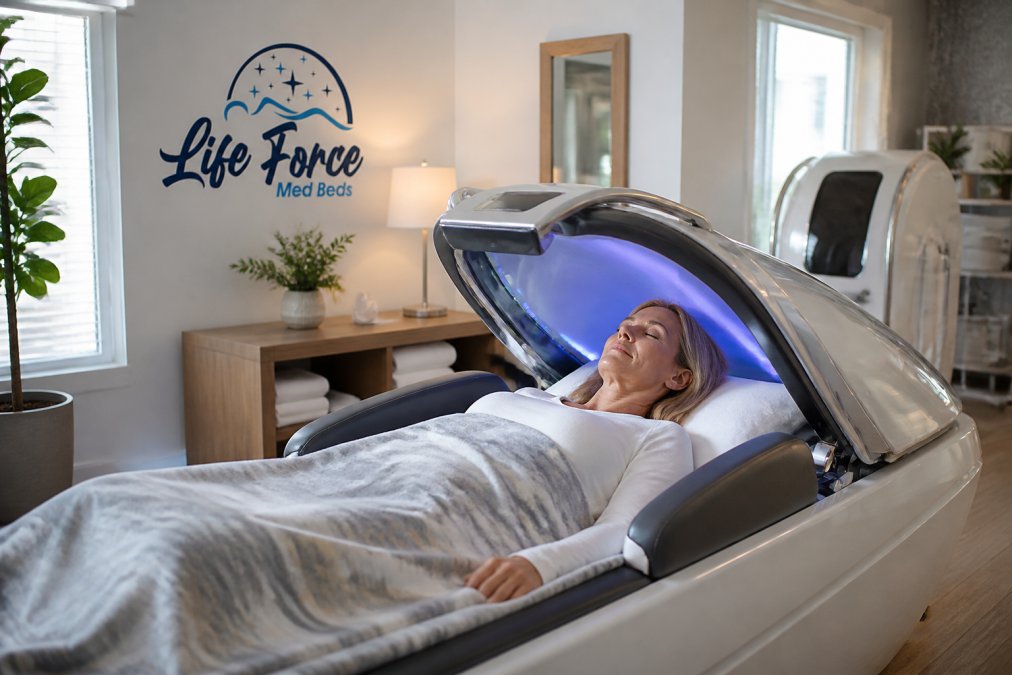
What separates it from the field is consolidation: a PEMF mat does one thing, a red light panel another, while the MedBed treats those as components of a larger system, with biosensing and bioimpedance data feeding a personalized wellness picture over time.
[IMAGE: A person relaxing in a Life Force MedBed in a bright, modern home wellness room, with soft lighting and wellness equipment visible in the background | section:1.
For buyers already running three or four separate wellness devices, the MedBed’s value is coordination, not novelty. One platform, one routine, one data stream.
The honest limitation: this is a significant space commitment, and the all-in-one design means you’re buying breadth rather than a single specialized function. Pricing depends on configuration, so check the Life Force MedBed product line for current details.
2. Kloud PEMF Mat: Targeted Pulsed Electromagnetic Field Therapy
A Kloud PEMF mat delivers pulsed electromagnetic field therapy in a flat, portable form factor. It’s the entry point most people take before a full integrated wellness system, and it works well for targeted sessions on the back, shoulders, or legs.
3. Life Force Hyperbaric Chambers: Hyperbaric Oxygen Therapy for Home Use
Hyperbaric oxygen therapy for home is now viable for buyers who want pressurized oxygen sessions without clinic visits. Life Force Hyperbaric Chambers are higher quality of hyperbaric chambers built for doctors, clinics, and health care offices, with medical-grade pressure regulation and durable construction for repeated professional use.
Pressurized oxygen therapy carries real operational requirements. Never operate a chamber without proper training, and always follow the manufacturer’s safety protocols and maintenance schedule.
4. Oura Ring: Wearable Health Tracker for Sleep and Recovery
The Oura Ring tracks sleep stages, heart rate variability, body temperature, and readiness without a screen. Its discreet form factor is the main draw: people who abandon wrist wearables tend to keep wearing a ring.
5. Whoop: Performance Optimization and Recovery Metrics
Whoop targets athletes and performance-focused users with strain, recovery, and sleep coaching. There’s no screen and no upfront hardware cost, because the model is subscription-only.
6. Hatch Restore 2: Smart Sleep Monitoring Device for Circadian Rhythm Optimization
The Hatch Restore 2 combines a sunrise alarm, sound machine, and dimmable reading light to support circadian rhythm optimization. It’s a sleep hygiene tool rather than a biometric tracker, and that’s why it works: it changes the environment instead of just measuring it.
7. Allergen Alert: Air Quality and Environmental Sensors for Home Sanctuary
Allergen Alert monitors indoor air quality and detects specific allergens in the home, sending mobile alerts when triggers appear. It earns a spot for timing: it tells you when to act, not just what the air contains.
- Sensor types. PM2.5 for smoke and fine particulates, VOCs for off-gassing from furniture and cleaning products, and humidity for mold and dust mite risk.
- Alerting. Push notifications when a threshold is crossed, not just a dashboard you have to remember to open.
- Placement. One monitor covers one room well; whole-home coverage usually needs two or three units or a hub-connected set.
- Integration. Check whether it works with your smart home hub or HVAC system, or whether it stands alone.
If you are building a home sanctuary in Atlanta, start with a single air quality monitor in the bedroom. Sleep is where environmental triggers do the most damage, and bedroom data is the easiest to act on.
8. Headspace: AI-Powered Health Applications for Stress Management
Headspace delivers guided meditation, sleepcasts, and focus soundscapes through AI-driven insights that adapt recommendations to your usage. It integrates with Apple Health and Google Fit, making it a natural companion to wearable data.
9. Waterdrop Filter A2: Home Environment Optimization
The Waterdrop Filter A2 uses multi-stage filtration to reduce contaminants including lead and chlorine, with real-time filter life monitoring. It’s the least glamorous item on this list and possibly the most consequential for daily health.
10. The Brick: Digital Boundaries for Better Recovery
The Brick is a physical lock that stores your phone for a set period, enforcing digital boundaries without software. It sounds gimmicky until you try it. Recovery metrics improve when you stop scrolling at midnight, and no app can enforce that on itself.
How to Choose the Right Wellness Technology for Your Home
Start with the outcome you want, not the device category. Sleep problems point to the Hatch Restore 2 or Oura Ring. Recovery and performance point to Whoop or a PEMF mat. Broad, multi-modality support points to an integrated wellness system. The harder questions are the ones most buying guides skip.
Interoperability: will your devices actually talk to each other?
- Export formats. Can the device send data out as CSV or through a standard API, or is it locked inside a proprietary app?
- Hub compatibility. Does it connect to Apple Health, Google Fit, or a smart home hub like Apple Home or Google Home, or does it require its own bridge?
- Account requirements. Some devices work fully offline; others stop functioning if the manufacturer’s cloud goes down or you cancel a subscription.
Look for these specifics before you buy:
- What is collected, raw sensor data, derived scores, or both.
- Where it is stored, on-device, in the manufacturer’s cloud, or both.
- Whether it is sold or shared with advertisers, insurers, or data brokers.
- How you delete it, a real export-and-delete path, not just an account deactivation.
Accessibility for aging and home-bound users.
- Controls that work without a smartphone. Physical buttons and large displays beat app-only interfaces for anyone who does not want to manage another login.
- Fall-safe form factors. Floor-level mats and low platforms create trip hazards; look for devices that can be used seated or with a caregiver present.
- Clear operational requirements. Pressurized oxygen therapy, for instance, carries real training and maintenance obligations. Atlanta Hyperbaric Center provides consultation and setup guidance for households and clinicians navigating those requirements, and Hyperbaric Business Solutions helps practices integrate chambers into their workflow.
Choose for the outcome first, but vet for interoperability, data privacy, and physical fit before you buy. A device that cannot share data, cannot protect it, or cannot fit your space will not stay in your routine.
Frequently Asked Questions
What are the best wellness technologies for home use in 2026?
The top options include integrated systems like the Life Force MedBed, wearable trackers such as Oura Ring and Whoop, sleep devices like Hatch Restore 2, air quality monitors like Allergen Alert, and recovery tools such as PEMF mats. For a comprehensive setup, consider a multi-modality platform that combines several technologies. Always match devices to your specific health goals and consult a professional for personalized advice.
How do integrated wellness systems like the Life Force MedBed work?
Integrated wellness systems combine multiple technologies, such as PEMF, red light therapy, and frequency-based modalities, into one platform. The Life Force MedBed, invented by Dr. Louis Hilliard, is designed to provide a personalized wellness experience by integrating bioresonance, oxygen therapy, and more. These systems aim to support overall wellness by allowing users to access various therapies in a single environment, potentially simplifying home wellness routines.
Is hyperbaric oxygen therapy safe for home use?
Hyperbaric oxygen therapy for home use can be safe when performed with medical-grade equipment and proper guidance. Chambers like those from Life Force Hyperbaric Chambers are designed for clinical and home settings, but require professional consultation for safe operation. It’s essential to follow safety protocols and consult a healthcare provider to determine if home HBOT is appropriate for your situation. Always prioritize equipment quality and expert support.
What are the benefits of PEMF therapy for home recovery?
PEMF therapy uses pulsed electromagnetic fields to support cellular function and may aid recovery by reducing inflammation and promoting relaxation. Home devices like the Kloud PEMF Mat offer convenience for regular use. While research is ongoing, many users report improved recovery metrics and reduced muscle tension. For best results, use as directed and consult a professional if you have underlying health conditions.
How can I build a comprehensive home wellness sanctuary?
Start by identifying your primary wellness goals, such as better sleep, stress reduction, or physical recovery. Then select technologies that address those areas, like a smart sleep device, air purifier, and a multi-modality system such as the Life Force MedBed. Ensure devices integrate well with your routine and consider data privacy features. For personalized guidance, consult with wellness professionals and explore platforms that offer comprehensive solutions.


