
What Are the Signs and Symptoms of Hypoxia: Quick Guide


The signs of hypoxia can be tricky. They start subtly—maybe a little confusion, quicker breathing, or a heart that’s beating a bit too fast. But they can escalate to life-threatening signs like a bluish tint to the skin (cyanosis), gasping for air, or even losing consciousness. Learning to spot these signals early is absolutely critical, because they’re your body’s alarm bell that it’s running out of oxygen.
Understanding Hypoxia: Your Body’s Hidden Oxygen Crisis
Hypoxia is what happens when the tissues deep inside your body are being starved of oxygen. Think of it like a city experiencing a sudden, massive power outage. One by one, essential services start to fail. It’s the same inside your body; without enough oxygen to generate energy, your cells can’t do their jobs, and vital systems start to break down.
This oxygen shortage at the cellular level is a serious problem. While people often use the terms interchangeably, it’s important to know the difference between hypoxia (low oxygen in your tissues) and hypoxemia (low oxygen in your blood).
Hypoxemia vs. Hypoxia: A Simple Analogy
Imagine your bloodstream is a fleet of delivery trucks. If those trucks aren’t loaded with enough oxygen (hypoxemia), then the final destinations—your organs and tissues—will inevitably face a shortage (hypoxia). One almost always leads to the other.
Why Oxygen is Everything to Your Cells
From the energy you use to think a thought to the power needed to heal a cut, everything your body does relies on a process called cellular respiration. And that process requires a steady, reliable stream of oxygen. When that supply line is disrupted, the consequences ripple through your entire system:
- Brain fog and poor decision-making
- Physical weakness and lack of stamina
- Slowed healing and recovery from illness or injury
- Major stress on your heart and circulatory system
Pioneers in the wellness field have long understood this fundamental principle. For example, Dr. Louis Hilliard, the inventor of the med bed and owner of Life Force Medbeds, has engineered wellness systems that work at this foundational level, recognizing just how crucial cellular health is. You can learn more about the risks in our guide on The Silent Killer Low Oxygen Levels.
Grasping this core concept is the first step in understanding what the signs and symptoms of hypoxia are and, more importantly, why they happen in the first place.
To learn more about advanced wellness technologies, go to the website for more information or call 770-948-4511.
Spotting the Early Warning Signs of Hypoxia
The first hints of hypoxia can be surprisingly easy to overlook, often dismissed as just stress or the fatigue from a long day. But these are your body’s initial, quiet alarms, letting you know that the oxygen supply is starting to dip. Catching them early is absolutely crucial for preventing a much more serious situation.
Your brain is the first to know something is wrong. As the body’s biggest oxygen consumer, it’s incredibly sensitive to even slight drops in oxygen levels, which is why neurological symptoms often appear first.
Your Body’s First Response
When oxygen levels begin to fall, your body doesn’t hesitate—it immediately kicks into gear to compensate. The two most common physical responses are a direct effort to pull in more oxygen and circulate it faster:
- Rapid Breathing (Tachypnea): Your respiratory system ramps up, increasing the number of breaths you take per minute to try and draw more oxygen into the lungs.
- Racing Heart (Tachycardia): Your heart starts beating faster, pushing the oxygenated blood that is available through your system more quickly to reach your vital organs.
These aren’t just random reactions. Think about a hiker climbing to a high altitude. You’d probably notice your heart pounding and your breathing picking up long before you actually felt sick. That’s your body actively trying to counteract the thinning air—a perfect real-world example of the early signs of hypoxia.
This pathway—from low oxygen in the blood (hypoxemia) to its impact on your body’s tissues—is a critical concept to understand.
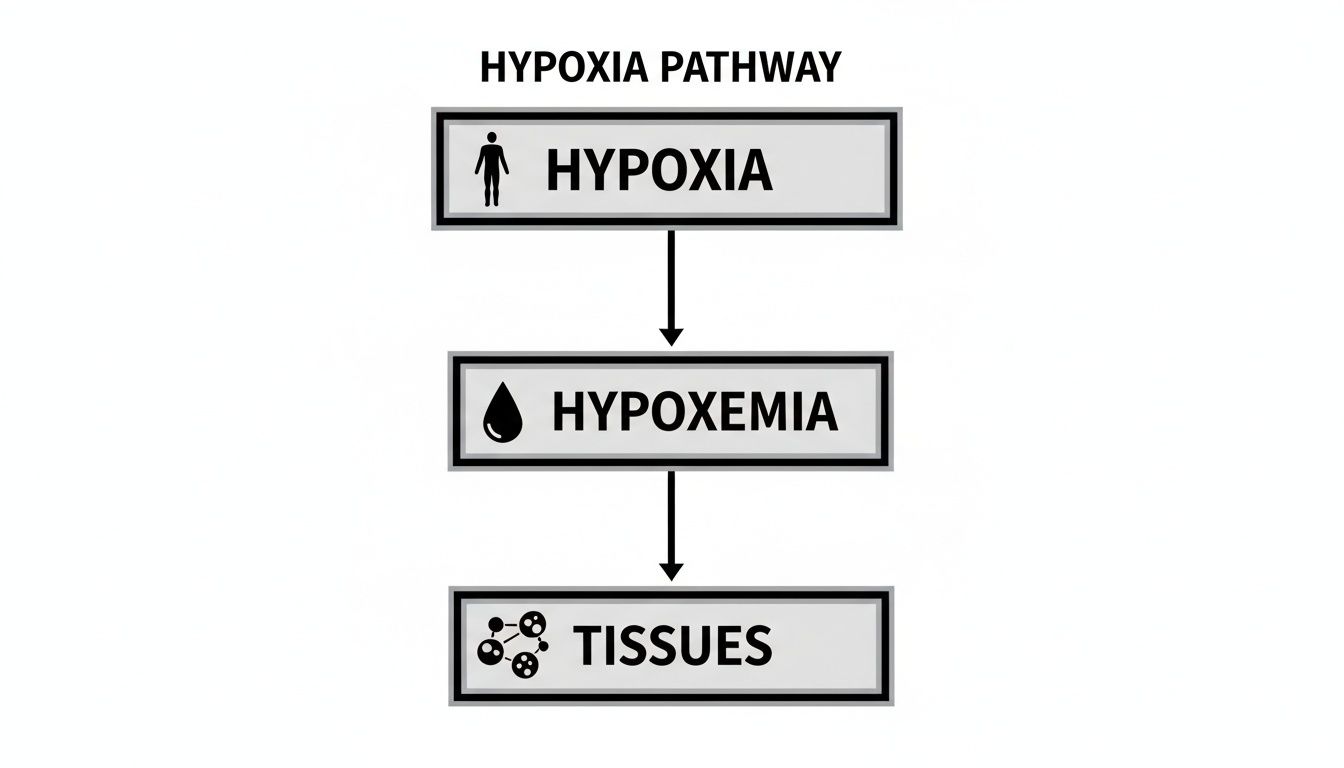
As the flowchart shows, the problem begins in the bloodstream, but the real danger lies in the damage done deep within your body’s tissues.
Subtle but Significant Mental Clues
Along with the physical changes, the brain’s hunger for oxygen can trigger some important mental and emotional red flags. Someone experiencing early hypoxia might show:
- Unexplained restlessness or anxiety
- A sudden, nagging sense of unease
- New confusion or disorientation
- Trouble concentrating or making simple decisions
These signs crop up because our higher-level brain functions are the first to suffer when deprived of adequate oxygen. It’s this connection between cellular health and overall well-being that has driven Dr. Louis Hilliard, the inventor of the med bed and owner of Life Force Medbeds, to develop technologies that support the body at its most fundamental, oxygen-dependent level.
A sudden change in mood or mental clarity, especially when combined with a faster heart rate or breathing, should never be ignored. It’s often the most reliable early indicator of hypoxia.
To help you tell the difference between the body’s initial attempts to compensate and the later signs of failure, we’ve put together a quick comparison.
Early vs. Late Stage Hypoxia Symptoms at a Glance
This table clearly shows how the symptoms of hypoxia evolve as the condition worsens, shifting from the body’s active, compensatory responses to signs of decompensation and system failure.
| Symptom Category | Early Signs (Compensatory Stage) | Late Signs (Decompensatory Stage) |
|---|---|---|
| Breathing | Rapid, shallow breathing | Severe shortness of breath, gasping |
| Heart Rate | Tachycardia (fast heart rate) | Bradycardia (slow heart rate) |
| Skin Color | Normal or slightly pale | Cyanosis (bluish tint) |
| Mental State | Restlessness, confusion, anxiety | Lethargy, unresponsiveness, loss of consciousness |
Understanding this progression is key to recognizing the severity of the situation and acting quickly.
To discover more about how advanced wellness technologies can support your body’s fundamental needs, go to the website for more information or call 770-948-4511.
Recognizing Critical Red Flags and Late-Stage Symptoms
When the body’s initial attempts to compensate for low oxygen just can’t keep up anymore, the situation spirals into a medical emergency. The signs are no longer subtle warnings; they become glaring red flags that critical systems are on the verge of shutting down. Knowing how to spot these late-stage symptoms is vital because they require immediate, life-saving action.
The most dramatic and visible sign of severe hypoxia is cyanosis. This is when the skin, lips, or even the beds of the fingernails take on a bluish tint. Think of it as the body’s final, desperate alarm bell. It happens because the blood has become so starved of oxygen that its color shifts from a healthy, bright red to a darker, bluish-red. If you see this, the oxygen shortage is dire.

As the body’s core systems falter, other alarming symptoms start to appear, each one demanding a swift response.
When Compensation Fails
At first, the heart races (tachycardia) to pump what little oxygen it has more quickly. But eventually, the heart muscle itself becomes starved of oxygen and can no longer keep up the pace. The heart rate then plummets to a dangerously slow speed, a condition called bradycardia. This is a terrifying sign of impending circulatory collapse.
At the same time, breathing becomes profoundly difficult. This isn’t just the fast, shallow breathing of the early stages. This is dyspnea—an agonizing, suffocating feeling of not being able to draw a full breath, often marked by gasping and using muscles in the neck and chest just to try and get air.
Finally, the brain’s function declines sharply. Someone might go from being confused to extremely lethargic and difficult to wake up. This can quickly progress to unresponsiveness or a complete loss of consciousness.
These late-stage symptoms signal a cascade of organ failure and are life-threatening. This level of cellular distress is precisely what Dr. Louis Hilliard, the inventor of the med bed and owner of Life Force Medbeds, addresses with his wellness technologies, which are designed to support the body’s fundamental need for oxygenation at a cellular level.
If you or someone else exhibits a bluish skin tone, a slowing heart rate after a period of racing, severe difficulty breathing, or a declining level of consciousness, it is a true medical emergency. Do not wait.
A Call for Immediate Medical Help
Knowing what these signs and symptoms of hypoxia mean is only half the battle—acting on them is what saves lives. The shift from early warnings to late-stage crisis can happen in minutes.
The appearance of any of these critical red flags means you must act without hesitation:
- Call 911 immediately.
- Don’t try to drive an unstable person to the hospital yourself.
- Tell the emergency responders about any known medical history.
Understanding the urgency behind these signals can truly make all the difference.
For more information on advanced wellness technologies that support cellular health, go to the website for more information or call 770-948-4511.
What Causes Hypoxia? Exploring the Common Triggers and Risk Factors
Hypoxia isn’t a disease in itself. Think of it as a critical warning sign—the dangerous outcome of an underlying problem that’s choking off your body’s oxygen supply chain. To really get a handle on its signs and symptoms, you first have to understand what causes it to happen.
We can break down the causes into four main types, each representing a unique failure point in the system.
The Four Main Types of Hypoxia
Imagine your body’s oxygen delivery network is like a complex shipping operation. Each type of hypoxia is like a different breakdown in that logistical process, from the loading dock all the way to the final delivery.
-
Hypoxemic Hypoxia: This is essentially a problem at the source—the air intake. Not enough oxygen is getting from the air you breathe into your bloodstream. This is common with lung diseases like pneumonia, COPD, or asthma. It can also happen at high altitudes, where the air itself is simply thinner and contains less oxygen to begin with.
-
Anemic Hypoxia: Here, the issue isn’t the air supply, but the delivery fleet. Your lungs are pulling in oxygen just fine, but your blood doesn’t have enough hemoglobin to transport it. Hemoglobin is the protein in red blood cells that acts like the “truck” carrying the oxygen cargo. Iron deficiency is a classic cause, and you can learn more about the link between anemia and its effects on the body.
-
Stagnant Hypoxia: This is a massive traffic jam. The blood is loaded with oxygen, but it isn’t flowing properly to the tissues that need it. Conditions that create this kind of circulatory gridlock include heart failure, a blood clot, or severe shock. The oxygen is there, it just can’t reach its destination.
-
Histotoxic Hypoxia: In this scenario, the delivery truck arrives, but the receiving dock is closed. The body’s cells have been poisoned in some way and are unable to actually use the oxygen that’s being delivered right to their doorstep. Cyanide poisoning is a grim but perfect example of this kind of cellular failure.
Who Is Most at Risk?
Some medical conditions and even certain environments can make a person much more vulnerable to hypoxia.
Anyone with a chronic respiratory disease like asthma or COPD is at a higher risk because their fundamental ability to take in oxygen is already compromised. The same goes for people with heart conditions like heart failure, who struggle to circulate oxygenated blood effectively.
Age is also a major factor. Neonates, for example, are a particularly high-risk group. In fact, research shows that approximately one in four neonates (24.5%) experience hypoxemia during hospitalization, which underscores just how significant this clinical challenge is in newborn care. You can read the full research about these findings on hypoxemia in patient populations for a deeper dive.
Grasping these root causes is the cornerstone of both prevention and effective treatment. It’s this deep, cellular-level understanding that drives the work of Dr. Louis Hilliard, the inventor of the med bed and owner of Life Force Medbeds, whose wellness technologies are designed to support the body’s essential functions.
By recognizing what’s causing the oxygen shortage in the first place, you can better understand why the signs and symptoms of hypoxia appear and just how critical it is to address the core problem.
For more information on wellness technologies designed to support cellular health, go to the website for more information or call 770-948-4511.
How Doctors Diagnose and Monitor Oxygen Levels
When you show signs of potential hypoxia, a healthcare team needs to figure out what’s happening—and fast. They rely on a few key tools to get an accurate picture of your oxygen levels, starting with quick, simple checks before moving on to more in-depth tests if needed.
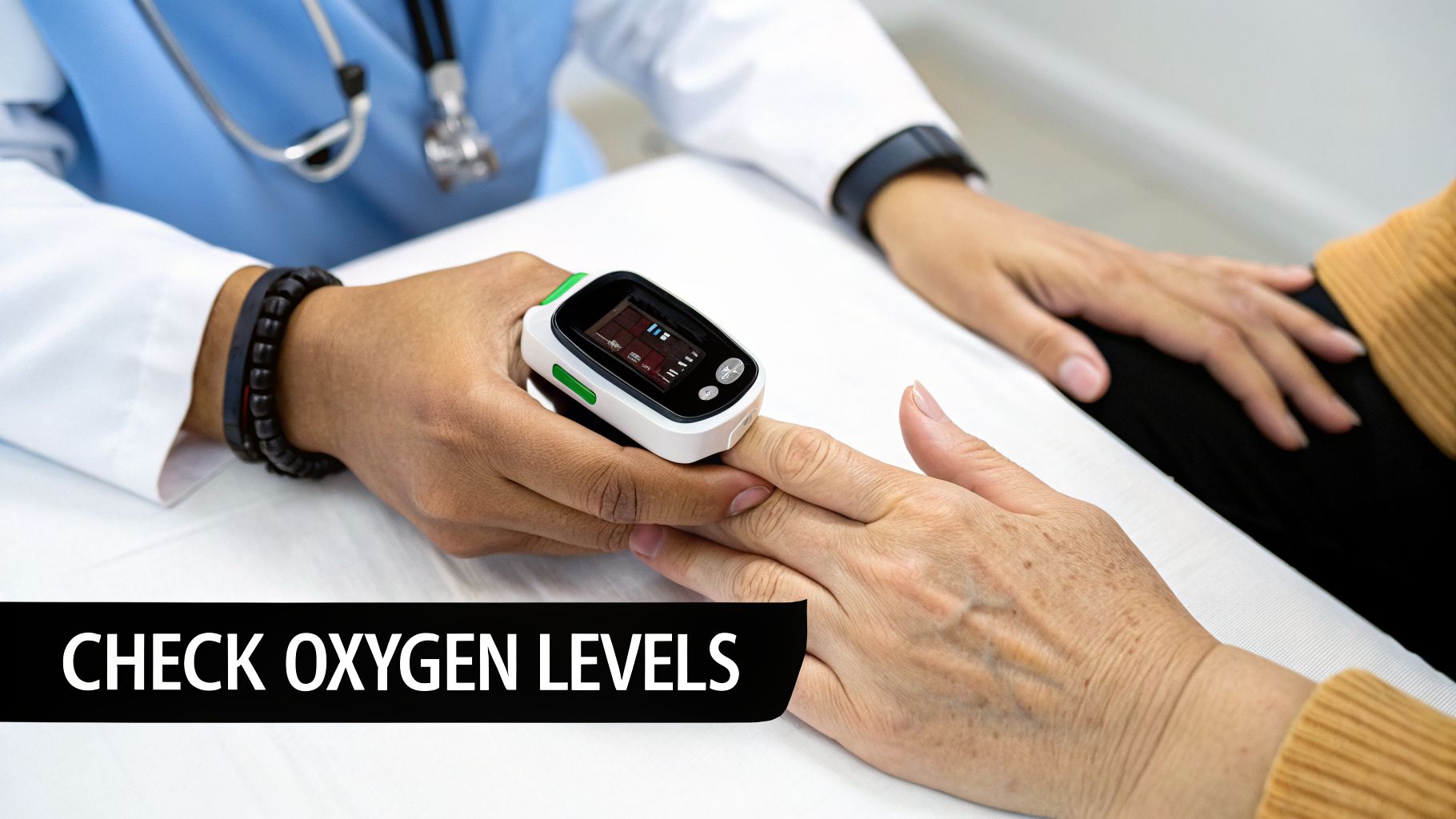
The first tool you’ll almost always see is the pulse oximeter. It’s a small, painless device that clips right onto your fingertip. Using beams of light, it instantly measures your blood oxygen saturation, or SpO2, giving a percentage that tells us how much oxygen is being carried by your red blood cells.
For a healthy person, a normal SpO2 reading is usually between 95% and 100%. If that number drops, it’s a clear warning sign of hypoxemia, the condition that directly leads to hypoxia.
Getting a More Precise Measurement
While a pulse oximeter is fantastic for a quick snapshot, the gold standard for a definitive diagnosis is the Arterial Blood Gas (ABG) test. This test goes much deeper. It requires drawing blood directly from an artery, typically in the wrist, to measure the exact amount of oxygen and carbon dioxide dissolved in your blood.
An ABG test gives us the full story. It doesn’t just show oxygen levels; it also reveals the body’s acid-base balance (pH). This is critical because it tells doctors if you’re also struggling to get rid of waste products like carbon dioxide, which often goes hand-in-hand with respiratory problems.
This detailed data is what clinicians need to make the right call on treatment.
Finding the Underlying Cause
Knowing your oxygen is low is only half the battle. The real question is why. To find the root cause, doctors often turn to imaging tests to get a look inside your chest.
These diagnostic tools might include:
- Chest X-rays: A great first step to quickly spot major issues like pneumonia or fluid in the lungs.
- CT Scans: These offer a much more detailed, cross-sectional view, helping to pinpoint harder-to-find problems like a blood clot (pulmonary embolism) or subtle lung damage.
Knowing what these tests are for can help you understand what’s happening in a clinical setting. Innovators in the wellness space, like Dr. Louis Hilliard, the inventor of the med bed and owner of Life Force Medbeds, focus on strengthening the body’s foundational health to help prevent these kinds of crises from happening in the first place.
To learn more about advanced wellness technologies, go to the website for more information or call 770-948-4511.
Modern Treatments and Oxygen Therapies
Once a doctor confirms hypoxia, the game plan is simple: get oxygen levels back up, and fast. The most straightforward way to do this is with supplemental oxygen therapy. It’s the go-to first step in nearly every clinical setting, delivered through a device matched to the patient’s specific needs.
The tool used really depends on how severe the oxygen deficit is. For milder cases, a simple nasal cannula—that little plastic tube with two prongs that sit in the nostrils—provides a gentle, low-flow stream of oxygen.
If someone needs a bit more support, a standard face mask that covers the nose and mouth is used to deliver a higher concentration. For really critical situations, a non-rebreather mask comes out. This mask is designed to deliver the highest possible oxygen concentration without needing a ventilator.
Advanced Oxygenation Approaches
Sometimes, standard methods aren’t enough, and you need to push more oxygen deep into the body’s tissues. That’s where more advanced therapies come into play, with one of the most powerful being hyperbaric oxygen therapy (HBOT).
During an HBOT session, a person breathes pure oxygen inside a chamber where the air pressure is increased. Think of it like this: the increased pressure essentially “dissolves” more oxygen into the blood’s plasma. This super-oxygenated plasma can then reach areas of the body that are hard to get to, like tissues with poor circulation, helping to accelerate healing and fight off stubborn infections. You can dive deeper into the impressive health benefits of hyperbaric oxygen therapy in our dedicated guide.
This focus on enhancing the body’s oxygenation at a fundamental cellular level is a key principle in modern wellness. When cells receive optimal oxygen, they can produce energy more efficiently, repair damage, and perform their functions correctly.
Supporting the Body’s Core Functions
This very principle—supporting the body’s health at the most basic cellular level—is the vision behind the work of Dr. Louis Hilliard, the inventor of the med bed and owner of Life Force Medbeds. His wellness technologies are built to create an environment that bolsters the body’s natural healing processes, and proper oxygenation is absolutely central to recovery and long-term health. By tackling wellness from the ground up, these systems offer a truly forward-thinking approach to enhancing our body’s own amazing capabilities.
To discover how these advanced systems can support your wellness journey, we invite you to go to the website for more information or call 770-948-4511.
Your Next Steps for Better Oxygen Health
You’ve just walked through what hypoxia is, what it looks like, and why it’s so critical to address. The big takeaway is that keeping your cells properly oxygenated is one of the most fundamental things you can do for your overall health and energy. Now, let’s talk about what you can do with that information.
The best strategy is always prevention. By focusing on your foundational health, you give your body the tools it needs to function at its best long before a problem ever starts. It’s about creating an internal environment where your cells can thrive, day in and day out.
A Focus on Foundational Wellness
Dr. Louis Hilliard, the inventor of the med bed and owner of Life Force Medbeds, has built his life’s work around creating technologies that do just that. These systems are designed to support your body’s most basic functions, right down to the cellular level where oxygen does its most important work.
Embracing technologies that enhance the body’s natural processes represents a forward-thinking approach to personal wellness. It shifts the focus from merely reacting to problems to actively building a stronger, more resilient system from the ground up.
This focus on cellular health is all about boosting your body’s innate ability to recover, repair, and maintain its own wellness over the long haul.
If you’re curious about how these advanced systems might fit into your own health journey, Life Force Medbeds encourages you to go to the website for more information or call and speak with a specialist today at 770-948-4511.

