
Why Oxygen Therapy Is Essential for Recovery


Table of Contents
- How Oxygen Therapy Accelerates the Body’s Natural Healing Process
- Benefits of Hyperbaric Oxygen Therapy for Athletes
- How Long Should a Hyperbaric Oxygen Session Last?
- Integrating Oxygen Therapy with MedBed Technology
- Conditions That Benefit from Supplemental Oxygen
- Types of Oxygen Delivery Systems and Patient Monitoring
- Conclusion
- Frequently Asked Questions
Last Updated: September 13, 2026
How Oxygen Therapy Accelerates the Body’s Natural Healing Process
Oxygen therapy is the controlled delivery of supplemental oxygen to raise tissue oxygen levels and support the body’s own repair mechanisms, and it has become a cornerstone of recovery-focused care. This guide explains why oxygen therapy is essential for recovery, from cellular respiration to practical session planning.
Every cell in your body runs on oxygen. When delivery falls short, healing slows, fatigue builds, and organ function suffers. When delivery improves, the healing cascade gets what it needs to move forward.
The Science of Cellular Respiration and Tissue Repair
Cellular respiration is the process by which cells convert oxygen and nutrients into usable energy. Without adequate oxygen, this process shifts into less efficient pathways, and tissue repair slows.
Three things happen when oxygen delivery improves:
- Collagen synthesis accelerates, supporting wound closure and connective tissue repair
- White blood cell activity increases, improving the body’s ability to clear debris and fight infection
- New blood vessel formation supports long-term vascular health in recovering tissue
The practical takeaway: oxygen is not a passive input. It is the rate-limiting factor in much of the repair process.
StatPearls clinical overview of oxygen therapy
Understanding Blood Oxygen Saturation and Hypoxemia
Blood oxygen saturation measures how much oxygen your red blood cells are carrying. Hypoxemia is the medical term for low oxygen levels in the blood; hypoxia describes low oxygen at the tissue level, where it does the real damage.
Normal saturation typically sits in the mid-to-high 90s for healthy adults at rest. Below that range, the body compensates: heart rate climbs, breathing quickens, and fatigue sets in. A dyspnea (shortness of breath) episode during everyday activity is a common early signal.
Do not self-diagnose low oxygen levels from a consumer pulse oximeter alone. Readings vary with cold hands, nail polish, and poor circulation. A clinical arterial blood gas test is the standard for confirming hypoxemia.
Benefits of Hyperbaric Oxygen Therapy for Athletes
Hyperbaric oxygen therapy (HBOT) is not the same thing as the supplemental oxygen a patient breathes through a nasal cannula at home, and conflating the two is the single most common error in recovery content. Normobaric oxygen therapy delivers oxygen at normal atmospheric pressure, roughly 14.7 pounds per square inch at sea level, and mainly raises the amount of oxygen bound to hemoglobin. Hyperbaric oxygen therapy delivers oxygen inside a pressurized chamber, typically at 1.5 to 3.0 atmospheres absolute (ATA), which raises the amount of oxygen dissolved directly in blood plasma. That dissolved fraction is what reaches tissue that has poor blood flow, and it is why HBOT is studied for recovery scenarios where circulation itself is the bottleneck.
For athletes, the practical benefits center on four mechanisms:
- Faster tissue recovery. Hard training creates micro-damage in muscle and connective tissue. Elevated plasma oxygen supports the repair cascade, including collagen synthesis and new blood vessel formation.
- Reduced inflammation. HBOT is studied for its effect on inflammatory signaling after intense exertion. Athletes commonly report less soreness, though individual response varies with pressure, session frequency, and overall recovery habits.
- Improved energy availability between sessions. Better tissue oxygenation supports mitochondrial energy production, which can show up as less mid-day fatigue and steadier output across a training block.
- Support for wound and soft-tissue healing. The same plasma-oxygen mechanism that helps chronic wounds also applies to the micro-injuries that accumulate during a competitive season.
What the Pressure Setting Actually Changes
Pressure is not a marketing detail; it is the variable that separates a wellness session from a clinical protocol. A common pattern in supervised recovery programs is 1.5 to 2.0 ATA for 60 to 90 minutes, while higher clinical pressures are reserved for specific wound and infection indications under physician oversight. More pressure is not automatically better. Higher ATA increases the risk of ear and sinus barotrauma, so chambers that let patients start lower and build gradually tend to produce better tolerance and better adherence.
Why Athletes Stack Sessions Rather Than Book One
The recovery effect is cumulative, not a one-session switch. Athletes using hyperbaric protocols typically schedule sessions around heavy training blocks, often several sessions per week during peak load and fewer during tapering. What most guides miss is that the scheduling pattern matters as much as the chamber itself. A single session before a competition is a different intervention than a two-week block during preseason conditioning, and the recovery goal should drive the plan.
Matching the Modality to the Recovery Goal
Not every recovery goal requires a pressurized chamber. Mild fatigue or general wellness support may respond well to normobaric supplemental oxygen, while post-surgical recovery, chronic wound care, and stubborn soft-tissue injuries are the scenarios where the hyperbaric distinction earns its keep. Life Force Hyperbaric Chambers are higher quality of hyperbaric chambers for doctors, clinics and health care offices that need dependable equipment for exactly this range of protocols. Clinics in Atlanta and across Georgia can work with Atlanta Hyperbaric Center for clinical chamber access, and with Hyperbaric Business Solutions for guidance on setting up or expanding chamber services.
Ask any facility two questions before booking: what pressure do you use, and who supervises the session? The answers separate a clinical protocol from a wellness add-on.
How Long Should a Hyperbaric Oxygen Session Last?
A typical hyperbaric oxygen session lasts 60 to 90 minutes, though the right duration depends on your goals, the pressure used, and clinical supervision. Shorter sessions suit maintenance routines; longer sessions are common in supervised recovery protocols.
Factors That Determine Optimal Session Duration
Four variables drive session length:
| Factor | What It Affects | Typical Adjustment |
|---|---|---|
| Treatment pressure | Oxygen absorption depth | Higher pressure, shorter session |
| Recovery goal | Acute vs. maintenance | Acute protocols run longer |
| Individual tolerance | Ear and sinus comfort | Start shorter, build gradually |
| Clinical supervision | Safety and monitoring | Supervised sessions can extend |
Clinical Guidelines and Patient Monitoring
Reputable chambers follow clinical guidelines for pressure, duration, and patient monitoring. Technicians track comfort, ear equalization, and vitals throughout. For facilities that want that oversight built into the equipment itself, a Health Monitoring System can support remote tracking of patient vitals across sessions.
Ask any facility how they monitor sessions and who supervises them. A chamber without trained oversight is a red flag, not a shortcut.
Integrating Oxygen Therapy with MedBed Technology
Integrating oxygen therapy with MedBed technology means combining oxygen delivery with PEMF, red and near-infrared light, frequency therapy, and biosensing in one system, so recovery support happens in a single session rather than across separate devices.
Dr. Louis Hilliard is the inventor of the med bed, and that origin matters. Life Force MedBeds build on this foundation as an integrated wellness technology platform rather than a single-function device.
How Dr. Louis Hilliard’s Invention Changed Wellness Technology
The med bed concept changed the conversation from single-modality devices to consolidated systems. Instead of buying a red light panel, a PEMF mat, and a separate oxygen setup, users get one environment that coordinates them.
For anyone who has priced out separate devices, the appeal is obvious: fewer devices, one routine, and monitoring built in.
Combining PEMF, Light Therapy, and Oxygen for Comprehensive Recovery
Stacking modalities works because they address different parts of the same problem. Oxygen supports cellular respiration; PEMF targets circulation and comfort; red and near-infrared light supports collagen synthesis and skin recovery. Life Force Hyperbaric Chambers are higher quality of hyperbaric chambers for doctors, clinics and health care offices.
Clinics in Atlanta and across Georgia can also work with Atlanta Hyperbaric Center for clinical chamber access, and with Hyperbaric Business Solutions for guidance on setting up or expanding chamber services.
Conditions That Benefit from Supplemental Oxygen
Supplemental oxygen helps in any condition where blood oxygen saturation drops or tissue demand outpaces supply. It supports patient outcomes across respiratory, cardiovascular, and recovery-focused care.
Chronic Obstructive Pulmonary Disease and Pneumonia Recovery
In chronic obstructive pulmonary disease, long-term oxygen therapy is a standard part of care for patients with chronically low saturation. In pneumonia recovery, supplemental oxygen supports the body while the lungs clear infection and inflammation.
Both cases share a theme: oxygen buys the body time and energy to heal.
Oxygen therapy does not treat the underlying disease. It supports the body while other treatment does the work.
Fatigue Management and Vascular Health
Persistent fatigue is one of the most overlooked signs of poor oxygenation. Fatigue management improves when oxygen delivery to tissues is consistent, and vascular health benefits when circulation and oxygen transport work together.
Types of Oxygen Delivery Systems and Patient Monitoring
Oxygen delivery systems range from home concentrators to pressurized hyperbaric chambers, and the right choice depends on how much oxygen you need, where you need it, and whether your recovery goal requires pressure. Understanding the difference between normobaric and hyperbaric delivery is the foundation for every other decision.
Normobaric Systems: Concentrators, Cannulas, and Portable Units
Oxygen concentrators pull oxygen from room air, compress it, and deliver it through a nasal cannula. They are the workhorse of home supplemental oxygen because they never run out of supply the way a tank does, though they require electricity and routine filter maintenance. A nasal cannula is comfortable and unobtrusive, which is why it remains the most common delivery method for continuous low-flow support. Portable oxygen concentrators and compressed tanks serve patients who need mobility, and liquid oxygen systems offer a higher oxygen density for patients with high flow requirements.
Hyperbaric Systems: Pressurized Delivery in a Clinical Setting
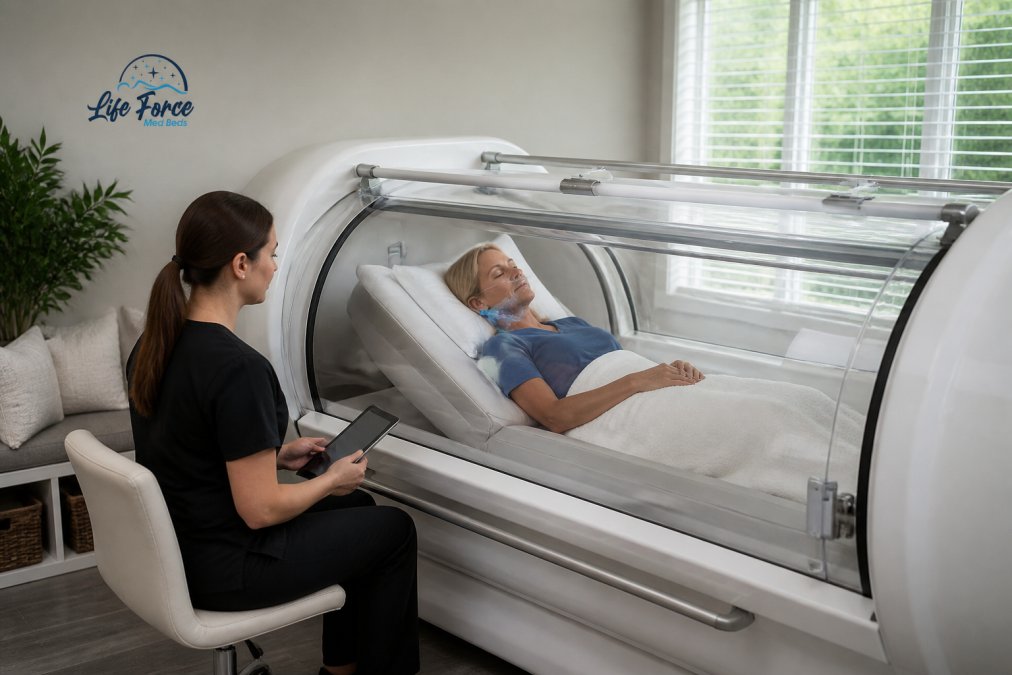
Hyperbaric chambers deliver oxygen at increased pressure, typically 1.5 to 3.0 ATA, which raises the amount dissolved in plasma beyond what normal breathing can achieve. This is a fundamentally different intervention from home supplemental oxygen, not a stronger version of it. Hyperbaric sessions require clinical or supervised wellness oversight because pressure changes affect the ears, sinuses, and lungs, and because monitoring during the session is part of the safety protocol.
| System | How It Works | Best For |
|---|---|---|
| Oxygen concentrator | Filters oxygen from room air | Daily supplemental oxygen at home |
| Nasal cannula | Low-flow delivery via nose | Continuous mild support |
| Portable concentrator | Battery-powered room-air filtration | Mobility and travel |
| Hyperbaric chamber | Pressurized oxygen delivery | Supervised recovery protocols |
| MedBed platform | Multi-modality with monitoring | Consolidated wellness routines |
Monitoring: Pulse Oximetry vs. Arterial Blood Gas
A pulse oximeter is the everyday tool for tracking blood oxygen saturation. It is fast and non-invasive, but readings vary with cold hands, nail polish, and poor circulation, so it is a screening tool rather than a diagnosis. For clinical accuracy, arterial blood gas testing remains the reference standard, measuring oxygen, carbon dioxide, and pH in a single draw. During hyperbaric sessions, technicians typically track comfort, ear equalization, and vitals throughout, and a chamber without trained oversight is a red flag rather than a shortcut.
Navigating Access and Insurance in Atlanta
Most national recovery guides stop at the clinical definition and never address how a patient actually gets access. In Atlanta, the practical questions are different from a generic web search. Georgia residents on long-term oxygen therapy typically need a physician’s order and a qualifying blood oxygen saturation measurement before a durable medical equipment supplier will set up a concentrator at home, and Medicare and most commercial plans require documentation of that qualification. The paperwork burden is real, and it is the step where most patients stall.
For hyperbaric therapy, coverage is narrower. Many plans cover HBOT only for specific indications, so patients should ask their insurer directly which diagnosis codes are covered before assuming a session is reimbursable. Local clinical resources make this easier to navigate. Atlanta Hyperbaric Center provides clinical chamber access in the metro area, and Hyperbaric Business Solutions advises clinics and health care offices on setting up or expanding chamber services, which is useful context for patients trying to understand what a well-run facility looks like.
If you are searching for oxygen therapy near me in Atlanta, ask about supervision, monitoring protocols, and whether the setup suits your recovery goals. The answers will tell you more than any equipment brochure.
Bring your most recent blood oxygen saturation reading and your physician’s order to your first appointment. It shortens the intake process and helps the facility match you to the right system.
Conclusion
Recovery outcomes depend on oxygen reaching tissue when the body needs it most, and that is where an integrated approach beats scattered devices. Life Force brings oxygen therapy together with PEMF, red and near-infrared light, frequency therapy, and built-in biosensing in one platform, so you can monitor, assess, and support recovery without juggling separate equipment. Explore the Life Force MedBed product line or the hyperbaric chamber options to see which configuration fits your routine.
Frequently Asked Questions
Does oxygen speed up recovery?
Oxygen therapy can support the body’s natural healing processes by increasing oxygen availability to tissues. This can help with cellular respiration, collagen synthesis, and white blood cell activity. For athletes, it may reduce fatigue and support tissue repair after intense training. However, individual results vary, and oxygen therapy works best as part of a comprehensive recovery plan.
How long should you be on oxygen therapy?
Session length depends on the type of therapy and your health goals. Hyperbaric oxygen sessions typically range from 60 to 90 minutes, while supplemental oxygen via a concentrator may be used for shorter or longer periods based on clinical guidelines. A qualified healthcare professional can help determine the right duration for your needs.
Can oxygen therapy be integrated with other wellness modalities like PEMF?
Yes. Integrated wellness systems like the Life Force MedBed combine oxygen therapy with PEMF, red light therapy, and other modalities. This approach allows you to support multiple aspects of recovery in one session. Dr. Louis Hilliard, inventor of the med bed, designed these systems to work together for a more comprehensive wellness experience.
What is the difference between clinical oxygen therapy and wellness-based oxygen support?
Clinical oxygen therapy is prescribed to treat specific medical conditions like hypoxemia or chronic obstructive pulmonary disease, with precise oxygen delivery monitored by healthcare providers. Wellness-based oxygen support focuses on optimizing oxygen availability for general recovery, athletic performance, or proactive wellness. Both approaches aim to improve tissue oxygenation but differ in setting, oversight, and intended outcomes.
Recovery is not a single intervention; it is a system, and your equipment should reflect that. Life Force MedBeds combine oxygen therapy, PEMF, light therapy, and health monitoring in one integrated platform designed for consistent, data-informed wellness. Get started with Life Force and build a recovery routine that works as hard as you do.


